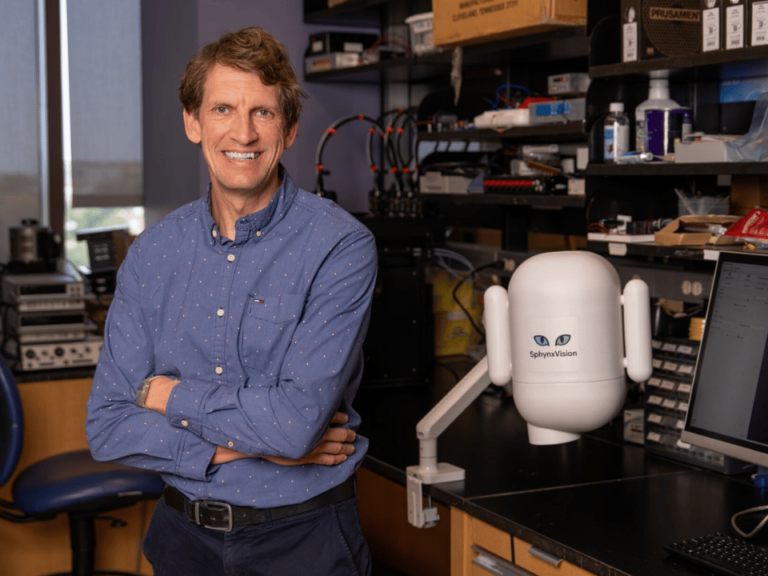
David Gius was named associate cancer center director for translational research at the Mays Cancer Center, home to UT Health San Antonio MD Anderson.
Gius was recruited to the Mays Cancer Center from the Robert H. Lurie Comprehensive Cancer Center at Northwestern University with a $6 million senior investigator recruitment grant awarded in August by the Cancer Prevention and Research Institute of Texas.
Gius, professor of radiation oncology, studies the cellular processes that govern aging, cellular metabolism and cancer. He has developed several mouse models to study these health issues in breast cancer and other types of human malignancies.
He brought four researchers with him to the Mays Cancer Center and, in addition to the $6 million CPRIT grant, three NCI grants totaling about $4 million. He has developed eight genetically modified mouse models to study human breast, prostate and liver tumors.
“Our work addresses a fundamental issue in oncology, namely that age represents a strong cancer risk factor. I focus on the biology of the aging protein Sirtuin-3 (SIRT3) and two mitochondrial proteins that direct the mechanisms that affect the flow of energy in the development and growth of cancer and tumor cell resistance,” he said in a statement. “Through our research, we hope to eventually be able to help medical practitioners identify patients who are more likely to respond to therapy, predict the duration of drug response and explain acquired drug resistance.”