A novel cancer therapy studied and developed at the Medical College of Wisconsin with promising clinical outcomes is leading to a larger phase II trial to improve on the current standard of care.
Results of phase I of the first-in-the-world double targeted CAR T-cell therapy clinical trial were published in Nature Medicine.
This is a novel, cell-based treatment against cancer targeting two proteins (antigens CD19 and CD20) on the surface of cancer cells. This CAR T-cell therapy trial began in October 2017 and resulted in safe and promising outcomes for patients with relapsed and refractory B cell non-Hodgkin lymphomas which are cancers of the immune system.
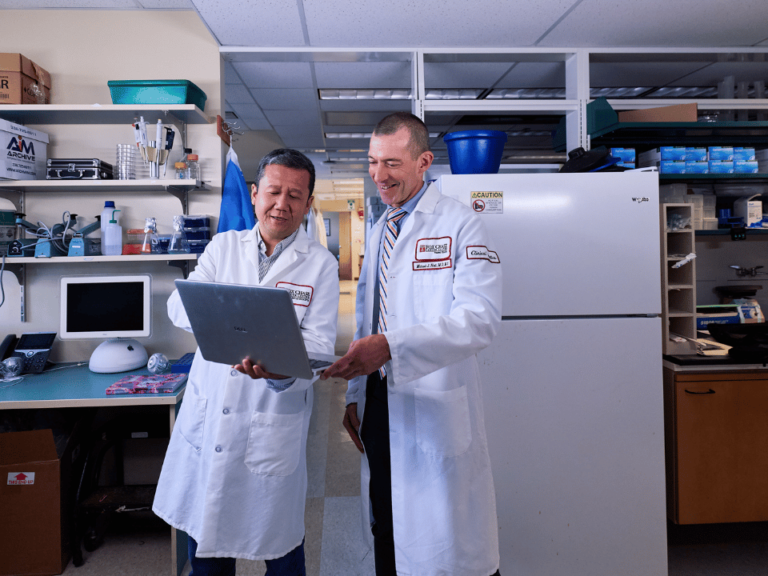
MCW researchers collected patient T cells and then used a specially engineered virus to augment their ability to identify and kill cancerous cells and effectively destroy the lymphoma. While phase I focused on safety and feasibility of the treatment, a multi-institutional phase II is being developed to determine the true efficacy and understand how the nuances of the treatment process can result in excellent outcomes for a larger subset of patients.
All patients in the clinical trial had failed prior treatments and their cancer had relapsed. Within 28 days of the CAR-T cell therapy, 82 percent responded positively. Six months later, more than half of the patients’ cancer remained in remission. A higher dose of the treatment correlated with a prolonged remission, a trend the researchers plan to study further in the trial’s second phase.
The new treatment genetically alters a person’s own immune cells to target cancer cells in a unique and personalized fashion, a significant departure from more routine chemotherapy.
The cell product used for treatment was manufactured using the CliniMACS Prodigy device, which is part of an automated CAR T cell manufacturing platform developed by Miltenyi Biotec.
Housed at the Froedtert & MCW Clinical Cancer Center, the CliniMACS Prodigy device enabled the research team to conduct the CAR T-cell immunotherapy through a self-contained, desktop system, producing new cells ready to be infused back into a patient’s bloodstream within 14 days. With the device, the entire process was performed locally at Froedtert Hospital.
This research was made possible through philanthropic dollars raised by the Children’s Wisconsin Foundation and the MACC Fund and their support of the Cell Therapy Lab at MCW.