


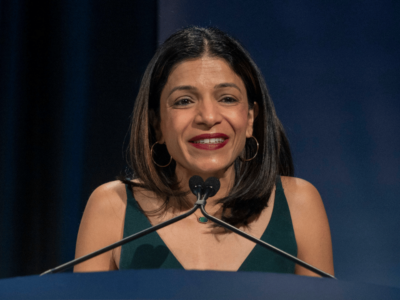
Claire Marie Porter is a reporter with The Cancer Letter. She joined the publication in 2024.
Before joining The Cancer Letter, Claire was a freelance health and science journalist with bylines in The Atlantic, Scientific American, The Washington Post, Undark Magazine, Popular Science, WIRED among other publications. She graduated with an M.S. in Journalism from Columbia University in 2020, where she received honors for her thesis "The Deadly Itch" on Intrahepatic Cholestasis of pregnancy.
She was a 2020 Society of Environmental Journalists grant recipient, and completed internships with Next City and National Public Radio.
She graduated from Temple University with a Bachelor’s degree in English in 2013.
Before joining The Cancer Letter, Claire was a freelance health and science journalist with bylines in The Atlantic, Scientific American, The Washington Post, Undark Magazine, Popular Science, WIRED among other publications. She graduated with an M.S. in Journalism from Columbia University in 2020, where she received honors for her thesis "The Deadly Itch" on Intrahepatic Cholestasis of pregnancy.
She was a 2020 Society of Environmental Journalists grant recipient, and completed internships with Next City and National Public Radio.
She graduated from Temple University with a Bachelor’s degree in English in 2013.
Latest Stories

Regulatory News
FDA has granted an accelerated approval to dostarlimab-gxly (Jemperli), making it the first and only immunotherapy approved in the U.S. for adults with locally advanced rectal cancers.

Cancer Policy
President Trump earlier this week signed an executive order to create a women’s health division within NIH, as well as a White House Women’s Health Task Force.

Conversation with The Cancer Letter
The U.S. Preventive Services Task Force is at risk of losing the expertise, evidence-review infrastructure, and institutional culture that has made it a model for evidence-based medicine. In July 2025, David Ransohoff, a gastroenterologist and clinical epidemiologist in the Division of Gastroenterology and Hepatology at University of North Carolina School of Medicine, noted that HHS...
Obituary
Rachna Shroff, a physician-scientist who spent much of her career researching treatments for pancreatic and biliary cancers, has died at the age of 47. She briefly battled an aggressive cancer of an unknown origin.

Cancer Policy
In a post on NCI’s LinkedIn, NCI Director Anthony Letai confirmed that the institute has fully awarded and paid out all of its grant funding for the Fiscal Year 2026.

When Rachna Shroff learned that she was facing a serious illness, she began thinking about what she wanted to leave behind.
Cancer Policy
HHS is planning a large initiative to better document and report health problems and injuries from vaccines.

Regulatory News
Nearly two years after FDA issued a final rule requiring radiologists to tell women whether their breasts are “dense” or “not dense” after a mammogram, the notification has become nearly universal.

The Directors
What should a cancer center look like in an era of AI, genomics, complex patient populations, rising costs, and declining public trust in science?
Cancer Policy
FDA has issued a direct final rule that changes the language in its regulations so that “animal testing” is no longer described as the default or defining form of “nonclinical” safety testing.

NCI
As of the end of August, NCI has selected 1,891 competing awards for funding this fiscal year, all of which will be funded by the year’s end, NCI Director Anthony G. Letai said to the National Cancer Advisory Board.
Cancer Policy
HHS Secretary Robert F. Kennedy, Jr., through the Agency for Healthcare Research and Quality, has announced the addition of eight new members to the U.S. Preventive Services Task Force.

Clinical
For years, personalized cancer vaccines have promised to make a radical idea possible—a treatment designed not just for a particular type of cancer, but for the distinctive mutations in a patient’s tumor.

Cancer Policy
As part of a sweep of leadership changes at FDA, Heidi Overton, deputy director of the White House Domestic Policy Council, has been nominated to the role of FDA commissioner.

Cancer Policy
The Pentagon has temporarily rescinded a recently published guidance that would require all military personnel aged 30 and over to receive testosterone level testing to check for deficiencies.

Free
President Trump earlier this week issued an executive order that would drastically change the childhood immunization schedule—limiting recommendations, spacing out shots, and splitting the combined measles, mumps, and rubella vaccine into single-disease injections.

The Directors
New pressures notwithstanding, being a cancer center director is still a dream job, two of the nation’s newest cancer center directors said.

Cancer Policy
After a decade of litigation, Johnson and Johsnon has agreed to a settlement deal to resolve the some 69,000 lawsuits alleging the company’s talc-based baby powder caused ovarian cancer and mesothelioma.
Cancer Policy
The Trump Administration has released a new United States Government Policy for Stopping High-Risk Life Sciences Research, a framework that prohibits federally supported dangerous gain-of-function research while establishing stronger oversight for life sciences research that could pose significant risks to public health, biosecurity, or national security.

Regulatory News
In a video captioned “The High-T Department of War” and posted on X, Secretary of Defense Pete Hegseth announced that he was authorizing a screening program for troops to ensure “you have the right testosterone levels to operate at your absolute best.”
Cancer Policy
HHS has joined President Trump’s “Genesis Mission,” an artificial intelligence platform to harness federal scientific datasets. The purpose of the move is to use AI to further Robert F. Kennedy Jr.’s efforts to end what he calls “the chronic disease crisis,” a focal point of his Make America Healthy Again strategy.

The Directors
The United States has a translation problem. Scientific breakthroughs in oncology are accelerating, but clinical trial infrastructure hasn’t kept pace.
Regulatory News
The Trump administration’s effort to give political appointees greater authority over federally-funded science is colliding with fierce objections from researchers, universities, medical organizations, and members of Congress.
Cancer Policy
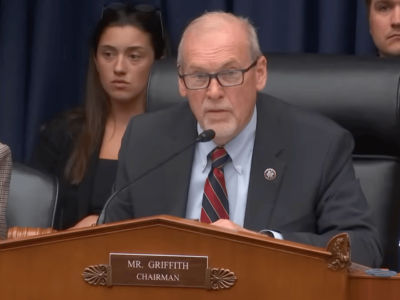
At a recent House Energy and Commerce Health Subcommittee hearing titled “Maintaining America’s Leadership in Biomedical Innovation: FDA’s Role in Advancing U.S. Drug Development,” lawmakers examined ways to increase efficiency and speed across early-stage clinical trial development.
Cancer Policy
A scheduled U.S. Preventive Services Task Force meeting has been canceled, marking the fourth consecutive cancellation by HHS.
Cancer Policy
FDA will temporarily stop publicly releasing rejection letters as it evaluates potential response to a citizen petition issued by an unnamed pharmaceutical company challenging the legality of the practice.

Cancer Policy
The Centers for Medicare & Medicaid Services has proposed a sweeping new Advance Care Planning quality measure (MUC2025-020) that would track end-of-life care discussions for patients 18 and older.

Cancer Policy
FDA has issued a proposed rule to require both foreign and domestic tobacco manufacturers to register their facilities and list their products with the agency. This closes a regulatory gap, holding overseas e-cigarette and tobacco makers to the same standards as U.S. companies.

Clinical
Jenna Scott was 29, seven months pregnant, and suddenly, feeling very sick.

The Directors
How’s this for a paradox: The better cancer centers become at keeping patients alive, the more expensive cancer care becomes. This brutal tradeoff hits harder in rural areas, where the cancer burden is higher and the investigator and clinical trial representation is lower.
Cancer Policy
An FDA advisory panel has recommended approval of Moderna’s mRNA-based flu vaccine, mFlusiva, for adults ages 50-64, and adults 65 and older, if a specific condition is met.

News Analysis
FDA has issued a draft guidance to reduce unnecessary animal testing in nonclinical safety assessments for some cancer pharmaceuticals.

The White House Office of Management and Budget has released a 412-page proposal that inserts political appointees into all stages of reviewing and awarding of federal research grants.

If you believe in the miraculous healing power of ivermectin, hydroxychloroquine, and the harm from vaccination for HPV and COVID-19, you’ve got a powerful friend in Sen. Ron Johnson (R-WI), chair of the Permanent Subcommittee on Investigations of the Senate Committee on Homeland Security and Governmental Affairs.

In a poignant keynote punctuated with anecdotes about grief, American Society of Clinical Oncology’s immediate past president Eric Small emphasized that the annual conference is not just about scientific discovery, but about a responsibility to translate discoveries into better outcomes for cancer patients globally.

Cancer Policy
Friends of Cancer Research announced the election of Richard Pazdur to the organization’s board of directors.

The Directors
Getting NCI clinical trials to the community has never been an easy task. Has it been getting simpler or more difficult in recent years?
Cancer Policy
In a letter, sixty organizations representing cancer patients and providers are urging HHS Secretary Robert F. Kennedy Jr. to maintain the integrity of the U.S. Preventive Task Force.
Cancer Policy
The Vaccines and Related Biological Products Advisory Committee on May 28 approved the composition of COVID-19 vaccines for the 2026-2027 immunization season.
Capitol Hill
Esa M. Davis and John B. Wong have been fired from U.S. Preventive Services Task Force by HHS Secretary Robert F. Kennedy Jr.

Cancer Policy
In further major FDA shake-ups, three top regulators left the agency on May 15, just days after the resignation of Commissioner Marty Makary.
Cancer Policy
The charter governing the Advisory Committee on Immunization Practices will be returned to its previous framework for two years because the Department of Health and Human Services didn’t allow sufficient time for public comment after Robert F. Kennedy crafted a charter more favorable to his policy preferences.

Podcast
“Backwater to Blockbuster,” the first de novo book published by the Cancer History Project, traces the evolution of St. Jude Children’s Research Hospital to its current status of a powerhouse of research in pediatric cancer.

Regulatory News
The immediate impetus for FDA Commissioner Marty Makary’s exit from the top job at FDA is arguably less significant than the legacy of dysfunction he leaves behind.

Cancer Policy
President Donald Trump has withdrawn the nomination of Casey Means for Surgeon General, instead nominating Nicole B. Saphier, a radiologist at Memorial Sloan Kettering Cancer Center.

Cancer Policy
Following Vinay Prasad’s second and presumably final departure from his job as director of the Center for Biologics Evaluation and Research, Prasad’s deputy Katherine Szarama has stepped in as acting drector.
Drugs & Targets
FDA has issued a “safe to proceed” letter to Revolution Medicines, allowing the sponsor to initiate an expanded access treatment protocol for its experimental pancreatic cancer drug, daraxonrasib, a RAS inhibitor.

Health and Human Services Secretary Robert F. Kennedy Jr. is moving to overhaul the U.S. Preventive Services Task Force, a highly influential panel that determines which preventive services insurers must cover and guides routine medical care for millions of Americans.

Cancer Policy
The Centers for Disease Control and Prevention’s Advisory Committee on Immunization Practices, or ACIP, voted in December to rescind its recommendation that all newborns receive a hepatitis B virus vaccine dose within 24 hours of birth.

The Directors
In recent months, several directors of cancer centers, appearing on The Directors, a segment of The Cancer Letter Podcast, mentioned that their institutions are increasingly providing small grants—typically in the range of $50,000—to scientists to enable them to keep their labs open.
Cancer Policy
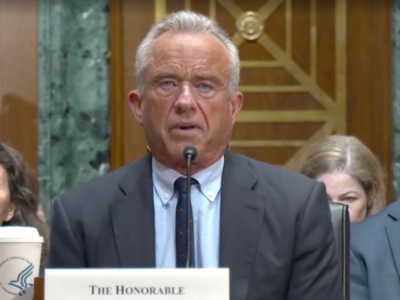
At the Senate Finance Committee hearing on April 22, Health and Human Services Secretary Robert F. Kennedy Jr. hinted at how he intends to reform the U.S. Preventive Services Task Force, a highly respected, independent organization that weighs evidence to make recommendations on screening for diseases.
Cancer Policy
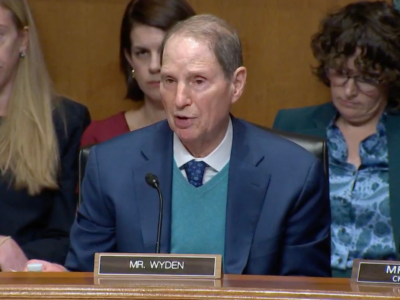
HHS Secretary Robert F. Kennedy Jr. testified before two Senate committees on April 22 as part of a final “blitz” of congressional budget hearings.
Cancer Policy
President Trump has nominated Erica Schwartz, who served as deputy surgeon general in his first administration, to serve as the next director of the Centers for Disease Control and Prevention.
Cancer Policy
FDA announced that it has achieved its first-year goals in implementing its roadmap to reduce animal testing in preclinical studies.
Regulatory News
Boca Raton resident Gabriela Sanchez recently found herself stepping into a mobile outreach vehicle operated by Sylvester Comprehensive Cancer Center.

Conversation with The Cancer Letter
Over the course of his first six months as NCI director, Anthony Letai has contended with federal budget turbulence, a record-setting government shutdown, and concerns about the flow of over research dollars.

Cancer Policy
President’s budget request would cap indirect costs and fully fund all NIH research projects upfront
NCI has emerged relatively unscathed in the president’s FY 2027 budget request that would slash $15.8 billion from HHS funding, cut NIH overall by about 10%, eliminate three NIH institutes and centers, and move the Institute for Environmental Health Sciences and its circa $1 billion budget out of NIH.
News Analysis
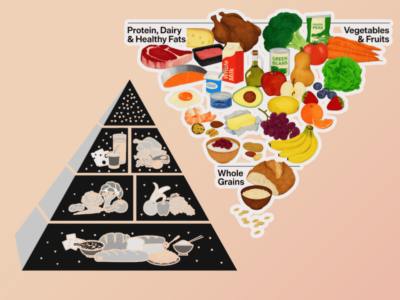
Recently, HHS Secretary Robert F. Kennedy Jr. posted a video montage featuring himself shirtless in jeans, working out with Kid Rock. The duo is in a blue-lit grotto with a cold plunge and sauna. Set to Kid Rock’s “Bawitdaba” and intercut with a selection of patriotic imagery, the video ends with the two men in a hot tub, chugging what appears to be milk.

Cancer Policy
President Donald Trump has imposed a 100% tariff on drugmakers that have not struck a deal with the president to lower the U.S. drug prices of patented pharmaceutical products and ingredients.

Cancer Policy
ImmunityBio and its owner and executive chairman Patrick Soon-Shiong received a warning letter from FDA for making false and misleading claims about a cancer treatment in television ads and on a podcast.

Cancer Policy
FDA, with support from HHS Secretary Robert F. Kennedy Jr., is scrapping a proposed rule that would have banned people under 18 from using tanning beds.
Cancer Policy
FDA has published a draft guidance to incentivize drug developers to use and validate new approach methodologies, or NAMS, as part of a broader effort to move away from animal testing.

NCI
A public-private effort, spearheaded by NCI Director Anthony Letai, and led by the Foundation for the National Institutes of Health, is working to speed up the development of therapeutic cancer vaccines.
Cancer Policy
FDA has created a new adverse event reporting system that will consolidate several systems it has for reporting different types of adverse events.

Regulatory News
Amid deepening controversy, Vinay Prasad, FDA’s top clinician and scientist, and director of its Center for Biologics Evaluation and Research, will be leaving the agency.
Cancer Policy
FDA has approved leucovorin calcium tablets (Wellcovorin), expanding its use for the treatment of cerebral folate deficiency in adult and pediatric patients.

Cancer Policy
Mt. Sinai forms committee to probe Epstein links to breast center founder Eva Dubin, faculty members
Mount Sinai hospital has formed a committee to investigate the ties between Jeffrey Epstein and Eva Dubin a Swedish physician and philanthropist who founded the Dubin Breast Center at the Tisch Cancer Institute whose name is featured prominently in the Epstein files.

The Directors
“We’ve always argued that money comes and goes, but if you lose a generation of scientists—you can’t buy them back,” said Kelvin Lee, director of the Indiana University Simon Comprehensive Cancer Center.
Cancer Policy
Former members of the U.S. Preventative Services Task Force are sounding alarm about an apparent plan by HHS to eliminate the highly respected and influential 16-member expert panel.
Cancer Policy
HHS leadership has announced they will be pursuing steps to “crack down on fraud in Medicare and Medicaid.”
News Analysis
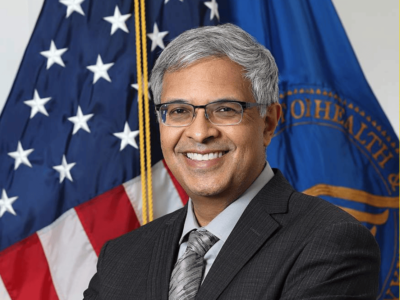
NIH Director Jay Bhattacharya has taken a second big job.

Cancer Policy
For decades, FDA commissioners sought to insulate the agency’s professional staff from political interference with regulatory decisions.

Regulatory News
In the latest episode of Vinay Prasad’s extraordinary adventures at FDA, the agency (i.e. Dr. Prasad himself) has issued a Refusal-to-File letter to an mRNA-based influenza vaccine application.
Cancer Policy
FDA has approved drug labeling changes to six menopausal hormone therapy products, also known as hormone replacement therapy.

NCI
The new ad hoc working group of the National Cancer Advisory Board will play a key role in shaping NCI’s extramural priorities, NCI Director Anthony Letai said at the group’s inaugural meeting Feb. 6.
Cancer Policy
FDA has launched a venture in onshoring domestic drug development called the Precheck Pilot Program.

The Directors
As NCI paylines drop to 4%, cancer centers are tapping into their institutional funds to provide “bridge funding,” typically in $50,000 to $100,000 increments, to enable investigators to keep their labs open until better times return—next year God willing.
Cancer Policy
The reviews of two drugs granted priority review via FDA’s new priority voucher program, Commissioner’s National Priority Voucher (CNPV) Pilot Program, have been delayed.

Clinical
A story is told that after first obtaining approval for marketing Premarin in 1942, Wyeth Laboratories didn’t lock up the secret recipe for making the hormonal drug in a company safe, to be guarded by patent lawyers.

Cancer Policy
OpenAI has launched a ChatGPT health feature in the U.S. that is currently available only to a small group of users for refinement.

Cancer Policy
A federal court has ordered the U.S. Department of Health and Human Services to restore nearly $12 million in funding that was cut from American Academy of Pediatrics funding last month.

Cancer Policy
Last year, the Trump administration began dismantling, RIFing, and stamping out programs and staff deemed ideological or politically motivated, halting application processes, and stripping funding opportunities.

Cancer Policy
The House of Representatives has passed an extension of Obamacare subsidies, sending the bill on to the Senate.
Cancer Policy
FDA has granted sacituzumab tirumotecan (sac-TMT), a trophoblast cell-surface antigen 2 directed antibody-drug conjugate, a priority voucher via the agency’s Commissioner’s National Priority Voucher (CNPV) Pilot Program.
Cancer Policy
FDA has released a congressionally mandated report evaluating the use of perfluoroalkyl and polyfluoroalkyl substances in cosmetic products.

The Directors
As trust in scientific and regulatory institutions frays and the meaning of “gold standard science” is increasingly contested, cancer research faces a credibility test of its own.

Cancer Policy
Harvey A. Risch, professor emeritus and senior research scientist at Yale School of Public Health, was named chair of the President’s Cancer Panel.

Cancer Policy
The U.S. Senate didn’t take up the Mikaela Naylon Give Kids a Chance Act after two Senate members—Bernie Sanders (I-VT) and Sen. Markwayne Mullin (R-OK)— voted “Nay,” blocking it.

Regulatory News
FDA has withdrawn a proposed rule that called for standardized testing for detecting and identifying asbestos in talc-containing cosmetic products.

Cancer Policy
The U.S. House of Representatives unanimously passed the Mikaela Naylon Give Kids A Chance Act, a bill to accelerate pediatric cancer treatments and expand access to life-saving therapies for children battling rare diseases.
Clinical Roundup
The American Cancer Society is introducing two key changes for cervical cancer screening guidelines.
Cancer Policy
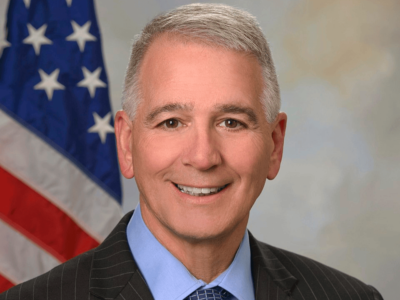
Ralph Lee Abraham, a Louisiana surgeon general who implemented controversial policies and held views that have drawn significant criticism from public health experts, has quietly been installed as the second-highest official at the Centers for Disease Control and Prevention.

Free
The nagging pain in Mia Sandino’s right knee set in in September 2018, and throughout her freshman year at the University of Washington, she tried to ignore it. “I was being a very naive and invincible-feeling 19-year-old,” Sandino told The Cancer Letter. “I didn’t put two and two together that this area of the knee that...

Cancer Policy
An NIH employee who has been publicly critical of the Trump administration’s health policies said she was placed on “nondisciplinary” administrative leave when she returned to work Nov. 13 after the government reopened.

Cancer Policy
Natalie Phelps, a 43-year-old mother of two, died Nov. 9 from colorectal cancer.

Regulatory News
Top FDA officials said the agency is in the process of removing the black box safety warnings from all forms of menopausal hormone therapy, including creams, pills, and other treatments prescribed to ease the symptoms of menopause and perimenopause.
Cancer Policy
Cornell University has come to an agreement with the Trump administration that will unfreeze the university’s more than $250 million in interrupted federal research funding and “protect Cornell’s students from violations of federal civil rights laws, including from discrimination based on race, sex, or national origin, and promote America’s hardworking farming and rural communities” following accusations of antisemitism and discrimination in admissions.
Regulatory News
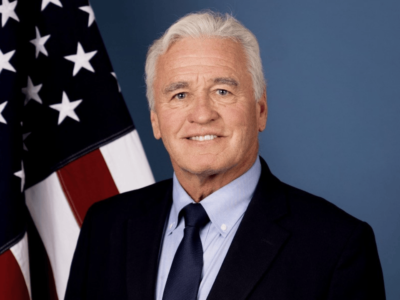
George F. Tidmarsh has resigned from his job as director of the FDA Center for Drug Evaluation and Research in the aftermath of a lawsuit by a former associate and a probe into what an HHS spokesperson described as “serious concerns about his personal conduct.”
Cancer Policy
The U.S. Preventative Services Task Force has postponed its November meeting due to the federal government shutdown.

Cancer Policy
The federal government shutdown is entering its fifth week, and funding delays are now directly affecting the healthcare system.


