


Jacquelyn Cobb is managing editor of The Cancer Letter. She also serves as a reporter and host of The Cancer Letter Podcast.
Jacquelyn joined the publication in 2022 and has won numerous journalism awards during her time at The Cancer Letter. She was named a finalist for the 31st Annual NIHCM Awards in Research and Journalism for her coverage of multi-cancer detection tests, which also won first place for Investigative Journalism in the Washington, D.C. Chapter of the Society of Professional Journalists 2025 Dateline Awards. The Cancer Letter Podcast was nominated for a Webby Award in 2026.
Jacquelyn's robust background in science forms the foundation of her work as a science journalist. Before joining The Cancer Letter, Jacquelyn worked at Dana-Farber Cancer Institute as a research data specialist in translational gastrointestinal oncology. She graduated with an MSc in precision medicine and biomedical technology as an Erasmus Mundus Scholar.
Jacquelyn graduated from Lafayette College with a bachelor’s degree in biology and English. During college, she was editor-in-chief of the undergraduate-led research journal,The Journal of Young Investigators. After college, she received a Fulbright Fellowship and spent nine months in Kolkata, India as an English teaching assistant.
Jacquelyn joined the publication in 2022 and has won numerous journalism awards during her time at The Cancer Letter. She was named a finalist for the 31st Annual NIHCM Awards in Research and Journalism for her coverage of multi-cancer detection tests, which also won first place for Investigative Journalism in the Washington, D.C. Chapter of the Society of Professional Journalists 2025 Dateline Awards. The Cancer Letter Podcast was nominated for a Webby Award in 2026.
Jacquelyn's robust background in science forms the foundation of her work as a science journalist. Before joining The Cancer Letter, Jacquelyn worked at Dana-Farber Cancer Institute as a research data specialist in translational gastrointestinal oncology. She graduated with an MSc in precision medicine and biomedical technology as an Erasmus Mundus Scholar.
Jacquelyn graduated from Lafayette College with a bachelor’s degree in biology and English. During college, she was editor-in-chief of the undergraduate-led research journal,The Journal of Young Investigators. After college, she received a Fulbright Fellowship and spent nine months in Kolkata, India as an English teaching assistant.
Latest Stories

Regulatory News
As the debate around Galleri, the multi-cancer detection test developed by GRAIL Inc., rages on, fueled most recently by the full-steam-ahead support it has received from regulatory and legislative bodies, NCI Director Anthony Letai has turned his attention to the available data.

Cancer Policy
President Donald Trump has moved to cancel $810 million in government spending that has already been appropriated by Congress.

Regulatory News
The FDA Molecular and Clinical Genetics Panel of the Medical Devices Advisory Committee voted in favor of Galleri to become the first multi-cancer detection test to receive regulatory approval.

Regulatory News
FDA has granted an accelerated approval to RP1 (vusolimogene oderparepvec) following the agency’s Cellular, Tissue, and Gene Therapies Advisory Committee’s 10:3 vote in support of the biologic in combination with nivolumab for the treatment of advanced melanoma in patients who have progressed on prior anti-PD-1 therapy.
Cancer Policy
The Senate has released its version of a 2027 continuing resolution that would fund the U.S. government through Dec. 11.

White House
In his latest set of sweeping tariffs on the pharmaceutical industry, President Donald Trump has announced a 200% levy on imported generic drugs by the year 2029.
Cancer Policy
FDA’s Oncology Center of Excellence has published three final guidance documents intended to broaden eligibility criteria for participation in clinical trials of oncology drugs.

Cancer Policy
China approved more novel oncology drugs than the United States from 2020 to 2025, according to a new analysis from Friends of Cancer Research published in Health Affairs Scholar.
Cancer Policy
HHS and the Centers for Medicare & Medicaid Services deferred more than $1 billion in federal Medicaid payments to California and Minnesota as these states submit additional documentation supporting certain Medicaid claims.
Cancer Policy
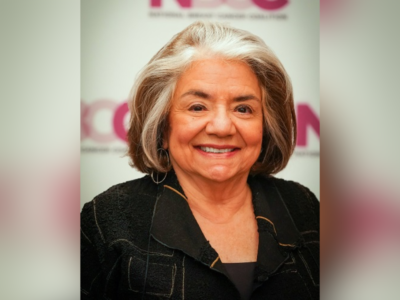
NBCC President Fran Visco authored the following open letter to the House Ways and Means Committee, criticizing the committee for failing to bring the Metastatic Breast Cancer Access to Care Act, HR 2048, before the committee for markup.
Cancer Policy
The White House Office for Regulatory Affairs and Information released a series of documents detailing each agency’s regulatory priorities for the coming year.

News Analysis
On Feb. 2, Nature Medicine published the results of a large, randomized, prospective clinical trial in the nascent and some say, fringe, field of chrono-oncology—the study of how natural biological rhythms might impact cancer outcomes.

Cancer Policy
Democratic leaders of the House Committee on Energy and Commerce are urging NIH Director Jay Bhattacharya to voice objections to a proposed rule from the Office of Management and Budget that would give the administration unprecedented political control over government-funded science.

Cancer Policy
An analysis by Stand up for Science found that the White House Office of Management and Budget’s recently proposed rule, “Regulation for Federal Financial Assistance,” if finalized, could result in termination of nearly 50% of active clinical research studies.

The White House Office of Management and Budget has published a “Regulation for Federal Financial Assistance,” a proposed rule that seeks to fundamentally redraw the ground rules for all federally funded research. On the other side are America’s scientists who aren’t just crying foul—they are readying for a political fight.

Cancer Policy
NIH has published a request for information on its proposed policy that would cap the number of research project grants, or RPGs, for which an individual can simultaneously serve as principal investigator or multi-principal investigator.

Clinical
A note for historians: On April 21, 2026, pancreatic cancer finally began to budge.

Clinical
As complementary and alternative medicines continue to gain acceptance beyond the margins of cancer treatment, results from a recent study from Yale School of Medicine published in JAMA Network Open suggests that some patients using CAM with their mainstream therapy may, in fact, be substituting alternative medicine for allopathic interventions.
Cancer Policy
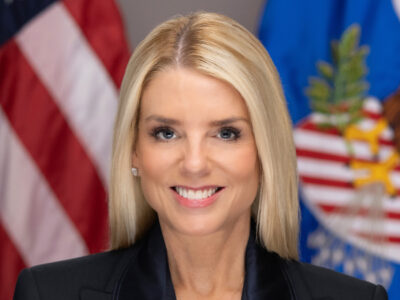
Pam Bondi, former U.S. attorney general, was diagnosed with thyroid cancer. Bondi received treatment and is in recovery, according to reports by Axios.
NCI
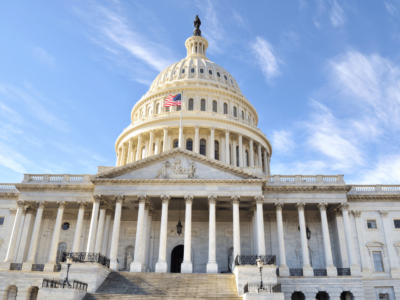
NCI has been getting what seems to be less austere treatment compared to its NIH counterparts.

Regulatory News
AstraZeneca’s application for camizestrant, a next-generation oral selective estrogen receptor degrader, or SERD, in metastatic breast cancer might have seemed set to sail smoothly through the FDA approval process.
Drugs & Targets
The FDA Oncologic Drugs Advisory Committee on April 30 considered two applications from AstraZeneca Pharmaceuticals LP.
Clinical
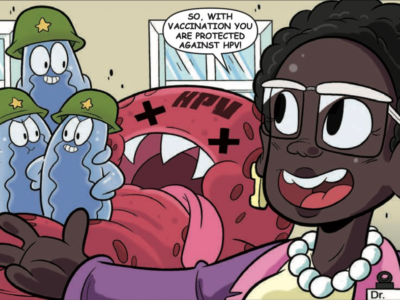
In theory, cervical cancer could be almost entirely eliminated with prevention and screening efforts, thanks to a quirk of the disease’s histology: Virtually all cases are caused by high-risk human papillomavirus, for which there is both a vaccine and an effective screening test.
Clinical
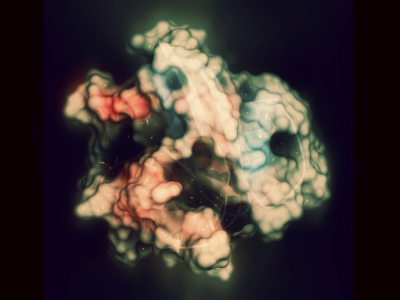
The long-awaited results from the RASolute 302 trial—a phase III clinical trial evaluating daraxonrasib, a RAS inhibitor, for the treatment of patients with previously treated, metastatic pancreatic ductal adenocarcinoma—have been read out.
Cancer Policy
FDA has added stereotactic breast biopsy needles to its Medical Device Shortages List with an estimated duration of “through Q4 2026,” which spans July 1 to Sept. 30.

Cancer Policy
The Centers for Medicare & Medicaid Services issued the 2026 CMS Interoperability Standards and Prior Authorization for Drugs proposed rule, which aims to shorten care delays and improve transparency within federal health insurance programs by establishing electronic prior authorization, or ePA, requirements for covered prescription drugs and expedite federal response deadlines to ensure patients receive life-critical medications without administrative delay.
Cancer Policy
A meeting convened by Friends of Cancer Research focused on the methodology for using external control arms in cancer clinical trials.
Cancer Policy
The Advisory Committee on Immunization Practices, or ACIP, renewed its charter April 6. In an announcement in the Federal Register, new criteria for ACIP members were rolled out with a focus on “geographical balance” and a “balance of speciality areas.”
Cancer Policy
FDA issued a stern reminder to medical product companies and researchers of the requirements to submit certain clinical trial results information to ClinicalTrials.gov.
Cancer Policy
A coalition of public health groups sent a formal letter to NIH Director and Acting CDC Director Jay Bhattacharya April 15 highlighting the need for the immediate restoration of full staffing and resources to the CDC’s Office on Smoking and Health.

Cancer Policy
President’s budget request would cap indirect costs and fully fund all NIH research projects upfront
NCI has emerged relatively unscathed in the president’s FY 2027 budget request that would slash $15.8 billion from HHS funding, cut NIH overall by about 10%, eliminate three NIH institutes and centers, and move the Institute for Environmental Health Sciences and its circa $1 billion budget out of NIH.

Editorial
We have good news: The Cancer Letter Podcast is a nominee for The Webby Awards, which are recognized as the internet’s highest honor.

NCI
NCI Director Anthony Letai appeared before the National Cancer Advisory Board Committee March 17 to maneuver through thorny topics while reiterating his message of reassurance: Stability. Stability. Stability.

Regulatory News
On Jan. 9, Pierre Fabre Pharmaceuticals received a “complete response letter” from FDA: its application for the T-cell therapy tabelecleucel (Ebvallo) was getting a hard No.

News Analysis
If you listen to GRAIL executives discuss the results of the long-awaited trial of the company’s multicancer detection test, you might be led to conclude that the company’s pivotal NHS-Galleri study had an overwhelmingly positive result.
Conversation with The Cancer Letter
Undeterred by the negative topline result of its pivotal trial of Galleri, a multicancer detection test, the test’s sponsor, GRAIL, said it’s forging ahead with its plan to get FDA approval and reimbursement from CMS and private insurers.

Conversation with The Cancer Letter
Philip E. Castle, director of the NCI Division of Cancer Prevention, said he was disappointed to hear that GRAIL’s NHS-Galleri trial did not meet its primary endpoint of reduction in late-stage cancers.
Free
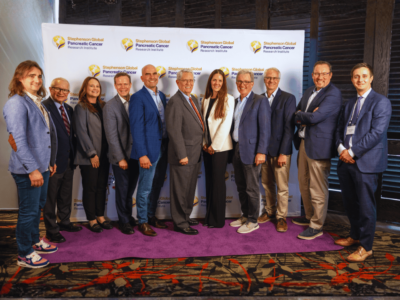
The Stephenson Global Pancreatic Cancer Research Institute, established a little over a year ago with a $150 million gift from entrepreneurs and philanthropists A. Emmet Stephenson Jr. and Tessa Stephenson Brand, has refined its goals.
Cancer Policy
For decades, FDA commissioners sought to insulate the agency’s professional staff from political interference with regulatory decisions.

NCI
When President Donald Trump on Feb. 3 signed H.R.7148, a package funding most of the federal government through FY26, many in oncology released a long-held sigh of relief.

Cancer Policy
A Super Bowl LX commercial by Hims & Hers, a controversial direct-to-consumer medication platform, featured the company’s new offering: Galleri, a multi-cancer detection test produced by GRAIL Inc.

Capitol Hill
On Feb. 3, the House of Representatives passed the Senate Amendment to H.R. 7148, the Consolidated Appropriations Act, 2026, by a vote of 217 to 214. Later that day, President Donald Trump signed the bill into law, officially ending the brief partial government shutdown that began on Jan. 31.

Cancer Policy
NIH announced Jan. 29 that “Basic Experimental Studies Involving Humans,” also called BESH, will no longer be considered clinical trials and will therefore no longer be subject to the requirements under the NIH definition of a clinical trial, including registration and reporting requirements in ClinicalTrials.gov.

Capitol Hill
An argument can be made that anyone who has attempted to follow the path of spending bills on Capitol Hill over the past ten days should be evaluated for whiplash.
Capitol Hill
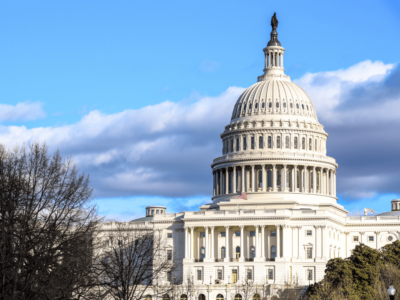
The U.S. House of Representatives Jan. 22 passed a three-bill minibus package that is expected to be the grand finale of the drama of the fiscal year 2026 appropriations process. The package, which funds the HHS as well as the departments of Defense, Transportation, Housing and Urban Development, Labor, and Education, gives NIH and NCI modest raises over FY25, and nullifies several aggressive cuts the White House had proposed for NIH.
Capitol Hill
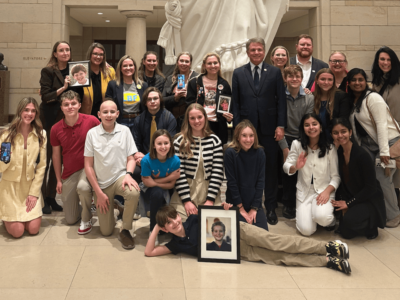
Sometime next week, the Senate is expected to vote on a legislative package that would determine the fiscal year 2026 spending levels for much of the federal government.

News Analysis
The American Cancer Society’s 2026 annual statistics report trumpets a symbolic milestone for oncology—for the first time, the five-year relative survival rate for all cancers combined has reached 70% for people diagnosed between 2015 and 2021 in the U.S.

Cancer Policy
FDA has released additional information on its “flexible approach” to regulating chemistry, manufacturing and control, or CMC, requirements for cell and gene therapies.

Clinical
A phase III clinical trial will soon begin testing the evidence collected thus far that points to a stunning prospect: the COVID-19 vaccine—a widely accessible mRNA vaccine already on the market—could make checkpoint inhibitors work better for lung cancer and melanoma patients.
Cancer Policy
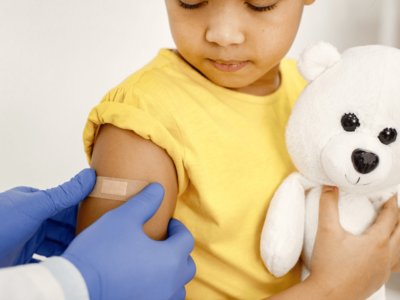
On Jan. 5, the Centers for Disease Control and Prevention released a scaled-back childhood vaccine schedule that slashed the number of diseases that the institution recommends all children get immunized against—from 17 to 11.

New Year’s Eve approaches, and with it, a chance to turn a new leaf with renewed energy, to reflect on—or perhaps, in the case of 2025, bemoan—the events of the year, and, most importantly, to celebrate.

Cancer Policy
Angelo de Claro was named acting director of the FDA Oncology Center of Excellence, following Richard Pazdur’s departure from that position—and the agency (The Cancer Letter, Dec. 5, 2025).

Cancer Policy
Dana-Farber Cancer Institute has agreed to pay $15 million to the U.S. government in a settlement to resolve allegations that, between 2014 and 2024, Dana-Farber violated the False Claims Act by “using fraudulent images in grant applications and research articles to induce the NIH to pay millions of dollars to support research at Dana-Farber.”
Cancer Policy
HHS has cut millions of dollars in grants to the American Academy of Pediatrics, according to documents obtained by The Washington Post.

Conversation with The Cancer Letter
John C. Byrd grew up in Augusta, a town of 2,000 or so in northeastern Arkansas.

Cancer Policy
Harvey A. Risch, professor emeritus and senior research scientist at Yale School of Public Health, said he was named chair of the President’s Cancer Panel. Risch will succeed Elizabeth M. Jaffee, who was appointed by President Joe Biden in January 2023.

Cancer Policy
In a Dec. 5 memo, President Donald Trump directed the HHS secretary and the CDC director to “align the U.S. core childhood vaccine recommendations with best practices from peer, developed countries.”
Drugs & Targets
FDA published a perspective article in JAMA that describes the agency’s current regulatory thinking for the development of CAR T-cell therapies.

NCI
Anthony G. Letai’s initiation as the 18th director of the National Cancer Institute wasn’t exactly smooth.
Cancer Policy
Vinay Prasad, FDA’s chief medical and scientific officer and director of the agency’s Center for Biologics Evaluation and Research, has instructed his staff to check with him before continuing to work on ongoing submissions to journals or beginning new contract-funded projects to “ensure that we are not engaging in sunk cost fallacy, not publishing obviously erroneous work, and not being distracted from our core mission.”
Cancer Policy
FDA issued a draft guidance on Dec. 2, outlining specific product types for which the FDA believes six-month non-human primate toxicity testing can be eliminated or reduced.
Cancer Policy
The “One Big Beautiful Bill Act” includes new restrictions on federal student loan borrowing that the Trump administration says are aimed at driving down the cost of graduate education. However, critics of the change say that the reduced access to low-interest federal loans will further reduce the accessibility of graduate and professional degrees.
Cancer Policy
Approximately one in 30 NIH-funded clinical trials—and more than 74,000 trial participants—were affected by grant funding disruptions caused by the Trump administration, according to an analysis in JAMA Internal Medicine.

Cancer Policy
Natalie Phelps, a 43-year-old mother of two, died Nov. 9 from colorectal cancer.
Cancer Policy
FDA Commissioner Marty Makary and Vinay Prasad, FDA’s chief medical and scientific officer and director of the agency’s Center for Biologics Evaluation and Research, jointly published a letter in The New England Journal of Medicine spelling out the rationale for FDA’s new “plausible mechanism pathway,” aimed at getting bespoke therapies to market without the need for a randomized controlled trial.
Cancer Policy
On the evening of Nov. 12, President Donald Trump signed a continuing resolution that officially ended the 43-day-long U.S. government shutdown that began on Oct. 1.
Cancer Policy
Cornell University has come to an agreement with the Trump administration that will unfreeze the university’s more than $250 million in interrupted federal research funding and “protect Cornell’s students from violations of federal civil rights laws, including from discrimination based on race, sex, or national origin, and promote America’s hardworking farming and rural communities” following accusations of antisemitism and discrimination in admissions.
Cancer Policy
CMS announced a new drug payment model called the GENErating cost Reductions for U.S. Medicaid (GENEROUS) Model that the agency plans to pilot next year.

The Directors
At a time when federal immigration policies are becoming stricter, Kunle Odunsi, director of University of Chicago Medicine Comprehensive Cancer Center, reflected on the fact that cancer research is a highly international community.
Cancer Policy
FDA announced six additional awardees under the Commissioner’s National Priority Voucher pilot program, which aims to accelerate review time for applications that are deemed to be advancing U.S. “national priorities” (The Cancer Letter, Oct. 24, June 20, 2025).
Cancer Policy
The White House Nov. 6 announced a deal with drugmakers Eli Lilly and Co. and Novo Nordisk to expand coverage and reduce prices for their obesity treatments, Zepbound and Wegovy.

Clinical
Following last month’s dismissal of the securities class action complaint against Illumina Inc. and its former spinoff company, GRAIL, the plaintiffs have refiled an amended complaint, keeping the action alive.

Regulatory News
New research led by Friends of Cancer Research demonstrates that decreases in circulating tumor DNA after initiation of treatment are associated with improved overall survival in patients with advanced non-small cell lung cancer treated with immunotherapy or chemotherapy.

Clinical
Recent results from the PATHFINDER 2 study showed that the addition of GRAIL’s multi-cancer detection test to standard screening led to a seven-fold increase in cancers detected within a year, the company said.

Regulatory News
Bowing to the growing animal rights movement, FDA and NIH have made policy changes to discourage animal testing, instead favoring alternative research models.

Cancer Policy
As of Oct. 1, Medicare no longer covers telehealth visits.

In 1988, Frank McCormick learned with the rest of the field that more than 90% of patients with pancreatic cancer have a mutation in the Kirsten rat sarcoma viral gene.

Cancer Policy
NIH’s new “unified grant funding policy,” is “not political,” NIH Director Jay Bhattacharya said during his remarks at Research!America’s annual National Health Research Forum Sept. 17.
Drugs & Targets
FDA approved Keytruda Qlex (pembrolizumab and berahyaluronidase alfa-pmph) Sept. 19 for subcutaneous injection for adult and pediatric (12 years and older) solid tumor indications approved for the intravenous formulation of pembrolizumab.
Cancer Policy
FDA has begun to crack down on direct-to-consumer prescription drug advertising.

The Directors
In the face of the unknown, two cancer center leaders discuss planning for the future, recovering from setbacks, and holding on to what they still have.
Cancer Policy
FDA introduced the Rare Disease Evidence Principles to provide greater speed and predictability in the review of therapies intended to treat rare diseases with very small patient populations with significant unmet medical need and that are driven by a known genetic defect.

On Sept. 4, Jay Bhattacharya did something NIH directors rarely do: he appeared before the National Cancer Advisory Board, speaking directly with the NCI advisory board about hot-button policy changes taking place under his leadership at NIH.
Capitol Hill
The House is on track to join the Senate in rejecting the Trump administration’s budget proposal that would cut NIH by $18 billion.

NCI
At the Sept. 4 meeting of the National Cancer Advisory Board, NCI Principal Deputy Director Douglas R. Lowy provided an overview of how NCI is weathering the maelstrom of executive orders, policy changes, and funding uncertainties that has come down on federal agencies and research institutes since Donald Trump’s inauguration in January.
Free
The Government Accountability Office, an independent, non-partisan congressional watchdog agency, found that NIH violated the Impoundment Control Act of 1974 when it cancelled nearly 2,000 research grants in an effort to comply with several of President Donald Trump’s executive orders, including “Ending Radical And Wasteful Government DEI Programs And Preferencing” (The Cancer Letter, Jan 24, 2025).

Free
Brown University has reached an agreement with the Trump administration to restore the university’s federal funding for medical and health sciences research.
Free
President Donald Trump signed an executive order mandating that his appointees will review all funding announcements and grant awards to “verify that each grant dollar benefits Americans instead of lining grantees’ pocketbooks or furthering causes that damage America.”

Cancer Policy
A study led by researchers at the University of Pennsylvania has found that binary (yes/no) voting at the FDA Oncologic Drugs Advisory Committee can accurately capture the committee members’ perspectives in most cases.

Conversation with The Cancer Letter
The first large cancer screening/early detection initiative to be launched in 2025—the NCI-funded Vanguard study of multi-cancer detection tests—has started accruing patients through nine sites across the U.S.
Cancer Policy
NCI announced that the paylines for R01 grants for established and new investigators are expected to drop to the 4th percentile—a historic low for the institute.

Cancer Policy
It has been more than three months since the Trump Administration froze Columbia University’s NIH funds in an attempt to crack down on “antisemitism.”
Drugs & Targets
FDA July 23 extended the review period for the Biologics License Application for Blenrep (belantamab mafodotin-blmf) combinations for the treatment of patients with relapsed or refractory multiple myeloma who have received at least one prior line of therapy.

Regulatory News
The FDA Oncologic Drugs Advisory Committee July 17 recommended against approval of a Blenrep-based regimen for the treatment of relapsed or refractory multiple myeloma, citing unacceptable rates of ocular toxicity and overall poor tolerability of the drug.

Cancer Policy
The U.S. Supreme Court has temporarily lifted a lower court’s freeze on the Trump administration’s reductions in force, or RIFs, freeing the government to continue their large-scale restructuring of the federal government.
Cancer Policy
Over 20 scientists whose grants have been canceled by the Trump administration presented posters on their now-terminated work at “The Things We’ll Never Know: A Science Fair of Canceled Grants.”
Cancer Policy
In a move advertised as being in line with FDA’s goal of “radical transparency,” the agency July 10 announced the publication of more than 200 complete response letters.
Cancer Policy
The United States House of Representatives July 3 voted to pass H.R.1, also known as the “One Big Beautiful Bill Act.” President Trump signed the bill into law July 4 (The Cancer Letter, July 3, 2025).

Clinical
Don’t try to convince Col. Susan Fondy that lymphedema doesn’t merit interest from medical researchers.
Cancer Policy
Sen. Bill Cassidy (R-LA), a key Senate health leader, June 23 called for the meeting of the Advisory Committee on Immunization Practices to be delayed, citing concerns over the committee members’ lack of directly relevant experience and their potential bias against some vaccines.


