

Request a sponsored account
If your institution has a site license, you may be eligible for a sponsored account.
Enter your organization-affiliated email address below to request or renew your sponsored account.
Enter your organization-affiliated email address below to request or renew your sponsored account.
Latest Stories

Conversation with The Cancer Letter
A year ago, when he was sworn in as director of the National Cancer Institute, Anthony G. Letai set a goal: Reassure cancer researchers that the institute will keep a steady course aimed at finding treatments for cancer.

White House
Michael R. Caputo, a cancer survivor and a Republican political operative with a wide-ranging resume, was named to the President’s Cancer Panel, a board formed under the National Cancer Act to monitor the National Cancer Program and report to the president about “barriers to progress in reducing the burden of cancer.”

Regulatory News
Nearly two years after FDA issued a final rule requiring radiologists to tell women whether their breasts are “dense” or “not dense” after a mammogram, the notification has become nearly universal.

Regulatory News
For the past four decades, psilocybin research has focused on one area: the treatment of mental health disorders, including depression, anxiety, existential distress associated with serious medical illnesses, post-traumatic stress disorder, and addiction.
Sponsored
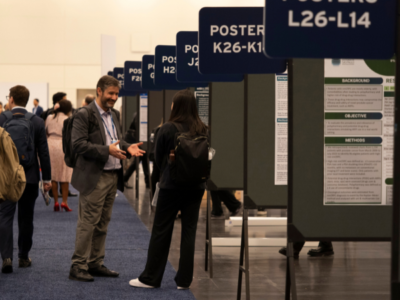
For over two decades, the ASCO Genitourinary Cancers Symposiumhas stood as the premier global event that has helped advance cancer science and transform care. The 2027 Symposium will continue this legacy from Feb. 11–13 in San Francisco by bringing together the largest international audience in GU oncology to help define tomorrow’s standards of care.

Cancer Policy
President Donald Trump has moved to cancel $810 million in government spending that has already been appropriated by Congress.

Cancer Policy
Judge Haywood Gilliam, of the U.S. District Court for the Northern District of California, blocked the Trump administration’s second attempt to require a $100,000 fee for H1-B visas, which allows foreign nationals in “specialty occupations” to live and work in the U.S. The fee was previously $5,000 to $10,000.

Cancer Policy
NIH has introduced Linked Discoveries, an experimental tool designed to help scientists more easily see how an individual research finding relates to the larger body of biomedical evidence.

In Brief
James B. Yu was named associate director for clinical research at Dartmouth Cancer Center.

In Brief
The American Association for Cancer Research will present the 2027 AACR Distinguished Public Service Award to Sanya A. Springfield at the AACR Annual Meeting 2027, to be held April 2-7 at the Orange County Convention Center in Orlando.

In Brief
Eric Cantor was named the next president and chief executive officer of PhRMA, effective Nov. 9.

In Brief
ARPA-H launched the Simulation-augmented, Real-time Platform Adaptive Seamless Trials (SURPASS) program, together with three complementary projects, aimed at removing barriers that slow clinical development and help promising treatments reach patients sooner.
In Brief
The governing board of the Cancer Prevention and Research Institute of Texas approved more than $35 million in cancer research and innovation grants for institutions and companies across Texas.
In Brief
The Maryland Stem Cell Research Commission announced over $4.8 million in awards through the Maryland Stem Cell Research Fund during the first funding cycle of fiscal year 2027, supporting stem cell and regenerative medicine research across Maryland.
In Brief
The University of Chicago Medicine completed the construction phase of the AbbVie Foundation Cancer Pavilion on Chicago’s South Side.

Clinical Roundup
Decipher Prostate Genomic Classifier can predict which patients are more likely to benefit from adding short-term ADT, or androgen deprivation therapy, to dose-escalated radiation, providing both Level 1B1 prognostic and predictive evidence, according to a retrospective ancillary analysis of the randomized phase III NRG/RTOG 0815 trial.
Clinical Roundup
Researchers from City of Hope have developed a “plug-and-play” technology that adds engineered molecules to chimeric antigen receptor T cells after treatment, allowing scientists to better control the cells and redirect them to attack different types of cancer. The preclinical study offers a more flexible way to help CAR T cells keep pace with mutating tumors.

Clinical Roundup
Cancer cells selectively chip away gene-rich sections of the Y chromosome, triggering ripples that regulate tumor growth, according to a study conducted by researchers at the University of Arizona Cancer Center and Cedars-Sinai Medical Center.
Clinical Roundup
Researchers at the Icahn School of Medicine at Mount Sinai have identified biological mechanisms that may contribute to CAR T-cell-associated enterocolitis, a serious inflammatory condition of the intestine that can occur after a type of CAR T cell therapy for multiple myeloma.
Clinical Roundup
Eating less sugar could protect the microbiome during antibiotic treatment, according to a study led by researchers at City of Hope. The study followed patients with blood cancer who were going through an intensive treatment called allogeneic hematopoietic cell transplant. This population is at particularly high risk for severe gut microbiome disruption and associated side effects.
Clinical Roundup
About 25% of lung adenocarcinomas have mutations of the gene KRAS, which drives uncontrolled cell growth. In recent years, FDA has approved two KRAS inhibitors to treat patients with specific KRAS mutations. While these drugs can work well initially, tumors almost always develop resistance to them.
Clinical Roundup
Immune cells can reach head and neck tumors, but once there, many stop functioning. This helps explain why immunotherapy with immune checkpoint inhibitors—which have transformed treatment for some cancers—benefit only 17% to 23% of patients with head and neck squamous cell carcinoma.
Clinical Roundup
Gene therapy for blood disorders such as sickle cell disease and beta thalassemia switch on fetal hemoglobin and replace faulty adult hemoglobin by regulating levels of BCL11A, which was identified by Dana-Farber research two decades ago.
Drugs & Targets
FDA approved Degevma (denosumab-adet) as a biosimilar to Xgeva (denosumab).
Drugs & Targets
FDA approved Ponlimsi (denosumab-adet) as a biosimilar to Prolia.
Drugs & Targets
FDA accepted the company’s supplemental New Drug Application and granted Priority Review designation for Lynkuet (elinzanetant) under investigation for the treatment of moderate to severe vasomotor symptoms (also known as hot flashes) in women receiving endocrine therapy for treatment of breast cancer.

NCI Trials
The National Cancer Institute approved the following clinical research studies last month.

Podcast
In this episode of The Cancer Letter Podcast, Paul Goldberg, editor and publisher of The Cancer Letter, Jacquelyn Cobb, managing editor, discuss the Sept. 23 meeting of the FDA Molecular and Clinical Genetics Panel of the Medical Devices Advisory Committee, during which the panel voted in favor of Galleri, the multi-cancer detection test from GRAIL Inc., to become the first multi-cancer detection test to receive regulatory approval.

The Directors
What should a cancer center look like in an era of AI, genomics, complex patient populations, rising costs, and declining public trust in science?

Regulatory News
The FDA Molecular and Clinical Genetics Panel of the Medical Devices Advisory Committee voted in favor of Galleri to become the first multi-cancer detection test to receive regulatory approval.

News Analysis
The White House last week considered, but ultimately abandoned, a plan to create a panel that would review NIH grants in an effort to weed out projects the administration regards as “woke.”

Perspective
My recent column about Merck’s television commercial for perioperative Keytruda left me with a question I could not shake.
Sponsored
Breast cancer treatment has changed dramatically over the past decade. One of the most important advances has been our growing ability to understand the biology of each patient’s cancer and use those insights to guide treatment decisions more precisely. That shift is helping make personalized cancer care a reality.
Cancer Policy
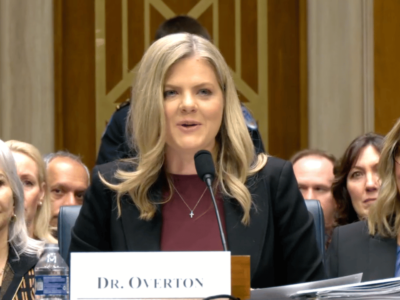
Heidi Overton, President Trump’s nominee for FDA Commissioner, defended the agency’s recent policy decisions reversing its hardball stance on flavored nicotine products, as she appeared in front of the Senate Committee on Health, Education, Labor, and Pensions on Sept 24.

Cancer Policy
The Trump administration has announced the removal of 750,000 people from coverage on the Affordable Care Act marketplace. Vice President JD Vance asserted that these individuals are suspected of “fraudulently enrolling in the program.”
Cancer Policy
FDA has issued a direct final rule that changes the language in its regulations so that “animal testing” is no longer described as the default or defining form of “nonclinical” safety testing.

Cancer Policy
NCI Director Anthony Letai announced the development of TrialMatch, an AI tool that helps oncologists identify clinical trials for their patients.

Cancer Policy
EPA has stopped publishing cancer risk estimates as part of its annual Air Toxics Screening Assessment, according to a team of data scientists and former federal employees at the Federation of American Scientists. The group has tracked hundreds of federal databases that have disappeared—in part or in full—since the start of the second Trump administration.

In Brief
The University of New Mexico Comprehensive Cancer Center has received redesignation as an NCI Comprehensive Cancer Center.

In Brief
Rutika Mehta has joined NYU Langone Health’s Perlmutter Cancer Center as director of upper GI medical oncology.

In Brief
Cancer Nation has awarded the following honorees with the 2026 Ellen L. Stovall Award

In Brief
The Colorectal Cancer Alliance has announced the appointment of four members to its board of directors.
In Brief
Ronald McDonald House New York announced the completion of its renovation of the Community Floor, a reimagined space designed to enhance the everyday experience of children and families staying at the House while their children receive treatment for serious illnesses. The project, which has transformed dining, kitchen, play, and program areas on the second floor of the House at 405 East 73rd Street, creates spaces where families can share meals, children can play and learn, and caregivers can find opportunities for connection, respite, and support.
Funding Opportunities
Cancer Grand Challenges has launched two new targeted challenges focused on gastroesophageal cancer, with awards of up to $34 million available through support from the Torrey Coast Foundation and Cancer Research UK.
Clinical Roundup
Tagrisso (osimertinib) demonstrated a sustained, clinically meaningful overall survival benefit at eight years compared to placebo in the adjuvant treatment of patients with early-stage (1B, 2, and 3A) epidermal growth factor receptor-mutated non-small cell lung cancer after complete tumor resection with curative intent, according to the updated exploratory results from the ADAURA phase III trial.
Clinical Roundup
PDS0101 plus pembrolizumab showed antitumor activity in ICI-naive HPV16-positive R/M HNSCC, according to the results of a phase II trial.
Clinical Roundup
A blood test may help doctors identify which patients with Ewing sarcoma are at greater risk of relapse, according to a study led by investigators at Dana-Farber/Boston Children’s Cancer and Blood Disorders Center and the Children’s Oncology Group. The findings lay the groundwork for more personalized treatment strategies in this rare cancer.
Clinical Roundup
The Community Oncology Alliance announced results from a national survey examining how independent community oncology practices deliver bispecific therapies on Sept. 22.
Drugs & Targets
FDA granted approval for Lyrfigtu (lirafugratinib) as a treatment option for patients with cholangiocarcinoma with FGFR2 fusion or other rearrangement.
Drugs & Targets
FDA has approved belzutifan (Welireg) in combination with lenvatinib (Lenvima) for adults with advanced renal cell carcinoma with a clear cell component following a programmed death receptor-1 or programmed death-ligand 1 inhibitor.
Drugs & Targets
FDA has granted Priority Review for IMFINZI (durvalumab) in combination with enfortumab vedotin for the treatment of patients with muscle-invasive bladder cancer who are ineligible for or have declined cisplatin-based chemotherapy.

Podcast
In this episode of The Cancer Letter Podcast, Fran Visco, president of the National Breast Cancer Coalition, and Jacquelyn Cobb, managing editor of The Cancer Letter, discuss the Metastatic Breast Cancer Act, bipartisan legislation that would eliminate the waiting periods for Social Security Disability Insurance and Medicare for eligible people with metastatic breast cancer.

NCI
As of the end of August, NCI has selected 1,891 competing awards for funding this fiscal year, all of which will be funded by the year’s end, NCI Director Anthony G. Letai said to the National Cancer Advisory Board.

Health Equity
The Centers for Medicare & Medicaid Services has published a guidance that spells out a process for states to use to exempt Medicaid recipients from the controversial work requirements established last year under President Trump’s “One Big Beautiful Bill Act.”

Perspective
Scientific advances have produced therapies that allow some people with metastatic breast cancer to live longer and better. We want that progress to continue, and we will continue to fight for the right research necessary to achieve it.

Sponsored
Congress settled the FY26 question in February, with NCI receiving $7.352 billion, an increase of $128 million over the prior year. After a year in which cancer center directors spent an extraordinary share of their leadership attention defending the research enterprise, that outcome deserves to be called what it was: a win.

Obituary
Harold P. Freeman, a surgeon who started his career in Harlem, where, in addition to performing surgeries, he pioneered the system of patient navigation, and who studied health disparities and served as president of the American Cancer Society and chair of the President’s Cancer Panel, died on Aug. 11. He was 93.

In the Archives
Harold Freeman, who was widely regarded as the “father of patient navigation,” was also a passionate storyteller with a special talent for coining a phrase.
Cancer Policy
HHS Secretary Robert F. Kennedy, Jr., through the Agency for Healthcare Research and Quality, has announced the addition of eight new members to the U.S. Preventive Services Task Force.
Cancer Policy
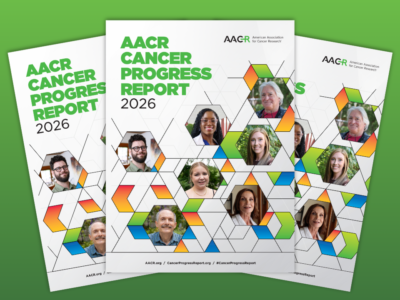
The American Association for Cancer Research has released the AACR Cancer Progress Report 2026.

Cancer Policy
Every cancer center surveyed by by the National Comprehensive Cancer Network was experiencing a shortage of at least one anti-cancer agent.
Cancer Policy
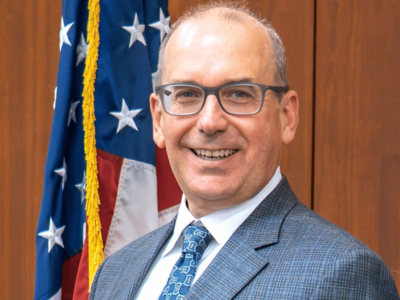
This summer, NCI launched a weekly social media series hosted by Director Anthony Letai.
Cancer Policy
FDA announced the final design of the Expedited Investigational New Drug Pilot.

In Brief
Following a national search, NCI has selected Senthil K. Muthuswamy as the next director of the Center for Cancer Research. He assumed the role July 26.

In Brief
D. Neil Hayes, has been appointed director of the Institute for Precision Cancer Medicine, effective Sept. 14. Hayes will also serve as deputy director of the OSUCCC.

In Brief
Edward Kaftan will join Dartmouth Cancer Center as the associate director for administration and scientific affairs.
In Brief
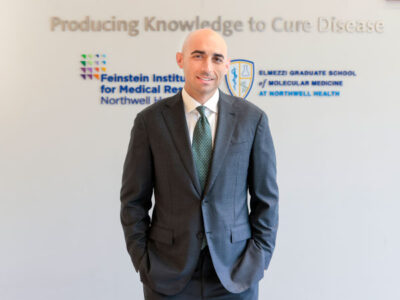
Northwell Health and the Northwell Cancer Institute have appointed Kalil Abdullah as system director of Central Nervous System Cancer.

In Brief
Kimyatta Washington was appointed chief operating officer of UChicago Medicine’s of the AbbVie Foundation Cancer Pavilion.
In Brief
UNC Lineberger Comprehensive Cancer Center has received $40 million from the OpenAI Foundation, the non-profit parent organization that governs the for-profit company OpenAI Group PBC, to generate data that could make personalized cancer vaccines more effective.
In Brief
UCLA researchers have received a grant worth up to $7 million over five years from the National Institute of Allergy and Infectious Diseases to launch a first-in-human clinical trial evaluating whether drugs already used to treat autoimmune diseases can prevent or reverse immune checkpoint inhibitor-induced type 1 diabetes, a rare but often permanent complication of cancer immunotherapy.
In Brief
Researchers at VCU Massey Comprehensive Cancer Center were recently awarded a $2.5 million R01 grant from NCI. The five-year grant will allow Massey to evaluate the efficacy of TROP2 targeted antibody-drug conjugates to further enhance therapeutic benefits in both breast and pancreatic cancer care.
In Brief
The V Foundation for Cancer Research announced $16.2 million in funding awarded to 18 exceptional scientists through its Dick Vitale Pediatric Cancer Research Fund.

In Brief
Jason Zhang, an assistant professor of bioengineering in the UCLA Samueli School of Engineering and a member of the UCLA Health Jonsson Comprehensive Cancer Center, has received an $800,000 grant from the V Foundation for Cancer Research to investigate how glioblastoma cells become resistant to targeted treatments.

In Brief
In the documentary short, “1001 CUTS,” Sarah Temkin, a gynecologic oncologist, examines the enduring misogyny of medicine, particularly in the operating room.
In Brief
Texas Oncology is collaborating with the American Cancer Society to improve access to cancer screening and early detection in Texas through a new, exclusive statewide collaboration. The initiative focuses on breaking down barriers to screening, raising awareness about prevention, and helping more people catch cancer early.

In Brief
Curebound, a San Diego-based cancer research accelerator, announced the addition of Paula Schneider and Richard Whittington to its board of directors.
Clinical Roundup
The American Society of Clinical Oncology has expressed support for the advancement of functional precision medicine.
Clinical Roundup
A rare inherited mutation in the Epidermal Growth Factor Receptor gene is associated with a 25-fold increased risk of lung cancer, according to a study by investigators at Dana-Farber Cancer Institute and 23andMe Research Institute.
Clinical Roundup
Biologic drugs play an important role in treating cancers such as breast cancer and lymphoma, but their high costs can add to the financial burden of cancer care. Now, lower-cost versions known as biosimilars are gaining ground, and a study led by researchers at the UCLA Health Jonsson Comprehensive Cancer Center suggests their growing use is associated with lower costs for both insurers and patients.
Clinical Roundup
Artificial intelligence may help radiologists identify subtle signs of breast cancers that are missed during routine mammograms—and some AI systems may even identify patterns associated with an increased risk of cancer before it becomes visible on a mammogram—but there are still many significant limitations, according to a review led by investigators at the UCLA Health Jonsson Comprehensive Cancer Center.
Clinical Roundup
Virtually all high-grade, aggressive gliomas in adults accumulate massive amounts of a metabolite called guanidinoacetate that overstimulates nearby neurons and promotes tumor growth, according to new research from scientists at Children’s Medical Center Research Institute at UT Southwestern published on Sept. 15 in Cell.
Clinical Roundup
OST-HER2-treated patients showed statistically significant benefit in an interim three-year overall survival data analysis when compared with a combined published historical control arm being used for regulatory interactions. The analysis is from the company’s phase IIb trial for the prevention or delay of recurrence in patients with fully resected, pulmonary metastatic osteosarcoma (the “Metastatic Osteosarcoma Program”).
Clinical Roundup
Researchers at City of Hopeled the development of a new, investigational blood test that could detect pancreatic cancer at its earliest stages, when the disease is more treatable and potentially curable.
Clinical Roundup
Pancreatic tumors can resist immunotherapy by recruiting nearby immune cells to help protect them, according to researchers at The University of Texas at Austin. The findings, published in Nature Communications, also point to a potential new strategy for overcoming resistance and improving cellular therapies.
Clinical Roundup
Hansoh Pharmaceutical Group announced positive overall survival data from ARTEMIS-008, its pivotal phase III trial in China, evaluating the B7-H3-targeted antibody-drug conjugate risvutatug rezetecan (Ris-Rez) versus topotecan in patients with relapsed small cell lung cancer whose disease progressed following platinum-based first-line therapy.
Clinical Roundup
Patients with with advanced non-small cell lung cancer with epidermal growth factor receptor exon 20 insertion mutations treated with intravenous Rybrevant (amivantamab-vmjw) plus carboplatin-pemetrexed chemotherapy achieved a median OS of nearly three years (34.3 months), compared with 27.9 months for chemotherapy alone, according to the final overall survival analysis of the phase III PAPILLON study.
Clinical Roundup
Altis Labs Inc., the AI endpoint company accelerating clinical trials, on Sept. 17 announced findings from an independent post-hoc analysis evaluating its AI-powered imaging endpoint, IPRO, in the MARIPOSA phase III trial.
Clinical Roundup
Bristol Myers Squibb on Sept. 8 announced positive phase II results from the registrational QUINTESSENTIAL trial (NCT06297226) of arlocabtagene autoleucel (arlo-cel; BMS-986393) in adult patients with quadruple-class exposed relapsed and refractory multiple myeloma (RRMM).
Clinical Roundup
Why do signaling proteins called interferons, which recruit the immune system to attack cancer cells, start helping the tumor grow rather than shrink when they linger too long?
Clinical Roundup
An existing anti-seizure drug slows the growth of a devastating group of childhood cancers, according to the results of a Stanford Medicine-led study.
Clinical Roundup
A personalized approach to obesity treatment may help breast cancer survivors improve their long-term health by identifying early which patients need more than behavioral lifestyle intervention alone, according to a Johns Hopkins Kimmel Cancer Center-led clinical trial.
Drugs & Targets
FDA approved imlunestrant (Inluriyo) in combination with abemaciclib (Verzenio), for adults with estrogen receptor (ER)-positive, human epidermal growth factor receptor 2 (HER2)-negative, estrogen receptor 1 (ESR1)-mutated advanced or metastatic breast cancer, as detected by an FDA-authorized test, with disease progression following at least one line of endocrine therapy.
Drugs & Targets
FDA has granted accelerated approval to sevabertinib (Hyrnuo), a kinase inhibitor, for adult patients with locally advanced or metastatic non-squamous non-small cell lung cancer whose tumors have HER2 tyrosine kinase domain activating mutations, as detected by an FDA-authorized test.

Podcast
This week’s oncology headlines run the gamut—from a discussion on the long-term consequences of 9/11 on lung cancer incidence, to the promise—and limits—of cutting edge mRNA science, to major institutional leadership changes, and even the intersection of cancer and war.

Free
Twenty-five years ago, the attack on the World Trade Center engulfed Ground Zero in a shroud of smoke, leaving Lower Manhattan covered in toxic dust for months.

Clinical
For years, personalized cancer vaccines have promised to make a radical idea possible—a treatment designed not just for a particular type of cancer, but for the distinctive mutations in a patient’s tumor.

Change swept through executive offices at cancer centers in recent weeks, shifting top leadership at the University of Texas MD Anderson Cancer Center, Duke Cancer Institute, and the University of Florida.

Russian general who was accused by Ukraine’s security services of carrying out a bombing of a pediatric cancer hospital in Kyiv two years ago was shot by an unknown assassin deep inside Russia, becoming the latest in a series of Russia’s commanders to be killed or wounded in retribution for war crimes.

Sponsored
As Kentucky’s only National Cancer Institute-designated Comprehensive Cancer Center, the University of Kentucky Markey Cancer Center has a responsibility that extends far beyond its home in central Kentucky.

Cancer Policy
As part of a sweep of leadership changes at FDA, Heidi Overton, deputy director of the White House Domestic Policy Council, has been nominated to the role of FDA commissioner.


