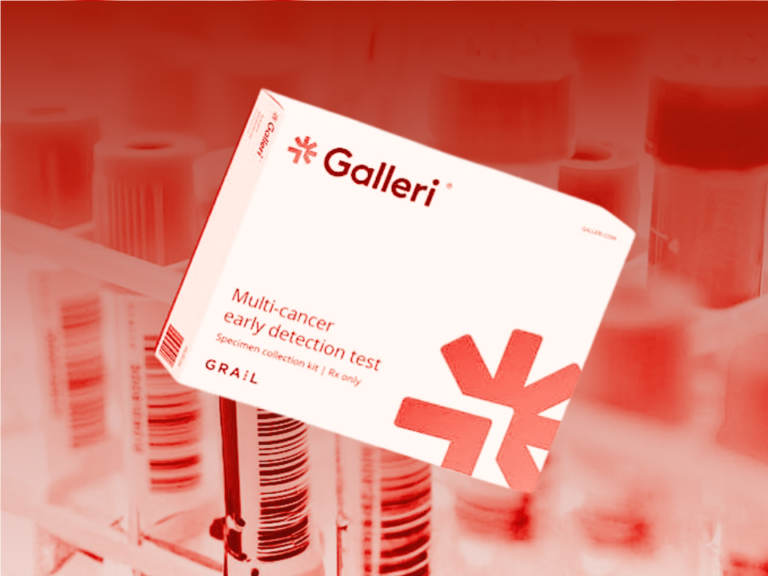
GRAIL’s Megan Hall: “I think we can be confident that there is clinical benefit to implementing this technology. And I think that’s really hard to argue with.”

Mainstream epidemiologists beg to differ

Share on facebook
Share on twitter
Share on linkedin
Share on email
Share on print

Undeterred by the negative topline result of its pivotal trial of Galleri, a multicancer detection test, the test’s sponsor, GRAIL, said it’s forging ahead with its plan to get FDA approval and reimbursement from CMS and private insurers.

To access this subscriber-only content please log in or subscribe.

If your institution has a site license, log in with IP-login or register for a sponsored account.*
*Not all site licenses are enrolled in sponsored accounts.

Login Subscribe
Jacquelyn Cobb
Managing Editor
Table of Contents

YOU MAY BE INTERESTED IN

In this episode of The Cancer Letter Podcast, Paul Goldberg, editor and publisher of The Cancer Letter, Jacquelyn Cobb, managing editor, discuss the Sept. 23 meeting of the FDA Molecular and Clinical Genetics Panel of the Medical Devices Advisory Committee, during which the panel voted in favor of Galleri, the multi-cancer detection test from GRAIL Inc., to become the first multi-cancer detection test to receive regulatory approval.
The NHS-Galleri trial presented at ASCO was the largest, prospective, randomized trial of a multicancer early detection test (MCED) to date. The study enrolled approximately 143,000 asymptomatic adults (ages 50-77) and was the first of its kind to assess clinical utility of an MCED test for cancer screening. 
Jacquelyn Cobb
Managing Editor

Never miss an issue!

Get alerts for our award-winning coverage in your inbox.

Login