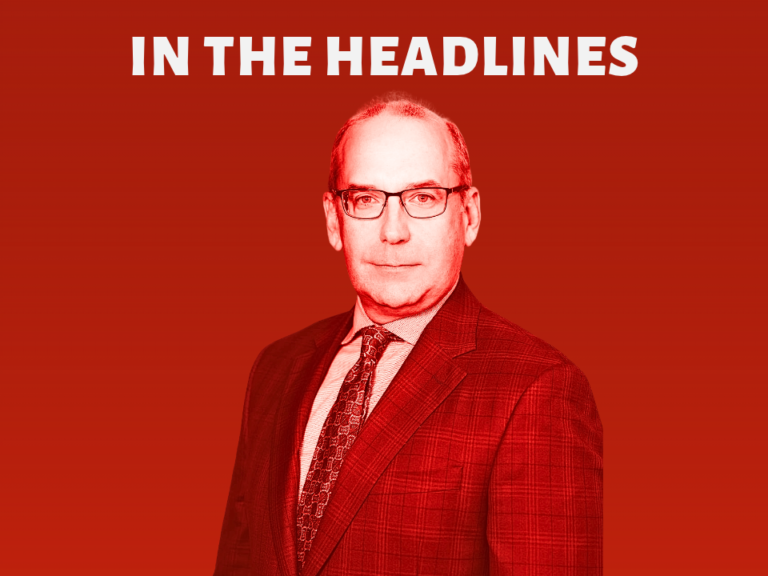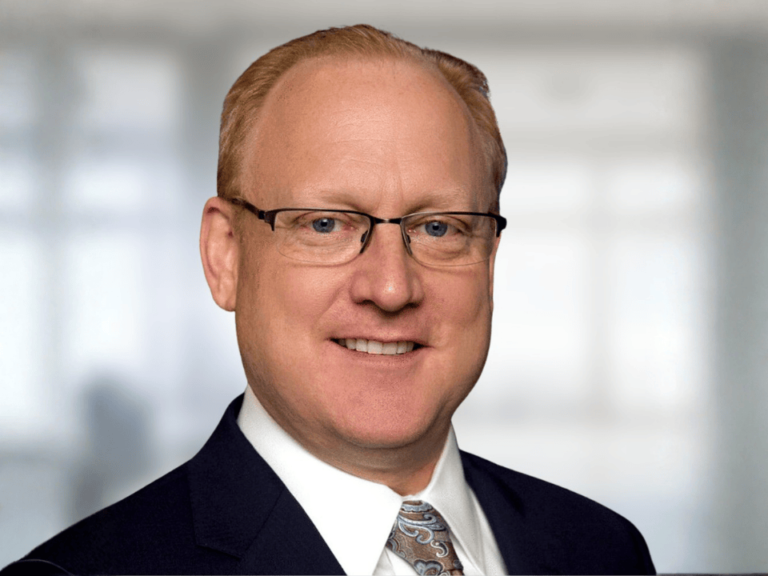
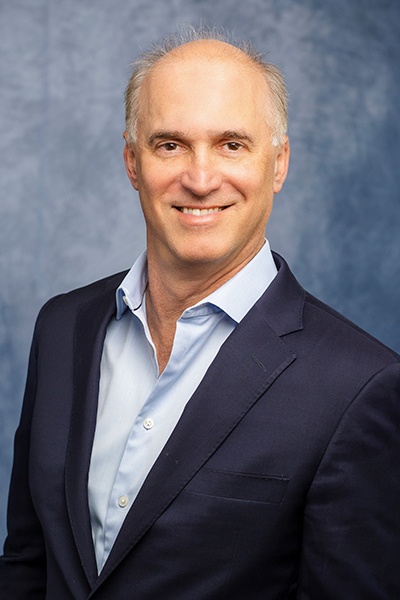

With major leadership changes, grant disruptions and terminations, and a stoked distrust in science, Steven Artandi, the director of Stanford Cancer Center, worries that young investigators will feel disenchanted by the U.S. research atmosphere and take their work and study elsewhere.
“The uncertainty in the current system is giving some people pause, especially younger people, whether they’re Americans or whether they trained abroad, as to whether the United States is the right place to spend their careers,” said Artandi, who is also the Laurie Kraus Lacob Director of the Stanford Cancer Institute and the Jerome and Daisy Low Gilbert Professor of Medicine and Biochemistry at Stanford University. “So, I am up at night worrying about the future of American leadership in cancer science and in science more broadly.”
Even at moments when I allow myself to catastrophize, I don’t think the cancer centers are going away, and I think there will be a role for a cancer center director for a long time to come. We’ll see. Maybe there won’t be tough times, and maybe funding will be exactly as it’s been. But if there are tough times, I think we will get through it and I think there will continue to be a real need for cancer centers.
Eric Winer
“And these changes reverberate,” said Eric Winer, director of Yale Cancer Center. “The fact that there’s this threat to scientists from around the world to be able to come to the U.S. is a real turnoff for a lot of people.”
There is an existential threat that the U.S. might not be the best place to do cancer research right now, said Winer, who is also president and physician-in-chief of Smilow Cancer Hospital, Yale New Haven Health System.
“This is the time where I think all of us in the field want to step hard on the research accelerator, we don’t want to back off,” Winer said.
However, Winer pointed out that he will not be the one making scientific discoveries in 10-20 years. It’s the future generations, the very ones who are feeling uncertain about entering into an unstable NIH, that worry him.
“And if we lose a generation, or even half a generation of people, it’s a huge problem for cancer medicine and cancer science,” Winer said.
Winer and Artandi appeared together on The Directors, a monthly series which focuses on the problems that keep directors of cancer centers up at night.
This episode is available exclusively on The Cancer Letter Podcast—on Spotify, Apple Podcasts, and YouTube.
Artandi worries that even if the proverbial ship is righted again, the uncertainty will endure.
“Even when funding gets restored and if the H-1B visa threat doesn’t materialize, it creates an environment where especially young people become uncertain,” Artandi said. “If there’s too much noise, if there’s too much uncertainty, we run the risk of people making other choices, which is very concerning.”
However, Artandi said it’s important not to catastrophize.
“I think Eric and I, and all of our colleagues as cancer center directors, are so grateful to the Congress, to the Senate, and to the House of Representatives for restoring funding to the NIH and the NCI,” Artandi said. “I think that one approach that I use is that we are doing critically important work for the American people in advancing the course of cancer science and in advancing the course of cancer therapy and, for that reason, I think that our work should continue and it’s important not to overreact.”
With nearly two million cancer diagnoses every year, cancer researchers still have their work cut out, Winer said.
“I know that our patients don’t want us to back off because the truth is there’s a lot of work to be done,” Winer said.
Winer pointed out that medical school admissions have continued to increase in the U.S. and it’s still very competitive to get into U.S. medical schools.
“That is somewhat reassuring that we’re not, at least so far, turning off really young people, meaning college students, from wanting to pursue careers in medicine,” Winer said. “And presumably, some of them will catch the cancer medicine bug.”

“The way that science ought to be done and the way that medicine ought to be practiced is in a slow, deliberate, thoughtful way, not by going and tearing things apart, but by going and meticulously applying the science,” said Otis Brawley, the Bloomberg Distinguished Professor of Oncology and Epidemiology at the Johns Hopkins University Sidney Kimmel Comprehensive Cancer Center and a discussant on this episode of The Directors. “To apply the science, by the way, you have to understand the science. And I’m afraid that some of what I’m hearing is people who don’t totally understand the science, people who don’t totally understand what good things the science has actually gotten us.”
Brawley said that the uncertainty that Artandi and Winer spoke of is actually a threat in and of itself.
“These people combined in these professions over the last 50 years are the reason why we’ve had a 34% decline in the cancer death rate in the United States,” Brawley said. “The young folks who are coming into science, who are going to succeed me, who are going to succeed the other full professors in America’s universities, those folks are very frightened to come into medicine.”
Some young researchers are actually leaving research altogether, said Brawley, shifting to work for investment bankers, or going to European countries where things appear to be more stable.
“Some of them are deciding not to go into science at all,” Brawley said. “When we lose really smart minds who should be doing science and they decide to go do something totally different, that’s how we get hurt as a nation.”
Brawley said that the scientific method needs to be applied even as we change how science is done. Appreciation of the history of cancer science can inform how the future should be handled.
“There’s some third rails out there, if I can use the subway analogy, that we ought not touch,” he said. “You can see that if you appreciate where we have come from, and you can also get a little vision of where we actually can go. I’m hopeful that we can do better than a 50% reduction in cancer mortality by 2040, just by learning how we can apply much of the science that we already have, getting good education prevention, appropriate prevention, appropriate screening, appropriate diagnostics, and appropriate treatment to as many Americans as possible. I’m actually hopeful we can do that.”
Explore previous episodes of The Directors.
Some highlights:
On NCI’s new director
In this episode, Artandi and Winer were able to reflect on NCI’s new leadership, after a 9-month interim period since Trump took office in January.
Anthony G. Letai, a physician-scientist at Harvard Medical School and Dana-Farber Cancer Institute, has been officially named the 18th director of the National Cancer Institute. Letai, whose research is focused on apoptosis and functional diagnostics, was sworn in to his new role by Department of Health and Human Services Secretary Robert F. Kennedy Jr. on Monday, Sept. 29. His appointment was met with much praise from the oncology community (The Cancer Letter, Sept. 25, 2025). His predecessor W. Kimryn Rathmell stepped down as NCI director in January, handing her resignation to the Biden administration (The Cancer Letter, Jan. 17, 2025). For the past nine months, NCI has been run by Douglas R. Lowy, the principal deputy director.
“I trained at the same time as Tony,” Artandi said. “We were both fellows in the Dana-Farber MGH cancer program, oncology fellowship program, and I’ve known Tony for a couple of decades now, and he’s a fantastic oncologist, physician, scientist. He’s spent his life trying to advance our understanding of how cells die in response to chemotherapeutic agents, which is a fundamental mechanism of how we kill cancer cells and he’s an exemplary nominee for this role.”
Winer was a junior faculty member at Dana-Farber when Letai was training.
“He is an extraordinary scientist,” Winer said. “He is someone who has maintained, I believe, a small clinical footprint. He understands the scientific issues, he understands the issues from a patient perspective, and I think having a great scientist in this role is really important.”
Letai has what it takes socially as well, Artandi said.
“I would say that succeeding in a big cancer center, a big, top-rank cancer center requires people skills,” Artandi said, “the ability to get along with others and express oneself—and he clearly has those skills.”
On future uncertainty and unease
While funding threats and cancellations continue to loom, at Stanford, the grant portfolio has remained safe, Artandi said.
“There are small numbers of grants that have been impacted if they focused on diversity issues or LGBTQ issues,” he said, “but that’s a small percentage of the portfolios who are looking to fund some of those things in different ways.”
“Some of the funding was delayed because the NIH had been delayed in paying out grants and now there’s a rapid catch-up where the NIH is dispersing money by the end of the fiscal year so things are pretty much in line with expectations,” he said. “Now, I would say one issue that has impacted Yale and Stanford is the endowment tax which is new and that has caused concerns because the endowment payout is how we support a lot of the innovation in our organizations.”
I don’t even know if most Americans know that an incredibly high percentage of children receive their medical insurance from Medicaid and it’s different on the adult side because of Medicare. Medicare covers older people, but Medicaid covers young people and families without means. So, I think it’ll have an outsized impact on pediatric operations.
Steven Artandi
Winer said he anticipates that the funding changes will affect clinical trials.
“I worry that funding for nationally sponsored clinical trials almost certainly will have an impact or the potential declines in funding will have an impact in terms of our ability to do certain clinical trials,” he said. “And it is really critical to have a national clinical trial system and not be totally reliant upon the pharmaceutical industry to conduct all trials because there are some that will never get done.”
But, Winer said, he tries to keep his anxieties close to his chest, and focuses on the unified mission of providing optimal care for patients.
“Even at moments when I allow myself to catastrophize, I don’t think the cancer centers are going away, and I think there will be a role for a cancer center director for a long time to come,” Winer said. “We’ll see. Maybe there won’t be tough times, and maybe funding will be exactly as it’s been. But if there are tough times, I think we will get through it and I think there will continue to be a real need for cancer centers.”
Both Winer and Artandi are concerned about Medicaid cuts and what it means for cancer care. The greatest impacts will be in pediatrics, they said, where so many more patients are covered by Medicaid.
“I don’t even know if most Americans know that an incredibly high percentage of children receive their medical insurance from Medicaid and it’s different on the adult side because of Medicare,” Artandi said. “Medicare covers older people, but Medicaid covers young people and families without means. So, I think it’ll have an outsized impact on pediatric operations.”
“And on top of it, many children with cancer, while often cured of their cancer, have a lifetime of medical challenges related to cancer and cancer treatment and so it goes on for years after the diagnosis,” Winer said.
On public trust in science
Public mistrust of science and its worth, fueled by the media, concerns Artandi.
“Even if you read articles in what we call the mainstream press, it’s surprising to me how tenuous the arguments are about the utility of science, and how there’s this undercurrent of mistrust,” he said.
There’s always room to appropriately criticize any large organization, that’s not the issue, he said.
The way that science ought to be done and the way that medicine ought to be practiced is in a slow, deliberate, thoughtful way, not by going and tearing things apart, but by going and meticulously applying the science.
Otis Brawley
“But the fundamental issue is that our standard of living is better than most places in the world because the United States has invested in science and in reason and in advancing technology and medicine, that’s just inarguable. And yet we see things written that are somehow arguing the contrary point and I find that very confusing and concerning.”
“I think there are far too many Americans who just don’t feel that they can trust science and the scientific process and yet, much to my shock and chagrin, seem to be able to trust statements that, at times, are just made up,” Winer said.
Part of the solution may be for cancer centers to take a more active role in educating the public, Artandi said.
“I don’t know where the trust is with regard to the general population of cancer centers, I haven’t seen those data, but people usually trust their doctors is what we hear,” Artandi said. “And so, I think there’s an opportunity for us to reach out in that direction that really hasn’t been a core mission.”
Engaging with and educating the cancer center’s local community has been a core priority, but not on a broader national level, Artandi said.
“But if you look at the reductions in mortality for cancer, if you look at the breakthroughs with immunotherapy, and curing 40% of patients with metastatic melanoma, and other examples with targeted therapeutics—you can’t argue with those results,” Artandi said. “And that all came from funding the NIH, attracting the best people, and supporting investigation.
“We’re a critical part of the ecosystem that then leads into biotechnology companies and into big pharma,” Artandi said, “and it’s all a highly integrated ecosystem that, if we start to unplug aspects of that, then we’ll see the rest of the system begin to be compromised.”
Listen to the full episode on Spotify, Apple Podcasts, and YouTube.
A transcript of the podcast is available below:
Claire Marie Porter: Welcome back to the Directors, a special segment of The Cancer Letter Podcast. The Directors is sponsored by ASCO, the American society of clinical oncology.
This time, Steven Artandi, the director of Stanford Cancer Center, and Eric Winer, director at Yale Cancer Center, talk about how their institutions are handling these uncertain times.
Artandi is also the Laurie Kraus Lacob Director of the Stanford Cancer Institute and the Jerome and Daisy Low Gilbert Professor of Medicine and Biochemistry at Stanford University.
Winer is also the president and physician-in-chief of the Smilow Cancer Hospital Yale New Haven Health System.
Otis Brawley, the Bloomberg Distinguished Professor of Oncology and Epidemiology at the Johns Hopkins University Sidney Kimmel Comprehensive Cancer Center, appears on the podcast as a discussant.
With that, let’s get started.
Paul Goldberg: Welcome to The Directors podcast. With us today, we have Eric Winer who’s the director at Yale Cancer Center and Steven Artandi who’s the director of Stanford Cancer Center.
So, welcome to The Directors, where the first question is always the same: in October 2025, well, what’s keeping you up as directors of NCI-designated comprehensive cancer centers?
Eric Winer: Who do you want to go first?
Paul Goldberg: Well, I would say let’s go in alphabetical order.
Steven Artandi: Sure. Well, Paul, thanks for having us here. I think there are many things that keep us up and I’m sure we’ll touch on many of those. But if, really, you think about and take stock of where we are in the history of cancer research and cancer therapy, it’s just so striking that our patients have been in a privileged position to have benefited from stable and really strategic investment in the cancer enterprise for so many decades and that’s led to incredible breakthroughs and new treatments that have driven down cancer mortality over the past several decades. And in part what that’s done is to create a stable ecosystem, to attract the best and the brightest from the United States but also from abroad and then to support those people, those physicians and scientists to make their fundamental discoveries over the years and that’s what’s led to this just unbelievably spectacular advances in cancer treatment that we see now every day in the clinic.
And I think what keeps me up at night is that the uncertainty in the current system is giving some people pause, especially younger people, whether they’re Americans or whether they trained abroad, as to whether the United States is the right place to come to spend their careers trying to tackle really what is one of the fundamental challenges of our time.
And so, I am up at night worrying about the future of American leadership in cancer science and in science more broadly.
Eric Winer: So, I, not surprisingly, agree with everything that Steve said.
Let me just take this perhaps a step further. So, we have made incredible progress during the course of the last, I would say, essentially 20 years when we think about clinical progress. But in the U.S. alone, there are still almost 2 million diagnoses of cancer every year, there’s still over 600,000 people who lose their lives from cancer each year and, of course, those numbers are far, far higher globally so there’s a lot of work to be done. And as Steve said, I think we’re all worried that some of that work may be threatened by funding cuts, by a sense that the U.S. may not be the best place to do cancer research and this is the time where I think all of us in the field want to step hard on the research accelerator, we don’t want to back off. And I think that, I know that our patients don’t want us to back off because the truth is there’s a lot of work to be done.
And I’ll just end by echoing what Steve said about young people. And I’ve been doing this for over 30 years, I’m not going to be the person who is making discoveries in 10 and 20 years, it’s the people who are in the generation behind us and the generation beyond that. And if we lose a generation or even half a generation of people, it’s a huge problem for cancer medicine and cancer science.
Paul Goldberg: Actually, looking at … You mentioned the U.S. being a magnet for the best and the brightest from all over the world. What about the H-1B visa changes? How much are you using H-1B?
Steven Artandi: H-1B is an integral mechanism especially for our postdoctoral scientists who are coming from abroad. Again, we’re getting to attract the best and the brightest who come here from Europe and Asia and elsewhere who want to get the best training in cancer science, make the biggest discoveries, they will often come on an earlier visa and then have to transition to an H-1 but the H-1B mechanism is absolutely essential. And in terms of the news, it’s unclear exactly how that’s going to impact us so I think we’re cautiously monitoring the current situation.
Eric Winer: And these changes reverberate. So, even for someone who, perhaps, would be able to get a visa or for others, the fact that there’s this threat to scientists from around the world to be able to come to the U.S. is a real turnoff for a lot of people. So, this is something that I think we’re all worried about. I will tell you that, at Yale, we received a late night email from our dean talking about this because her feeling was that we all needed to know as soon as possible.
Paul Goldberg: There is some discussion that academic institutions and hospitals might be exempted but I’m not sure there’s been anything officially said about it, has there? So, we basically don’t know.
Eric Winer: Not to my knowledge.
Steven Artandi: There’s something about medical … Yeah, something about medical exemptions but it’s unclear what that means.
Paul Goldberg: Okay.
Eric Winer: Is it $100,000 or $100,000 a year? And certainly, if it’s the latter, there’s no way that medical institutions can cover those kinds of costs particularly with cutbacks in research funding. And at the same time, for those cancer research institutes that have a clinical component, there’s threats to clinical funding as well.
Paul Goldberg: Basically, I think that destroys the big labs that do depend on post-docs from, really, all over the world. It’s a-
Steven Artandi: I would say big labs and small labs.
Paul Goldberg: Small labs.
Steven Artandi: Both, both. For sure, both.
Paul Goldberg: Sure, both. And then clinically as well because you do need docs from … How much do you depend on H-1B for clinical care?
Eric Winer: To some extent. There are a limited number of people at our institution who are on such visas but, around the country, there are more. And we do have a shortage nationally in terms of the number of clinicians who are taking care of patients with cancer.
Paul Goldberg: So, I’m actually spending a lot of time trying to keep myself from catastrophizing and I think I’m starting to catastrophize a little bit less since about July 31st when the Senate appropriations happened and then the House appropriations followed. So, the 40% cut is not happening, the indirect cost thing is also probably not happening. And what do you think? Is it, what’s your sense of uncertainty on this?
Eric Winer: I think there’s a lot of uncertainty. I don’t think we know what’s happening. I do know of people who have recently had grants not funded that were at the 5% or at the fifth percentile. I think this idea that the pay line from the NCI is going to be at 4% is terrifying. And not only is it terrifying from the standpoint of the limited funding but it’s hard to imagine how people are going to be able to be enthusiastic about applying for federal grants if, on average, they have a one in 25 chance of being funded.
Steven Artandi: But I would say, Paul, I agree with your approach to not catastrophize because the news is coming all the time and it’s often then changing. I think Eric and I and all of our colleagues as cancer center directors are so grateful to the Congress, to the Senate and to the House of Representatives for restoring funding to the NIH and the NCI. I think that one approach that I use is that we are doing critically important work for the American people in advancing the course of cancer science and in advancing the course of cancer therapy and, for that reason, I think that our work should continue and it’s important not to overreact.
Eric Winer: Well, I don’t think that any of us should think that everything will be the worst that it can be. And I will tell you that I remain optimistic that, whatever we hear, we’ll get through it and it will be fine in the end. But as much as I try to remind myself of that, there are moments when it’s worrisome and there is a fair amount of effort that I spend, and I’m sure Steve does as well and I’m sure our colleagues do across the country, trying to reassure very worried young scientists and physicians.
Steven Artandi: This is the challenge that, even when funding gets restored and if the H-1B visa threat doesn’t materialize, it creates an environment where, especially young people, become uncertain if this is direct … Because everyone has options. Young, smart people have options as to what they’re going to do with their lives, they can do something that we chose, Eric and I chose many years ago which is to try to advance the course of cancer patients or do something else. And if there’s too much noise, if there’s too much uncertainty, I think people will … We run the risk of people making other choices which is very concerning.
Eric Winer: Paul, one of the fascinating things at the moment is that medical school admissions continue to go up, it’s very difficult to get into U.S. medical schools. And so, that, I will say, is somewhat reassuring that we’re not, at least so far, turning off really young people, meaning college students, from wanting to pursue careers in medicine and presumably some of them will catch the cancer medicine bug.
Paul Goldberg: Well, I actually catastrophized a lot then I got tired and now I’m not doing it very much. But speaking of not catastrophizing, Tony Letai is likely to be named the NCI director or … Actually, let me just put it this way. By the time we run this, he will have been named the NCI director. What are your thoughts about him? You both know him.
Steven Artandi: Yeah, I can start because I trained at the same time as Tony. We were both fellows in the Dana-Farber MGH cancer program, oncology fellowship program and I’ve known Tony for a couple of decades now and he’s a fantastic oncologist, physician, scientist. He’s spent his life trying to advance our understanding of how cells die in response to chemotherapeutic agents which is a fundamental mechanism of how we kill cancer cells and he’s an exemplary nominee for this role.
Eric Winer: Yeah. So, having been at Dana-Farber also, I was a junior, junior faculty member when Tony was training. He is an extraordinary scientist, he is someone who has maintained, I believe, a small clinical footprint. He understands the scientific issues, he understands the issues from a patient perspective and I think having a great scientist in this role is really important.
Paul Goldberg: Ned was just saying recently, Ned Sharpless, that one of the best metrics for gauging success of an NCI director is ability to deal with Congress. How will he do on this? Will you see a good salesman on that type of thing?
Eric Winer: I presume so. I think that part of what makes anyone successful in this role is having good people around them at the NCI who can advise them and coach them and I assume he will gather those people together around him. But he’s a scientist with a great deal of integrity and so that in and of itself is really critical.
Steven Artandi: I would say that succeeding in a big cancer center, a big, top-rank cancer center requires people skills, the ability to get along with others and express oneself and he clearly has those skills.
Paul Goldberg: I guess looking at the impact of the past few months of what the administration has done, when I ask center directors and others about the impact, I hear about uncertainty which by itself is an adverse event, no question.
What about actual measurable problems like this grant cancelled, that grant? How have you been affected? What have you lost? What don’t you have now that you used to have, let’s say, in December ’24?
Eric Winer: I think more than anything else, what we don’t have is as much certainty about the future. In truth, there have been very few grants to date at our center that we have lost. In fact, I actually queried a number of my colleagues and, for the most part, we’re not aware of grants that have been taken back in terms of cancer medicine or cancer research and, for that matter, clinical aspects. I think that the potential payline in the 4% range is something that worries a lot of people. I think that many, many academic institutions are concerned about the future. I will say that we have tried to be very, very thoughtful about this, we haven’t rescinded offers to graduate students or post-docs, we don’t have a faculty hiring freeze, we continue to recruit. So, I think it’s more about the uncertainty and unease than about anything that’s actually been lost to date.
Steven Artandi: Well, I think it’s the same at Stanford, Eric. There are small numbers of grants that have been impacted if they focused on diversity issues or LGBTQ issues but that’s a small percentage of the portfolios who are looking to fund some of those things in different ways. But in general, the grant portfolio has been preserved. Some of the funding was delayed because the NIH had been delayed in paying out grants and now there’s a rapid catch-up where the NIH is dispersing money by the end of the fiscal year so things are pretty much in line with expectations. Now, I would say one issue that has impacted Yale and Stanford is the endowment tax which is new and that has caused concerns because the endowment payout is how we support a lot of the innovation in our organizations.
Eric Winer: No, it is a challenge, very much so. I worry that funding for nationally sponsored clinical trials almost certainly will have an impact or the potential declines in funding will have an impact in terms of our ability to do certain clinical trials. And it is really critical to have a national clinical trial system and not be totally reliant upon the pharmaceutical industry to conduct all trials because there are some that will never get done.
Paul Goldberg: I was just hearing that NCI is pushing as much money out the door as possible and, when they call cooperative groups folks and say, “Hey, what have you lost?” they all say nothing so far. Does it mean that they won’t? I think they should be having conversations with Tony Letai so it would continue this way. But it’s an interesting thing because nothing is being lost yet. But that may be the old joke about the guy jumping off the Empire State Building and, as he’s flying by, they ask him, “How’s it going?” and “so far so good.” So, maybe that’s where we are.
Eric Winer: Well, and Paul, maybe nothing will be lost and maybe the funding for clinical trials will continue and it won’t be a concern. I will say, from a cancer center standpoint, the one thing that very clearly has been lost is that there were funds to support diversity efforts within cancer centers, so the programs to enhance diversity have gone away. At least the funding for them has gone away. I think many institutions are still quite committed to what is often called something other than DEI at this point but to really try to make sure that we continue to have a broad range of individuals who are doing research, taking care of patients, functioning within our centers.
Paul Goldberg: Are you paying for it yourselves or?
Eric Winer: To a significant degree, we’re using philanthropy to cover some of those costs and the programs have been adjusted to a limited extent. But I think that there is good reason to that, in matters of research, having a wide variety of voices and brains from all different parts of the world is very important.
Paul Goldberg: Steve, you’re doing the same?
Steven Artandi: Yeah, it’s very similar. I think it’s not as structured as it was when the NCI was requiring it so it has a different look. And I think we’re definitely focused, as Eric said, on diversity of thought. I think that’s something that’s come up on the left and the right that both sides agree on is having diversity of ideas.
Paul Goldberg: Well, yeah. One of the things I keep hearing from cancer center directors is that you end up having to practice psychiatry without a license, talking people up and saying, “Hey, it’s not over. We are all going to be here.” How are you doing that? Are there any best practices that are emerging?
Steven Artandi: Well, maybe I’ll start.
There’s a lot of messaging throughout the whole organization, it starts at the university level and at the school of medicine level and the health system level, the cancer center level and so we participate in that. We have quarterly town halls where we try to express support for everyone and for the stability of the current system.
I had my lab meeting this morning and had to talk to my lab scientists about the H-1B challenges and try to allay their concerns even though we don’t have all the data. So, yeah, it’s a lot of reassurance.
Eric Winer: I do my best to hold my own anxieties within and not make other people anxious based on every little anxiety that I hear. I’m, in the next couple of months, having a series of dinners at my house to invite faculty over to give them a chance to sit and talk and I think that what’s really critical is to remind people of the great mission we have. And that mission is about research and it’s about education and it’s about taking the best possible care of the patients we have while trying to make that care better in the future. And I think, if you remind people of mission, it really helps a lot because it’s a pretty lofty mission.
Steven Artandi: Yeah, yeah. Do you have more of an open door policy than you used to? Do people just knock on the door, stick their head in and say, “Hey, Steve, Hey, Eric?” Is that something you’re doing? Is that helpful? Does that work? Is that something you can do?
We certainly probably both have open door policies but I wind up seeing there’s a lot of communication that goes on in our organization. So, I wind up seeing people in so many different contexts that not so many people have to come to my office to find me because we’re typically out in the organization talking to people on a daily basis.
Eric Winer: I would agree. My door’s always been open. I was mentioning earlier that I do a radio show that becomes a podcast once a week with faculty members and one of the reasons I love it is I get to spend one-on-one time with a whole range of different people who I might not otherwise see. They’re not necessarily the people who would typically walk into my office, and I get to do it every week.
Paul Goldberg: When we started the Directors, if I were to be asked whether we will all be here two years from now, three years from now, four years from now, I would’ve said, “Heck if I know.” I think I’m starting to be able to say I think we will be. Are you feeling the same way?
Steven Artandi: Yes. I don’t want to jinx it but I’m very confident … I hadn’t actually formulated that notion, Paul, so it’s a little bit frightening. But yeah, I think because of, what Eric said, it’s because of our mission, because we’re doing fundamentally important work for all Americans that our work has to continue. So, I fully anticipate that we will be here.
Eric Winer: So, even at moments when I allow myself to catastrophize, I don’t think the cancer centers are going away and I think there will be a role for a cancer center director for a long time to come. And so, there may be, we’ll see, maybe there won’t be tough times and maybe funding will be exactly as it’s been. But if there are tough times, I think we will get through it and I think there’ll continue to be a real need for cancer centers and we’ll all figure out in our own ways and in some similar ways how we manage it.
Paul Goldberg: Is there anything that you wanted to bring up, any episodes of that … Anything you’ve encountered in the past eight months or nine months that … Maybe conversations with patients?
Eric Winer: I will just say that, apart from the NCI and if we just take a step aside to see MMS, I think we’re all also worried about cuts in Medicaid and what that can mean in terms of cancer care. We know that, and there’s been research on this, that, with the Affordable Care Act and in states that did provide care to individuals with cancer, that there were a number of studies that actually showed improvements in how we were doing in terms of taking care of patients. So, I worry about people not getting the care that they need.
Paul Goldberg: How is Medicaid going to affect you, Steve?
Steven Artandi: Oh, it has an impact, for sure, and especially on the pediatric side where so many more of the patients are covered by Medicaid. I don’t even know if most Americans know that an incredibly high percentage of children receive their medical insurance from Medicaid and it’s different on the adult side because of Medicare. Medicare covers older people but Medicaid covers young people and families without means. So, I think it’ll have an outsized impact on the pediatric operations.
Paul Goldberg: Easily.
Eric Winer: And on top of it, many children with cancer, while often cured of their cancer, have a lifetime of medical challenges related to cancer and cancer treatment and so it goes on for years after the diagnosis.
Paul Goldberg: This is something that really should be out there as a story of patients being told by patients. We’re not hearing patients yet very much. We try to get that out but we haven’t really succeeded yet. I think we’ll just focus on that as much as we can now that the flooding of the zone has subsided.
Steven Artandi: Yeah. And I may be mistaken but I think the way the bill was written is that it staggers the impact and pushes it out to the future so that will … The big impact on Medicaid will be coming, it hasn’t come immediately.
Paul Goldberg: What about community oncology, the convergence of academic and community? Is this being affected yet? Are you seeing it? Has anything happened with this? Is community care taking away some of your patients? Are you absorbing community care? How does it actually work right now with both of your institutions?
Steven Artandi: Well, I think that the insurance ecosystem is complex and also regional so it can be different in different regions of the country. Here in the Bay Area, a significant percentage of cancer patients are cared for by the local comprehensive cancer centers, Stanford and UCSF. And I think what we’re seeing is a gradual migration toward those centers because of the complexity of cancer care and because it’s generally understood that the outcomes are better when you’re treated at a comprehensive cancer center and we live in an area where there’s a fair number of people who are well-insured. So, we’re seeing increase, almost a relentless increase, in demand for our cancer services.
Eric Winer: So, we actually have 14 sites of care around Connecticut and about half of all people who are diagnosed with cancer in Connecticut come to either our main campus or one of those sites. So, we haven’t really seen much of a shift over the last year or two. And as Steve said, I think there’s huge value in care that is anchored, in one way or another, in a comprehensive cancer center whether that care is delivered at the main site or at a satellite or network site.
Paul Goldberg: Is there anything we haven’t discussed? Anything I forgot to ask? Any glaring example or …
Steven Artandi: I would raise one issue, Paul, I don’t know if you want to go in this direction.
Paul Goldberg: Oh, yeah.
Steven Artandi: But one area that’s concerning is the public trust in science and how that has changed. I guess, catalyzed by COVID. But even if you read articles in what we call the mainstream press, it’s surprising to me how tenuous the arguments are about the utility of science and how there’s this undercurrent of mistrust or thinking. I think I was reading an article yesterday in the New York Times, there was an opinion piece saying that the NIH doesn’t invest in risky science and is not focused on curing diseases and I think that couldn’t be further from the truth. While there’s always opportunity to criticize any organization, especially large bureaucracies, there’s always an opportunity to criticize and criticize appropriately and make improvements, that’s not an issue.
But the fundamental issue is that our standard of living is better than most places in the world because the United States has invested in science and in reason and in advancing technology and medicine, that’s just inarguable. And yet we see things written that are somehow arguing the contrary point and I find that very confusing and concerning.
Eric Winer: Yeah, I can’t agree more and I think that this is a hugely important issue. I think there are far too many Americans who just don’t feel that they can trust science and the scientific process and yet, much to my shock and chagrin, seem to be able to trust statements that, at times, are just made up. In truth, I think we deal with this a little less in cancer than in some areas partially because cancer is oftentimes so frightening to people that they’re all too ready to listen to experts in the area. But I think, nationally, it’s a huge problem and I think we’re going to have to deal with that over the years ahead.
Paul Goldberg: Language like evidence-based medicine doesn’t mean evidence-based medicine or gold standard science doesn’t mean randomized clinical trials, it just means something else and it’s starting to get that way. But what do we do about it? Can we do anything?
Steven Artandi: Well, I wonder if we as cancer centers need to take a more active role in educating the public about science. I don’t know where the trust is with regard to the general population of cancer centers, I haven’t seen those data but people usually trust their doctors is what we hear. And so, I think there’s an opportunity for us to reach out in that direction that really hasn’t been a core mission. Engaging the local community and educating local community has been but not on a broader national level. But if you look at the reductions in mortality for cancer, if you look at the breakthroughs with immunotherapy and curing 40% of patients with metastatic melanoma and other examples with targeted therapeutics, it’s just … You can’t argue with those results and that all came from funding the NIH, attracting the best people, supporting investigation.
And then another thing I would argue is that we’re a critical part of the ecosystem that then leads into biotechnology companies and into big pharma and it’s all a highly integrated ecosystem that, if we start to unplug aspects of that, then we’ll see the rest of the system begin to be compromised.
Paul Goldberg: Maybe there’s a way of putting together some training modules for patients that would be about evidence-based medicine and the stuff not to listen to. People have tried to do it, not always well.
Eric Winer: Well, it is interesting. People respect their own doctors in general, trust their own doctors and like their own doctors but they have distrust for the system and, if you ask people if they like doctors in general, they may not say yes. So, it’s almost as if we need to get people’s own doctors on this bandwagon and have them help educate people. And I actually think that some real efforts concerted very carefully, thought through efforts to help explain the scientific process and how we develop new treatments, I think that would be really useful for people in the community to hear. You’re giving me ideas about what we can do in our community outreach and engagement program.
Paul Goldberg: Yeah, let’s all think about it and maybe bring in some more people to think about it. The other thing I’ve been thinking about, I don’t know what to do with this, is the rebuild. Because the system that is being taken apart or, well, attempts are being made to take it apart, would not be a system that any one of us would build prospectively, it evolved. So, how do you build a better system that would replace what’s there now considering that we’re getting a little bit of help in taking it down?
Eric Winer: Much of the problem though is that so many people in the country feel alienated from academic life in general and science and it’s really, I think, a matter of trying to regain trust in those individuals about what we’re all trying to do. I, on some level, really understand how this happened and it’s time to really do our best to fix it.
Paul Goldberg: Let’s all drink a beer at the AACI and talk about it in a couple of weeks.
Steven Artandi: That’ll be fun.
Paul Goldberg: That will be fun.
Steven Artandi: Let’s do that.
Paul Goldberg: Yeah. My usual last question is what’s the most positive thing you can say right now really about anything?
Steven Artandi: Oh, that’s easy. This is the most exciting time to be either a cancer scientist, to be a cancer doctor in terms of the technologies that we have, the new exciting therapies, the breakthroughs in understanding of cancer. This is literally the most exciting and important time to be engaged in this area.
Eric Winer: Yeah, I think that that’s totally true. I’ve been a breast cancer doctor for over 30 years now and the evolution of the field is really breathtaking. There are, not only fewer people suffering and dying, but treatments are far easier than they used to be and I can really see a time when we’re going to, I’ll speak first about breast cancer and then more generally, I can see a time when there just aren’t going to be people who need to die of the disease and then the next step is to eliminate it, to prevent it and eliminate it entirely. And that’s going to be true across the board. It’s going to take a number of decades but it’s going to happen and we just have to keep focused on that goal.
Paul Goldberg: Well, thank you, gentlemen. This was really fascinating to learn from you.
Eric Winer: Hope it was helpful.
Steven Artandi: Thank you, Paul. Thanks for bringing us together.
Paul Goldberg: Well, thank you. And let’s continue the conversation on education once … But it would require beer.
Steven Artandi: I think we can provide those.
Paul Goldberg: All right. Well, Otis, thank you for joining us as a discussant on The Directors, and I guess I should probably just instead of a question, recap why we do The Directors. We do The Directors once a month and we interview two directors of cancer centers to take a pulse of what’s happening, what’s keeping them up at night, and you heard this, what is keeping cancer center directors up at night in October 2025?
Otis Brawley: I think the answer is uncertainty. This is actually a common theme through our government right now, or throughout the United States. We don’t know exactly what the future holds. Those of us who work in science and in science that needs federal funding, we’re not certain exactly what the funding is going to be in the future. We’re not certain what the rules are under which we need to work. I actually, I hear very frequently people say, “Make America Great Again.” Truth be told, when we look at scientific research, when we look at America’s universities, when we look, especially at cancer research, we are great and we want to stay great, and the uncertainty is a threat to that greatness.
Paul Goldberg: So what you’re really saying then is that uncertainty itself is the threat. It’s not the number of grants cut, it’s not the appropriations. It’s not the spending bills. It’s not the Washington shenanigans of various types, but it is actually the not knowing.
Otis Brawley: That’s correct. One of the things that I do is I spend a lot of time advising young people coming into the science, the people who are going to win the Nobel Prizes over the next 20, 30 years. People both in the school of public health arena as well as in the school of medicine, basic science people who are doing the molecular biology, developing the new drugs, helping us understand what cancer is, the social scientists who help us figure out both how we pay for healthcare and how we provide more healthcare.
These people combined in these professions over the last 50 years are the reason why we’ve had a 34% decline in the cancer death rate in the United States. Well, the young folks who are coming into science, who are going to succeed me, who are going to succeed the other full professors in America’s universities, those folks are very frightened to come into medicine.
Some of them are actually already leaving research. A few of them end up going to work for investment bankers to tell people what next drug company to invest in. Some of them are going to Europe. We’ve already lost some of our faculty who’ve decided to go to Europe or France where they think things are a little bit more stable right now.
Some of them are deciding not to go into science at all. When we lose really smart minds who should be doing science and they decide to go do something totally different, that’s how we get hurt as a nation.
Paul Goldberg: It is really fascinating to think about this. Nobody’s ever really pointed that out, that that is in itself a harm. But what about the harm, the actual harm, which is what we were talking about in this episode of The Directors?
Otis Brawley: Yeah, it’s very interesting. I do a great deal of health outcomes research. We’re not really able to talk as much about race and ethnicity and socioeconomic status now as I wish we could. Much of my work has been… My best work over the last few years, if I could be less than humble for a second, is working with Ahmadine Jamal, who’s an immigrant to the United States from Ethiopia, and he has come here and he’s helped us to define health disparities in the United States.
He’s been able to make the argument, and mathematically, it’s actually fairly simple to do once somebody figured out how to do it, that of the 600,000 cancer deaths that occur in a given year, 132,000 are unnecessary, without a new drug, without a new treatment, just by giving people adequate care, 132,000 of the 600,000 deaths in cancer would go away.
That’s the disparity. That’s quantifying the disparity. Then we went on to qualify the disparity. Of the 132,000 needless deaths that occur every year from cancer, 80,000 are in white people. Now there’s been this movement that I can’t study outcomes in Blacks or outcomes in Hispanics. What I actually was studying was outcomes by race, and I found out that a large number of the people who need help, the largest group of people who need help in terms of health disparities are white Americans.
I think what we need is a good balanced approach, thinking about people more as human beings than research where certain words are not allowed. We’ve gone through a period of time where a number of grants, they just search certain keywords. There were 50 keywords, and if any of those words showed up, the grant was subject to being defunded. That’s unfortunate. That’s not the way to do science. That’s not the way that we benefit mankind.
Paul Goldberg: Well, it’s interesting because there’s this threat of getting used to it, like saying, “Oh, that’s just DEI. I’m not DEI.” Or saying, “Oh, that’s just vaccines. What do you expect?” Or you can say, “Oh, it’s just mRNA.” Do you see that happening now?
Otis Brawley: Yeah. I see us getting less and less scientific. One of the problems that I’ve harped on my entire career, not just in the last two or three years, is that we tend to not appreciate the science enough. We tend to not be orthodox to the science, and this is… I’ve even written with you a book about how, when we get unorthodox and we start becoming, in the practice of medicine, we call it gunslinger, becoming a gunslinger or cowboy, we end up hurting people.
The way that science ought to be done and the way that medicine ought to be practiced is in a slow, deliberate, thoughtful ways, not by going and tearing things apart, but by going and meticulously applying the science, and to apply the science, by the way, you have to understand the science. And I’m afraid that some of what I’m hearing is people who don’t totally understand the science, people who don’t totally understand what good things the science has actually gotten us.
There was a paper that you reported on in The Cancer Letter earlier this year that talked about how cancer rates were going through the roof, and that paper never mentioned the fact that we’ve had a 34% reduction in cancer deaths since 1991. We have prevented millions of cancer deaths through the national cancer program, that is Richard Nixon’s program that put more money into cancer research, that put more money into figuring out how to apply the fruits of that cancer research.
A 34% reduction in cancer death rate means that if you’re the average American today, your risk of dying from cancer is two-thirds what it was for someone that was your age in 1990. We are well on our way toward a 50% reduction in the risk of cancer death toward by 2040. Actually, some of us think that we could get to a 50% reduction in cancer death by 2035, 2033 to 2035, but what is happening right now is actually putting that good thing to threat. I mean, we may not get to a 50% reduction because of the disruptions.
Paul Goldberg: Well, it’s not happening though truly yet. It’s a threat, right, so I mean, our objective here with the directors is to see how much of a threat materializes, because so far Congress has stopped a lot of this, but you’re saying that actually the uncertainty is what’s doing it, so there is an actual threat?
Otis Brawley: The uncertainty, and don’t get me wrong, I am the first to say we in science do need to have some introspection. We do need to think about what we’re doing. We do need to be a little bit humble and get rid of the hubris that we sometimes have. We do need to think about how we can do things more efficiently. My concern is the movement that I see right now is not being done in a thoughtful, very deliberate way where we are being religious to the science and understanding what the science tells us.
We need to apply the scientific method as we change how we do science. We need to appreciate all the elements of science. I’ve heard some people say that corporations need to do more in terms of research and development. It’s not realized that what the NIH has done over the last 50 years is develop and support the development and education of a number of scientists who are out there making drugs in corporations today. The NIH and the National Cancer Institute and America’s universities and corporate America, the pharmaceutical industry, all work together in a certain way.
We need to think about how they get along. We do need to think about that, but many people who are tearing down the NIH right now don’t understand the important niche that it fits with corporate America. If we’re going to have… By the way, we’ve had over 400 cancer drugs approved now since Nixon signed the war on cancer. It was a Republican president in 1971 who came together with Democrats in the House and Senate who signed the National Cancer Act.
Richard Nixon never referred to it as the war on cancer. Other people did. We’ll use that analogy for now, but I think we even need to question whether we should call it an anti-cancer effort or a war on cancer. You guys who deal with writing things much better than I, probably appreciate the war analogy more so than an anti-cancer effort, but whatever it is, it has helped us to come up with numerous treatments. It’s helped us to understand what cancer is, how to prevent cancer, and when the rubber hits the road, it’s led to a death rate today that’s two-thirds what it was in 1990.
Paul Goldberg: It’s really interesting because most people don’t quite realize it, and I’m not even sure I realized it until well into covering this field, well in, how unusual and how fascinating that law was, the 1971 National Cancer Act, because here is the first example of a country declaring a war on a disease, and that’s where we all are, and that’s just so special.
Otis Brawley: We don’t understand some aspects of it, to this day. For example, there were six elements in the National Cancer Act. One of those six elements put the National Cancer Institute in charge of cancer education, dissemination of information where we have a new finding, Bernie Fisher’s Lumpectomy and radiation is equal to mastectomy. The modified mastectomy is equal to the Halsted mastectomy, that was communicated by the Office of Cancer Communications at the National Cancer Institute.
One of the six things it put the National Cancer Institute into dissemination of information about cancer to doctors and to the public. One of the first things that happened this year was the Office for Cancer Communications was abolished. All the people who were responsible for that element of the National Cancer Act got laid off.
Paul Goldberg: That is crucially important for this, and by the way, let’s just sort of put this a little more into perspective. The reason that was there in the National Cancer Act had to do with NASA, because they were basically building a NASA on cancer, an amazing idea, and now it’s gone. That part of it. That’s actually harm.
Otis Brawley: There’s a physician in Missouri today who wants to go to the Physician Data Query to find out how the breast cancer patient in front of him should get treated today. Unfortunately, the Physician Data Query or PDQ, which was maintained by the National Cancer Institute, has not been staffed for the last several months. Those people got laid off.
Paul Goldberg: That was most of what that office did, so yeah, that’s an amazing story and an amazing piece of information. So we’ve got two elements of harm here. One is uncertainty itself as a harm and two, NCI’s ability to communicate with the public. I mean, those are two big ones, so in addition to some of the ones that people are surmising, is there anything else that struck you as noteworthy in this interview with The Directors, with Dr. Artanda?
Otis Brawley: Well, you’ve got two extraordinary leaders at two extraordinary cancer centers. When I say we are great, I just reviewed this morning, that ratings came out about world universities. Of the top 10 universities in the world, seven of them are in the United States.
Yeah. If you look at the top 100 universities of the world, 80% of them are in the United States. We need to be very careful in supporting those world-class institutions, so we can remain great. We need to be very careful. One of the greatest exports, by the way, that we have in the United States is education.
We have a number of people coming to this country from a number of countries to learn. I happen to believe that how we maintain influence worldwide is by exporting our education. The fact that we have foreign students coming to universities, I think is a good thing, and we need to encourage that. That actually helps them to think independently and helps us to overcome a number of obstacles that we might have with foreign governments in the future.
It might even avoid some wars. It may very well have avoided some wars by having this education industrial complex where we export… By the way, these foreign students, they pay good money for that education. They don’t get scholarships. They don’t get free grants.
Paul Goldberg: What about the H1 visas situation? We talked about it.
Otis Brawley: I am very concerned that we don’t appreciate what foreign students, residents in medicine, graduate students, even some young teachers from foreign lands contribute to this country. People who have been on H1 visas who have made tremendous contributions, and we’re talking about major league drugs that we have today to fight some of the most important diseases out there, to include HIVA, include malaria, cardiovascular disease, COVID. There were people with H1B visas who were involved in the development of all of those things. People who came to this country and made contributions to society very quickly.
I think we need to look long and hard about how we treat those folks, number one, and how welcoming we are to bring those folks in so that we can harvest the fruits that they want to contribute to society.
Paul Goldberg: Well, that’s still in the threats column. It’s not in the actual harm, but it is in the harm because of the uncertainty.
Otis Brawley: Yeah. There’s a number of hospitals, by the way, that the residency programs, the people who provide healthcare to the people in those hospitals, many of the residents come from foreign medical schools on H1B visas, and if we are not careful, and I don’t know what’s going to happen there, but if we’re not careful, we’re going to end up with a number of hospitals that are unable to provide care, and it becomes another threat to medical care, or the provision of medical care in the United States.
We’re already concerned about Medicare and Medicaid reforms and how that’s going to affect healthcare in the United States.
Paul Goldberg: Is there anything we forgot to focus on? Anything we forgot to mention?
Otis Brawley: I still am a little bit hopeful that we will sit down, slow down, think deeply a little bit, be cautious. In some instances, some of us need to learn a little of the history of what we have done. You know that I’m very fond of the George Santayana quote, “Those who don’t appreciate history are destined to repeat it.” If we just learn a little bit of our history, especially our history in medicine and science, we can foresee some of the things that we ought not touch.
There’s some third rails out there, if I can use the subway analogy, that we ought not touch, and you can see that if you appreciate where we have come from, and you can also get a little vision of where we actually can go. I’m hopeful that we can go better than a 50% reduction in cancer mortality by 2040, just by learning how we can apply much of the science that we already have, getting good education prevention, appropriate prevention, appropriate screening, appropriate diagnostics, and appropriate treatment to as many Americans as possible. I’m actually hopeful we can do that.
Paul Goldberg: Thank you very much. This is a nice way of ending the conversation. Hope.
Otis Brawley: Thank you.