As trust in scientific and regulatory institutions frays and the meaning of “gold standard science” is increasingly contested, cancer research faces a credibility test of its own.
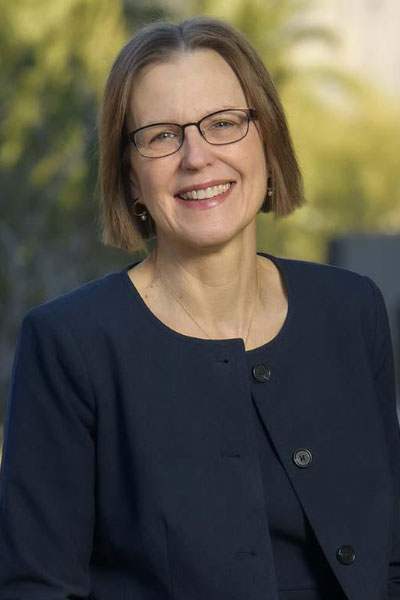
“Cancer research is apolitical,” said Joann Sweasy, director of the Fred & Pamela Buffett Cancer Center and president of the Association of American Cancer Institutes. “Everyone is impacted by cancer. I don’t know any family that’s not impacted by cancer.”
Since the Trump administration took over federal health agencies, cancer center directors have had a lot of “strategic discussions,” Sweasy said.
“We had a lot of open discussion, which was great, but it wasn’t reactive discussion,” she said. “We weren’t approaching people on the Hill, our delegations reacting to things. It allowed us time to get our facts together. So, I think it was a very strategic approach.”
Those closest to this work now have an even greater responsibility to make the case for the value of cancer research to the public that funds it.
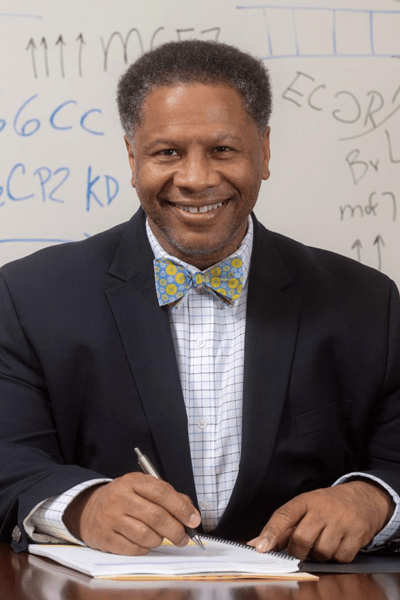
“We need to be also accountable and responsible for how we communicate the good news and the bad to the American public,” said Robert Winn, director and Lipman Chair in Oncology of the VCU Massey Comprehensive Cancer Center, and former AACI president.
Winn considers this renewed attention to communicating cancer progress a “silver lining” to the past year of instability.
“We recognize that we cannot work in a vacuum as much as we had been in the past,” Winn said. “So, there’s something good that came out of all that craziness.”
NCI-designated cancer center directors look to patients as being their “north star,” said Sweasy.
“I think we’ve shown that we’re able to pivot when we need to pivot and work together,” she said. “I think each of us as directors and members of our cancer center have the north star as really doing the best we can for cancer patients, cancer survivors, and their families, and to prevent cancer. So, I think they’re incredibly valuable. We are the national team.”
Sweasy and Winn appeared together on The Directors, a monthly series which focuses on the problems that keep directors of cancer centers up at night.
This episode is available exclusively on The Cancer Letter Podcast—on Spotify, Apple Podcasts, and YouTube.
“I think that the lessons learned for me about communicating more effectively is to say less better, and to actually be much more focused on connecting and knowing a little bit about even the legislators,” Winn said.
Winn said the best part about the bipartisanship of cancer research is seeing the number of Republicans and Democrats who have become engaged and taken action.
“There were both moderate and non-moderates, and on both sides of the streets,” Winn said.
“One of the things I think we all had to do is, we all as cancer center directors had to be better communicators to our legislators and our community. And I think this was an example of how we had to frame things in a way in which the legislators could clearly understand,” Winn said.
Sweasy said they did this by making the stories of patients central to their message.
“We spoke with folks on the Hill and we told the stories,” Sweasy said. “We told the stories of our constituents, people who were impacted by cancer and how important research is to developing new therapies and to keep folks with cancer having the best therapies possible.
“We told them the stories of our junior faculty and how we’re the most competitive country in the world for cancer research and how we’re losing that because our junior faculty are so frightened about the current situation at the NIH. They understood that.”
Winn, too, acknowledged that the past year has made him a better storyteller.
We told them the stories of our junior faculty and how we’re the most competitive country in the world for cancer research and how we’re losing that because our junior faculty are so frightened about the current situation at the NIH. They understood that.
Joann Sweasy
“It’s that whole adage that ‘facts tell, but the stories sell,’ and connect, and we were being told that by the legislators,” Winn said. “In fact, I think one person said to me, ‘I know when you have one of your science types.’ I said, ‘Why?’ Because, when you think I don’t understand, all they do is give me more data.”
The rhetorical framing mattered, Winn said. Communicating the import of cancer science had to be done apolitically.
“It was a combination of figuring out strategically who we actually have to get the ears of,” Winn said. “Both people on the aisles, including those people from red states, certainly those people from blue states, it was really framing this in an apolitical way, the impact of science and what would be at stake if we lost it.
“And as a result of that, I think we wound up getting many, many, many more people, not only in blue states, but in red states to stand up for us,” he said.
This feat required a reframing for cancer research communicators as well, Winn said.
“I think that at the end of the day, had we taken an old-fashioned stance that, ‘Well, you don’t understand our science and so that means you’re dumb.’ Instead of actually doing that, we were like, ‘We really need to make sure you understand this.’ At the end of the day, that, I think, has come to some positive impact.”
Sweasy said cancer center directors have needed to be deliberate and proactive in their partnerships.
“I also think that we decided deliberately to partner with our congressional delegations,” Sweasy said. “We all know that there is a budget crisis in Washington, but we reached out in partnership.”
Explore previous episodes of The Directors.
Some highlights:
The role of community advisory boards
The role and power of community advisory boards, or CABS, weren’t fully appreciated until this year, Winn said.
“All the cancer centers in the United States were armed with something that I don’t think we completely valued until all this stuff happened, and that is our community advisory boards.
“We finally recognized that there was power in being able to assemble those community advisory boards throughout the country,” he said. “So, if there was something that we would go back to, it would be, and then I’m really trying to push for, is that as cancer centers, we recognize and utilize that even outside the cancer centers, these community advisory boards, which are key to us, we all have them. We should be leveraging that power better than we have in the past.”
CABs are, and should continue to be, used as teaching resources, Sweasy said:
So, we teach community advisory boards, we teach community scientists, et cetera, who go into their own communities to learn about, again, what we do at the cancer center, cancer research, how it works.
They present what they’re very interested in terms of cancer and their own experience in the environment, all kinds of issues, and that’s exactly what’s happening.
And there are many people lobbying Congress right now. There are many people who are speaking with congressional representatives, state representatives, because we view ourselves as really helping to empower each other.
It’s about empowering each other. We’re empowering them with the knowledge of what we’re doing. They’re empowering us with what’s going on in our catchment areas, what we can really make a difference in.
And our congressional delegations care very much about what’s going on in our catchment areas and how to decrease the cancer burden.That’s what they’re most interested in, because our delegations serve their constituents.
So, this is a two-way street, and I think it’s working very well, and I think we’re going to have it work even better because, again, we’re interacting much more, at least here at the Buffett Cancer Center, as a priority for us to interact with the citizens of our catchment area.
On cancer centers funding and the new NOFO
Earlier this year, there was concern that the Cancer Center Support Grant review was going to NIH completely. NIH announced that it would further centralize grants, cooperative agreements, and research and development contracts (The Cancer Letter, March 7, 2025).
The vast majority of peer review is conducted by the NIH Center for Scientific Review, though some proposals are reviewed by the institutes and centers. The new schema would fully consolidate review at CSR, thus saving $65 million, the proposal stated.
NIH has consolidated the initial level of review at the Center for Scientific Review, arguably making the Cancer Center Support Grant, the P-30, into just another funding mechanism.
On Oct. 20, AACI convened a panel discussion titled “Considering the Future of the CCSG” (The Cancer Letter, Oct 31, 2025). Takeaways from the session included:
- Though review of CCSGs has been moved out of NCI to the NIH Center for Scientific Review, the reviews have gone smoothly, largely owing to the expertise of the members of the review panel,
- The centers applying for CCSG renewal would be wise to develop more effective supplemental materials, including strategic plans and examples of protocols,
- The role of the EABs is changing from helping orchestrate elaborate productions to conducting anything-but-flashy editing sessions,
- A move is afoot in Congress to bring back some version of a site visit—perhaps in an abbreviated form.
Regarding the CCSG review, Sweasy said she is still advocating for site visits, but she has confidence in the expertise of the NIH Center for Scientific Review.
Said Sweasy:
So, the reviewers are people who have expertise in cancer centers. My long interactions with the Center for Scientific Review at the NIH on different types of grants, I’ve applied for all kinds of grants, are that overall, not 100% of the time, but overall, the people who are reviewing the grants have expertise in that area. That’s been their tradition for quite a long time. Every once in a while, you get a reviewer three and you’re not excited and you’re ready to just be very reactive.
But, in the end, most of the time, experts are reviewing the grant. So, I think that’s good. I’m still advocating for a site visit. I think we’ll learn more in the next couple of weeks or months about that. I think things will be different. Because something is changing doesn’t mean it’s bad or good. And I think that’s what we learned in January.
Something’s changing, not bad or good. What’s the strategy and how are we going to make it really good? How are we going to really carve out our way so that we can do the best possible job actually for the citizens of the United States who have cancer or are impacted by cancer, keeping our eyes on the prize?
It was easy to catastrophize early on in the Trump administration. But the reality is that NCI and cancer research infrastructure have remained somewhat recognizable.
The new Notice of Funding Opportunity that just came out appears to be keeping things as they were via “flat funding.”
Winn said the NOFO, which is pretty much unchanged, provides a level of relief to cancer centers.
Sweasy pointed out that flat funding is technically a decrease, if you factor in inflation.
“So, we have assurances from many members of Congress that they’re not going to ask for a decrease, but of course, flat funding is not an increase and it’s a decrease actually… if you think about inflation,” Sweasy said.
She worries about future cancer researchers and the workforce: Who is going to sign up for essentially a decrease in cancer research funding?
“For me, I’m very concerned about our junior faculty and trainees and the cancer workforce,” Sweasy said. “This is a spectacular time to be doing cancer research. It’s the best time we’ve ever had with all of the technologies, all of the information we have. And if we, in essence, keep federal funding for cancer research flat and decrease it, I’m really concerned about the next generations coming through the pipeline. Who’s going to sign up for this?”
The flat funding compounded with an increased incidence of cancer in young people are factors that are keeping Sweasy up at night.
“It’s a fabulous time, but they’re also practical considerations. Will I really be able to have a sustainable career in this area? I have to say another thing that’s keeping me up at night that is tangentially related to this is the increased rates of cancer in young adults,” she said. “I’m really worried about that. I’m very concerned about that.”
Winn was similarly cautious about the future:
So, the fact that the Notice of Funding Opportunity is still very recognizable is a good thing. And I think what we’re finding is that the review process is certainly different to date. I don’t think that it’s really harmed significantly any cancer centers, but it still has a ways to go over time.
I am still watching and observing because I don’t know that this is the best possible way to do it. I am an advocate, not all cancer centers are, but I am an advocate for at least a modified site review because I do think without that, that we’re losing a substantial, I would say, characteristic of what cancer centers are and how to get their senior leaders involved with that.
On AI policies
The directors have embraced the fact that AI will be a part of the future of cancer care whether we like it or not. Appropriate use of the emerging technology is key.
“It is incumbent upon us to be able to talk about AI in the context of it being a tool, not a crutch,” Winn said. “Sometimes we get into the sense that we talk about AI, like it’ll do all of our thinking for us. It will not. Because the tool only works as good as the person at the moment behind it.”
Sweasy said AI-use is an ongoing topic of conversation.
“I think it’s a topic that we plan to discuss at the directors meetings and bring in experts to talk about AI and the use of electronic health records, et cetera. So, it’s very much on our minds,” she said.
Both directors see a targeted use of AI in mitigating some rural discrepancies in cancer care delivery.
“One of the challenges that we all now can no longer deny is that there is a worsening outcome in our rural communities when it comes to cancer health,” Winn said. “The second thing that’s undeniable now is that they are also the most vulnerable with some of the potential changes and threats in the context of how that care will be delivered.
“So, I do have some hopes that the new technologies in AI, if we are really clever about it, may mitigate some of those. But, if you ask me right now, our rural communities, I don’t know that most people in the United States know that over the last 20 years, not only have we actually had groups of young people with increased accelerated, poorer outcomes from cancer, but our rural communities, year over year, have been doing less well. And so, it is a big national problem, I think for both of us.”
This topic is one that Sweasy is working into her presidential initiative with AACI.
“Look, cancer mortality rates for many are going down, but not in rural communities,” Sweasy said. “And depending upon the geography in a rural community, it can be even worse. The cancers we see are more advanced because of lack of early detection in a lot of rural communities. I think there’s a big role for AI in helping to solve some of these problems.
“And I think that’s rolling into my presidential initiative with AACI on rural cancer health. So, I think there are real opportunities there, but this is… I call it a crisis. This is a real crisis for folks who live in rural areas. Just because they live in a rural area, they do worse. And that’s something that all cancer centers have to address.”
Listen to the full episode on Spotify, Apple Podcasts, and YouTube.
A transcript of the podcast is available below:
Sara Willa Ernst: Welcome back to the Directors, a special segment of The Cancer Letter Podcast, sponsored by the American Society of Clinical Oncology.
This time, Joann Sweasy and Robert Winn reflect on lessons learned during a tough year.
Sweasy is the director of the Fred & Pamela Buffett Cancer Center and the Eppley Institute for Research in Cancer and Allied Diseases at the University of Nebraska and the current president of the Association of American Cancer Institutes.
Winn is the director of the VCU Massey Comprehensive Cancer Center, professor of pulmonary disease and critical care medicine at VCU School of Medicine… and was formerly the president of AACI.
With that, let’s get started!
Paul Goldberg: All right. Well, Dr. Sweasy, Dr. Winn, thank you for joining us on the 12th episode of The Directors. 12th episode means it’s here to stay. And every month when we have this, when we convene this, we learn something new.
So, I have a question and the question is, when all of this began in January, by all of this, I mean not just The Directors, but this current phase in cancer research, what were your projections and how are they different from what actually happened? And maybe we should start with Dr. Sweasy.
Joann Sweasy: Put me on the spot first.
Paul Goldberg: Of course.
Joann Sweasy: I’m generally a very cautious person and I don’t get upset easily. I try not to get upset easily. I’m not my best in a reactive mode. And so, I was really thinking that eventually, there would be some sort of a reset and this is why, because cancer research is apolitical. Everyone is impacted by cancer. I don’t know any family that’s not impacted by cancer.
I knew we would have some challenging times to get through. And Rob Winn did an incredible job in keeping us together in AACI, lots of lobbying. We had to do that. We had to come up with a strategy. And I knew we’d have to come up with a strategy. Great people working on the strategy. I view myself as part of the team as well.
But I knew we just couldn’t sit back. We needed a strategy, but I had confidence that everyone’s impacted by cancer and I had confidence in our team at the AACI, Rob, Jen, and collaboration with all the cancer center directors. I’m not saying it’s cured, but I think we knew we had to develop a strategy and I think we came up with a great one.
Rob Winn: Yeah, and I was thinking about that. And so, if we go back to January, here are all the things we were thinking about: a 40% cut to the budget, 15% indirect.
We were thinking—in fact, I remember that, and Joann, you know what I mean by this, we even had some folk around the country saying there would be no NCI.
Joann Sweasy: Right.
Rob Winn: That those days were done. It was looking pretty grim. But to your point, Joann, I think that at the end of the day on both aisles, cancer, it has become apolitical. It’s the one thing that people can rally around and understand that what we represent as a cancer center is part of an intricate national team that aligns to fight cancer for the country. Industry, the NIH and NCI are part of that, the cancer center networks of Cancer Center directors through NCI designation, and even down to our Chamber of Commerce.
I think what has happened, Paul, is as a result of some of the early drama and confusion, we’ve actually—we’re propelled, catalyzed, if you will, to start looking deeper below the superficial about how we really work as a national team. That has resulted overall with 36% less people dying from cancer today as they did in 1991.
So, I would say lots of drama, lots of pots clanging, lots of hell and fury. But if you answer the question where we are today, I think Joann answered that absolutely accurately. We’re at a place where we actually have gotten a reconfirmation that cancer matters to more than just us.
Joann Sweasy: And cancer research matters. Cancer research matters. That’s what’s incredible. I don’t know. If I may interject, I think one of the things we learned, and Rob, please jump in, one of the things we learned is that we could do a better job of communicating that to the public, the taxpayers. Right?
Rob Winn: I think, Paul, one of the things that I love that you are doing with The Directors show is you’re finally allowing really good researchers and really the amazing people that do it to actually be more upfront and visible. And I think that we were doing great work, but in some cases we were invisible and we were so busy about our work that we forgot that we needed to communicate to the American people.
And I think that that has been… If there is a silver lining, one of the silver linings is I think that has come out of this is that we recognize that we cannot work in a vacuum as much as we had been in the past, that we do need to be also accountable and responsible for how we communicate the good news and the bad to the American public. So, there’s something good that came out of all that craziness.
Joann Sweasy: I think so. And I was thrilled to see in The Cancer Letter that the new NCI director, Dr. Letai, is in full agreement with this. Let’s communicate.
Paul Goldberg: So, in November, give or take, after the election, I had this idea because it was very clear that things were going to happen, that were going to change the way research is done. I did what I usually do when I have a crazy idea. I called Dr. Winn and I said, “Do we need to start something called The Directors where two directors at a time are going to meet and exercise leadership?” Because the field needs leadership.
And I’m glad we did that. But at that time, and what happened later was threats of catastrophes and consequently catastrophism, but what was the strategy? Where were you? I found it very soothing to hear cancer center directors saying, “Hey, let’s react to real things.” How did your job change overnight?
Rob Winn: I think when I took over as AACI president, Joann, I don’t think either one of us with Jennifer or with anybody that was actually, or Roy or any of these folks, I don’t really think that we thought we were going to be as actively involved with being on the Hill as much as we were.
I do think one of the cool things that came out of it, talking about communication, is that the AACI put together a weekly and then every other week town hall so that we would be able to really communicate more effectively around the cancer centers. And I remember in the beginning, we had almost the majority of cancer centers were showing up. We were meeting with then Dr. Lowy, remember those days, and getting as much information as we could from the NCI.
And I think everybody felt that it was helpful. So, what happened differently, I think we were the agent of change around communication, both Joann and I, in the context, and Jennifer, with convening people to have discussions amongst the cancer center directors better than we had in the past.
Joann Sweasy: That’s right. And strategic discussions. I think they were strategic. We had a lot of open discussion, which was great, but it wasn’t reactive discussion. We weren’t approaching people on the Hill, our delegations reacting to things. It allowed us time to get our facts together. So, I think it was a very strategic approach. I really do.
Paul Goldberg: But the reset button that you speak of was hit at some point. We knew it was hit in the summer, in July, when the House and Senate started to do their thing and we knew that something had happened behind the scenes. Is there anything that happened that you can talk about now?
Joann Sweasy: We just told the stories. We spoke with folks on the Hill, and we told the stories. We told the stories of our constituents, people who were impacted by cancer and how important research is to developing new therapies and to keep folks with cancer having the best therapies possible.
We really told them the stories, the patient stories. We told them the stories of our junior faculty and how we’re the most competitive country in the world for cancer research and how we’re losing that because our junior faculty are so frightened about the current situation at the NIH. They understood that. Rob, I’m sure you have more to add.
Rob Winn: Yeah. No, I think that you hit the nail on the head. Paul, one of the things I think we all had to do is, we all as cancer center directors had to be better communicators to our legislators and our community. And I think this was a example of how we had to frame things in a way in which the legislators could clearly understand.
I am an advocate, not all cancer centers are, but I am an advocate for at least a modified site review because I do think without that, that we’re losing a substantial, I would say, characteristic of what cancer centers are and how to get their senior leaders involved with that.
Robert Winn
In fact, I’m laughing a little bit because it’s that whole adage that facts tells, but the stories sell and connect and we were being told that by the legislators. In fact, I think one person said to me, “I know when you have one of your science types.” I said, “Why?” Because when you think I don’t understand, all they do is give me more data.
It turns out that it was a combination of being able to, and I think, Joann, I think you hit it on that. I mean, you really nailed it. It was a combination, Paul, of figuring out strategically who did we actually have to get the ears of. And I will tell you that this is a story that both people on the aisles, including those people from red states, certainly those people from blue states, it was really framing this in an apolitical way, the impact of science and what would be at stake if we lost it.
And I think, Paul, one of the most wonderful things I think Jennifer, Joann, and I and Roy and others were able to do in the cancer center directors like Barry Sleckman and others were to do, is we were much better storytellers. And as a result of that, I think we wound up getting many, many, many more people, not only in blue states, but in red states to stand up for us.
And I think that at the end of the day, had we taken an old-fashioned stance that, “Well, you don’t understand our science and so that means you’re dumb.” Instead of actually doing that, we were like, “We really need to make sure you understand this.” At the end of the day, that, I think, has come to some positive impact.
I’m not going to say it’s the be on the end all, but it certainly contributed with the writings, with the going on the hill, with the many meetings we were having, with the many meetings we were having, not just on the Hill, but in our own hometowns and on our own capitals. Many of those things, I think, as a group of activities actually helped us get to where we are now, which is a little bit more stable.
Joann Sweasy: I also think that we decided deliberately to partner with our congressional delegations. We all know that there is a budget crisis in Washington, but we reached out in partnership. I think that’s very important. Telling stories and reaching out in partnership is very important.
Paul Goldberg: And really, the lobbying efforts, correct me if I’m wrong, because I wasn’t obviously there, it would have been appropriate for me to be there, but the lobbying efforts were focused on moderate Republicans who basically turned this thing around. And some of the times, actually, the Dems were opposed to some of the things that were happening that reversed these programs of these cuts.
Rob Winn: I think that the lessons learned from me about communicating more effectively is to say less better and to actually be much more focused on connecting and knowing a little bit about even the legislators.
And so, I think what I said was that it was a combination of, I think, some moderate Republicans, some not so moderate Republicans, and some Democrats who ultimately woke up and actually really understood what was at stake. And so, I think the best part of this story is that this is the best part about bipartisan.
There was a little bit of everybody and those who actually really understood what was at risk actually stood up and they were both moderate and non-moderates and on both sides of the streets.
Paul Goldberg: Dr. Sweasy, I remember a couple of years ago you told me about the cancer cafes, correct me if I’ve got this wrong, that you were running in Arizona where you were basically meeting with people and getting them to understand the science and what’s at stake. To what extent was that helpful here?
Joann Sweasy: I don’t know in Arizona how that was helpful. I think it’s helpful. What I’m finding here is that when we go and talk with people, so we’ve been doing this through our community advisory board, reaching out to the community. We have a series called Let’s Check Cancer, et cetera. We’re finding it very helpful.
We’re finding that people are gaining a better understanding of what we do inside the cancer centers. We’re opening it up so that the public really understands that they have a role in what we do, that we really want to know what’s important to them, and we want them to know how research works and how we develop new drugs, et cetera.
So, we’re emphasizing that a lot at the University of Nebraska here at the Fred and Pamela Buffett Cancer Center and a lot of other cancer centers are doing similar things to communicate with people in their catchment area.
Paul Goldberg: Rob, you also have done a lot of that.
Rob Winn: Yeah. Yeah. I think taking it to the streets has been important. And Joann, I think Dr. Sweasy, thank you for reminding me of that. That was a wonderful program, by the way, particularly the reach, not traditionally easy to reach sort of communities, particularly rural. On that part, we’ve been doing things like Facts and Faith Friday.
We’ve been where we get hundreds of the top faith-based leaders throughout the Commonwealth to get together on a weekly or every other week meeting to talk about these things and actually be able to be some of our best advocates, both in the state and nationally. In fact, some of these folks have gone with us to the Hill in DC to also help us bring the message.
I want to make sure that what doesn’t get lost in this is that the team sort of aspect, it was the cancer center directors, but there were patients and there were communities and there were other people who all rallied around saying the same thing.
In fact, I remember at AACR, do you remember the meeting that they had where they said they filled the entire room? It was the first time they’ve ever done that when they were actually out there advocating for us. So, it took a team. I will also say to you that it doesn’t hurt going out to interesting enough reaching rural populations.
Turns out going out to those Friday evening racetracks where you actually are doing, what do you call it, NASCAR racing and all the rest of that stuff, you can reach lots of people. So, we’re getting creative about how do we reach communities and how do we reach a number of people.
Joann Sweasy: Right. We go to the agricultural fairs, Cattlemen’s Ball, for example, and we reach a lot of people, have a lot of one-on-one conversations at these events and folks in rural areas are very interested in research, cancer research, cancer care and access. It’s very important for the cancer centers to really interact with members of their catchment area.
Paul Goldberg: How would you get patients to be heard more systematically? And I keep saying, I hear sometimes cancer center directors say, “I brought with me a patient.” And I’m saying, “Well, I think we’ll be in a much better position when the patient says I brought with me a cancer center director.” How far away from that, how could we make that happen?
Rob Winn: I’m laughing because we haven’t completely launched this yet, but what we recognize is that say, for example, all the cancer centers in the United States were armed with something that I don’t think we are completely valued until all this stuff happened, and that is our community advisory boards.
It turns out that the CABs throughout the country, we finally recognized that there was power in being able to assemble those community advisory boards throughout the country. And in fact, we made some early attempts at that, but I think given the speed of which so much craziness was happened, we never really fulfilled that.
So, if there was something that we would go back to, it would be, and then I’m really trying to push for, is that as cancer centers, we recognize and utilize that even outside the cancer centers, these community advisory boards, which are key to us, we all have them. We should be leveraging that power better than we have in the past.
Paul Goldberg: They also should be viewed more as a political resource, as a database perhaps of patients who have benefited from this, from cancer research and who can maybe even go into their own communities and teach. That’s not happened yet, but it can happen, which shouldn’t be very difficult to make that happen. Is that something—
Rob Winn: Joann, you want to answer?
Joann Sweasy: No, that’s right. I mean, that’s what we do. So, we teach community advisory board, we teach community scientists, et cetera, who go into their own communities to learn about, again, what we do at the cancer center, cancer research, how it works, and it’s a two-way dialogue though. They present what they’re very interested in terms of cancer and their own experience in the environment, all kinds of issues, and that’s exactly what’s happening.
And there are many people lobbying Congress right now. There are many people who are speaking with congressional representatives, state representatives, because we view ourselves as really helping to empower each other. It’s about empowering each other. We’re empowering them with the knowledge of what we’re doing. They’re empowering us with what’s going on in our catchment areas, what we can really make a difference in.
And our congressional delegations care very much about what’s going on in our catchment areas and how to decrease the cancer burden and the catchment area. That’s what they’re most interested in, because our delegations serve their constituents. So, this is a two-way street, and I think it’s working very well, and I think we’re going to have it work even better because again, we’re interacting much more, at least here at the Buffett Cancer Center, I know other cancer centers, we’re interacting much more as a priority for us to interact with the citizens of our catchment area.
Paul Goldberg: What’s keeping you up at nights now in December 2025?
Rob Winn: I’ll let Joann start that.
Joann Sweasy: Funding for cancer research, right? It’s pretty clear. Funding for cancer research. So, we have assurances from many members of Congress that they’re not going to ask for a decrease, but of course, flat funding is not an increase and it’s a decrease actually. So, flat funding is really a decrease if you think about inflation.
For me, I’m very concerned about our junior faculty and trainees and the cancer workforce. This is a spectacular time to be doing cancer research. It’s the best time we’ve ever had with all of the technologies, all of the information we have. And if we, in essence, keep federal funding for cancer research flat and decrease it, I’m really concerned about the next generations coming through the pipeline. Who’s going to sign up for this?
It’s a fabulous time, but they’re also practical considerations. Will I really be able to have a sustainable career in this area? I have to say another thing that’s keeping me up at night that is tangentially related to this is the increased rates of cancer in young adults. I’m really worried about that. I’m very concerned about that. And I know I saw an article recently in a major newspaper, it’s a little controversial, but I’m really concerned about that.
Rob Winn: And I think I would add two more things. I’m actually concerned that because we have not always been probably the best at communicating and letting the people in the United States know that we have been doing and that we work on their behalf, that there’s becoming much more of a difficulty or widening river of distrust, mistrust, and low trust with the American public.
I’m worried because at the very same time that we are making tremendous progress, you could potentially have with some of the interesting and sometimes confusing information that’s coming out about science, have people that have already been confused even more so. So, I think lastly, that we have made tremendous progress.
If you ask me what keeps me awake, we have made tremendous progress and there’s even more to make. What keeps me up at night is that will we, unfortunately, allow either events or policies getting the way of that so that instead of progressing over the next five to seven to 10 years, we’re actually going backwards.
There were wonderful examples of this in history, Italy and Germany. There are lots of examples where you had societies that were making great leads and strides and bounds and were leading the world and then all of a sudden through a couple of eras wound up actually going backwards.
I fear that every single day that the power of science is, certainly we’re recognizing that in Brazil and in Germany and in Canada and in China, that there are really amazing science stuff that’s actually happening there.
We are still number one. So, the reality is I love partnering with them, but I still worry a little bit that if we’re not careful, we’ll find ourselves 10 years from now talking about who we were as opposed to who we’re going to be.
Paul Goldberg: I love the way you mentioned a couple of errors.
There was no biggies.
Rob Winn: I’m not going to expound on anything else. I’m just saying that sometimes it does matter that you actually see the big picture and that we all understand science and how it works.
Paul Goldberg: That would help a lot. I guess one of the things that I found very helpful at the AACI annual meeting was the Cancer Center Directors Panel where it was stated that the rumors of the end of the cancer centers were greatly overstated and that actually things went pretty well. And given that as well as the current NOFO, can you illuminate that?
Rob Winn: I’m going to let Joann take the first crack at the NOFO, although my only thing is I will say that there’s a level of relief in this NOFO, but I’ll let Joann take that.
Joann Sweasy: I’d like to understand the question, just a little bit.
Paul Goldberg: There was this great concern that the CCSG review early in the year, is going to NIH completely and CCSG is very special and therefore it should be reviewed by people who really understand it. Well, at the AACI meeting, we heard from cancer center directors as well as reviewers, which is really the same cohort, saying, “Hey, things went really well.”
I was fascinated to hear that. And then, of course, there’s this new NOFO that just came out, which basically is keeping things… I don’t know whether that will stick because Tony Letai is saying that he wants to put his own mark on that, but what are your thoughts about the NOFO and the review as it’s going on right now?
Joann Sweasy: Right. The NOFO, as you said, is really unchanged. We have a few things here and there, but it’s really unchanged. The review, I still think that a site visit would be helpful, a site visit in some way for a number of different reasons. But the review of the cancer centers, as I understand it, and I have not reviewed at this point, but the review as I understand it was from a lot of people who have expertise.
So, the reviewers are people who have expertise in cancer centers. My long interactions with the Center for Scientific Review at the NIH on different types of grants, I’ve applied for all kinds of grants, are that overall, not 100% of the time, but overall, the people who are reviewing the grants have expertise in that area. That’s been their tradition for quite a long time. Every once in a while, you get a reviewer three and you’re not excited and you’re ready to just be very reactive.
But in the end, most of the time, experts are reviewing the grant. So, I think that that’s good. I’m still advocating for a site visit. I think we’ll learn more in the next couple of weeks or months about that. I think things will be different. I think one thing I’d like to… I’ve cautioned a lot of folks is because something is changing doesn’t mean it’s bad or good. And I think that’s what we learned in January.
Something’s changing, not bad or good. What’s the strategy and how are we going to make it really good? How are we going to really carve out our way so that we can do the best possible job actually for the citizens of the United States who have cancer or are impacted by cancer, keeping our eyes on the prize?
Rob Winn: Yep. And Paul, and thank you for that, Joann. The simple answer that I have is that there certainly might be changes to a new NOFO, but if you answer the very first question at the top, what was happening in January? In January, we thought we were going to have a completely different sort of system. It would be unrecognizable.
So, the fact that the Notice of Funding Opportunity is still very recognizable is a good thing. And I think, Joann, what you said about the review process, I think what we’re finding is that the review process is certainly different to date. I don’t think that it’s really harmed significantly any cancer centers, but it still has a ways to go over time.
I am still watching and observing because I don’t know that this is the best possible way to do it. I am an advocate, not all cancer centers are, but I am an advocate for at least a modified site review because I do think without that, that we’re losing a substantial, I would say, characteristic of what cancer centers are and how to get their senior leaders involved with that. So, yeah, I think I agree with everything Joann said.
Joann Sweasy: I agree. I wish that I think we would’ve transitioned it slowly into something else and maybe had us as stakeholders as they have had in the past when they’ve changed review, had the scientist as stakeholders to have a discussion.
I think a slower transition, but let’s see what happens. We have a new NCI director now, and so let’s see what happens. I like to keep an open mind about these things.
Paul Goldberg: It’s not really clear.
What is the world like without pay lines and the priority scores, which is what seems to be happening? Do you understand it? Is this something that’s bothering you? Oh, so the three of us don’t understand that, that’s good.
Rob Winn: You got to talk about a gray zone and just hanging on to hope. I am hopeful though that with Dr. Letai and others in there, that we will get to a point where there’s enough stability. We will come back to understanding what those numbers are. At this point, it’s still a little uncertain. At least I’m telling everyone to continue to apply. You will continue to get grants. I don’t really know the pay line at this moment.
It’s up in the air, but I think over time with some additional stability, because that’s the key for me. All the twists and turns was creating anxiety and instability, which was getting not only our young people, but our partners like industry sponsors and people within the community was getting everybody upset. I think that what we’re establishing is a little bit more stability now.
So, we’re hopeful that there will be some normalization of the process of going back to normal where we knew what the pay line was, et cetera, et cetera. So, it’s still watch and wait. I think until they address the forward funding issue, which I don’t know has been completely settled, until that gets addressed, I think we just don’t know at the moment.
Joann Sweasy: And I wish we would explain the pay line a little better and what the reasoning behind that is. And I think we have to see how many people get funded, the percentage of people that get funded in the next couple of cycles.
I wish we had a better explanation of the pay line. I wish we had a better explanation of forward funding and what’s going to happen with that. We just don’t know.
Paul Goldberg: So, we’re all equally in the fog here. So, they will take away my license if I don’t ask an obligatory question about AI. I don’t even know how to ask a question about AI, but maybe it’s an AACI question. Is there an AACI approach to AI?
Rob Winn: So, Paul, I have to say that what keeps me up at night is not really… There will be a day where we’ll be expected to use AI. By the way, EHR systems are starting to already think about… Remember we had Cerner and Epic. We’re already starting to move to, well, what’s going to be the next big blockbuster EHR system for patient records? That will be AI.
Joann Sweasy: It’s AI.
Rob Winn: There will be a day where it’ll almost be an expectation, I guess. I mean, it’s all speculative that AI portions of the core grant will have software. And even those people are probably doing some of that now. You know the problem I have, Paul?
I also think that we decided deliberately to partner with our congressional delegations. We all know that there is a budget crisis in Washington, but we reached out in partnership. I think that’s very important. Telling stories and reaching out in partnership is very important.
Joann Sweasy
The problem I have is that we have young people who are starting to say, because I don’t think they fully understand that we haven’t clarified the value of a college education, we have an increasing number of young people who are saying they are not interested in going to college and they’re not interested in pursuing PhDs or MDs.
At the same time, if you ask those young people, what are they most concerned by, that their jobs will be replaced by AI. So, if you take those two things, it makes no damn sense. You have a young group that says, “I am going to… College is not going to be…” And by the way, I think they have a good point in that there were some for profit schools and some other things that not all the kids were going to your Princeton’s or your university state school or college or even community college.
Some were caught up in this money mill. And I can see why some of them were very upset with that. But the reality is we know AI is coming. And so, I am concerned that we’ll have an even less sophisticated populace to work with as we’re talking about cancer and science and that we’re not really putting any light on our young people in the context of their now looking at other alternatives other than college and those types of deals while AI is approaching.
But you asked me what keeps me up at night, that keeps you up at night. But the other thing about using AI, Joann, you probably have some more insights, but it’s here. Using it for EHR systems, using it probably for the core grant and using it for other things. So, those days are here and he or she that can use it better is probably going to be on top. So, fighting it makes no sense.
Joann Sweasy: But we’re using AI for a lot of things now, especially as Rob pointed out, we really need trained people. We need people who really understand AI, really understand how to write all the different programs, et cetera, involved in AI are AI experts and we need all of these people to really continue the upward trajectory.
So, I agree with Rob. I think a concern about just staying back and saying, “Well, AI is going to do everything. I don’t need to have a career. I don’t need to go to college,” is a huge problem. And I have a concern about the workforce, especially between AI and then AI and the funding, et cetera, et cetera. We really need great people to go into cancer research.
Rob Winn: And this is disruptive philosophy that the AI is just like the phone in any technology. It’s going to disrupt, and so you’ll lose some jobs, but it’ll create some jobs. I get that, I do. But I do say to you that AI is coming whether we like it or not, and we’re using it daily.
I will say one thing though. Can I say something real quick, Paul?
Paul Goldberg: Please.
Rob Winn: That I think as a group of people talking about AI, it is incumbent upon us to be able to talk about AI in the context of it being a tool, not a crutch. And so sometimes we get into the sense that we talk about AI, like it’ll do all of our thinking for us, it will not.
And this is where the analytical thinking and the critical thinking, I don’t know that we actually have the appropriate emphasis on that because the tool only works as good as the person at the moment behind it.
Joann Sweasy: That’s right.
Rob Winn: And it’s not a crutch. It’s not a great crutch.
Paul Goldberg: Is there an AACI role in this, in setting policy? And I’m asking this because Dr. Sweasy is the president of AACI and Dr. Winn is a past president of AACI.
Joann Sweasy: Absolutely. There’s a role. We’re thinking about a panel for the national meeting, but there is a role. I think it’s a topic that we plan to discuss at the directors meetings and bring in experts to talk about AI and the use of electronic health records, et cetera. So, it’s very much on our minds.
Paul Goldberg: And both of you have work in catchment areas that are heavily rural. What is it like right now to be… Are there any special challenges, both in the Trump era and in the AI era perhaps, if they’re relevant? Is there anything new in this, any new challenges that have emerged?
Joann Sweasy: Rob, go ahead. Go ahead.
Rob Winn: I was going to say that in rural, one of the challenges that we have all now can no longer deny is that there is worsening outcome in our rural communities when it comes to cancer health. The second thing that’s undeniable now is that they are also the most vulnerable with some of the potential changes and threats in the context of how that care will be delivered.
So, I do have some hopes that the new technologies in that AI, if we are really clever about it, may mitigate some of those. But if you ask me right now, our rural communities, I don’t know that most people in the United States know that over the last 20 years, not only have we actually had groups of young people with increased accelerated, poorer outcomes from cancer, but our rural communities, year over year have been doing less well. And so, it is a big national problem, I think for the both of us.
Joann Sweasy: Look, cancer mortality rates for many are going down, but not in rural communities. And depending upon the geography in a rural community, it can be even worse. The cancers we see are more advanced because of lack of early detection in a lot of rural communities. I think there’s a big role for AI in helping to solve some of these problems.
And I think that’s rolling into my presidential initiative with AACI on rural cancer health. So, I think there are real opportunities there, but this is… I call it a crisis. This is a real crisis for folks who live in rural areas. Just because they live in a rural area, they do worse. And that’s something that all cancer centers have to address.
Paul Goldberg: And Medicaid is a part of that. And we don’t know the impact of cuts on Medicaid.
Rob Winn: Listen, that’s another thing that… Now you said what keeps you up at night, maybe with that question about the Medicaid, maybe I won’t ever go to sleep. When we think about our at-risk populations, particularly in urban areas, but certainly our at-risk populations in rural communities, any substantial change to the Medicare and in some ways, some of the ACA is going to be challenging in taking care of these communities.
Joann Sweasy: Absolutely. Hospitals are closing, practices are closing. It’s very challenging. So, any changes, it’s a huge threat.
Paul Goldberg: How is the value of having the NCI cancer center designation changed? And how has it been affected? Is it more valuable, less valuable than the question was before January last?
Rob Winn: That’s a great question. I don’t know if it’s more valuable, less valuable, but I think we’re much more aware of the importance of the NCI designation and that those states with NCI designated cancer centers, because of the organization, because of the rigor, of the alignment of get things done, those states tend to have better outcomes.
And so, I think I used to always appreciate having an NCI designated cancer center, but I think I’m much more acutely aware of the impact of having them and the impact of being in states without. So, for me, I don’t know more value. I think I’ve just become much more aware of its value.
Joann Sweasy: I don’t know. I think that without the NCI designated cancer centers coming together the way that we’ve come together over the past year, I think we’d be in a very different place. I think the NCI designated cancer centers, as Rob has said over and over, are the national team. We are the national team to have better cancer care, better prevention, et cetera.
I think we’re more valuable right now than we ever were. I think cancer center directors and cancer centers have come together in a variety of ways over the past year that have just been remarkable. And I think all the strategy, everything that we’ve done over the past year has really, I think, put us on a great trajectory for the future.
I think we’ve shown that we’re able to pivot when we need to pivot and work together. And I think that NCI designated cancer centers really do all of… I think each of us as directors and members of our cancer center have the north star as really doing the best we can for cancer patients, cancer survivors, and their families, and to prevent cancer. So, I think they’re incredibly valuable. We are the national team.
Paul Goldberg: Well, I’m catastrophizing a lot less in part thanks to your efforts and your success in all of this. And I guess my last question is there anything I forgot to ask?
Rob Winn: Yeah. What brings us hope?
So, actually, what brings me hope is that over the last several months, it is clear that I think the AACR ran a survey, didn’t they? Or something like that about how the American public felt about cancer and researchers. And in fact, what it turns out is that the American public gets it. Research is important. I think what brings me hope is legislators are starting to get it.
And I think that the third thing that brings me hope is that I think because of the chaos, I don’t think that the old school cancer centers of yesteryear who could only be worried just about the research and not be worried about its community impact, I think that those days are also winning and that may not be a bad thing. So, I’m hopeful that things will stabilize and that we’ll continue to move past all this and get back to doing the work we do, which is fighting cancer.
Joann Sweasy: And I’m really excited about what we’ve learned about communicating with the public and communicating with people in our catchment area. We keep learning more and more. We’ve learned the value of that. And it’s why I’m a cancer center director. It’s to make impact in the catchment area. It’s to partner with people to really make significant impact in people’s lives.
So, I’m really excited about that and I’m really excited about what’s in store for the NCI with our new director. I’m excited about partnering with Dr. Latai and his team. I think that this is a really incredible time for us. And so, I think there are many opportunities ahead of us and I’m excited about cancer research. There’s never been a better time to do it.
Paul Goldberg: Well, thank you for your leadership.
Rob Winn: Well, thank you.
Joann Sweasy: Thank you very much.
Rob Winn: And thank you for taking the time being with us. I appreciate it.
Joann Sweasy: I do too.
Paul Goldberg: Thank you.