


Sara Willa Ernst is a reporter with The Cancer Letter. She joined the publication in 2025.
Before joining The Cancer Letter, Sara reported on health in Texas both as a freelance journalist based in Austin and the health reporter at the NPR station in Houston, where she produced two investigative podcasts "Hot Stops" and "Below the Waterlines." The latter won her two regional Murrow awards in 2023.
Her bylines have appeared in publications such as NPR, The Texas Standard, WHYY's The Pulse, WBUR's Here and Now, Austin Free Press and the Austin Chronicle.
She graduated from Vanderbilt University with a bachelor's degree in Communications Studies in 2018.
Latest Stories

Free
Physician-scientists by day, a funk-loving musical troupe by night. You may have seen The CheckPoints—a 13 member cover band with a three-piece brass section and Jim Allison on harmonica—movin’, groovin’, and gettin’ down as a mainstay closing act at ASCO, AACR, or the Society for Immunotherapy of Cancer annual meetings.
Free
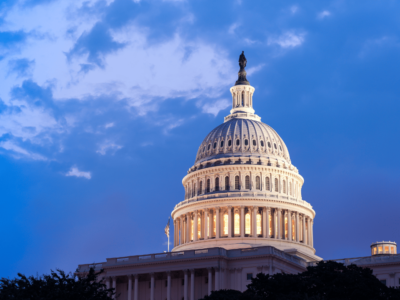
The U.S. Senate has passed a stopgap spending bill that, in addition to avoiding a government shutdown at the end of September, would preclude the White House Office of Management and Budget from finalizing a proposal that seeks to fundamentally redraw the ground rules for all federally funded research (The Cancer Letter, Aug. 7, 2026).
U.S. News & World Report has been publishing the best cancer hospitals rankings for 37 years, but this year is different.
Cancer Policy
The Centers for Medicare & Medicaid Services will move forward with its definition of “medically frail” that cancer patients and survivors on Medicaid will need to meet in order to earn an exemption from new work requirements.
Cancer Policy
After returning to the drawing board, the Health Resources and Services Administration has announced a second iteration of the 340B Rebate Model Pilot Program, after it withdrew the original pilot earlier this year.

News Analysis
Prediction market exchanges have allowed the public to bet on the ousting of Nicolás Maduro, the outcome of the Spain v. Argentina World Cup final, and whether Trump will use the word “hippopotamus” in the month of July.

Free
If a Mount Rushmore of Epidemiology were to exist, Joseph F. Fraumeni Jr. would be etched into the face of the mountain, former NCI Director Ned Sharpless once told Stephen J. Chanock.

Capitol Hill
The Centers for Medicare & Medicaid Services is planning a 33.4% cut to the reimbursement payments hospitals receive for all drugs acquired through the 340B program, according to a draft guidance published on July 7.

Regulatory News
FDA has released a final guidance for drug sponsors conducting clinical trials of psychedelics, including psilocybin, LSD, and MDMA, for the treatment of psychiatric and substance abuse disorders.

Cancer Policy
Medicare Advantage beneficiaries have access to fewer cancer specialists, when compared to traditional Medicare beneficiaries, according to a study published in JAMA Network Open.

Cancer Policy
The American Association for Cancer Research is urging the White House Office of Management and Budget to rescind its recent proposed rule that would give the administration unprecedented political control over government-funded science.
Cancer Policy
The Centers for Disease Control and Prevention has published an updated version of the charter for the Advisory Committee on Immunization Practices.
Cancer Policy
Delays in processing of U.S. visas are keeping foreign born resident physicians from joining U.S. residency programs, which began on July 1, a group of more than 20 medical societies said.
Cancer Policy
FDA is allowing ZYN nicotine pouches, a tobaccoless product that has soared in popularity since in recent years, to make the claim that its products are safer than cigarettes.
Cancer Policy
Starting on July 1, medical students will be precluded from borrowing more than $50,000 per year in federal direct unsubsidized loans.
In the Archives
When Robert Mayer was only a few years out of residency, in the 1970s, he signed on as an investigator of the NCI-supported Gastrointestinal Tumor Study Group, which conducted research into colorectal, gastric, and pancreatic cancers.

Regulatory News
Earlier this year, Joe Rogan, host of “The Joe Rogan Experience” podcast, sent a text to President Donald Trump.

Cancer Policy
Asal SayasSen. Ed Markey (D-MA) and Sen. Amy Klobuchar (D-MN) introduced a bill that requires NIH to develop a national strategy to address the rise of cancer in younger adults.

Cancer Policy
Judge Leo Sorokin, of the U.S. District Court for the District of Massachusetts, struck down a new policy under the Trump administration that tacks on a $100,000 fee for H1-B visas, which allows foreign nationals in “specialty occupations” to live and work in the U.S. The fee was previously $5,000 to $10,000.
If you believe in the miraculous healing power of ivermectin, hydroxychloroquine, and the harm from vaccination for HPV and COVID-19, you’ve got a powerful friend in Sen. Ron Johnson (R-WI), chair of the Permanent Subcommittee on Investigations of the Senate Committee on Homeland Security and Governmental Affairs.

Cancer Policy
The Centers for Medicare & Medicaid Services has released a guidance for states on how to implement Medicaid work requirements that will go into effect nationwide on Jan. 1, 2027.
Cancer Policy
As many as five million people may fall out of coverage on the Affordable Care Act Marketplace this year, according to an analysis from Kaiser Family Foundation and Wakely Consulting Group. The estimate projects enrollment to decline from 22.3 million people to 17.5 million.
Cancer Policy
EPA is rolling back limits on four types of PFAS chemicals, commonly referred to as “forever chemicals.” Some in this group of nearly 15,000 synthetic chemicals have been linked to a greater risk of cancer.
Cancer Policy
The U.S Supreme Court has declined to hear a slew of legal challenges filed by pharmaceutical companies such as AstraZeneca, Johnson & Johnson, Bristol Myers Squibb, Novo Nordisk, Novartis, and Boehringer Ingelheim.

Clinical
In a recent set of regulatory decisions that culminated in the resignation of FDA Commissioner Marty Makary on May 12, the agency appears to have reversed its hard-ball stance on flavored e-cigarettes.

Cancer Policy
The U.S. Department of Justice issued a letter alleging that Yale Medical School of violating anti-discrimination laws and instititing policies that disadvantaged white and Asian applicants while favoring Black and Hispanic applicants. The DOJ investigation, which was launched a year ago, reviewed the school’s admission policies for the class of 2023, 2024, and 2025, the...
Regulatory News
Disappointment hangs in the air as Replimune’s Biologics License Application for RP1 (vusolimogene oderparepvec) in combination with nivolumab in the treatment of advanced melanoma was denied again by FDA on April 10.
NCI
Tucked in at the end of a 20-minute talk that covered paylines, promising young investigators, and precision medicine, NCI Director Anthony G. Letai beefed up the alliteration with two more words that begin with a “p”: prevention and pilot.

The California Institute for Regenerative Medicine, a state agency tasked with awarding billions of dollars of scientific funding for stem cell and gene therapy, has rescinded a controversial policy that was disrupting the flow of funding to cancer research.

Cancer Policy
The Centers for Medicare & Medicaid Services has proposed a rule to update Medicare payments for hospice care in the next fiscal year, which begins on Oct. 1.
Free
It took Yuliia Lozko nearly three days to travel to Sidney Kimmel Comprehensive Cancer Center at Jefferson Health in Philadelphia.
Cancer Policy
Two-thirds of radiation oncologists surveyed by the American Society for Radiation Oncology in March are seeing Medicare reimbursements decline by 10% or more, according to a report published on April 1.
Cancer Policy
The Environmental Protection Agency held a public hearing on April 1 on a proposal to weaken regulations on emissions of ethylene oxide, a gas that is primarily used to sterilize medical devices and equipment (The Cancer Letter, March 30, 2026).
Cancer Policy
Immunization rates are declining in infants and toddlers 24 months and younger, according to the most recent National Immunization Survey-Child report from the Centers for Disease Control and Prevention.

The Directors
Leadership is changing at The Wistar Institute and the Helen F. Graham Cancer Center & Research Institute in the months to come—but the leaders of the two institutions say that this will have little if any effect on the clinical-research collaboration that they have spent the past 15years building (The Cancer Letter, July 12, 2019).

Clinical
Three decades ago, colorectal cancer was the fifth leading cause of cancer death in patients under 50 years old. For a physician treating the average 45-year-old, colorectal cancer was not a diagnosis that immediately came to mind.
Cancer Policy
Four out of five people returning to the ACA Marketplace say their healthcare costs are “higher,” compared to last year, according to a survey conducted by Kaiser Family Foundation in mid-February and early March. More than half of respondents reported these costs (premiums, deductibles, co-pays, or coinsurance) were “a lot higher.”

Cancer Policy
Judge Brian E. Murphy, of the U.S. District Court for the District of Massachusetts, temporarily blocked a series of recent changes to the CDC vaccine schedule.

Cancer Policy
The Environmental Protection Agency has proposed a series of amendments to weaken regulations on emissions of ethylene oxide, a gas that is primarily used to sterilize medical devices and equipment.
Cancer Policy
The H–1Bs for Physicians and the Healthcare Workforce Act—introduced by Rep. Sanford D. Bishop, Jr. (D-GA) and Rep. Mike Lawler (R-NY)—would exempt physicians and health care workers from a recently imposed $100,000 fee now required to obtain an H-1B visa, which allows foreign nationals in “specialty occupations” to live and work in the U.S. The fee was previously $5,000 to $10,000.
Cancer Policy
Yet another U.S. Preventative Services Task Force meeting is postponed—the third missed meeting since the start of the second Trump administration.

News Analysis
If you listen to GRAIL executives discuss the results of the long-awaited trial of the company’s multicancer detection test, you might be led to conclude that the company’s pivotal NHS-Galleri study had an overwhelmingly positive result.
Conversation with The Cancer Letter
Undeterred by the negative topline result of its pivotal trial of Galleri, a multicancer detection test, the test’s sponsor, GRAIL, said it’s forging ahead with its plan to get FDA approval and reimbursement from CMS and private insurers.

Conversation with The Cancer Letter
Philip E. Castle, director of the NCI Division of Cancer Prevention, said he was disappointed to hear that GRAIL’s NHS-Galleri trial did not meet its primary endpoint of reduction in late-stage cancers.

Cancer Policy
Mount Sinai hospital has formed a committee to investigate the ties between Jeffrey Epstein and Eva Dubin a Swedish physician and philanthropist who founded the Dubin Breast Center at the Tisch Cancer Institute whose name is featured prominently in the Epstein files.

Cancer Policy
Rep. Josh Gottheimer (D-NJ) introduced the FIRE Cancer Act on Feb. 27. The piece of legislation seeks to increase grant dollars available to local fire departments, specifically earmarked for cancer prevention, “including providing multi-cancer early detection testing or other forms of preventative tests.”
Clinical Roundup
High-level results from the randomized, controlled NHS-Galleri trial, which is evaluating GRAIL’s multi-cancer screening test, Galleri, over three years in 142,000 participants aged 50 to 77, reveals that the trial did not meet its primary endpoint of shifting cancer diagnosis from advanced stages (3 and 4) to earlier stage (1 and 2).

The call to Fire Captain Brian Buchanan and his crew came at midnight. Northern California firefighters were urgently needed to help fight the wildfires that were devouring big swaths of Los Angeles.
Cancer Policy
Bayer, the owner of the herbicide Roundup, offered $7.25 billion to settle thousands of lawsuits alleging that the product is responsible for causing cases of Non-Hodgkin lymphoma.

NCI
The National Cancer Advisory Board’s ad hoc Working Group on Extramural Research Concepts and Programs on Feb. 6 voted to approve four new and three reissue concepts.

Cancer Policy
A Super Bowl LX commercial by Hims & Hers, a controversial direct-to-consumer medication platform, featured the company’s new offering: Galleri, a multi-cancer detection test produced by GRAIL Inc.
Cancer Policy
HHS is withdrawing the “340B Rebate Model Pilot Program” that was intended to go into effect on Jan. 1, according to a joint motion filed last week.
Cancer Policy
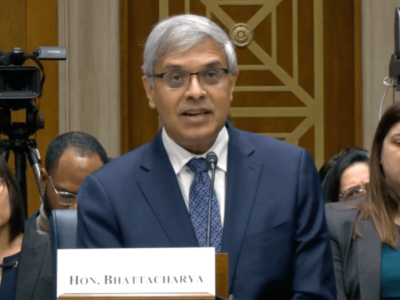
Pressed by Sen. Bernie Sanders (I-VT), NIH Director Jay Bhattacharya acknowledged that he is not aware of any study pointing to a causal link between vaccines and autism.
Cancer Policy
TrumpRx, a direct-to-consumer drug purchasing platform, limited to self-pay patients, is live, as of Feb. 5.
Cancer Policy
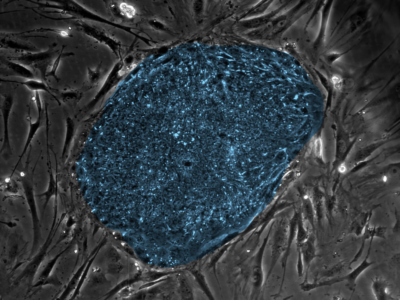
NIH is suspending the addition of new human embryonic stem cell lines to the Human Embryonic Stem Cell Registry, all while looking for alternatives. The agency also issued a request for information on “emerging biotechnologies to reduce or potentially replace remaining research reliance on human embryonic stem cells.”
Cancer Policy
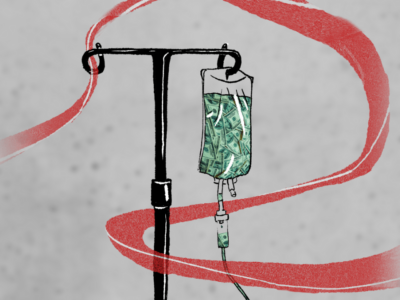
The Center for Medicare and Medicaid Services is entering negotiations with drugmakers over the price of 15 medications this year. The newly announced list includes four drugs used to treat cancer.
Cancer Policy
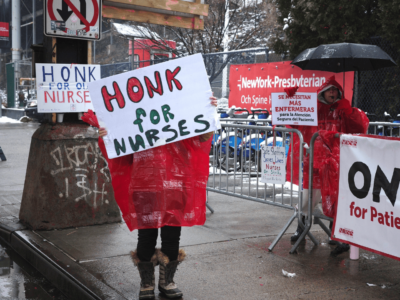
Around 31,000 healthcare workers in California and Hawaii joined the picket line Jan. 26 as the United Nurses Associations of California/Union of Health Care Professionals and Kaiser Permanente reached an impasse in contract negotiations.

In the Archives
Over his five decades as a radiation oncologist, Bernie Lewinsky has been collecting the relics of radiotherapy.
Cancer Policy
NIH will no longer fund scientific research that uses human fetal tissue from elective abortions, a practice that has contributed to the study of cancer, the development of vaccines, and the treatment of other diseases.

Cancer Policy
According to a preliminary tally, 1.4 million fewer Americans have signed up for health insurance through the Affordable Care Act Marketplace this year, according to early data published by the Centers for Medicare and Medicaid Services.

Health Equity
New Medicaid work requirements included in President Donald Trump’s “One Big Beautiful Bill Act” could result in as many as 1.6 million missed screenings for breast, colon, and lung cancers within the first two years, researchers at the University of Chicago reported in a paper published in JAMA Oncology earlier this month.
Cancer Policy
FDA, in collaboration with the European Medicines Agency, has published 10 principles to help guide pharmaceutical companies using artificial intelligence to develop drug, biological, and medical devices.

Clinical
A phase III clinical trial will soon begin testing the evidence collected thus far that points to a stunning prospect: the COVID-19 vaccine—a widely accessible mRNA vaccine already on the market—could make checkpoint inhibitors work better for lung cancer and melanoma patients.
Cancer Policy
Regulatory Toxicology and Pharmacology has retracted a literature review published in 2000 that concluded that glyphosate, a common herbicide used in agriculture and found in products such as Roundup, “does not pose a health risk to humans.”
Cancer Policy
The Centers for Medicare and Medicaid Services is awarding $50 billion to all 50 states as part of the Rural Health Transformation Program—funding established through the One Big Beautiful Bill passed in July.
Cancer Policy
A federal judge has blocked the Health Resources and Services Administration from rolling out a pilot program that would reimburse safety net hospitals that get a discount on drugs through the 340B program via a rebate, as opposed to the status quo of up-front savings. The preliminary injunction was issued on Dec. 29, just a few days before the program was slated to begin on Jan 1.

Cancer Policy
In a joint letter, 148 members of the U.S. Senate and House of Representatives are urging the Department of Education topreserve nursing as a “professional” degree—a categorization that gives students greater access to federal loans.

Regulatory News
The European Society For Medical Oncology has formally weighed in on a question that U.S. medical groups have been chipping away at as well: How can we guarantee safe and effective use of artificial intelligence in oncology?
Cancer Policy
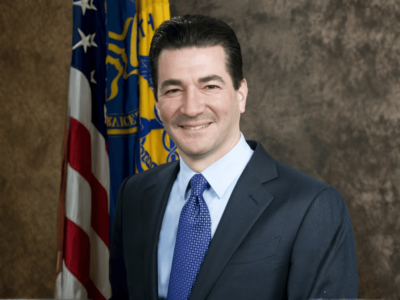
Scott Gottlieb, a former FDA commissioner, said a recent decision by the Centers for Disease Control and Prevention Advisory Committee on Immunization Practices’ to change its recommendation for when children should receive the hepatitis B vaccine is another sign of the ACIP’s diminished credibility as a scientific authority.
Cancer Policy
HHS has issued its AI strategy—“the first step” in making a “whole-of-department transformation” towards the use of artificial intelligence in public health, health care delivery, biomedical research, human services, and agency operations.
Cancer Policy
Medicare will soon launch a pilot program that will test the use of AI to automate the prior authorization process—a tool that will recommend whether to approve or deny coverage for a patient in the program.
Cancer Policy
Pediatric cancer patients are living longer than ever before, according to the AACR Inaugural Pediatric Cancer Progress Report, published on Dec. 4. The five-year survival rate for all pediatric cancers has increased from 63% in the mid-1970s to 87% in 2015-2021.
Cancer Policy
The Center for Medicare and Medicaid Services said it has negotiated down the price of 15 drugs, including significant discounts to four costly cancer treatment drugs, according to an announcement from Nov. 25.
Cancer Policy
Centers for Medicare and Medicaid Services has announced that monthly premiums for Medicare Part B will begin costing patients $202.09 per month next year—a 9.7% rise up from $185 in 2025—for individuals making an annual income of $109,000 or less.
Cancer Policy
The American Hospital Association, joined by four community-based hospitals, has sued HHS over a pilot program to reimburse drug costs to safety net hospitals enrolled in the 340B program through a rebate—a departure of the status quo of up-front discounts.

Free
The nagging pain in Mia Sandino’s right knee set in in September 2018, and throughout her freshman year at the University of Washington, she tried to ignore it. “I was being a very naive and invincible-feeling 19-year-old,” Sandino told The Cancer Letter. “I didn’t put two and two together that this area of the knee that...
Cancer Policy
CMS announced a new drug payment model called the GENErating cost Reductions for U.S. Medicaid (GENEROUS) Model that the agency plans to pilot next year.
Cancer Policy
The American Academy of Pediatrics does not recommend the routine use of leucovorin (folinic acid) for autistic children, according to the interim guidance issued by the physician group Oct. 31.

The Friends of Cancer Research annual meeting, to be held Nov. 4 in Washington, DC, will focus on three questions facing the field of oncology clinical trial design.
Cancer Policy
NCI officials were notably absent from the annual meeting of the Association of American Cancer Institutes and the Cancer Center Administrators Forum in Washington, DC, due to the government shutdown that started on Oct. 1.
Cancer Policy
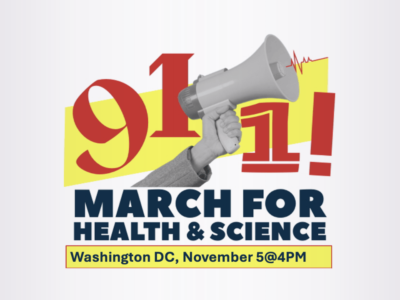
Scientists, health care professionals, and supporters will take to the streets on Nov. 5, calling for Congress to remove Robert F. Kennedy Jr. from his position as Secretary of Health and Human Services.
Cancer Policy
A court filing by Thomas Nagy Jr., deputy assistant secretary for Human Resources and chief human capital officer at HHS, claims that his department can proceed with the 982 RIFs it issued two weeks ago, despite a judge’s temporary order freezing the notices issued by two dozen federal agencies since the government shutdown that began on Oct 1.
Cancer Policy
A federal judge issued a temporary restraining order on Oct. 15, ordering the Trump administration to reverse the wave of layoffs that the administration is using as a pressure tactic intended to force the Democrats to accept cuts to popular health programs and reopen the government.
Cancer Policy
NIH has published a policy that prohibits U.S. researchers and NIH grant recipients working with human biospecimens to share this data with “countries of concern.” That list includes China (including Hong Kong and Macau), Russia, Iran, North Korea, Cuba, and Venezuela.
Cancer Policy
Governor Gavin Newsom Oct. 6 signed into law SB 351—a piece of legislation that prohibits hedge fund and private equity groups from interfering with the medical decisionmaking of physicians and their patients.

Chris Biggar, a 34-year-old from Ohio, had just landed his dream job working in R&D when he was diagnosed with stage 4 colon cancer.
NCI
NCI has released the names of the members of the newly formed ad hoc Working Group on Extramural Research Concepts and Programs. The group will perform the peer review functions of the now-defunct Board of Scientific Advisors.
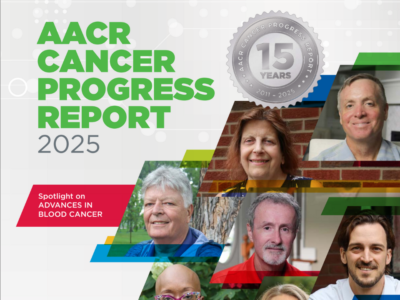
As NCI and NIH funding is being deliberated in Congress, this year’s 2025 AACR Cancer Progress Report had an unequivocal message: With 20 new anticancer therapeutics, new uses for eight previously approved anticancer therapeutics, two new early detection tools, and several AI-powered diagnostics approved over the span of just one year, cancer research funding yields a good return on investment.

The National Cancer Advisory Board approved five reissue concepts at a meeting Sept. 4.
Cancer Policy
To fight drug shortages that have dogged all of medicine—including oncology—for decades, the Trump administration is returning to a policy it first enacted during the president’s first term.

Cancer Policy
A federal judge ruled that the Trump Administration’s move to cut research funding to Harvard University was illegal—restoring more than $2 billion and all future grants to the institution.
Cancer Policy
FDA is shortening its timeline for publicizing Complete Response Letters, pledging to make them available to the public “promptly” after sponsors receive notice.

Podcast
Phil and Penny Knight made a record-setting $2 billion gift to OHSU Knight Cancer Institute.

Free
Earlier this year, amid efforts by the Trump administration to reduce the federal workforce, Lakshmi Grama decided to take early retirement from NCI.
Those anxiously anticipating the release of the U.S. News & World Report‘s evaluation of cancer hospitals will find one intriguing change.

Conversation with The Cancer Letter
The first large cancer screening/early detection initiative to be launched in 2025—the NCI-funded Vanguard study of multi-cancer detection tests—has started accruing patients through nine sites across the U.S.

Conversation with The Cancer Letter
On July 4, President Donald Trump signed into law “The One Big Beautiful Bill Act,” which is expected to deal a massive blow to Medicaid coverage and leave millions without insurance by instituting a work requirement for beneficiaries.

Regulatory News
The FDA Oncologic Drugs Advisory Committee July 17 recommended against approval of a Blenrep-based regimen for the treatment of relapsed or refractory multiple myeloma, citing unacceptable rates of ocular toxicity and overall poor tolerability of the drug.
Cancer Policy
The U.S. Department of Health and Human Services is searching for examples of employees, grant recipients, and contractors harmed by DEI efforts of the federal government in the last five years, as part of the Trump administration’s mission to end initiatives set up to diversify the workforce and bolster opportunities forhistorically disadvantaged groups.


