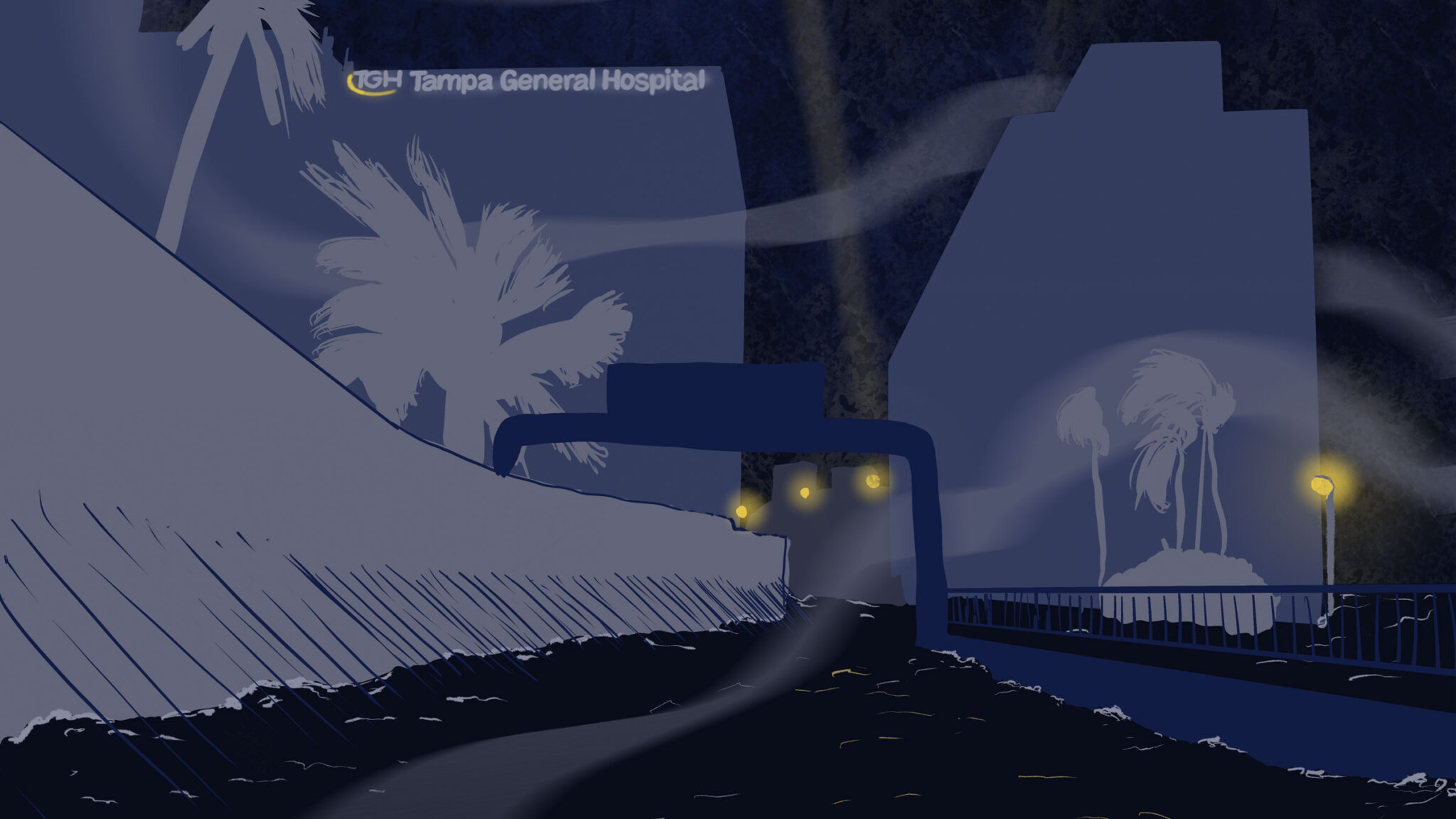
Ivan Borrello, medical director of the Myeloma, Bone Marrow Transplant and Cell Therapies Program at Tampa General Hospital’s Cancer Institute, watched as flood waters from Hurricane Helene heaved against a contraption called the AquaFence, which is, as the name suggests, a water-impermeable barrier made of marine-grade laminate and various metals that can withstand storm surges of up to 15 feet above sea level.
To access this subscriber-only content please log in or subscribe.
If your institution has a site license, log in with IP-login or register for a sponsored account.*
*Not all site licenses are enrolled in sponsored accounts.
Login Subscribe
If your institution has a site license, log in with IP-login or register for a sponsored account.*
*Not all site licenses are enrolled in sponsored accounts.
Login Subscribe