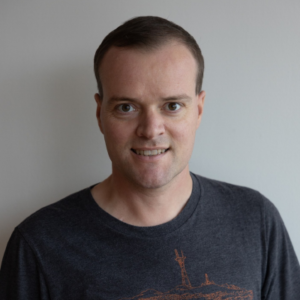
In November 2022, I was 43 years old, healthy, active, and the founding CEO of the publicly traded tech company GitLab.
I was doing a bench press when I felt a strange pain near my chest. I’d felt something like it before and it had passed. This time it didn’t. Two weeks later, unable to sleep at 4 a.m., I drove to the emergency room. The doctors found nothing on the X-ray and sent me home.
A few hours later, my GP called and asked if I knew how to meditate. I said yes. He told me to start immediately, because I might be having an aortic aneurysm and the pain could be my aorta starting to burst. I went back to the ER. My aorta was fine, but the scan found something else: a six-centimeter tumor growing out of my vertebrae.
The diagnosis was high-grade osteosarcoma of the thoracic spine.
What follows is my story through treatment, remission, recurrence, and into the fight for survival once the standard of care had been depleted. That fight required developing a new, fully personalized paradigm for my own treatment, one that I’m proud to say has resulted in me being measurably disease-free for over a year.
Mine is an n=1 case, but I believe it points to a possible future that can and should be more broadly accessible.
In the beginning
After my diagnosis, my team treated the cancer aggressively. I had surgery to remove the mass, a spinal fusion, radiation, and multiple rounds of chemotherapy so intensive that I required four blood transfusions.
During that same stretch of treatment, I got my first glimpse of what exists beyond standard of care. Years earlier, through Y Combinator, the famed startup accelerator, I’d become friends with Jose Mejía Oneto, MD, PhD, the CEO and founder of Shasqi. He was working on applying click chemistry to medicine. The vision was and continues to be to enable drugs to be active at the right location in the body, in order to limit off-target toxicity and maximize efficacy of drugs. Biotech investors were skeptical of the approach, but I believed, and became its largest investor.
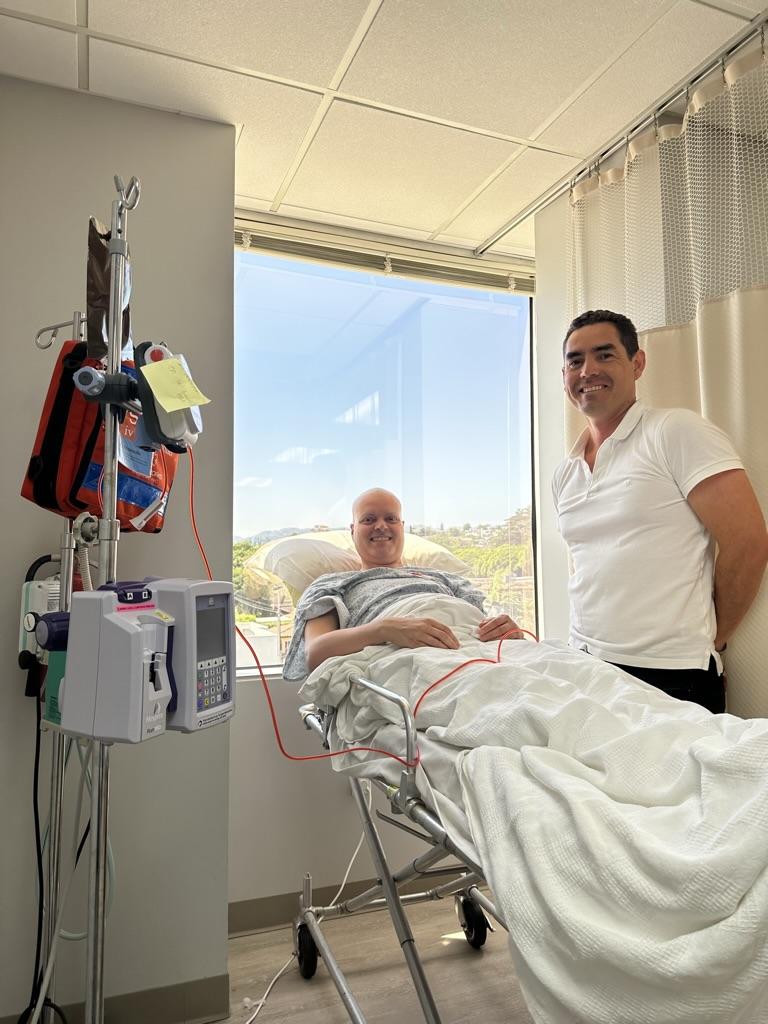
When I was diagnosed, Jose and my oncologist determined that the targeted chemotherapy his company was developing was a viable treatment option for me, but access looked nearly impossible. The clinical trial had already closed, and everyone told us the FDA route would be too slow. It wasn’t. We filed a single-patient IND, and it moved quickly.
Our roles quietly reversed. I had spent years helping keep Jose’s company alive. Now he was helping keep me alive. The combination of standard of care and the Shasqi therapy put my cancer into a remission that lasted about a year.
Then the cancer came back. It progressed locally, and there were no more standard of care therapies with extensive evidence behind them. My oncologist, whom I respect tremendously, told me he had nothing left he could recommend.
He suggested I look for a clinical trial. Osteosarcoma is rare, particularly in adults, and there were none that fit. Standard of care had run its course.
Going “founder mode” on my cancer
Paul Graham, who founded Y Combinator and who has spent decades thinking about what separates startups that survive from those that don’t, coined the term “default dead” to describe a startup that, at its current rate of spending and growth, will run out of money before it reaches a point where it can sustain itself.
When I ran out of standard of care, I was “default dead” in the most literal sense there is. My runway of options was at an end, and if nothing else changed, I was going to die.
But Graham has another essay, detailing a set of behaviors he calls “founder mode.” While a person operating in “manager mode” will delegate decisions to their team and trust in established processes to surface the right answers, “founder mode” requires diving in directly, getting into the details, staying close to the information, and making decisions at the pace the situation requires.
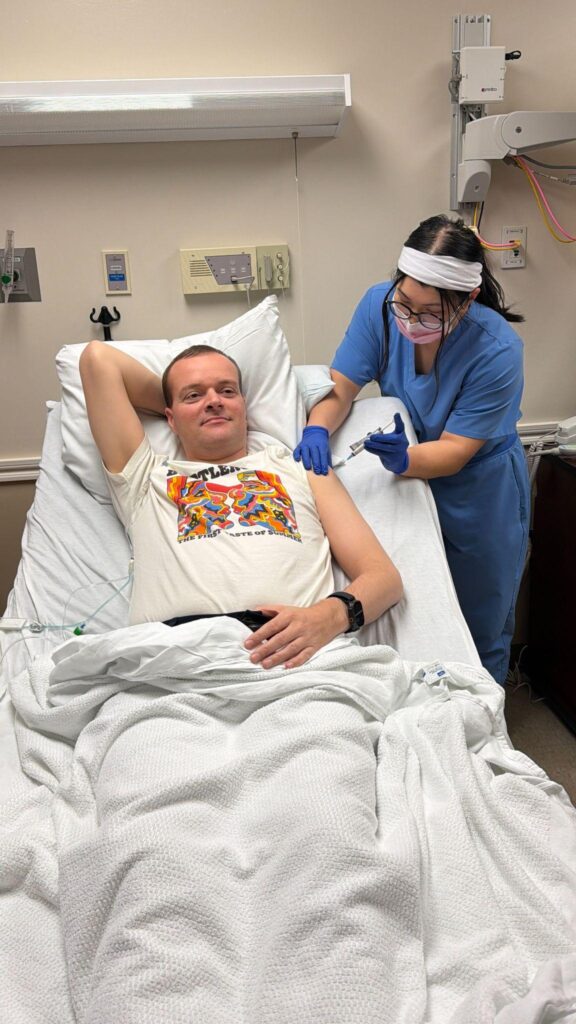
In a piece published earlier this year, the writer and investor Elliot Hershberg aptly connected this idea to what I did next: I quit my job and went “founder mode” on my cancer.
I said, “I’ll talk to anyone, I’ll go anywhere, and I can be there anytime.”
I took calls at odd hours and flew to wherever the right person was. With the help and prodding of Jose, as time was of the essence, even before standard of care ran out we looked for every potential support and alternative available.
As we found like minded individuals willing to explore beyond the obvious, I formed my own “ODAC” (FDA’s Oncologic Drug Advisory Committee), with members including Sant P. Chawla, MD, Santosh Kesari MD, PhD, Jeremiah Wala, MD, PhD, and Nima Afshar, MD.
To complement their expertise, I also assembled a separate scientific advisory board made up of informatically-savvy scientists, navigation specialists, and even a “CEO of my health,” Jacob Stern, to help me expand and triage my range of options.
I learned that a willingness to engage with a specific, messy, real case is a different trait than reputation. Some of the most useful input I got came from mid-career researchers with expertise in a pathway relevant to my tumor. When two experts disagreed with each other, that disagreement was often where the most useful information emerged.
Underneath all of it sat logistics nobody warns you about. One of the most challenging was getting access to my own tumor tissue. Not only was it difficult to get the institution to release the biopsy sample, it was difficult to get the surgery teams to handle it in a way where it could be preserved for maximal reuse.
In many ways, managing these logistics and clinical coordination mattered as much as anything else we did.
Building more runway
In the two years since going “founder mode” on my cancer, our approach has evolved into a four-part structure: Maximal diagnostics, creating new treatments, taking treatments in parallel, and scaling this for others. For me, it has worked so far. I’ll get into more detail below, but to summarize briefly the course of treatment after standard of care:
I first took an intensive course of immunotherapies, including select checkpoint inhibitors, a personalized peptide neoantigen vaccine, and an oncolytic virus, followed by a radioligand therapy, followed by a surgical procedure to remove what was left of the tumor once the radiotherapy had shrunk it sufficiently.
I’ve gone from “default dead” to having no evidence of disease for over a year, meaning that my monthly blood-based MRD tests come back negative, as well as my regular CT and biomarker scans.
I recognize that my access to incredible resources and a good deal of luck played into this result, but I also believe that for patients who have reached the end of their standard of care runway, there is much to learn from what worked for me.
Maximal diagnostics
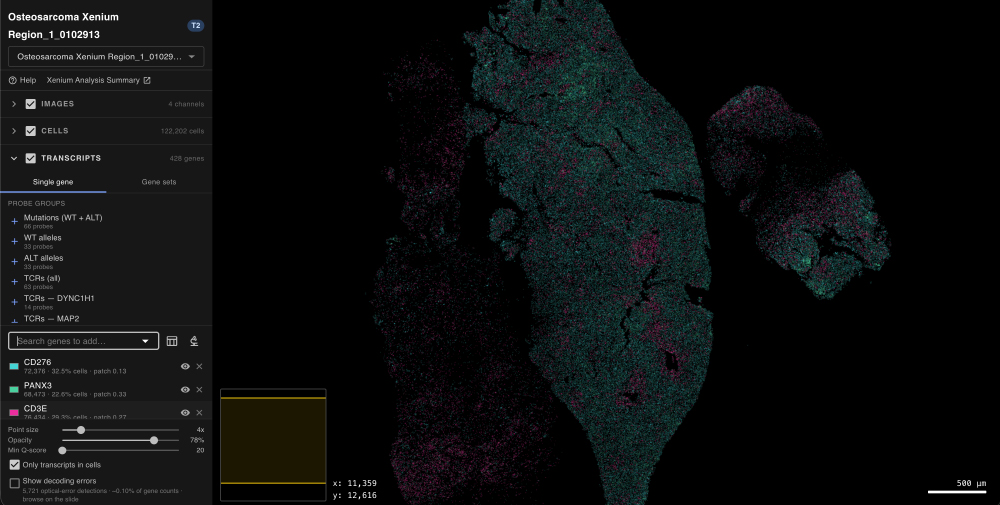
As I’ve learned from my doctors, the standard practice is to only run a test if you know how you’ll act on the result. Once in “founder mode,” we collected data first and figured out what to do with it after, and ended up with >30 terabytes of it, publicly available at osteosarc.com.
We’ve endeavored to measure as many aspects of my tumor as possible, including bulk DNA and RNA sequencing, single cell and spatial RNA sequencing, pathology staining, drug response testing on personalized organoids made from my tumor’s cells, multiple MRD tests, and radioligand imaging.
Source: osteosarc.com
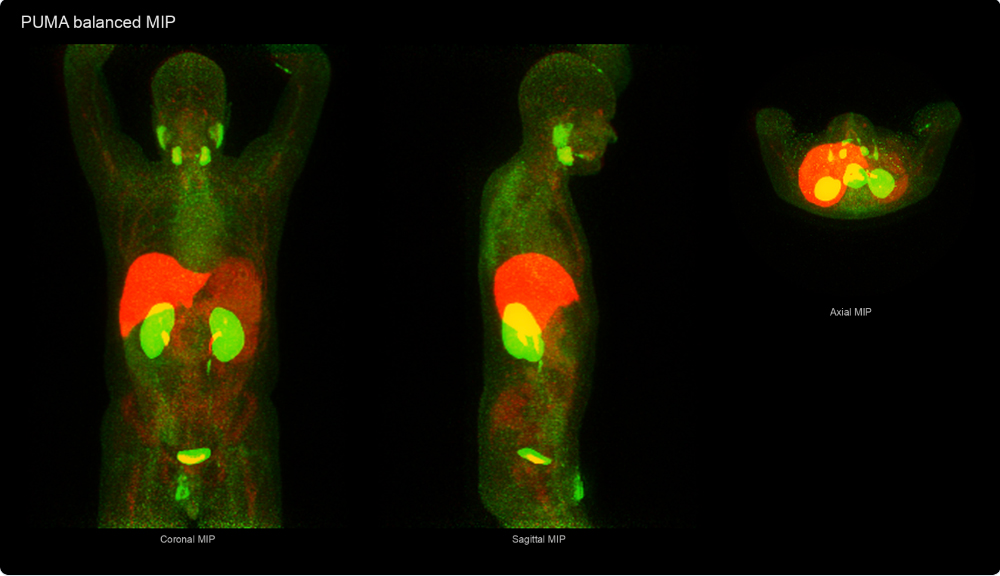
Through this approach, we found something specific and consequential. Bulk RNA sequencing of the recurrent tumor tissue first flagged unusually high expression of FAP, fibroblast activation protein. Single-cell sequencing confirmed expression not just in the fibroblasts in the microenvironment, but also in my tumor.
That mattered, because my team had identified an experimental treatment in Germany that could be administered by Richard Baum at CURANOSTICUM in Wiesbaden-Frankfurt, a pioneer in nuclear medicine who has successfully treated patients with a radioligand therapy targeting FAP. The drug pairs a FAP-targeting molecule with a radioactive isotope, delivering radiation directly to FAP-expressing cells. I traveled to Germany and went through the treatment twice. It worked better than expected: 60% necrosis, 20% shrinkage, and the effect was that surgeons were able to remove the bulk of the tumor.
The maximal diagnostics approach has also nominated other therapeutic targets we’re tracking closely, including B7-H3. There’s no approved B7-H3 therapy for osteosarcoma, but multiple antibody-drug conjugates targeting B7-H3 are in active development for other cancers, and if my disease were to recur, we could potentially rationally repurpose one of them.
Creating new treatments
Most of the drugs I’ve taken, as well as nearly all of the 25 drugs in my current therapeutic ladder, are off-the-shelf or traditional investigational therapies. But I’ve also had a chance to work at the leading edge of what’s possible in personalized medicine, and the pace of progress there surprised me.
Technical advances and a growing ecosystem around them are making truly bespoke treatments possible.
Source: osteosarc.com
One example: a personalized mRNA cancer vaccine, developed by a world-class team at Houston Methodist led by Dr. John Cooke and Dr. Jimmy Gollihar, tailored to neoantigens from my tumor. I was the first patient in an investigator-initiated trial for this vaccine, and the whole process, from initial discussion to injection, took six months.
This anecdote exemplifies how my team and I make decisions about my care. We engage deeply with specialists, complementing their expertise in the evidence base with the in-depth knowledge of my tumor that we’ve derived from the maximal diagnostics. Together, we map out risks (side effects) and rewards (likely response / recurrence prevention). In this case, we leveraged the preponderance of data from cancer vaccine trials and the COVID vaccine rollout to determine that the risk profile was low. Even though the evidence base on response was thin, the approach was mechanistically reasonable, making the risk versus reward favorable. The final decision always rests with me and my oncologist.
The breadth of what is possible in personalized medicine today struck me as much as the speed. We are running a custom binder discovery campaign against PANX3, a channel protein specifically expressed on my tumor cells. This is a relevant target for me but rare enough that it has not warranted an approach from biopharma that we know of.
We are building new radiodiagnostic agents to confirm where a candidate drug target would and wouldn’t bind in my body before committing to a treatment built for that target. We have a personalized TCR T-cell therapy manufactured, and a CAR T-cell therapy in development, to be deployed if needed.
In many ways, these are treatments of the future: built around the patient’s biology instead of a population average. There is still an enormous amount of work needed to bring bespoke therapies to patients who don’t have my resources or access. But an n=1 case like mine can still benefit the whole ecosystem, in two ways. It’s a tangible demonstration of what’s possible at the leading edge. And for much of what has been built for me, the manufacturing know-how, the regulatory groundwork, and in some cases the molecules themselves can inform or be reused for other patients. I see this as a foundation for getting more patients access to bespoke therapies when they need them most.
Running treatments in parallel
One of the core principles of my approach was taking many treatments in parallel instead of one after another. While pursuing the FAP-targeted therapy in Germany, I was also going through dual checkpoint blockade, NK cell therapy, an IL-15 superagonist, and an oncolytic virus, all in parallel. Combination chemotherapies are not controversial, nor are combinations between different modalities such as chemotherapy and radiation.
The concern I have encountered around combinations seems to arise from the fact that it is not possible to run a clinical trial to test every possible combination that may be beneficial to a particular patient or to identify the contributions of each treatment. This is especially true when dealing with investigational or personalized therapies, like I was.
In the two years since going ‘founder mode’ on my cancer, our approach has evolved into a four part structure: maximal diagnostics, creating new treatments, taking treatments in parallel, and scaling this for others.
The main source of risk with the parallel treatment approach is interactions between drugs, particularly overlapping toxicities that could be problematic. Our approach has been to work through these decisions with our scientific and medical teams based on known mechanisms of action, available pharmacological data, and biological first principles, even when we don’t have formal evidence for every combination. What we’ve learned is that the key to working with this uncertainty is accelerating our feedback loops. Instead of waiting months between tests, we tightened the cycle of diagnostics, imaging and biopsies to gather information more quickly and change course when needed.
People sometimes ask what I think actually worked.
Because I was running several treatments in parallel and because this is an n=1 case, it is impossible to determine causation or attribution with certainty. Because we have deep longitudinal profiling, we can develop reasonable mechanistic hypotheses. Darya Orlova and Hareem Maune analyzed longitudinal single-cell data from my tumor microenvironment, mapping cell-to-cell signaling across treatment. Their analysis points to a shift in neutrophil behavior, from largely inert to actively sending pro-tumor signals, a pattern that held through intensive immunotherapy and partially reversed after the FAP-targeted radiotherapy, suggesting the treatment may have disrupted a suppressive signaling network the immune system alone couldn’t overcome.
We see clonal expansion of tumor-reactive T-cell clones in the tumor microenvironment after the radioligand therapy, further pointing to a favorable remodeling of the immune milieu. Working with Will Hudson at Baylor, we’ve used monthly flow cytometry and single-cell TCR sequencing to track how my immune system has responded over time. That data shows sustained T cell activation well above healthy donors, along with a population of CD39+ CD8+ T cells that has persisted at elevated levels throughout, cells that show signs of prior antigen exposure and preferentially bind the anti-PD-1 antibody I was on, consistent with ongoing tumor surveillance.
While speculative, these data points highlight that it is possible to learn from longitudinal sampling and exploratory analyses.
I’ve said publicly that I’d rather die from a treatment than from my disease. I am aware this is an extreme position, and that I have made choices that would not be appropriate for every patient. I am still relatively young and generally healthy; the calculus would be different if I was elderly and frail. But I do believe that once the standard of care has been exhausted, patients deserve to have agency in their care and health systems should work to support their wishes.
The future is already here
While my cancer has been undetectable for more than a year, our work is far from over.
On the personal side, our ethos is “stay paranoid.” We continue to run maximal diagnostics, identify new biomarkers,
We continue to create new therapies, arm my immune system and update my therapeutic ladder as new information comes online.
But more broadly, we’re focused on scaling this approach to serve other patients who are facing the end of their standard of care runway.
What I did won’t scale in its current form. Saving my life has been a very expensive endeavor. But even beyond the financial aspect, I had numerous advantages, including a friend who was working in sarcomas, multiple avenues of access to care and a familiarity with the “founder mode” mindset. I’m not holding this up as a model. I’m holding it up as a proof of concept.
I’m not holding this up as a model. I’m holding it up as a proof of concept.
Another quote that stuck out to me from Elliot Hershberg’s piece was from the science fiction writer William Gibson, who said “The future is already here, it’s just not evenly distributed.” The diagnostic tools and treatments I leveraged are the future, and fortunately for all of us, they are getting better, cheaper and more accessible every year.
Sequencing a tumor down to the single cell is no longer exotic or impossibly expensive. Analyzing and interpreting the resulting data, which used to require significant time from multiple specialists that almost no patient could access, is becoming something AI tools can meaningfully democratize. This means that the kind of individualized reasoning that uncovered the FAP connection for me could reach far more patients. Computational modeling can now predict how a protein folds or how a molecule might bind, work that used to take years at the bench. And manufacturing a personalized therapy, a vaccine or a cell therapy built for one person’s biology, is possible, though challenges still remain.
None of this replaces the evidence base standard of care is built on. What I’m describing is what becomes necessary at the edge, where that evidence does not exist and a patient is otherwise “default dead.” This is a growing movement, and I see the work that Laura Esserman and her colleagues are doing with I-SPY 2, a breast cancer trial designed to learn and match patients to therapies as evidence accumulates, instead of waiting years for a single fixed endpoint, as stemming from the same point of possibility. I think what’s coming next takes this even further, down to one patient at a time.
Through Future of Cancer Care Today, part of the Sijbrandij Foundation, we’re working to build the infrastructure to help other patients look beyond the standard of care. We’re beginning by connecting patients with resources, information and support, but our goals are to develop programs that move the needle across sequencing, interpretation, modeling and manufacturing.
It is often said, the future is not guaranteed. While I am currently in remission, I do not say I am cured. Science is advancing, but much that is possible hasn’t made it to patients yet. To bring the future of medicine that I experienced to the wider population will require continued, determined effort.
I want to help that future arrive faster, and if that’s work you want to be part of, I’d like to hear from you—please reach out at cancer@sytse.com.