One of the great pleasures of summer is having more time to read.
Whether on vacation, at the beach, or listening to an audiobook during a cross-country drive or evening walk, summers offer an opportunity to read more broadly and reflect more deeply.
I know I’m writing for a cancer audience, and I think reading that we do outside of the cancer literature also expands our horizons and makes us more effective at our missions in cancer, at the bedside, in the lab, or behind a desk.
I tend to read one print book alongside an audiobook, which I enjoy while walking or traveling. I thought I’d share a few of my picks from this summer in case anyone is looking for one more book before these beautiful days slip away.
What to Make of a Life: Cliffs, Fog, Fire and the Self-Knowledge Imperative
By Jim Collins
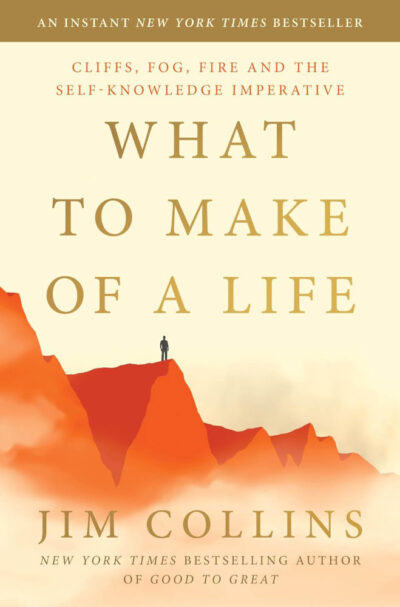
This was an audiobook that caught my attention this summer.
This book analyzed pairs of people for traits and experiences that shaped a life that was meaningful and fulfilling. All of us in the cancer field can be comforted in knowing that in finding our way here, we have likely aligned our encodings, one of the keys he identifies to finding satisfaction. During periods of non-alignment, he observes there can be discord or the sense of being in a fog, a sensation I could recognize, of going forward, but with unease and without a clear sense of direction.
He also argues that cliff experiences (episodes of trauma from which one experiences recovery) are a necessary part of the journey. We see our patients facing those experiences every day, and we are not immune from the trauma of loss, injury, or disruption.
Ultimately, igniting a fire in an area of deep passion can lead to focused activity, which he refers to as “hedgehog mode” (making reference to the allegory of the cunning fox and the persistent hedgehog—acknowledging that people may experience many distinct hedgehog phases over the course of a life).
One of the book’s most important ideas is that a meaningful life unfolds through distinct phases rather than a single continuous mission.
This idea resonated with me as I looked back at phases in my own life, with defined periods focused on scientific exploration, kidney cancer, physician-scientist development, and collaborative networks, all of which have helped shape my focus on community connectedness, while overlapping with equally important phases centered on personal growth, family, talent development, and community engagement.
The cliffs in my life played a role in focusing my attention, driving new alignments, and forcing phase shifts. Fundamentally, we can all find meaning and fulfillment, and the analysis of the lives of his prototypes: Barbara McClintock, Roger Sherman, and John Glenn are among my favorites.
How to Know a Person: The Art of Seeing Others Deeply and Being Deeply Seen
By David Brooks
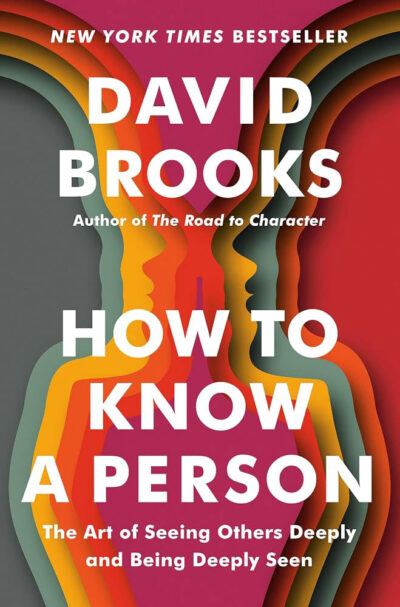
This one was another audiobook that I profoundly enjoyed and will probably listen to again.
This book is full of practical concepts that our palliative care colleagues will recognize instantly. The premise is simple: we can form deeper, more meaningful relationships by being curious about what truly drives the motivations and feelings of people.
The book probes more deeply into the meaning of connection and being seen as a unique individual. In this era of personalization in health care, with all the tools we have to create a personal plan of care—based on genetics and immune status, as well as social factors—this book is a wonderful reminder of the key ingredient of personalizing care: listening to the patient and seeing them as a whole person.
This practice extends to our interactions with each other, even in professional settings.
I’ve also seen this principle play out during Cancer Center site visits. The most valuable insights often emerge not from presentations, but from genuine conversation, curiosity, and the opportunity to understand how others see their work and mission.
There is a richness in conversation, in listening and digesting inputs, and in allowing oneself to see briefly through another’s eyes. This process also does a fantastic job of revealing both the uniqueness of each Cancer Center and the contributions that each Cancer Center makes to the overall impact of the Cancer Center Program.
Everything Is Tuberculosis
By John Green
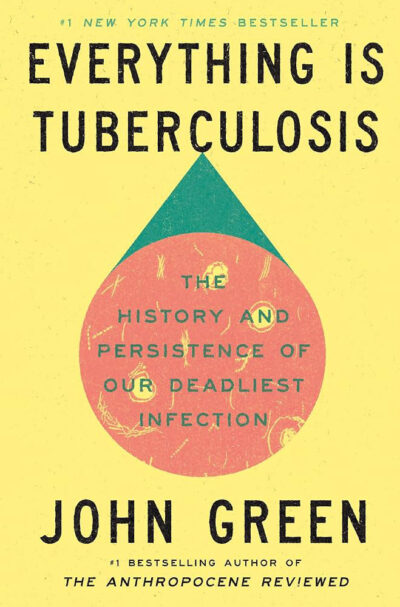
This was probably my favorite book of the summer.
My print reading usually takes a slightly different course than audio. I tend to switch between fiction and nonfiction, but this summer I leaned more toward science topics.
This book uses a simple premise and, through the action of storytelling, reveals the massive impact this single disease has had on our culture, language, social fabric, and global economics, as well as driving models of health care, of course. Told through the lens of tuberculosis patient Henry Reider, the book also unleashes a thoughtful and deep analysis of the impact of poverty, health discrimination, and generational loss that is intricately tied to the disease.
It is easy to see the parallels with cancer. Many of the inequalities of prevention, screening, treatment, and outcomes for cancer are not intrinsically different from that of tuberculosis.
This book shares the story in a poignant and tractable way and reflects the ways we can and should see people who experience cancer, so that we can ultimately make larger advances for all people.
Why Fish Don’t Exist
By Lulu Miller
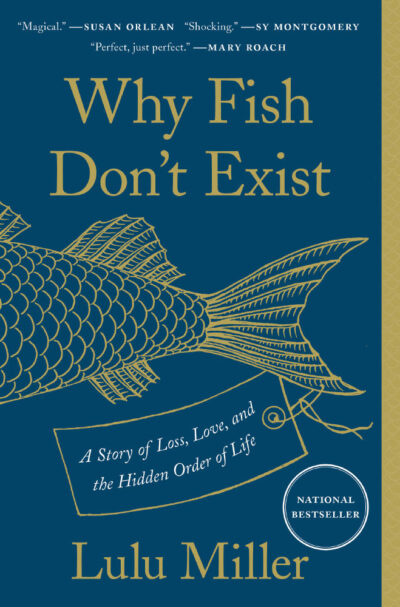
Finally, this book was loaned to me by our head of communications. It is a wonderful read for a summer week at the beach, and is a personal memoir woven into a biography of fish taxonomist David Starr Jordan.
Jordan was a hedgehog, who at the peak of his scientific career was responsible for cataloging and classifying his passion class (remember kingdom, phylum, class, order, family, genus, species?)—fish, before going on to be the President of Indiana University and the founding President of Stanford University.
He experiences thrilling discoveries, as well as his own share of cliffs, including facing involvement as a possible suspect in the strychnine murder of Jane Stanford (of Stanford University fame). I will confess, as a 2x graduate of that great university, I was unaware of the drama behind her death!
Interwoven with the memoir of the author, the book challenges the reader to realize that rigid classifications are in fact transient constructs, as well as artificial.
Life is complex and messy, and those classifications can both enable us to define the world but do so in a way that creates blinders to the true complexity of the universe. I won’t spoil the dark turn this rigid classification mentality takes in history, but this book illustrates how neglecting to be truly curious, to dig in and really know a person or an issue, can allow the structure to prevent seeing some beauty or truth that has been there all along.
In cancer, we are at an extraordinary moment. As we move beyond traditional classifications and uncover deeper layers of biology, we are learning that complexity is not a barrier to progress but a pathway to it. The same curiosity that helps us better understand cancer can also help us better understand our patients, colleagues, and communities.
Thanks for joining me on this summer reading tour. Each of these books offered more than a compelling story; each challenged me to see people, purpose, and complexity in a new way. Those are perspectives worth carrying into every season, including our work in cancer.