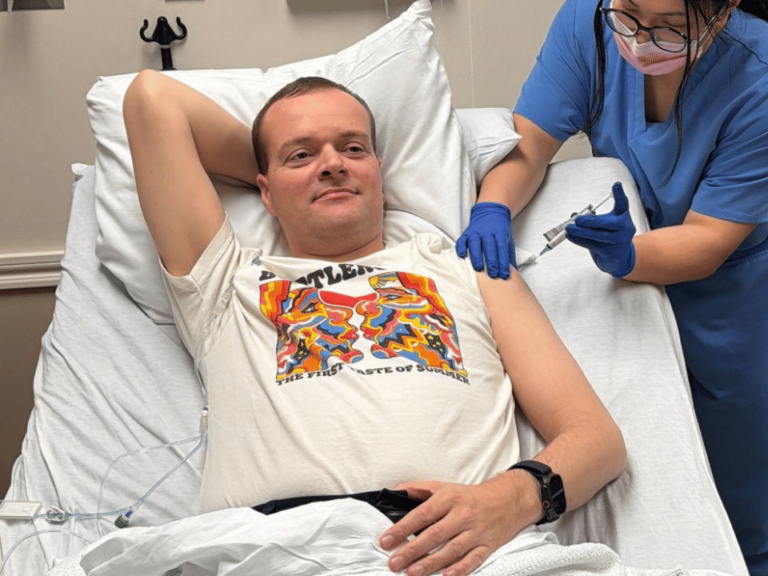
Blood test could guide future treatment in Ewing sarcoma, Dana-Farber study finds

Share on facebook
Share on twitter
Share on linkedin
Share on email
Share on print

A blood test may help doctors identify which patients with Ewing sarcoma are at greater risk of relapse, according to a study led by investigators at Dana-Farber/Boston Children’s Cancer and Blood Disorders Center and the Children’s Oncology Group. The findings lay the groundwork for more personalized treatment strategies in this rare cancer.

To access this subscriber-only content please log in or subscribe.

If your institution has a site license, log in with IP-login or register for a sponsored account.*
*Not all site licenses are enrolled in sponsored accounts.

Login Subscribe
Table of Contents

YOU MAY BE INTERESTED IN

FDA granted full approval of Tecelra (afamitresgene autoleucel) and expanded its indication to include pediatric patients 12 years of age and older with unresectable or metastatic synovial sarcoma who have received prior chemotherapy, are HLA-A*02:01P, -A*02:02P, -A*02:03P, or -A*02:06P positive and whose tumor expresses the MAGE-A4 antigen as determined by FDA-approved or cleared companion diagnostic devices. 
The Ohio State University Comprehensive Cancer Center—Arthur G. James Cancer Hospital and Richard J. Solove Research Institute has been approved for research funding by the Patient-Centered Outcomes Research Institute to study whether adding chemotherapy before standard treatment with immunotherapy, radiation, and surgery for certain sarcomas will reduce the risk of the cancer returning.

Never miss an issue!

Get alerts for our award-winning coverage in your inbox.

Login