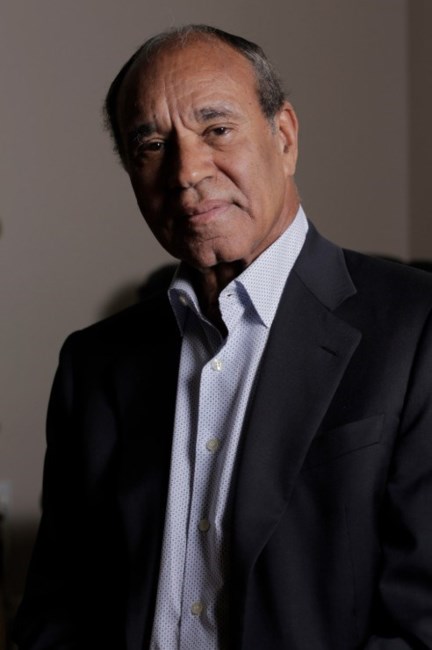
Harold P. Freeman, a surgeon who started his career in Harlem, where, in addition to performing surgeries, he pioneered the system of patient navigation, and who studied health disparities and served as president of the American Cancer Society and chair of the President’s Cancer Panel, died on Aug. 11. He was 93.
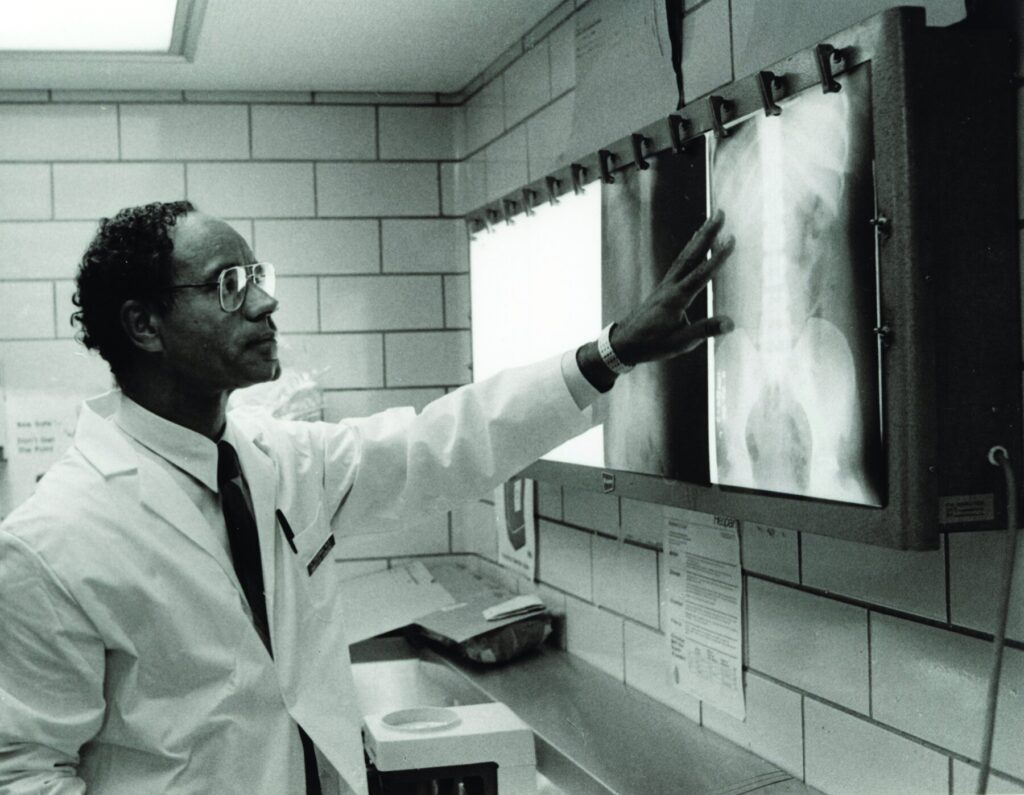
After receiving training at Howard University Medical School, Howard University Hospital, and what was then the Memorial Sloan-Kettering Hospital for Cancer, Freeman started his career at Harlem Hospital Center in 1967, where he remained through 2000.
Later, he practiced at Columbia University and North General Hospital. In 2003, Freeman and fashion designer Ralph Lauren founded the Ralph Lauren Center for Cancer Care and Prevention, which is located in Harlem.
Freeman was the center’s chair.
In an interview with The Cancer Letter four years ago, Freeman reflected on the determination he had to “cut cancer out of Harlem” when he got there in 1968.
“I’m ready to do it. I’m skilled. I know how to cut cancer out. I want to cut it out of Harlem. I can’t do that. I can’t cut it out. It won’t yield. It won’t yield to the surgeon’s knife. It won’t yield to what we call the Bard-Parker, which was the name of the surgeon’s knife. Cancer wouldn’t yield,” Freeman said in an interview with Robert A. Winn, director of Fox Chase Cancer, and John Stewart, founding director of LSU Health/LCMC Health Cancer Center. “Then I get to the reality, I can’t cut it out. Why? Because the people were coming in too late with cancer for me to be able to cut it out” (The Cancer Letter, Feb. 11, 2022).
A Cancer History Project archive of Freeman in his own words appears in this issue.
Freeman was among the first scientists to focus on health disparities.
In one stark finding, in an influential paper published in The New England Journal of Medicine in 1990, Freeman showed that Black men in Harlem were less likely to reach the age of 65 than men in Bangladesh.
“Dr. Freeman was a remarkably talented man who remained laser-focused on ensuring his work truly served communities,” Robert A. Winn, director of Fox Chase Cancer Center, said to The Cancer Letter.
Source: American Cancer Society
Said Winn:
His life reminds us that medicine and science, while vital, cannot solve everything on their own.
He showed us that creativity and determination can open new pathways, like patient navigation, that help ensure advances reach those who need them most.
When a leader like Dr. Freeman passes, we feel that loss deeply. Yet his legacy endures, challenging us to carry that work forward.
His example calls us not only to do our best, but to be fully present with the communities we serve, listening and ensuring that the promise of science reaches everyone.
Winn serves as the guest editor of this publication every February, during Black History Month.
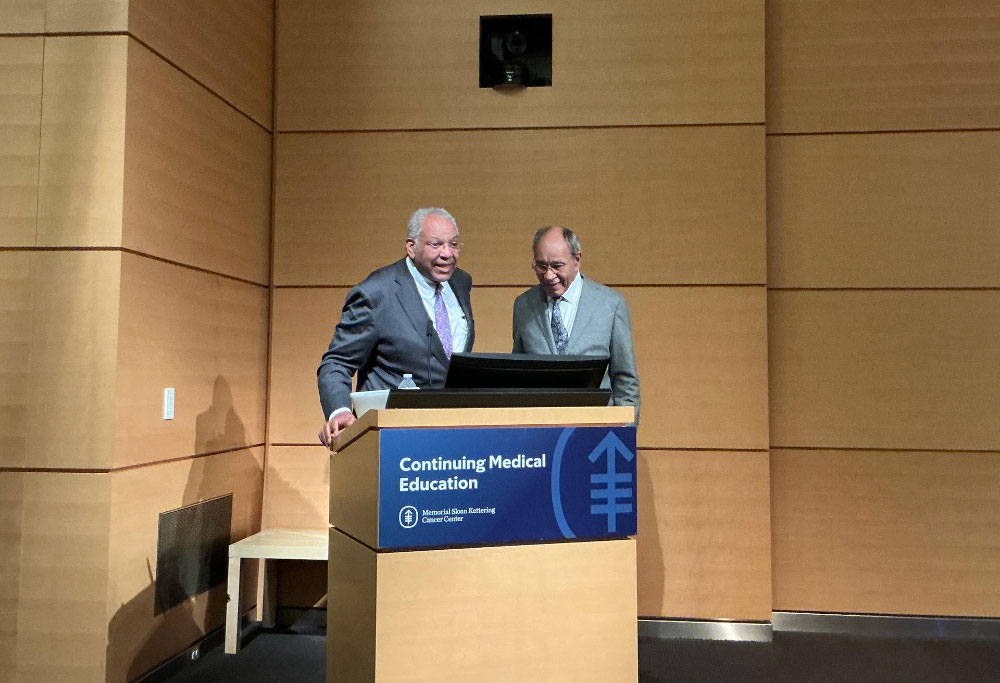
Freeman’s contributions to public health include convincing America’s cancer establishment to focus on the problem of health disparities, said Otis Brawley, the Bloomberg Distinguished Professor of Oncology and Epidemiology at Johns Hopkins University Sidney Kimmel Cancer Center.
“Harold Freeman came to the national scene in the area of minority health in the mid-1970s,” Brawley said to The Cancer Letter. “He was director of surgical oncology at Harlem Hospital and was highly critical of the American Cancer Society for not focusing effort on getting care to poor and minority people. ACS leadership challenged him to get involved in the ACS and he did. He ultimately rose to serve a one-year term as volunteer president in 1988-1989.”
Source: Otis Brawley
Said Brawley:
Dr. Freeman used this position to attain tremendous publicity with a New England Journal of Medicine article in 1990, pointing out that the life expectancy of men in Harlem, where he practiced, was lower than men in Bangladesh.
He was appointed chair of the President’s Cancer Panel by President George H.W. Bush, and later reappointed by President Bill Clinton. His influence spanned across political philosophies.
He held a series of hearings through the 1990s, pointing out that socioeconomics—and especially poverty—was the driver for what would then be referred to as “disparities in health.”
At the time, and even now, many mistakenly attributed Black-white disparities to racial differences in biology.
Harold Freeman was a leader in making the case that race is not a biological categorization—it is a sociopolitical categorization.
He referred to the belief in racial differences in biology as “racialism,” cautioning that calling it “racist” was a turn-off, whereas “racialism” often led to a discussion.
As a young NCI staffer to the President’s Cancer Panel, I distinctly remember Freeman telling a well-known and influential Black congressman to “shut up,” as his rhetoric was supportive of arguments for racial genetic inferiority.
Many associate Harold Freeman with his advocacy for patient navigation, as he became an advocate for it in an effort to get socially deprived patients better-quality care once diagnosed.
For many of us, his placing emphasis on socioeconomics and political reasons for the disparities in health was his greatest contribution.
It speaks to the causes of cancer in the population as well as the quality of care access issues. He was a voice that getting all people adequate high-quality care was a moral imperative.
Brawley is a co-editor of the Cancer History Project.
“We are deeply saddened by the passing of Dr. Harold Freeman, a visionary physician, pioneer of patient navigation, and a cherished friend,” Freeman’s friend and funder Lauren said in a post on Instagram.
Lauren’s post continued:
More than two decades ago, Dr. Freeman inspired me with his unwavering belief that every person deserves access to high-quality cancer care, regardless of their circumstances. His groundbreaking work in patient navigation transformed the lives of countless patients and families and forever changed the way cancer care is delivered.
Together, we opened the Ralph Lauren Center for Cancer Care and Prevention in Harlem, built on a shared commitment to addressing disparities in cancer care and bringing hope to communities in need. His legacy lives on through the patients he helped, the barriers he removed, and the work that continues every day at the MSK Ralph Lauren Center and all our Ralph Lauren Cancer Centers around the country.
Dr. Freeman taught us that compassion, dignity, and access to care can change lives. I will always be grateful for his friendship, wisdom, and extraordinary example.
Patient navigation, the program he developed after listening to his patients in Harlem, has since become a pillar of oncology care. Today, patient navigation is being used to manage care by commercial entities and can be reimbursed by the Centers for Medicare and Medicaid Services (The Cancer Letter, Jan. 5, 2024).
Freeman served as president of the American Cancer Society from 1988 to 1989 and chaired the President’s Cancer Panel from 1991 to 2002. He was initially appointed by George H.W. Bush, and continued to serve under Bill Clinton and George W. Bush, for a total of four three-year terms.
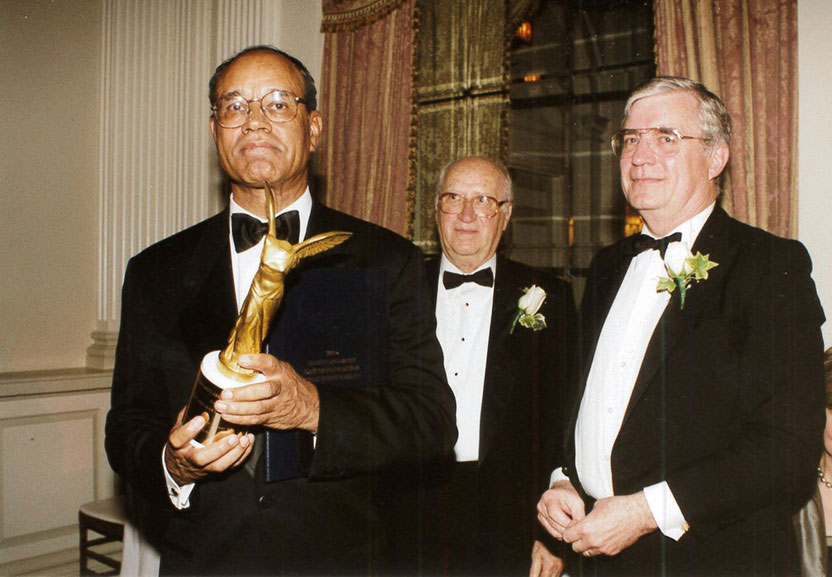
Source: Lasker Foundation
In 2000, while serving as chair of the President’s Cancer Panel, Freeman became an NCI associate director as well as director of the Center to Reduce Cancer Health Disparities. He remained in that position through 2005.
Harold Paul Freeman was born in Washington, DC, on March 2, 1933 to Clyde Freeman Sr. and Lucille Thomas Freeman. His father was an attorney; his mother an elementary school teacher.
His older brothers were Clyde and Thomas and all three, like their parents, were enthusiastic tennis players. Harold graduated as salutatorian from Dunbar High School in 1950 and Catholic University in 1954. He graduated from Howard University Medical School in 1958.
As a young NCI staffer to the President’s Cancer Panel, I distinctly remember Freeman telling a well-known and influential Black congressman to ‘shut up,’ as his rhetoric was supportive of arguments for racial genetic inferiority.
Otis Brawley
Freeman married Artholian (Arti) Palmer in 1957. They had two sons, Hal in 1959 and Neale in 1963. Both sons became physicians and tennis players.
Freeman completed his residency in general surgery at Howard University Hospital in 1964 and then moved to New York where he completed a senior residency at MSK in 1967. Harold then joined the staff at Harlem Hospital where he remained, after becoming director of surgery in 1974, until 2000.
Freeman subsequently was director of surgery at North General Hospital and then president and CEO until 2001.
His awards included the Mary Woodward Lasker Public Service Award received in 2000 “for enlightening scientists and the public about the relationship between race, poverty and cancer.” In 2003, the American Society of Clinical Oncology presented Freeman with the Special Recognition Award.
A children’s book highlighting the origin of this program, The Navigator, co-authored by Ali Bovis, is due to come out this fall.
Freeman is survived by his wife Arti, sons Hal and Neale, and grandchildren Thomas, Elle, and Savannah.