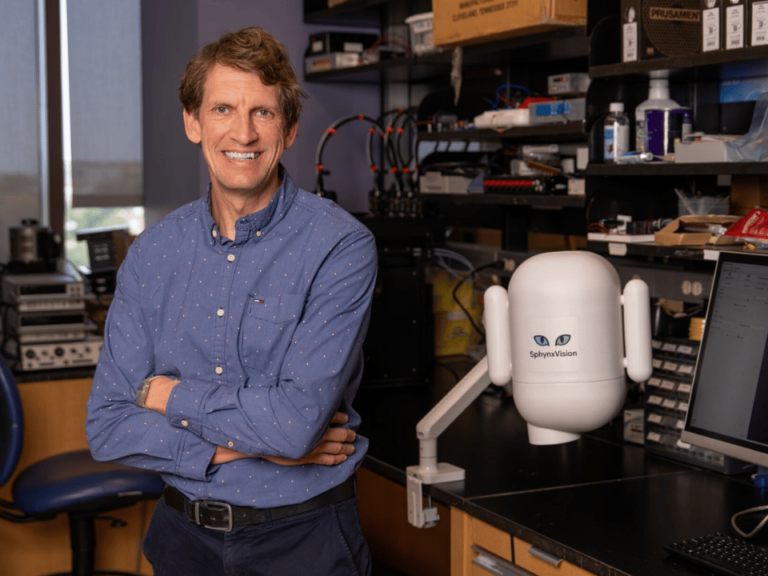
Ge Jin and Bingcheng Wang received a $3.7 million five-year grant to explore why those living with HIV have a higher risk for certain kinds of cancers, such as lung cancer.
Jin and Wang, co-principal investigators of the grant, are members of the Case Comprehensive Cancer Center’s Molecular Oncology Program. Jin is a professor at the School of Dental Medicine and Wang is the John A. and Josephine B. Wootton Endowed Chair of Research, professor at the School of Medicine, and a researcher at MetroHealth System.
The U.S. Department of Health and Human Services estimates more than 1.7 million people are newly infected with HIV every year. These 1.7 million people are more likely to get cancer at an earlier age and at a higher frequency, Jin said.
“We want to look at the molecular events involved in these processes, and find out why,” Jin said in a statement. “We need to find a better way to detect cancer in these patients at an earlier stage.”
Jin and Wang found that the immune cells from HIV patients secrete exosomes and attack lung cells, thus promoting the growth of cancer.

Wang said he believes the grant from NCI will “further investigate this novel mechanism of lung cancer promotion by HIV and develop new therapeutic agents to treat the disease among people living with HIV.”