J. Alan Diehl named deputy director and chief operating officer of Case CCC

Share on facebook
Share on twitter
Share on linkedin
Share on email
Share on print

J. Alan Diehl was named deputy director and chief operating officer of the Case Comprehensive Cancer Center.

Diehl will work closely with Stan Gerson, director of Case Comprehensive Cancer Center, to coordinate activities based on the recently updated strategic plan, priorities identified by the executive committee Diehl has been a member of, and to lead multi-investigator initiatives and grant applications.

Diehl joined Case Western Reserve University in 2019 as chair of the Department of Biochemistry in the School of Medicine. Diehl was director of the Cancer Cell Biology Program at the Abramson Family Cancer Research Institute at the University of Pennsylvania, and most recently served as associate director of basic science at Hollings Cancer Center at the Medical University of South Carolina.

Diehl’s research focuses on the discovery of molecular mechanisms that contribute to uncontrolled cell proliferation and decreased cell death. He is an expert in Program Project Grants and has already advised Case CCC member groups gearing toward submissions. Diehl also serves on multiple External Advisory Boards for NCI-designated cancer centers.

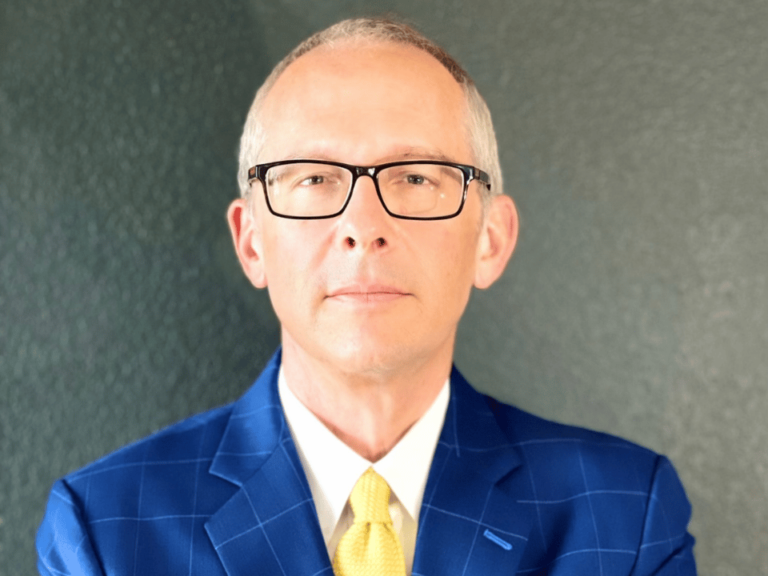
Table of Contents

YOU MAY BE INTERESTED IN

When our hematological malignancy testing pilot project began in Eldoret, Kenya, there seemed to be a mismatch in relation to progress in healthcare. The region, like much of sub-Saharan Africa, had been focusing on combatting infectious diseases such as HIV and malaria—which was much-needed—yet cancer care was under-resourced. 
Artificial intelligence is rapidly transforming biomedical research and healthcare. Large language models, foundation models, and AI agents are increasingly being deployed to assist with data interpretation, literature review, clinical decision support, and translational research. 
In modern oncology, important insights from clinical trials often emerge years after initial publication. As new therapies extend survival and transition more patients into long-term remissions, clinicians and researchers are increasingly looking beyond initial response rates to understand durability, long-term safety, and even the possibility of a cure. 

Never miss an issue!

Get alerts for our award-winning coverage in your inbox.

Login