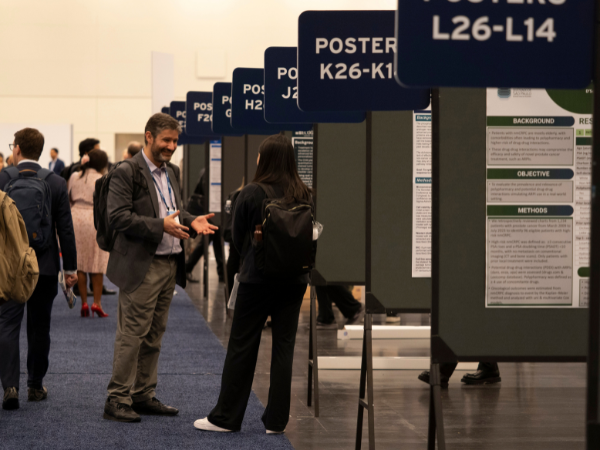
The American Association for Cancer Research recognized Cornelis Melief with the seventh AACR-CRI Lloyd J. Old Award in Cancer Immunology during the AACR Annual Meeting 2019.
Melief is an emeritus professor at the Leiden University Medical Center in the Netherlands, as well as chief scientific officer at ISA Pharmaceuticals.
He is being recognized for his discovery of mechanisms of immune recognition of cancer antigens and activation of antitumor responses, and for his role in the development of innovative immunotherapies, including a vaccine against the human papillomavirus, a leading cause of cervical cancer. He currently focuses on developing new immunotherapies and improving their effectiveness through combination therapies.
As a member of the AACR, he served as a member of the Immunology Advisory Committee from 2005 to 2011, and as a member of the editorial board of the AACR journal Cancer Research.
Melief has been recognized with many scientific honors, including the SOFI Prize Leiden in 1986, the AkzoNobel Prize in 1995, the European Federation of Immunological Societies Lecture Award in 2007, the Ceppellini Lecture from the European Society of Immunogenetics in 2009, the William B. Coley Award from the Cancer Research Institute in 2009, and the Queen Wilhelmina Research Prize from the Dutch Cancer Society in 2010.