
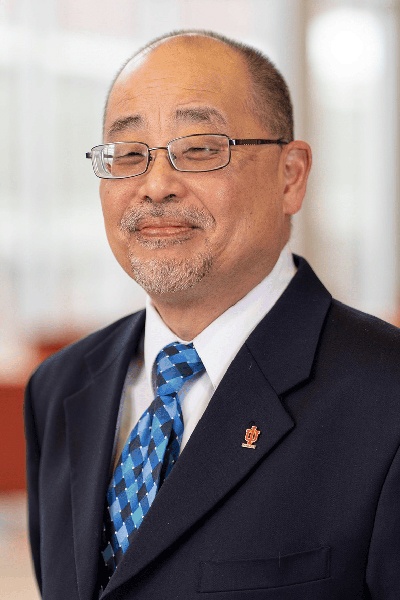
“We’ve always argued that money comes and goes, but if you lose a generation of scientists—you can’t buy them back,” said Kelvin Lee, director of the Indiana University Simon Comprehensive Cancer Center.
Protecting young investigators who have been barraged by a year’s worth of uncertainty and bad news is a top priority for cancer centers.
“Certainty is not there anymore,” said Yolanda Sanchez, director of the University of New Mexico Comprehensive Cancer Center. “So, what do you do? How do you gather resources from other places in order to continue the mission? Because we’re not stopping. We’re not telling students that they can’t be graduate students, they can’t be postdocs anymore. We are continuing the work. We just have to shift the funds from one place to another. Because we need the continuity, we need the innovation, and we need them to stay here until the paylines stabilize.”
On this episode of The Directors Podcast, Sanchez and Lee spoke with The Cancer Letter’s Paul Goldberg about safeguarding their young researchers while keeping their institutions resilient amid this era of uncertainty.
This episode is available exclusively on The Cancer Letter Podcast—on Spotify, Apple Podcasts, and YouTube.
Both Sanchez and Lee agree: Diversification of funding is key to survival.
“One of the things that is different about New Mexico is that we have incredible support from the state. Support for our cancer center is written into law and it’s recurring,” Sanchez said. “And they call us their cancer center. The legislators call our cancer center their home, and they come and have meetings here, and they invite us over to the roundhouse. So, I think that [means] looking for that diversity of portfolio of support for that innovative approach to reduce the burden of cancer in our catchment area.”
The University of New Mexico Hospital in Albuquerque, an affiliate of the cancer center, is the state’s premier safety-net provider.
“We take care of everyone, regardless of what’s in their wallet,” Sanchez said. “Our mission is to provide world-class, seamless, integrated care driven through innovation and research and delivered with compassion to all New Mexicans. And you can imagine the challenges both on the clinical side and on the research side—and really, clinical research is clinical cancer care.”
Sanchez and Lee said that in this tumultuous season, they are strategizing to grow diversification in funding in order to become less dependent on one source of funding.
“How do we diversify what we do to be more resilient and not be dependenton NIH funding for everything?” Lee said. “How do we grow that diversification? But I do think that diversification is an important thing. Our evolutionary biologists have said that even in systems that don’t have a single human being in it, diverse ecosystems are more robust than non-diverse ecosystems.
“That is a biological fact. And I think that’s an organizational fact.”
“I think the story that we were telling ourselves, and the uncertainty that was keeping us up at night, was that we were getting a 40% cut, a 15% [cap] in indirects, and then all grants with multi-year funding, which was going to be devastating to the cancer research community,” said Sanchez.
With great efforts on the part of the cancer community and Congress, these cuts were largely–but not entirely–averted. “But there is going to be an impact, and I think the important thing for us as directors is that we need to protect the new investigators,” Sanchez said.
Navigating political, economic, and societal change is a big part of the job of a cancer center director.
“This is not the only time that we have been here,” Sanchez said. “We had a recession in 2006 and 2008. We had another structural change in 2014, and then we had COVID, and now we’re here. So, there is no perfect time for this job; we just have to work together.”
Directors of cancer centers have stuck together through this rough patch.
“I’m really grateful that, being a new director, I had this community of directors that met every other week, and we really brainstormed and supported each other. That’s been great,” Sanchez said. “Even though I’m up at night, I have a community that I can go to.”
To become more resilient, cancer centers are looking for sources of funding beyond the federal government. Industry is a logical partner, Lee said.
“Our battle is with cancer, and that has never changed,” Lee said. “And we tell our cancer center, despite all the turmoil that we’ve gone through, we still have lives to save. I think that for us, certainly, partnerships with pharma have come more front-and-center.”
Partnerships with pharma can make cancer centers more effective.
“So, there have been a lot more partnerships and a lot more engagement,” Lee said. “And I think that’s good for everybody. I think it’s good for pharma, I think it’s good for cancer centers. I think it’s good for us—thinking about what the right mixes are. I think it’s also good for us, plugging into how we actually take our science and move it into our patients, So,it really supercharges the translational pipeline.
“It makes us think more of that development of intellectual property, something that IU has not really done a lot of until recently.”
Explore previous episodes of The Directors.
Some highlights:
On site visits as a component of CCSG review
Until last year, the review of CCSG applications was managed by NCI and required in-person site visits. Last year, the review of the CCSG program was transferred to the NIH Center for Scientific Review. In another change, NIH eliminated the requirement for in-person site visits, which some directors of cancer centers find useful while others regard it as unnecessary.
Said Sanchez:
Like everything else that has happened in the last 13 months, this has been the season for the pivot.
We have accommodated a new review process. We are responding and rising to the challenge. I think site visits are important, and the reason for that is that you can’t tell on paper the presence of a cancer center to its catchment area. You can describe it, you can tell stories, but it’s when you visit the cancer center… I have been at the Simon’s Cancer Center, So,I know exactly the impact and how people work together, and I think that’s what you get from a site visit.
How does the team work together and how do they serve the community through research, through education, through community engagement, and patient care? So, I do think site visits are important.
Right now, we’re in a process. We’re waiting to hear how the process is going to roll out, and I think once the process is established, future reviews are going to go more seamlessly.
Lee compares the site visit process to Kabuki theater, the 400-year-old classical Japanese dance-drama known for highly stylized performances, elaborate makeup, and vivid costumes.
“I was told by a cancer center veteran that the CCSG renewal, and in particular the site visit is Kabuki theater. It is art, but it is very highly stylized art,” he said. “And so, now we don’t have the Kabuki theater anymore. We don’t know what the stylized components are anymore. And I’ll say sort of selfishly, it’s better you than me, because I think Yoli’s point is we’re going to discover how this whole review process goes.
“I think it’s still evolving, and I think that the reviewers are evolving. So, I think that we won’t actually know what the actual Kabuki theater looks like for another two or three years, because everything is still moving.”
How is the impact of a cancer center measured?
Said Lee:
Impact is in the beholder’s eye. And so, what does impact mean?
How do we measure that in a consistent way? Now that we aren’t just counting beans— publications, grant funding—how do you actually measure impact and say impact in a population study is more or less than impact in a basic science area?
And then, how do we merge all that together in sort of figuring out the overall impact of a cancer center?
“I think it’s going to be an evolving process and it’s going to take maybe not three years, maybe two years to stabilize, which is about three cycles per year or two or three cycles per year,” Sanchez said. “I think it’s important to understand that even though the guidelines change, it takes the reviewers a couple of cycles to catch up to the guidelines.”
On funding and partnerships
Funding for team science has been hectic this year, Lee said.
How do we move forward in a more efficient way? How do we grow because we need to provide access? Access to clinical trials, access to basic research, to education, to patient care? That’s the $64 million question.
Yolanda Sanchez
“I think one of the things that has been more complicated is team science,” he said. “It’s been a very big focus for us at IU Simon, and we’ve been pushing towards that. But the larger grant mechanisms and the team science things—it’s been much less clear how we are going to do that. And in fact, we were talking at leadership council yesterday, and a group that is renewing its SPORE just found out a month ago that they could renew their SPORE, and so, now they’re going ahead with doing that, but there was a lot of uncertainty for them as to whether or not they were actually going to be allowed to renew it.”
The big question, said Lee, is what paylines are going to be.
“Nobody was clear how much money the NIH and NCI was going to have. So, if you’re going to do that, what do you protect? Do you protect the individual grants or do you protect the larger team science grants? So,I think that that’s all been part of the mix, and hopefully over the next few months, we’ll get more clarity coming out of that period of uncertainty that we were in,” Lee said.
Sanchez said that whatever happens with funding—things will never be quite the same. And perhaps that is a good thing.
Said Sanchez:
We are putting a lot of our energy into areas that before we didn’t have to.
I think I’ve become more of a cheerleader in my role as director. And one of the things that’s been harder for us—considering we have a very unique population in our state, a beautiful unique population in our state—therefore, the training grants for our students and postdocs are serving the unique populations of our state.
We have a certain amount of training grants that are going to enroll these students that are going to be from very different backgrounds.
I think that one of the things that we have to really be aware of is that no matter what happens in the next five years, we’re not going back. We’re not going back to the way we used to do things. We’re not going back to the processes that we were used to.
And so, that presents both a challenge and an opportunity. The challenge is we need to grow to meet the needs of New Mexicans for their cancer prevention diagnosis and care. We need to find an innovative and more effective way to translate discoveries into the clinic and the discoveries that are going to impact the people that we serve both locally and globally.
So, where do we put our resources? What is that new way of doing things? One way to fill that valley of death of early-phase investigator-initiated trials is that we started a pilot program to fund those specific trials.
Now they have to go through a process. They have to be reviewed, they have to have a protocol writer, they have to have a pilot to show feasibility. But then we fund those first two studies as proof of concept that we can do it.
And then pharma will say, “Yes, I want to partner with you because you’ve got the process all worked out.”
So, I think it’s important that we decide not in isolation. I think the cancer center directors group is amazing. How do we move forward in a more efficient way? How do we grow because we need to provide access? Access to clinical trials, access to basic research, to education, to patient care? That’s the $64 million question.
On community outreach and engagement
At UNM, community outreach and engagement has not been affected by funding uncertainties.
“There are challenges. I’m not going to say that there aren’t, but for example, we have a uniquely monolingual Spanish navigation program for women to get screened for cervical and breast cancer,” she said. “And if they have a diagnosis, then they are also navigated to care with an explanation of what clinical trials are so that they also enroll in clinical trials. That’s amazing. And that has continued with support from the cancer center, and it’s one of our flagship programs… that has not been impacted.”
Lee said IU’s catchment area is comparable to New Mexico’s.
Said Lee:
Our catchment area is the entire state of Indiana, and we are very cognizant that there are rural communities that are being left behind.
So, the question is how do we impact that? How do we actually get out there? One example is that our mobile lung cancer screening unit just got on the road last year to drive out to all the communities in Indiana.
In fact, the route that they mapped was based on the incidence of lung cancer that our office of community outreach engagement put together that heat map.
So, they’re just not driving across the state of Indiana randomly, they’re actually hitting all the counties that have the highest rate of lung cancer. That was a critical component of our office of community outreach and engagement to do that. And over the last year, I think we’ve had a 75% increase in lung cancer screening.
Part of it is the mobile unit, but part of it is now that mobile unit also brings awareness to all our hospitals and clinics that we should be doing that.
If they can’t come to us, we need to be able to get out to them. And that’s not only screening, but that’s also clinical trials. We need to be able to do clinical trials, design clinical trials that can be done out in the community.
And we’re not talking about taking a complicated trial and saying, “Hey, let’s just dummy this down and put it out in a community hospital.”
We’re designing a clinical trial that impacts the people who are out there—for example, lung cancer prevention—how do we design that trial so it can be actually implemented in a primary care setting or a secondary hospital critical access hospital So, patients can actually get out there.
How do we move technology out there, remote sensing, all those other things? So, that’s an important piece, and that’s very much tied into community outreach and engagement.
Listen to the full episode on Spotify, Apple Podcasts, and YouTube.
A transcript of the podcast is available below:
Paul Goldberg: Well, Dr. Sanchez, Dr. Lee, thank you so much for joining us on The Directors, the podcast of The Cancer Letter where the first question is always the same. And the first question is, what is keeping you up at night as you’re running your institution’s comprehensive cancer centers in February, 2026?
Kelvin Lee: Well, thank you, Paul for having us. It is quite a pleasure. We’ve heard wonderful things about this podcast. So, certainly, I think the thing that’s keeping me up and has kept me up for the last 12 months really is the uncertainty. And I have to compliment all of our advocates, the AACI, AACR, American Cancer Society, all the patient advocates, and then all of our legislative and governmental supporters that have really sort of tamped down, especially the NIH funding issues. But really the concern continues to be the uncertainty going forward.
I mean, I think that as cancer center directors, we are very used to a very structured way of how things are organized, how things are reported, how things are measured, and that’s all changing on top of the changing landscape for funding. And then the questions of, well, I mean, I don’t think any of us want to go through that again. So, then the questions are how do we mitigate and prepare for that in case that happens again? So, those are the things that really keep me up at night. It’s that uncertainty and how do we adjust for it? How do we plan for resiliency in the face of uncertainty? How do we manage all those things?
Paul Goldberg: Yoli?
Yolanda Sanchez: Thank you for having us as well. And I would like to echo Dr. Lee’s gratefulness for all the advocates and everyone who stepped up during the past 12 to 13 months and keeping right front and center the mission and the vision of the NCI and the cancer centers. And that is really to take care of the people that we serve. We are a cancer center that’s affiliated with a health system that has a safety net hospital. So, we take care of everyone regardless of what’s in their wallet. And so, our mission is to provide world-class, seamless, integrated care driven through innovation and research and delivered with compassion to all New Mexicans. And you can imagine the challenges both on the clinical side and on the research side and really clinical research is clinical cancer care. And so, what we have been doing is I try to pull my hair out at night so that I can come back and the day and not have my people pull their hair out so that I can come across as someone that is taking opinions.
And like Dr. Lee said, give us ideas of how to be resilient because this is not the only time that we have been here. We had a recession in 2006 and 2008. We had another structural change in 2014 economic then we had COVID, and now we’re here. So, there is no perfect time for this job; we just have to work together. I’m really grateful that, being a new director, that I had this community of directors that met every other week and we really brainstormed and supported each other. And that’s been great. That even though I’m up at night, I have a community that I can go to.
Paul Goldberg: Yeah, I’m just thinking out loud. A year ago, we all would be pulling our hair out over, oh my God, what is coming down the pike? But what came down the pike was not nearly as bad. And to some extent that’s the process you have described, but there’s also a process that you haven’t described, which is patients. We haven’t heard from patients yet. We need to, don’t we?
Kelvin Lee: Oh, for sure. And I actually do think that we have heard from patients. I actually think that the patients were the voice that all our government folks, all AACR, ACCI, all our organizations, they were ultimately who everybody was listening to and the impact of that. And so, really hats off to them for stepping up and telling their stories and making compelling for why cancer care, cancer research, cancer education are all important. But I think we have to continue that. And I think that one of the themes that had come out during the last year was I think a lot of people, including perhaps some of our cancer patients, don’t really realize how much advancement has happened because of cancer research over the last 20 years.
And I take care of myeloma patients, and I can say that we’ve seen that in the last five years that things that we would never have imagined possible five years ago are now standard of care and looking another five years ahead, the things are remarkable. Our ability to communicate that, I think is going to be incredibly important and get that out to the public, get that out to our patients, get it out to all of our advocates so they can also communicate the same message. But I think our patients have been tremendous supporters of what we’re doing. We just need more of them.
Paul Goldberg: Actually, that’s where I was going. Yoli, have you been able to use them?
Yolanda Sanchez: Yeah, so we have a lot of patients who have patient stories and that is part of our portfolio of how we communicate with statewide on the importance of cancer research and the importance of a comprehensive cancer center in the state, which we are the only one, the only NCI designated cancer center in New Mexico. And we have shared those stories with AACI and others, and I think that in front of the appropriations committees in the hearings, they were patient stories and I think we organized around and we have our community advisory boards that were ready to rise to the call to go to Washington and tell their stories.
Paul Goldberg: Yeah, well, I guess I’m kind of looking forward to the day when patients will be able to say, “I brought my cancer center director to Washington.”
Kelvin Lee: Yes.
Paul Goldberg: Rather than the other way around. That’s where I was coming from.
Kelvin Lee: Yes.
Paul Goldberg: So, it’s in a way, it’s not like the centers using patients, but the patients using centers.
Kelvin Lee: I think the last year has actually opened that door. I don’t think people had been thinking that way until over the last year. The advocacy has really ramped up and now that whole point of, “Hey, somebody from Muncie should call me up and say, I’m visiting my senator, you want to come out and come with me?” Happy to do it. Happy to do it.
Paul Goldberg: Yeah. I’m going to kind of shift gears abruptly. Can we talk about site visits and actually maybe even a little more broadly about renewals? And I think Dr. Sanchez, you are going through one now. What’s it like? Do you wish you had a site visit?
Yolanda Sanchez: So, thank you for that question. Like everything else that has happened in the last 13 months, this has been the season for the pivot. We have accommodated a new review process. We are responding and rising to the challenge. I think site visits are important, and the reason for that is that you can’t tell on paper the presence of a cancer center to its catchment area. You can describe it, you can tell stories, but it’s when you visit the cancer center…I have been at the Simon’s Cancer Center, so, I know exactly the impact and how people work together, and I think that’s what you get from a site visit. How does the team work together and how do they serve the community through research, through education, through community engagement, and patient care? So, I do think site visits are important. Right now, we’re in a process. We’re waiting to hear how the process is going to roll out, and I think once the process is established, future reviews are going to go more seamlessly.
Paul Goldberg: Yeah. Dr. Lee, what’s worrying you?
Kelvin Lee: When I was way back when, when I did have hair and I hadn’t pulled it all out.
Paul Goldberg: Oh, I knew you were going there. I’m sorry.
Kelvin Lee: I was told by a cancer center veteran that the CCSG renewal, and in particular the site visit is kabuki theater. It is art, but it is very highly stylized art. And so, now we don’t have the kabuki theater anymore. We don’t know what the stylized components are anymore. And I’ll say sort of selfishly, it better you than me as for, because I think Yoli’s point is we’re going to discover how this whole review process goes. I think it’s still evolving, and I think that the reviewers are evolving. So, I think that we won’t actually know what the actual kabuki theater looks like for another two or three years, because everything is still moving and even sort of the site visits, skinny site visits, no site visits.
We’ve always argued that money comes and goes, but if you lose a generation of scientists—you can’t buy them back.
Kelvin Lee
I think all that’s still evolving. So, I think that those are questions. And then one area that we’ve always asked is there’s now focus on impact, but impact is in the beholder’s eye. And so, what does impact mean? How do we measure that in sort of a consistent way? Now that we aren’t just counting beans publications, grant funding, how do you actually measure impact and say impact in a population study is more or less than impact in a basic science area? And then how do we merge all that together in sort of figuring out the overall impact of a cancer center?
Paul Goldberg: But actually as far as the review, last time, the three of us talked about it, was at the AACI annual meeting, and all of us just kind of blew my mind to hear that the reviews didn’t go so badly.
Kelvin Lee: That was good.
Paul Goldberg: The review was so good.
Kelvin Lee: That was very promising. And this is the thing, again, resonates with this sort of what keeps me up at night. If that stays that way, that’s great. If it somehow morphs into something else or all of a sudden we can’t get good reviewers or that process changes, then we are back in unknown territory. And that’s again, one of the areas that I think we’ll have to see what happens over the next year in terms of the reviews, whether they stay consistently good, which was very promising to hear at AACI, or if they somehow are changing because of the mix of the reviewers or available reviewers, et cetera.
Yolanda Sanchez: Yeah, I think it’s going to be an evolving process and it’s going to take maybe not three years, maybe two years to stabilize, which is about three cycles per year or two or three cycles per year. I think it’s important to understand that even though the guidelines change, it takes the reviewers a couple of cycles to catch up to the guidelines.
Kelvin Lee: At least, at least a couple of cycles.
Paul Goldberg: Yeah. But in this case, these are center directors who have been the reviewers and people of your set of skills who have done quite nicely in terms of saying, “Hey, this is not really that important.”
Kelvin Lee: Yeah. Well, to Paul, your point, I mean, it’s going to be critical that center directors continue to be-
Yolanda Sanchez: Continue.
Kelvin Lee: … important part of the review process, and we’ve all encouraged each other to be on each other’s review teams, et cetera, because I do think that that corporate memory is going to be key in the review process, especially since everything is changing. I think that sort of shared memory of what things are important will be important in sort of sustaining a consistent review process.
Paul Goldberg: A few months ago I was talking with Tony Letai and I asked him specifically, what’s going to change with the cancer centers? And he said that the process for renewals is going to change and become simpler. Have you seen that happen yet?
Yolanda Sanchez: I think the new NOFO that is being circulated, and they were taking opinion from the directors and the associate directors of administration is geared to simplifying. So, cutting the number of pages, combining sections. So, I think that we are headed in the right direction. If there were to be a site visit, I don’t think it’s going to be as much kabuki theater as before. I think it’s going to be more straightforward. So, I’m hopeful that that’s the case.
Kelvin Lee: I agree. I mean, our challenge has always been when we hear it all the time, it’s like, hey, they cut our page limits down from 12 to 6, and then the reviewers asked us for 14,000 pages of information. It’s like, okay, but we only have six pages to talk about it. So, I think the simplification piece has to go hand in hand with what the reviewers are told to expect. We can, if we’re going to simplify things where, for example, space, we’re not going to be able to give you maps of the entire campus that label where every single shared resource is anymore. So, I think that that’s going to be an important component of the simplification is that that carries down through the program officers, through the review teams to say, all right, this was not asked for in the new format. So, you can’t really go and ding them for something that they didn’t get asked to provide.
Yolanda Sanchez: And now to put a positive note on all that.
Paul Goldberg: Well, yeah, you’re up for renewal. You have to have positive notes.
Yolanda Sanchez: I think as a new director leading the renewal process, even though it was a little bit bumpy, it really allowed us time to reflect on what we have, our accomplishments and a time to say, okay, let’s gather and say who are we going to be for each other and for the people of New Mexico in the next five years. I think with all the glitches and things that are happening and maybe the extra bureaucratic paperwork that may have gone into renewals in the past, I think it is really an important moment for centers to take stock.
Kelvin Lee: It really has brought us closer as a community because we all climbed into the lifeboat together, and so it really has brought us closer as a community.
Yolanda Sanchez: Yes.
Paul Goldberg: It’s interesting. I can’t resist making a smart aleck-y comment about kabuki theater because kabuki theater is pretty easy to do, really. You just need the performers and the little face paint. But what I’ve heard people say, it’s more kind of more degraded from there to Phantom of the Opera or maybe The Lion King, and the site visit is where the chandelier falls and the puppets come out. So, I don’t know why I said that.
Kelvin Lee: I think we’re going to build that into our next site visit if we actually have it. I’m going to come down in a chandelier. I think that might actually either get us a really good score or really bad score.
Paul Goldberg: And then the kabuki people will come out and dance on the ashes. But I don’t know why I did this, but I just couldn’t resist. Since we’re all talking about fun things like theater. What about the paylines?
Kelvin Lee: They’re too low. I mean, if you asked any cancer centers, your director had said, “Hey, where are the paylines?” Everyone will say, “Well, they’re not at 80%, so they’re too low.” I think the question is where are they going to be? I mean, again, with the new budget, with the multi-year funding components, where they’re going to be. They’re certainly better now than 4%, right? Because at 4% essentially you’re looking at five grants that score to one, and then how do you pick of those five grants, how do you pick the two that are going to be funded? So, I think that if we get back up into the 9% range, I think that that’s a lot better. I do think that people are worried because of the issues with multi-year funding and how that skewed everything. Everybody’s still… I’m certainly still waiting for the other shoe to fall, and that goes back to the uncertainty piece. So, I think we want to see it go into operation and see how the year ends up.
Yolanda Sanchez: I agree. I think that the story that we were telling ourselves and the uncertainty was keeping us up at night that it was that we were getting a 40% cut, 15% [cap] in indirects, and then all grants with multi-year funding. Upfront funding, and which was going to be devastating to the cancer research community. Thanks to the work of all the advocates and the patients and the AACI, the AACR, ACS everyone including our directors who went up before the Appropriations committee and the community that was built. We are in a much better place. Is it perfect? No, but there is going to be impact, and I think the important thing for us as directors, and you may disagree, Kelvin, is that we need to protect the new investigators.
Kelvin Lee: That’s exactly right.
Yolanda Sanchez: Because we need the continuity, we need the innovation, and we need them to stay here until the paylines stabilize. They’re not paylines, but until the pay-
Kelvin Lee: I mean, Yoli’s entirely correct. I mean, we’ve always argued that money comes and goes, but if you lose a generation of scientists, young scientists that just leave because they say, “This is crazy, I’m not doing this,” they’re gone. You can’t buy them back. So, it’s important for, I think that the greatest impact of the reduced paylines really was on that next generation scientist and keeping them there. So, actually, once the HHS budget passed, two hours later, we sent out a cancer center-wide email saying, “Hey, look, some good news,” and primarily aimed at our younger investigators who had been buffeted by years worth of uncertainty and may are working towards, “Hey, I’m not doing this anymore. I’m going to go work for Lily or somebody else and I’m not going to stay in this. This is just crazy.” So, we wanted to continue to emphasize that, and I think that’s going to be the most important thing of keeping paylines stable and keeping that funding going is really that next generation of scientists.
Paul Goldberg: Well, what I was also kind of trying to understand and failing miserably is what the world after pay paylines or without paylines being used to determine who gets paid and who doesn’t get paid what that looks like, because other considerations can come into play, which actually some of them, if they’re geographic, you may actually be on benefiting from that, for example. I don’t know. How does that… Personally, I’m not worried about Tony Letai being the guy who gets to sign off on this as an administration person, but what about the whole beauty of payline system was that it didn’t matter who was in charge, or at least that was the ideology that it didn’t matter, but where are you on all of that? That kind of where the state of affairs, where the chief executive of the national cancer program is on National Cancer Institute is the guy who is making the final decision and has to, you can’t just say, “Well, it doesn’t matter because the payline was this.” It’s a long question. I’m sorry.
Kelvin Lee: No, there are very clearly positives and negatives in that entire discussion. I think it all boils down fairness. I mean, that’s what everybody’s going to come down to is that was that decision on any particular grant, a fair one? And fair is obviously a complex concept.What is fair depends on what framework you’re using. There are many frameworks that are legitimate and something might be fair in one framework that’s not fair in another framework. Geographic distribution of funding. Some people might consider it fair, other people might consider it unfair. So, I think that’s the complexity of it. I think in general as a principal, I don’t think that anybody is, “Oh no, we can’t do it that way. We just have to have a number to a single payline.” I do think it’s obviously that whole it’s the double in the details is like what is going to be incorporated in that decision and is that a fair decision? And again, it’s a very hard question to answer, and there are probably lots of legitimate answers in that and which makes it even more complicated.
Yolanda Sanchez: I agree. I have confidence that having a physician scientist at the head of the NCI is really going to champion science and basic and clinical research. So, I’m really excited about the possibility that the person who’s been making the decisions is really going to be someone who’s been in the trenches for his entire career. On the other hand, all institutes have priorities and all funding agencies have priorities, and some funding agencies exert those priorities in addition to the score in their funding decisions. And so, I think the NCI, by doing this, may be doing something similar to other institutes, and we should give it some time to play out, to figure out where we land on that, on one side or the other of that issue.
Paul Goldberg: Yeah. Is there anything you can think of that you can’t do at this time in 2026 that you could do at this time in 2025? Has anything changed in your daily life? Is there anything that’s verboten?
Kelvin Lee: Well, I used to be able to run farther in 2024 than I can now, so that’s changed. Well, I think-
Paul Goldberg: That’s ’24 though, not ’25.
Kelvin Lee: Yeah, exactly. No, I think one of the things that has been more complicated is team science. I mean, that’s been an area where we’ve had a lot more… I mean, it’s been a very big focus for us at IU Simon, and we’ve been pushing towards that. But the larger grant mechanisms and the team science things, it’s been much less clear how we are going to do that. And in fact, we were talking at leadership council yesterday, a group that is renewing its SPORE just found out a month ago that they could renew their SPORE, and so, it’s like, okay, and now they’re going ahead with doing that, but there was a lot of uncertainty for them as to whether or not they were actually going to be allowed to renew it. So, I think that that’s been-
Paul Goldberg: Why not? Why wouldn’t be?
Kelvin Lee: I don’t know.
Paul Goldberg: Okay.
Kelvin Lee: I mean, they just weren’t getting a clear answer from program, but it was one of those things where there’s a, for us to say, all right, if we want to do team science, what is that going to look like in this time right now that we had, again, a lot more certainty a year ago?
Paul Goldberg: What’s the obstacle to team science? I don’t understand.
Kelvin Lee: Well, I think that the question is what’s the paylines going to be? How much funding is there, whether or not this is a priority again, and that’s all moving simply because nobody was clear how much money the NIH and NCI was going to have. So, if you’re going to do that, what do you protect? Do you protect the individual grants or do you protect the larger team science grants? So, I think that that’s all been part of the mix, and hopefully over the next few months, we’ll get more clarity coming out of that period of uncertainty that we were in.
Yolanda Sanchez: Yeah, that question is food for thought actually, because we are putting a lot of our energy into areas that before we didn’t have to. I think I’ve become more of a cheerleader in my role as director. And one of the things that’s been harder for us—considering we have a very unique population in our state, a beautiful unique population in our state—therefore, the training grants for our students and postdocs are serving the unique populations of our state.
We have a certain amount of training grants that are going to enroll these students that are going to be from very different backgrounds. That certainty is not there anymore. And so, what do you do? So, how do you gather resources from other places in order to continue the mission? Because we’re not stopping. We’re not telling students that they can’t be graduate students, they can’t be postdocs anymore. We are continuing the work. We just have to shift the funds from one place to another. Because we need the continuity, we need the innovation, and we need them to stay here until the paylines stabilize.
Paul Goldberg: I was more also, worried about the community outreach and engagement. Has that become more difficult?
Yolanda Sanchez: Actually, no.
Paul Goldberg: Cool.
Yolanda Sanchez: Yeah, there are challenges. I’m not going to say that there aren’t, but for example, we have a uniquely monolingual Spanish navigation program for women to get screened for cervical and breast cancer. And if they have a diagnosis that then they are also navigated to care with an explanation of what clinical trials are so that they also enroll in clinical trials. That’s amazing. And that has continued and with support from the cancer center, and it’s one of our flagship programs. And so, that’s part of our community outreach, engagement, engagement with other communities that we serve and groups that we serve has continued, have moved forward. That’s a good question. That has not been impacted.
Paul Goldberg: That’s very interesting. I was afraid of it, but wouldn’t have predicted that.
Kelvin Lee: Well, so, I used very much like our Indiana, very much like New Mexico. Our catchment area is the entire state of Indiana, and we are very cognizant that there are rural communities that are being left behind. So, the question is how do we impact that? How do we actually get out there? One example is that our mobile lung cancer screening unit just got on the road last year to drive out to all the communities in Indiana. In fact, the route that they mapped was based on the incidence of lung cancer that our office of community outreach engagement put together that heat map. So, they’re just not driving across the state of Indiana randomly, they’re actually hitting all the counties that have the highest rate of lung cancer. That was a critical component of our office of community outreach and engagement to do that. And over the last year, I think we’ve had a 75% increase in lung cancer screening. Part of it is the mobile unit, but part of it is now that mobile unit also brings awareness to all our hospitals and clinics that we should be doing that.
If they can’t come to us, we need to be able to get out to them. And that’s not only screening, but that’s also clinical trials. We need to be able to do clinical trials, design clinical trials that can be done out in the community. And we’re not talking about taking a complicated trial and say, “Hey, let’s just dummy this down and put it out in a community hospital.” We’re designing a clinical trial that impacts the people are out there, for example, lung cancer prevention, and how do we design that trial so it can be actually implemented in a primary care setting or a secondary hospital critical access hospital so patients can actually get out there. How do we move technology out there, remote sensing, all those other things. So, that’s an important piece, and that’s very much tied into community outreach and engagement.
Paul Goldberg: What about, I guess, are people reticent to come to the cancer center right now, or to travel, or to walk out the door?
Kelvin Lee: I would say that you talk to every cancer center director, what’s the number one complaint you hear? Parking stinks at your center. So, that’s-
Paul Goldberg: You’re going in the wrong direction.
Kelvin Lee: Okay.
Paul Goldberg: It’s funny. It’s funny.
Kelvin Lee: I do think that people, I don’t think they’re reticent to come, but again, everybody’s traveling from entire, for us, the entire state of Indiana to come. And So,that’s, again, our goal is to treat people where they live and give them the same quality of care. If you walked into university hospital, that’s the same quality of care that you’d get if you walked into Ball Memorial Hospital out in Muncie. So,that’s a key piece. And then the access to clinical trials is the same, but I’ll flip it and say that for example, in the CAR T-cell field, So,CAR T-cells, our university hospital, our inpatient is actually full of patients getting CAR T-cells and good because it’s great therapy. The issue is that CAR T-cells that we are treating are small volume, are small number diseases. Myeloma, lymphoma, and we’ve already filled up our hospital.
So, I’ve always said to our healthcare system, “Can you imagine what will happen if a breast cancer CAR T-cell hits? We will not have the space at university hospital take care of those patients.” So, the answer is, we need to be able to move this out to the regions, to the regional hospitals, other hospitals, and we need to be able to move it out to outpatient. So, we need to be able to plan for those things now and do that. So, it’s not just, “Hey, we want patients coming down to a university hospital.” We will need to move all that complex care out into the regions and into our regional hospitals.
Yolanda Sanchez: So, I understand the question that people being afraid of seeking care, and I think that just during COVID, we’re going to find some cancers that were more advanced when they’re found because of that, and alSo,people seeking care elsewhere. It’s a challenge right now. But this is why we alSo,have the community outreach and engagement and navigators to try and navigate patients, whether they’re pediatric or adult, to care into the cancer center or the pediatric, the children’s hospital.
Paul Goldberg: How much can you help somebody who may have issues with documents or potentially issues with documents? Is there a way to help? Because that’s not your battle. Your battle is cancer.
Yolanda Sanchez: Right. Our battle is cancer, is treating cancer. We do have a partnership for health for screening and prevention with the consulate, the Mexican consulate, and the Mexican consul is on our community advisory board. And we have a lot of education in Spanish as well. Spanish-speaking oncologists who educate about prevention and screening and care. So,we’re doing that. But you’re right, one of my leaders said that to me. Just remember, he said, your enemy is cancer, right?
Paul Goldberg: Right, right. What about Medicaid? How is that affecting you?
Yolanda Sanchez: So, I just got the numbers for the end of January. So, we go between 13 and 14% of our patients being covered by Medicaid, but the state is a high adopter of Medicaid, which is more over 40% of the state are on Medicaid. So, we did the back of the envelope calculation of how the impact of losing coverage for our patients. Right now, we have about almost 7% indigent, uninsured, uncompensated care. So, that number is going to go up, but it’s not going to be catastrophic just because of our payer mix.
Paul Goldberg: I would love to see those numbers eventually, if you ever willing to, or if you wanted to write about that as a guest editorial, either or both of you. That would be fascinating because I’d love to see those numbers. I think a lot of people would love to see those numbers, the impact of Medicaid. That’s not a conversation for the directors.
Kelvin Lee: And I think that those are still ongoing conversations. I mean, I think the state of Indiana’s looking at a $2 billion decrease in Medicaid funding overall. And then the question has how does that impact the healthcare systems? I know that our healthcare system, MyHealth has been very actively modeling a lot of things. I don’t think that they have come to any clear conclusions as to what they want to do, but they’re very actively thinking about that.
Yolanda Sanchez: The numbers for the state are daunting, yes, for the state of New Mexico and the health system are daunting. And there has been a lot of planning and a lot of strategizing on how to mitigate that, yes.
Paul Goldberg: Wow. Yeah, I would love to see that and focus on it and do an actual story on it or even return to the directors with that subject alone. If you want, we can do the exact same thing again on just that. Meanwhile, is there anything I forgot to ask? Anything you’d like to talk about?
Kelvin Lee: I think to Yoli’s point, our battle is with cancer, and that has never changed. And we tell our cancer center, despite all the sort of turmoil that we’ve gone through, we still have lives to save and we still have those lives to save. So, I think that one of the questions has always been how do we become more resilient? What are new ways to improve what we can do? I think that for us, certainly partnerships with pharma have really come more front and center. I think that there has been a very, and I think this is driven at a number of different levels, certainly on the pharma side with the new requirements of a certain percentage of their patients on their pivotal registration trials have to be from the United States, has really sort of put into their minds how do we enhance clinical trial networks and how do we grow the ones that are coming out of the cancer centers?
So, there have been a lot more partnerships and a lot more engagement in that sense. And I think that’s good for everybody. I think it’s good for pharma, I think it’s good for the cancer centers. I think it’s good for us thinking about what the right mixes are. I think it’s also good for us plugging into how do we actually take our science and move it into our patients, so, it really supercharges the translational pipeline. It makes us think more of that development of intellectual property, something that IU has not really done a lot of until recently.
But I think that that all blends into the idea of how do we diversify what we do to be more resilient and not be dependent on NIH funding for everything. How do we grow that diversification? But I do think that diversification is an important thing. I mean, our evolutionary biologists have said that even in systems that don’t have a single human being in it, diverse ecosystems are more robust than non-diverse ecosystems. And so, that is a biological fact. And I think that’s an organizational fact.
Paul Goldberg: Dr. Sanchez, is there anything I forgot to ask?
Yolanda Sanchez: Yeah, I think that one of the things that we have to really be aware of is that no matter what happens in the next five years, we’re not going back. We’re not going back to the way we used to do things. We’re not going back to the processes that we were used to. And so, that presents both a challenge and an opportunity. The challenge is we need to grow to meet the needs of new Mexicans for their cancer prevention diagnosis and care. We need to find an innovative and more effective way to translate discoveries into the clinic and the discoveries that are going to impact the people that we serve both locally and globally. And Kelvin said that.
So, where do we put our resources? What is that new way of doing things? So, one way to fill that valley of death of early-phase investigator-initiated trials is that we started a pilot program to fund those specific trials. Now they have to go through a process. They have to be reviewed, they have to have a protocol writer, they have to have a pilot to show feasibility. But then we fund those first two studies as proof of concept that we can do it. And then pharma will say, “Yes, I want to partner with you because you’ve got the process all worked out.” So, I think it’s important that we decide not in isolation. I think the cancer center directors group is amazing. How do we move forward in a more efficient way? How do we grow because we need to provide access? Access to clinical trials, access to basic research, to education, to patient care? That’s the $64 million question.
Kelvin Lee: And I’ll emphasize, and I’ll make a shameless plug. The Hoosiers actually are national champions in football. And two years ago, the president of IU said, “We are going to become a football school.” This was when IU had absolutely the worst record in college football. And she said, we’re going to become a college football. We’re going to be a football school. And in two years, they have actually done that. And if you asked anybody two years ago, that’s crazy, what do you think about that? And everybody would’ve said, “That’s impossible.” But I think what we have all taken away from certainly here in Indiana is that it’s not impossible that if you are innovative, if you are clever, if you pay attention to details, if you have a clear vision of what you want to do, and then you can find the resources to do it, nothing’s impossible. So, all of us are wearing our national champion shirts, not because we’re very proud of being national champions, but it reminds us that nothing’s impossible and the Indiana Hoosiers are a perfect example that nothing is impossible.
Yolanda Sanchez: One of the things that is different about New Mexico is that we have incredible support from the state. Support for our cancer center is written into law and it’s recurring. And they call us their cancer center. The legislators call our cancer center their home, and they come and have meetings here, and they invite us over to the roundhouse. So, I think that looking for that diversity of portfolio of support for that innovative approach to reduce the burden of cancer in our catchment area.
Paul Goldberg: That’s fantastic. And yeah, this is an exciting time filled with uncertainty, but also opportunities.
Kelvin Lee: Exactly.
Yolanda Sanchez: Absolutely.
Kelvin Lee: Exactly.
Paul Goldberg: Thank you so much for agreeing to talk to me about all of this.
Kelvin Lee: Thank you for having us.
Yolanda Sanchez: Thank you for having us.
Paul Goldberg: Thank you.