
How’s this for a paradox:
The better cancer centers become at keeping patients alive, the more expensive cancer care becomes.
This brutal tradeoff hits harder in rural areas, where the cancer burden is higher and the investigator and clinical trial representation is lower. The federal budget introduced last summer dealt Medicaid a mighty blow, which is expected to cause a spike in the number of uninsured Americans over the next decade (The Cancer Letter, July 3, 2025).
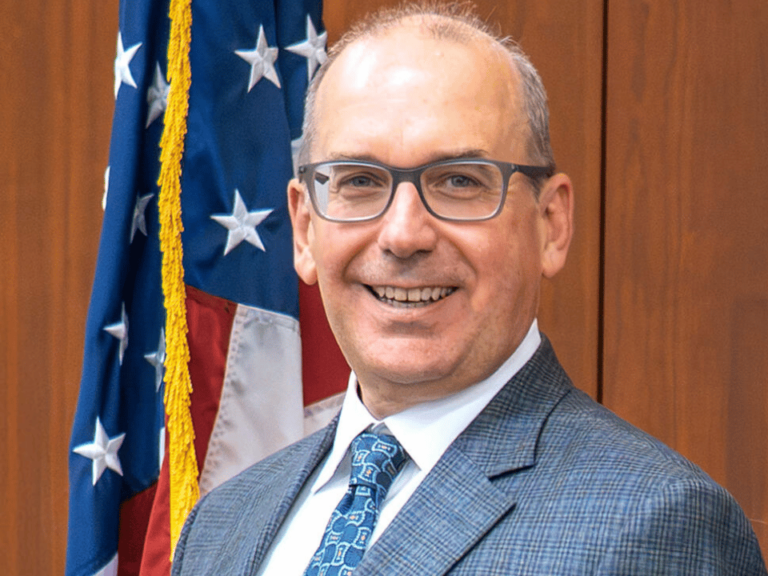
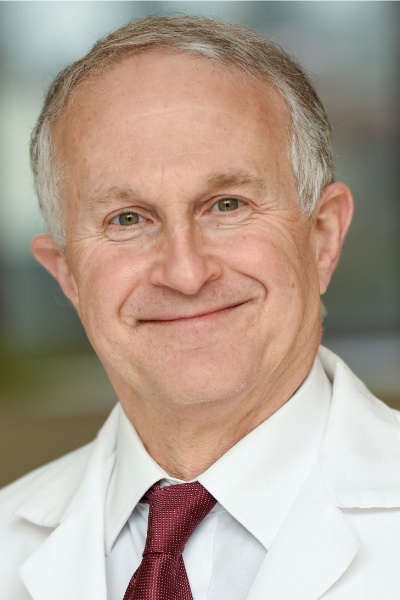
In the June episode of The Directors, two Midwestern cancer center directors, University of Iowa Holden Comprehensive Cancer Center Director Mark Burkard, and University of Minnesota Masonic Cancer Center Director Jeffrey Miller, discussed the financial and logistical challenges confronting cancer care outside major metropolitan hubs.
“We had a Medicaid expansion in Iowa, and that supported what’s called the directed payment program (Medicaid State Directed Payments) and that’s being phased out over 10 years,” Burkard said. “I think it’s going to affect rural hospitals and hospitals in underserved areas even more. And some money was put back into the rural transformation funds of which our state got $209 million. But we’re looking at, basically, over the next 10 years, a billion-dollar cut from our health system. So, we’re trying to figure out how to tighten our belts to make up for that difference as a health system.”
Driven by the One Big Beautiful Bill Act and subsequent CMS regulations, these changes cap supplemental payments and are expected to significantly reduce federal Medicaid spending over the next decade.
The effect of the financial tightening is systemic. Even the paths taken by junior faculty members are affected.
“It used to be that you could creatively dabble as a junior faculty, and then figure out how to develop your career,” Miller said. “But now, they want you to do it in pretty much three years. You get three years of unrestricted time, and then you’ve got to go out into the world and say, ‘How am I going to support my salary?’ Industry trials, NIH, DOD, foundations, you name it.”
At the same time, patients are living longer, and innovations abound.
“We’re a victim of our own success,” said Burkard. “Lung cancer patients are living longer than ever before. Melanoma patients—median survival is multiple years. When I was training, it was less than one with metastatic disease. And now, we doubled the survival. We’re doubling the survival with pancreatic cancer for the first time.”
Longer survival means more pancreatic cancer patients are receiving treatment for longer periods, driving up healthcare costs. While insurers and employers are understandably focused on containing expenses, Burkard said that delivering increasingly effective cutting-edge therapies requires greater investment.
“I think institutions are feeling crunched in so many different directions based on healthcare, based on their own pressures of their state, or their hospital, or other investments that need to be made along campus,” Miller said. “How do we attract everything here”?
Part of the answer: maintain an affiliation with NCI.
“NCI clearly defines what the institution needs to do to have us remain Comprehensive,” Miller said. ”There’s absolute economic benefit to the healthcare system in the state that we live in as long as we maintain this affiliation with the NCI, which is super important to all of us.”
Burkard and Miller appeared together on The Directors, a monthly podcast series that focuses on the problems that keep directors of cancer centers up at night.
“This means we have to be creative and we have to form partnerships and it seems like that is an alignment with what the NCI wants us to do,” Miller said. “They are funded by taxpayer dollars, and we have to make sure that we’re fairly reaching out to touch as many people as possible to impact their cancer journeys.”
Balancing out the research base by drawing in new investigators is essential, Burkard said.
“We do need a critical mass of investigators here in Iowa to really serve the state well when the people are experiencing the high cancer rates that we have and the growth driving cancers, who do we have investigating?
“And for the same with drug development, basic research, if you don’t have that critical mass of investigators, you can’t serve your population well,” said Burkard.” So, by that token, evening out the research base would be incredibly helpful.”
Delivering cancer care throughout the sprawling state is an obstacle.
“The big question, and this gets into how do we best export things?” Miller said. “We both work at centers that are really tertiary care centers, within our states. And the question is how do we make good quality care equal no matter if you’re in Bemidji, Minnesota, versus St. Paul, Minnesota, which is really a long distance away.”
Said Miller:
I think one of the things that—and Mark, I know you’re interested in this as well—is we’re trying to understand how to use our Comprehensive Cancer Center in our catchment area to build out and touch out into the state.
So, it’s really important, whether this is a combination of telehealth—we have a specific effort going on using some state-funded help to really increase the access to clinical trials, both therapeutic trials, which is a little bit harder.
Mark, I’ve realized that not all the hospitals have doctors in our system. So, one of the things is to get the expertise and the team to enroll in trials, patient centers, or at least they don’t have medical oncologists Monday through Friday. They may only have them one day a week, and how do you support them on a complicated trial and the non-therapeutic trials.
And I’m learning as a director that smoking cessation in the Native American community is not the same as in other communities. And it really takes special expertise and culture sensitivities to really get people to quit smoking. In the continuum of vaping and cessation completely, I think there have been a lot of creative studies that are going to be touching more cancer lives in some of my phase I therapeutic trials that are just trying to find dose finding for new therapeutic.
So, we have big jobs, Paul, as you know. And as my first day, our goal is to even the playing field and try to make everybody happy. And the breadth of cancer research is, Mark, as a new director continues to impress me how big it is really from the screening to the prevention trials to the phase I therapeutic trials. And really, changing the practice, which means you got to participate in phase III trials and involve your community.
Miller and Burkard spoke with Paul Goldberg, editor and publisher of The Cancer Letter.
This episode is available exclusively on The Cancer Letter Podcast—on Spotify, Apple Podcasts, and YouTube.
Explore previous episodes of The Directors.
Some highlights:
On the nature of research
Nationwide, academic medicine has gotten harder and more cutthroat, driven by record numbers of medical school applications, a congressionally capped number of federally funded residency slots, and a massive emphasis on specialized research.
The pressure to match into competitive academic programs is more intense than ever.
NCI clearly defines what the institution needs to do to have us remain Comprehensive. There’s absolute economic benefit to the healthcare system in the state that we live in as long as we maintain this affiliation with the NCI, which is super important to all of us.
Jeffrey Miller
“Academic medicine was easier 15-20 years ago, when the flow of clinical dollars allowed one to participate in research more easily than it is today,” Miller said. “And this is not unique to the University of Minnesota. When I talk to colleagues, this is happening around the country.”
“I grew up in a little bit of the old school and academics. You got an R award and you sustained your own research,” Miller said, referring to NIH R-series grants, especially the common R01 grant, which is a major federal research grant that often serves as the foundation of an independent research program.
“But there was more of a supportive mechanism to get you there and to fill in the gaps, which were a little bit easier more than 15 years ago than I think they are today,” he said. “And honestly, Paul and Mark, that does keep me up at night as I see some very good researchers struggling on how to figure out how to support their lab efforts. And the same thing for clinical investigators, how am I going to build my career when nobody wants to support my effort to do so beyond my RVU clinical care components?”
On funding faculty
Miller said prioritizing discretional dollars is the hardest part of his job.
Said Miller:
I’m probably asked, sadly, every day. I mean, the hardest part of what we do is how we prioritize the discretional dollars we have for the best payoff on investment, and that’s sometimes really hard. And this is coming from, at least for me, at all levels.
It’s coming from very senior people who have been well-RO1-funded.
It’s coming from middle people who have not bridged the gap from their three to five-year startup funding package, because I think they’re the least at risk, at least at our place, the way we… We don’t bug people for three to five years, depending on their letter and their position.
But then, it’s really hard. Since in a business model, which I’ve had to learn way too much, way more than I thought I would, compared to my own basic research laboratory, is how do you make the strategic decisions to invest into the best thing that are going to be self-sustainable for the future unless the institution has a lot of dollars to put into it.
Burkard said he has been trying to find ways to help fill in funding gaps.
Said Burkard:
We do have a program at the college level that exists to fill in gaps and we always look for opportunities to help our faculty.
I’ve been trying to find other ways of helping faculty.
For example, I’ve been trying to get philanthropic funds to help pay for graduate students and fill in gaps. The graduate students whose mentors lose funding the program director can fill in.
So, I’m trying to find long-term ways to enable people to do their research with less, which is the world we’re heading into.
Understanding healthcare economics is a big part of the job of a cancer center director, Miller said.
“I mean, Mark, you still do clinical work. I do too. I attend on the bone marrow transplant unit. I’m a hematologist, even though most of my research is focused on immunotherapy [for] solid tumors,” Miller said. “But what I’m seeing today is that the margin of flexibility on taking care of patients is so narrowed. And even the amount of money that goes back to my home Division of Hematology, Oncology and Transplantation is much narrower than it was.”
With this general squeezing, healthcare systems seem to be becoming more savvy, he said.
“But also, more restrictive in what we’re allowed to do. It’s just making the support from clinical divisions a little bit harder to understand how to perform research unless your institution happens to be well-endowed with dollars to be flexible to go into that area.”
Though NCI received a minor raise in the fiscal year 2026, Miller said that the number of awards going out and the work supported is still trending down because of the upfront funding issues.
On the good news
Despite concerns about funding and workforce challenges, Burkard said advances in cancer treatment give him reason for optimism.
“People are living longer and better with cancer,” Burkard said. “And I’m really excited about some of the diagnostic tools that are coming into play to intercept cancer before it’s metastatic after primary treatment. So, I think compared to where we were at when I was training 20 years ago, we have treatments and patients living longer and better. If we could get that evenly out to all the people, that would be better. That should be easier than making all these amazing discoveries, but I’m really positive on that.”
Burkard said he is also encouraged by the next generation of oncologists entering the field, noting that the university has continued to attract physicians and researchers interested in cancer care and scientific discovery.
“Also, there’s a lot of really good new people coming into the field. We’ve had no problem finding really great oncologists, dynamic, interested in clinical research, laboratory investigators, physician scientists, maybe because it’s so hard for them to find the right opportunity. We’ve been very blessed that they’re knocking on our door sometimes.
Miller agrees that there is plenty to be excited about in the cancer research enterprise, particularly as advances in biology, artificial intelligence, and drug development create new opportunities for discovery.
“One is experimental therapeutics and the level of biology and including AI into the tools to increase deficiency. Of course, I can’t do this at all on my own. I will state that publicly, but I have people in the lab who are really trying to understand protein interactions. If we find 30 sequences, how can we teach AI to help us functionally choose which we still have to validate in our standard functional assays, how to use them? Science is really moving forward. We have a big effort trying to intersect KRAS inhibitors in pancreatic cancer with immunotherapy. We know that KRAS inhibitors really change the microenvironment of pancreatic cancer and we have bioengineers that are working.”
But we’re looking at, basically, over the next 10 years, a billion-dollar cut from our health system. So, we’re trying to figure out how to tighten our belts to make up for that difference as a health system.
Mark Burkard
Beyond scientific breakthroughs, Miller said he is encouraged by the collaborative culture that has emerged amid recent challenges. Researchers, clinicians and staff have increasingly rallied around shared goals, reinforcing the importance of teamwork in advancing cancer care and research, he said.
“We’ve had a lot of stress in our state, and the resilience of people coming together for change and hard times continues to be remarkable and a positive experience for me,” Miller said. “Everybody’s living the same thing. There are a lot of struggles going out there. There are a lot of worries about the future.
“And, to me, it actually in some weird positive way brings people together to be a part of a big center mission, because it’s harder to live on your own without being part of a team. And this whole idea about team science, I think people are really gravitating. Our goal is to make sure people want to be productive and functional parts of the center towards these positive goals. And I think we’re really convinced that we’re reaching those goals.”
Listen to the full episode on Spotify, Apple Podcasts, and YouTube.
A transcript of the podcast is available below:
Paul Goldberg: Welcome to The Directors, a podcast of The Cancer Letter. I’m Paul Goldberg. I’m the editor and publisher of The Cancer Letter. With us, we have Dr. Jeffrey Miller, who is the director of the University of Minnesota Masonic Cancer Center, and Mark Burkard, who is the director of the University of Iowa Healthcare Holden Cancer Center. Two great Midwestern cancer centers, both Comprehensive. And it is wonderful to have you here.
One thing about The Directors is that the first question is always the same.:
What is keeping you up at night as you run your institutions now in June of 2026?
Who wants to jump in first?
Jeffrey Miller: Well, Mark, you’ve been doing this longer, so why don’t you start, and then I’ll go.
Mark Burkard: Sure. Up until a week ago, I was preparing our CCSG renewal. That was keeping me up at 3:00 AM.
But I would say, currently, it’s how we get it all done. There’s a lot, as a state university and a Comprehensive Cancer Center that serves the state. We have a big mission, not only to care for patients, not only to advance clinical research, not only to make discoveries, but also to go out and care for patients across our catchment.
And we, our cancer center, aims to serve the entire state of Iowa. There’s 99 counties. There’s three million people. And thinking about cancer prevention control and rural care across the breadth of the state in addition to everything else is a challenge.
So, I think it’s the breadth of activities, Paul, that I would say is real. And I even mentioned education is in a challenging time, when a lot of trainees are coming to us and saying, “Is this the career I want? Look at the headwinds we’re facing.”
So, we’re trying to encourage the future leaders in cancer as well.
Jeffrey Miller: Yes. So, Mark, let me build on that a little bit, not repeat everything you said. We also serve the state of Minnesota. We’re trying to figure out if we should expand our catchment area a little bit beyond our borders, because we border some states that don’t have cancer centers and how we should collaborate together.
But I think that the bigger thing just to build on that, that’s been complicated. I grew up as a translational researcher. My whole life has been studying natural killer cells and their mechanisms, and how to translate this into clinical trials.
And now, I find myself in the director role of the Comprehensive Cancer Center. I feel part of my job is to make 85% of the people happy 73% of the time, which is super hard.
I think one of the things that really keeps me up at night is some of… I think the growing fear of what’s happening in academic medicine. I mean, on one hand we have RVU-directed research and I deal with a lot of clinical investigators that are mainly clinicians—between 50%, 60%, 70% of their time—and how to keep them funded at a time when everybody seems to be under-resourcing how to support academic time.
And this is really challenging. Mark, I’m older than you, so I could say this. I think that academic medicine was easier 15, 20 years ago, when the flow of clinical dollars allowed one to participate in research more easily than it is today.
And this is not unique to the University of Minnesota. When I talk to colleagues, this is happening around the country.
So, I grew up in a little bit of the old school in academics. You got an R award and you sustained your own research. But there was more of a supportive mechanism to get you there and to fill in the gaps, which were a little bit easier more than 15 years ago than I think they are today.
And honestly, Paul and Mark, that does keep me up at night as I see some very good researchers struggling on how to figure out how to support their lab efforts. And the same thing for clinical investigators: “How am I going to build my career when nobody wants to support my effort to do so beyond my RVU clinical care components?”
Help me, because I’m stuck here inside the Beltway. And as I look at what’s happening, what’s actually happening at NCI, the numbers are staying about the same. They’re flat, which isn’t great, but they’re not being cut.
There was recently this story in The New York Times that the war on cancer has been canceled, and I’m not seeing that. I mean, I was a source for that story, and I’m still not seeing that. So, I just don’t get it. What has changed actually in the past, shall we say not necessarily arbitrarily, a year-and-a-half?
How has your life changed?
Jeffrey Miller: And you think, Paul, are you meaning from the National Cancer Institute perspective?
Yes.
Jeffrey Miller: Or the clinic or healthcare economics perspective? Because there are really two things driving into what keeps me up at night.
Okay. Well, choose. I mean, or do both.
Mark Burkard: Well, the healthcare economics changed with the federal policy bill last summer, which is cutting Medicaid. We had a Medicaid expansion in Iowa and that supported what’s called the directed payment program and that’s being phased out over 10 years.
So, I think it’s going to affect rural hospitals and hospitals in underserved areas even more. And some money was put back into the rural transformation funds of which our state got $209 million. But we’re looking at, basically, over the next 10 years, a billion-dollar cut from our health system. So, we’re trying to figure out how to tighten our belts to make up for that difference as a health system. I don’t know if you’re feeling that same thing, Jeff, but…
Jeffrey Miller: I think a little bit. I think, Paul, this is where I think a lot of what we do is healthcare economics. I mean, Mark, you still do clinical work. I do, too. I attend on the bone marrow transplant unit. I’m a hematologist, even though most of my research is focused on immunotherapy [for] solid tumors.
But what I’m seeing today is that the margin of flexibility on taking care of patients is so narrowed. And even the amount of money that goes back to my home Division of Hematology,Oncology and Transplantation is much narrower than it was.
So, everybody’s squeezing the same thing. I mean, the state and Medicare programs, healthcare systems are, I think, becoming perhaps—I don’t know, Mark, if you’d agree with this—more savvy.
But also, more restrictive in what we’re allowed to do. It’s just making the support from clinical divisions a little bit harder to understand how to perform research unless your institution happens to be well-endowed with dollars to be flexible to go into that area.
So, it used to be that you could creatively dabble as a junior faculty, and then figure out how to develop your career. But now, they want you to do it in pretty much three years. You get three years unrestricted time, and then you got to go out into the world and say, “How am I going to support my salary? Industry trials, NIH, DOD, foundations, you name it.”
And even though you’re right, Paul, I think that the number of dollars to the NCI, which is as I understand, Mark, from our last meeting, the only institute that went up a tiny bit, the number of awards going out and the work supported is still tending to go down because of this upfront funding is one of the issues.
And I still keep hearing these stories that people are getting seventh percentiles in the percentage ranking of their grants and still not getting funded. And it’s disillusioning people, and especially the future generation to want to do what we’re already doing. And I don’t know about you, Mark, but my wife tells me I’m not going to work forever.
Mark Burkard: Well, I’m an oncologist, so at heart I’m an optimist. And let me tell you the reason that people are looking at costs for cancer is because cancer costs are going up. We’re a victim of our own success.
Lung cancer patients are living longer than ever before. Melanoma patients, median survival is multiple years. When I was training, it was less than one with metastatic disease. And now, we doubled the survival.
We’re doubling the survival with pancreatic cancer for the first time.
So, guess what? Twice as many people are going to be out there with pancreatic cancer getting treatment. How do we pay for that? Well, it’s going to be a bigger expense to the healthcare system. And so, people look for other ways to cut costs to make it economical, and that’s fair.
If I’m an insurer, if I’m an employer, I don’t want to pay more. But it’s going to cost more to take care of patients and give me these cutting-edge drugs that we’re bringing into the clinic.
It’s interesting, because every month I meet with two cancer center directors and the thing that always seems to be coming up, well, over the past four months or so, is bridge funding. Are you running into that issue? Are you offering bridge funding to keep labs open? Are you being asked for it? How does that work?
Mark Burkard: I haven’t really been asked. We do have a program at the college level that exists to fill in gaps, and we always look for opportunities to help our faculty. I’ve been trying to find other ways of helping faculty.
For example, I’ve been trying to get philanthropic funds to help pay for graduate students and fill in gaps. The graduate students whose mentors lose funding the program director can fill in.
And I’d love to have a world where all those graduate students in cancer biology are endowed to do their work and their mentors don’t play. So, I’m trying to find long-term ways to enable people to do their research with less, which is the world we’re heading into.
Jeffrey Miller: And, Paul, I’m probably asked sadly every day. I mean, it is the hardest part of what we do—how do we prioritize the discretional dollars we have for the best payoff on investment, and that’s sometimes really hard.
And this is coming from—at least for me, Mark—at all levels. It’s coming from very senior people, who have been well-R01-funded. It’s coming from middle people, who have not bridged the gap from their three-to-five-year startup funding package, because I think they’re the least at risk, at least at our place, the way we… We don’t bug people for three to five years, depending on their letter and their position.
But then, it’s really hard. Since in a business model, which I’ve had to learn way too much, way more than I thought I would, compared to my own basic research laboratory, is how do you make the strategic decisions to invest into the best thing that are going to be self-sustainable for the future, unless the institution has a lot of dollars to put into it?
And I think institutions are feeling crunched in so many different directions, based on healthcare, based on pressures of their state or their hospital or other investments that need to be made along campus. How do we attract everything here?
And that’s one great thing about being a cancer center director is that the NCI clearly defines what the institution needs to do to have us remain Comprehensive. As Mark and I heard at the last directors’ meeting, there’s absolute economic benefit to the healthcare system in the state that we live in as long as we maintain this affiliation with the NCI, which is super important to all of us.
I heard the center directors’ meeting went incredibly well. I mean, I know it’s a bit of a softball question, but I heard that from several people who were there.
What were the highlights of the meeting for you? What are you expecting in terms of designation approach, or in terms of the NCI approach to this?
Mark Burkard: there were multiple take-homes. We heard about the economics. But two main things in this that came from Dr. Letai himself was improving efficiencies—in both the application process, trying to streamline that.
Just coming through that, I understand, have a good grasp of how much administrative work goes into that. And then, just having done some reviews, [Letai said that he wants to improve efficiencies in] how that’s reviewed, and there’s a little bit of a mismatch there. So, the streamlining there is welcome.
And then, there’s a push now in clinical trial competitiveness. I remember distinctly, early in my faculty career, going to a cooperative group meeting and hearing this presentation of how the NCI was planning to streamline consent forms, and they formed a committee, and then the committee met, and then they did their presentation. But the committee found eight things that were missing from the consent forms that they needed to add.
So, I laughed that the streamlining was making the consent forms longer, and then the solution was putting a one-page summary in the front of the consent form to add a new page. But I think Dr. Letai is very serious about this. And the clinical trials that are being run very effectively, for example, in China, which was noted, highlighted, at ASCO, is really pushing us. Because they’re opening and enrolling and completing trials more efficiently.
And do we want to outsource that?
So, I think there’s some very serious thought about streamlining processes for clinical research, which is wonderful.
You were there too; right, Jeff?
Jeffrey Miller: Yes. The other things that I think we heard about, I mean, it’s really important for all of us to be on an even playing field when it comes to peer review and really empowering the directors to represent their centers to continue to have us be successful. And I think the things that I liked is that they are trying to make it an even playing field. They’re trying to streamline the process.
I think the other things that I took away, Mark, just a little bit, which I think are good for our center and our scope is evening the playing field a little bit between accessing out into our catchment area, which for both of us is our states and really trying to place a little bit more equal emphasis on population studies as therapeutic trials.
So, I think it’s really important. I think even the NCI director stated that everybody knows that the amount of work we can do is somewhat proportional to the investment we have to do it, but I think that the goal is to reach out to more people and to have an impact on cancer research. And if that means getting a bus to start doing screening in all the corners of the state… and Mark, I think I remember from the University of Iowa when I was a resident there, there basically were buses of all corners of the state that brought people to you—at least at the VA hospital that was associated there.
And I think I continue to be surprised that people even two hours from the Minneapolis, St. Paul area do not want to get in a car and drive to the big city. So, this means we have to be creative and we have to form partnerships and it seems like that is an alignment with what the NCI wants us to do. They are funded by taxpayer dollars and we have to make sure that we’re fairly reaching out to touch as many people as possible to impact their cancer journeys.
Mark Burkard: Yes.
I’m thinking about it more from the inside the Beltway perspective. There’s these two, I think, very much opposite things, evening out the playing field and relying on peer review.
It seems like NCI is now moving away from peer review towards maybe evening out the playing field. I mean, I’m sure both are in play, but I’m just watching this right now from the point of view of the upcoming 2027 appropriations bill.
And there’s a report language that says, “That the NIH director can use up to $200 million to even out the geographic unevenness.”
So, I guess I read it as, “Move some of the money from the coasts towards the center of the country.”
Jeffrey Miller: The Midwest. You mean, to Minnesota and Iowa?
Yes, precisely, which is why I’m asking the question. I know there’s outrage on both coasts.
Do you share the outrage? Or do you say it’s long overdue?
Mark Burkard: Yes, I think it’s more complicated than that. Dr. Bhattacharya came here with our representative, Mariannette Miller-Meeks, who’s also an MD. And we had some institutional discussions and he did bring this up, that, “Hey, if facilities are less expensive in Iowa, then why are we paying more overhead to do the work elsewhere?”
Or if maybe what’s happened is the winners got a lot of resources, and so they were able to build up and the people who didn’t have that opportunity got behind.
And so, even out the playing field, which in a self-serving way is great.
We’d love to have our faculty have easier funding. At the same time in the field, we want the best and the brightest and the best opportunities. So, I don’t know how to separate better, how to even the playing field, so to speak, with making sure we’re investing in the best science. I think in the long term, it could play out in a positive way. But I also want the best cancer research to be done.
Jeffrey Miller: Yes. And, Mark, I agree with everything you said. As a scientist, and I’ve been supported by the NCI for my entire academic career, it’s very hard for academics who have done a lot of peer review to say that supporting the best, the brightest with all the criteria for peer review, including innovation and the overall impact in the field, that there is going to be some process that has precedent over that. It’s very, very hard for me as an academic to understand that.
As a peer reviewer, I try to be fair, and I try to be unbiased, and I try to understand the science, which is why peer review is sometimes not very easy. And what we all want to do for our areas of interest is say, “How do we invest the top 10% into trying to change the field or the practice of medicine and cancer care?”
And it’s not easy, but it just worries me if we’re taking away the peer review impact part of that makes us all, I think, a little bit nervous, despite the fact that we don’t want inequities.
And, as Mark already said, we are in the Midwest. But I don’t feel unfairly treated in the Midwest, to be honest with you. We try to surround ourselves with good academic depth and basic sciences and translational researchers to fill in that gap, and that’s part of the responsibility of the cancer center director.
So, I think we all want what’s fair and what’s an even playing field despite some of the intents, it’s hard for me to believe that peer review as long as that process goes smoothly and that’s currently in flux as well.
But if that process is working, it’s just hard to have too many unknowns to try to figure out how to be successful as in an academic career. It’s certainly making the young faculty very anxious.
It’s very hard to understand what’s actually happening. And I’m spending probably about half of my time trying to understand it in practical terms, because what does it mean that there is no payline?
Jeffrey Miller: Yes.
Mark Burkard: Well, my first grant was from the National Institute of General Medical Sciences. And NIGMS, for years, they said, “There’s no pa line.”
What they showed me, I think it was 2012, they showed an impact score or a percentile on the X axis and Y funding rates and it was an S-shaped curve. So, below a certain amount, it was almost 100%. But they pointed out, “Look, we’re picking the best programmatic projects at the secondary review level.”
So, I guess I’m very comfortable with that, to a degree, but I’d like to see that curve not be a random scatter of grants at all impact levels. I’d like to see that the scientific impact as well as the programmatic considerations are considered.
Harold Varmus used to take all of the borderline grant [applications] home to New York and review them at home, in the privacy of his apartment. So, I guess that’s not without precedent that people would look at it, as long as it’s not political, I guess.
Mark Burkard: Right.
Jeffrey Miller: Yes, and I think that’s the key, Paul. I think we just want some level of transparency.
I think we all value even the intramural program and some of the excellent research that’s being done there. And they may know things strategically in what they think is going to move the field forward. I guess what worries us the most is we don’t want to be a part of political battles, so, political geography is guiding these decisions, rather than scientific impact.
And I think you’re right, Mark. It’s a fair comment that this could be some degree of programmatic, at least, input for some of those is a fair comment, because there are a lot of talented people in the program who spent their entire life as well trying to figure out what’s going to move the field forward and they somewhat have this bigger 30,000-foot view.
I think we just want it to be fair and open, and understand the process, so everybody can move forward.
It’s interesting, because with the $200 million, it’s not a whole lot of money from the entire NIH budget. Plus, it’s not really decided it’s actually going to happen, because it’s just a House bill, and it’s not even in the bill, it’s in the report, and if it’s in the report, it means it’s a mandate. Maybe you should do it, maybe you’re going to have to do it, maybe not. But at least, you have to be able to answer questions from the committee about why you didn’t do it.
But evening out the system, I would argue, is consistent with the National Cancer Act of 1971.
Mark Burkard: Right. We do need a critical mass of investigators here in Iowa to really serve the state well when the people are experiencing the high cancer rates that we have.
And the growth driving cancers, who do we have investigating? When we go, one of my colleagues, Dr. Charlton, is going out to 99 counties to talk about local rates and the underlying causes.
And when she does that, there are a lot of questions like, “What’s in our water? How is agriculture in the state impacting that?” And we have some pat answers. We know like, “Well, smoking and alcohol and obesity, and these are still the major drivers and clearly important.”
But it’s hard to answer those questions without the expertise and to have the experts here in Iowa is important.
And the same with drug development, basic research—if you don’t have that critical mass of investigators, you can’t serve your population well. So, by that token, yeah, evening out the research base would be incredibly helpful.
Jeff, do you agree with that?
Jeffrey Miller: Yes, I do agree. And the big question, and this gets into how do we best export things? We both work at centers that are really tertiary care centers within our states. And the question is, “How do we make good quality care equal no matter if you’re in Bemidji, Minnesota versus St. Paul, Minnesota, which is really a long distance away.”
And I think one of the things that—and Mark, I know you’re interested in this as well—we’re trying to understand how to use our Comprehensive Cancer Center in our catchment area to build out and touch out into the state.
So, it’s really important, and whether this is combinations of telehealth… We have a specific effort going on using some state-funded help to really increase the access to clinical trials, both therapeutic trials, which is a little bit harder… Mark, I’ve realized that not all the hospitals have doctors in our system. So, one of the things is to get the expertise and the team to enroll trials, patient center, or at least they don’t have medical oncologists Monday through Friday. They may only have them one day a week. And how do you support them on a complicated trial and the non-therapeutic trials?
And I’m learning as a director that smoking cessation in the Native American community is not the same as in other communities.
And it really takes special expertise and culture sensitivities to really get people to quit smoking. In the continuum of vaping and cessation completely, I think there have been a lot of creative studies that are going to be touching more cancer lives in some of my phase I therapeutic trials that are just trying to find dose finding for new therapeutic.
So, we have big jobs, Paul, as you know. And as of my first day, our goal is to even the playing field and try to make everybody happy. And the breadth of cancer research is, Mark, as a new director, continues to impress me how big it is, really from the screening to the prevention trials to the phase I therapeutic trials. And really, changing the practice, which means you got to participate in phase III trials and involve your community.
Which is probably hard to do if you do not control the workforce of people who are… How is that going? Because I’ve never actually… It’s one of those stories I keep trying to figure out where the rubber meets the road as community oncology and academic oncology work together, and how is that working out in your world?
Mark Burkard: Well, this is something we have faced a lot. So, shortly after I started in 2024, our health system purchased Mission Cancer + Blood, which is the largest medical oncology group in Des Moines with 20 medical oncologists. And they had 16 outreach sites as well. So, a very active group.
And fortunately, they were engaged in clinical research. The clinical research leader, Dr. Tara Graff, is very invested in lymphoma therapy and bispecific therapeutics. And Dr. Seema Harichand co-led the NCORP with a co-PI at another health system, who was a radiation doctor.
And so, that has been eye-opening to me to try to bring them in. They’re seeing patients every day. They’re going to all these sites.
To be engaged in clinical research is a real challenge for them, but they are engaged. And then, one thing that happened recently that I’m excited about is the NCI released the NCORP program announcements not long ago.
And we met with the PIs of our local NCORP, and our plan is to apply for an academic NCORP, which will integrate the cancer center, the other health systems, and allow us to coordinate the clinical trial, at least for national trials more broadly.
So, I’m very excited about that. I know it’s going to be a lot of work. We have two great PIs who live and work in Des Moines, which is a great place for them to be. And so, I think that’s a tremendous opportunity for us in Iowa.
Jeffrey Miller: To expand on that a little bit, we’ve been really trying to work on the approach. The one thing for both of you is as I’ve gone into Upstate Minnesota. I’ve been really impressed, number one, about all the medical oncologist dedication to want to be a part of practice-changing trials. They really want to be a part of it. They know that their center is too small to attract even an industry funded trial.
So, one of the programs we’ve been working on, Mark, seeded a little bit by this state funding, is to create a consortium in Minnesota called the MN Cancer Clinical Trials Network, the Minnesota Cancer Clinical Trials Network. And the goal is that we would serve as the hub in this wheel of clinical trials. We’d have a central IRB. We’d have central contracting.
And we’re trying to work with industry, and saying, “Look, we’re a tertiary care center, but we could capture medical oncology with reach in the state of Minnesota at about 6 million people in total, when you count the entire state.”
And if we can make it easier for them to enroll—this is where I’ve learned a lot in that you have to have a certain degree of care at a center. Not every center is going to be able to do that, but the doctors who see the patients want to be a part of those trials. They want state-of-the-art best.
They want the new KRAS inhibitor added to their pancreatic trials, which are not going to cure them, but make their lives better, or extend their lives to be treated at their local clinic.
So, we’re starting to work through the hurdles of central IRB, central contracting, and this is very complicated. And then, we’ve got to get industry partners to say, “We will be a good accruer for you, so you need to entrust us to have these satellite sites.”
And some industry is going to be able to tolerate that and some will not. And there’s different levels or thresholds, I guess, of risk that they’re willing to accept.
About designation, NCI designation, Mark, you’ve just turned in your [CCSG renewal application].
Mark Burkard: We just submitted, yeah.
When’s your site visit?
Mark Burkard: Well, it is expected to be between November and January.
How does it feel now to be in the middle of this process? What are you seeing?
Mark Burkard: Well, I don’t know what to expect yet. Our review will probably happen in a few months. I sometimes look at my application and say, “Oh, I wish I did this or wish I did that,” but it’s in. And I’m hopeful that we’ll get a positive review, but I know the reviewers are going to be fair and rightfully find some weaknesses and point them out to us.
And that’s what I expect. I’m hoping for, and expecting, a favorable result. I know a funding decision would be after the site visit. But I’m always looking at our, “What was our score last time? Can we beat it? Are we doing better? Was a year and a half here enough to change the Queen Mary’s direction a little bit and show some that were pointed the right way?”
I’m not sure.
But I’ve also been a participant in reviews and I’ve seen how that’s changed over time too. I do think it’s a smooth and fair process the way it’s being done.
How long is your application?
Mark Burkard: Maybe 1,700 pages, yeah.
Oh, this is what Tony Letai is saying, “He wants to get it down to about 40, 50 pages.” Is that luck? Or is that going to happen?
Jeffrey Miller: I would welcome that.
Mark Burkard: Well, some of its list of publications and grants and biosketches. But yeah, the research strategy portions are pretty dense.
Jeffrey Miller: Yes.
Mark Burkard: I think there’s some that curtail them, yes.
Jeff, where are you in the process?
Jeffrey Miller: So, we have to go in with our renewal in January 2028. So, I think we’re… I’m fortunate, I feel fortunate to have a little bit of time to see how this goes.
Now, as director, I think you get asked to participate in this peer review more, which I’m planning to do over the next year. We’ve already been making programmatic changes. I don’t know, Mark, you can maybe comment on this. As a new leader, my sense as being a peer reviewer for a long time, the new leadership needs to make their imprint on what the center is.
So, we’re going through some very, I think, critical but important evaluations of our strategic plan, how we interact with our clinical partners and how we might want to rearrange things to be more in sync with the NCI’s priorities. I think over the past 10 years have really changed a little bit and we have to tailor the goals of the cancer center as the NCI defines them.
And this is where I appreciate—from the directors’ meeting, I feel some of these things that we’re changing that are not making 100% of the people happy all the time, especially as you ask people to change leadership roles.
But as long as there’s a strategic, good rationale to do this, I think it’s going to be important for how we sell ourself in a written application, which is really a little bit different than when we had these large one-day site visits where you could really, I would say, rehearse the selling points in front of a big audience.
It’s a little bit different to get that application, Mark, as you know and just say, “Okay, this has to stand on its own.” You have a little bit of a different lens, I think, and maybe less chance for error because there’s no second look.
It’s interesting, because you both have very similar problems, because you’ve succeeded these larger-than-life virtuoso directors. So, it’s like things were done a certain way for a very long time for a certain reason. How is that to change that?
Mark Burkard: Well, that’s interesting that you say that. Yes, George Wiener is still here and he’s advising me. He’s one of my advisors, and he’s been very, very helpful and supportive. And, in fact, he suggested some changes, so that was helpful, too.
But I have staff here who have been here since the first CCSG went in 1999, and we have faculty leaders who have been in their role for that long.
But I don’t think that was always necessarily the right thing going forward. The biggest change we made—again, I think George was helpful in this—is restructuring our programs. There was imbalance in our programs. It had grown over the years. There had been some restructuring 10, 15 years ago, but it was time to do that again.
And then, another thing that really changed the landscape is again, purchasing this group in Des Moines being part of our health system cancer center. And now, expanding our clinical research from one site in Iowa City to more of a statewide enterprise, and that has been an ongoing effort to integrate and streamline processes.
So, I think there’s a lot of good things here that you can build on if you have a successful cancer center. But as a new director, you may have a vision for things that could be opportunities that maybe were missed and you can build on the strengths and add to them. So, that’s mostly what I focused on.
Jeff?
Jeffrey Miller: Yeah. And Paul, Doug Yee was the director here for 16 years. He’s a super good guy. I was his deputy director since 2012. So, a lot of what I learned about how to become a cancer center director was from Doug. I still meet with them.
I think there is a certain amount of change. I think peer reviewers do want to see some change. They want to see the imprint of new ideas. And this is a whole thing, Mark, we’re going through program changes as well, just because new people come up, new investigators, super talented ones, they have different levels of hunger for wanting to be program directors.
And sometimes, change is good when the external environment is changing a lot. Sometimes, it’s good to get some new ideas. And what we’re finding is some people that got displaced in these leadership positions are happy to be senior advisors and help, and they’re totally dedicated to the cancer center mission, but they don’t feel that they need to lead this on their own. I think that’s certainly how Doug left. He’s still helpful. He’s still there to advise me. But I think we are in a time of change.
The healthcare system, at least here, Mark, is changing, and how we’re dealing with them. And we have more healthcare systems, I think, in Minnesota than you do in Iowa, but we just have to adapt to meet our strategic missions, and it’s important for directors to define their strategic missions for where they live and they’re not all the same. And that’s the good thing about our differences, I think.
What’s the most positive thing you can say if you were to try to say something positive about where we are as a field right now?
Mark Burkard: People are living longer and better with cancer. And I’m really excited about some of the diagnostic tools that are coming into play to intercept cancer before it’s metastatic [and] after primary treatment for metastasis.
So, I think compared to where we were at when I was training 20 years ago, we have treatments and patients living longer and better. If we could get that evenly out to all the people, that would be better. That should be easier than making all these amazing discoveries, but I’m really positive on that.
Also, there’s a lot of really good new people coming into the field. We’ve had no problem finding really great oncologists, dynamic, interested in clinical research, laboratory investigators, physician scientists, maybe because it’s so hard for them to find the right opportunity. We’ve been very blessed that they’re knocking on our door sometimes.
We had a physician not long ago just finishing training, MD, PhD, physician scientist, the STP saying, “Well, we’d like to move to a smaller community. And my wife’s family is from Iowa City. Do you have a job?” I’m like, “Okay, come on over. Let’s talk.” It’s great, but I’m really excited about where we’re headed as a field.
That’s very cool. Jeff?
Jeffrey Miller: Yes, Paul, I’m excited as well for two reasons.
One is experimental therapeutics and the level of biology and including AI into the tools to increase efficiency. Of course, I can’t do this at all on my own. I will state that publicly, but I have people in the lab who are really trying to understand protein-protein interactions. If we find 30 sequences, how can we teach AI to help us functionally choose which we still have to validate in our standard functional assays, how to use them?
Science is really moving forward.
We have a big effort trying to intersect KRAS inhibitors in pancreatic cancer with immunotherapy. We know that KRAS inhibitors really change the microenvironment of pancreatic cancer and we have bioengineers that are working.
So, I agree with Mark, the talent is tremendous.
The last comment I’d make on a point of positivity, we’ve had a lot of stress in our state and the resilience of people coming together for change and hard times continues to be remarkable and a positive experience for me. Everybody’s living the same thing. There are a lot of struggles going out there. There are a lot of worries about the future.
And, to me, it actually, in some weird positive way, brings people together to be a part of a big center mission, because it’s harder to live on your own without being part of a team. And this whole idea about team science, I think people are really gravitating [toward].
I think, Mark, you would probably agree with this. Our goal is to make sure people want to be productive and functional parts of the center towards these positive goals. And I think we’re really convinced that we’re reaching those goals.
Well, thank you both for your time and for your insight.
Also, our thanks or thanks go to our sponsor, the American Society of Clinical Oncology.
Jeffrey Miller: Great.
Thank you.
Mark Burkard: Thanks, Paul.