After 45 years of covering oncology, we stopped and asked our readers: who are you?
In a survey sent out to The Cancer Letter’s weekly mailing list, we asked key questions about our readers, their professional degrees, their fields of interest, and their satisfaction with our coverage.
We were pleased to learn that you like us: 83.1% of you rated your satisfaction with our reporting of your areas of interest at a 4 or 5 out of 5, with an average score of 4.1 out of 5 (82%).
We sent the survey to a list of 6,000 readers, and received 419 responses (7%).

Of the responses, 37.7% are MDs and 35.6% are PhDs. Within that list, 25 are MD PhDs (6%).
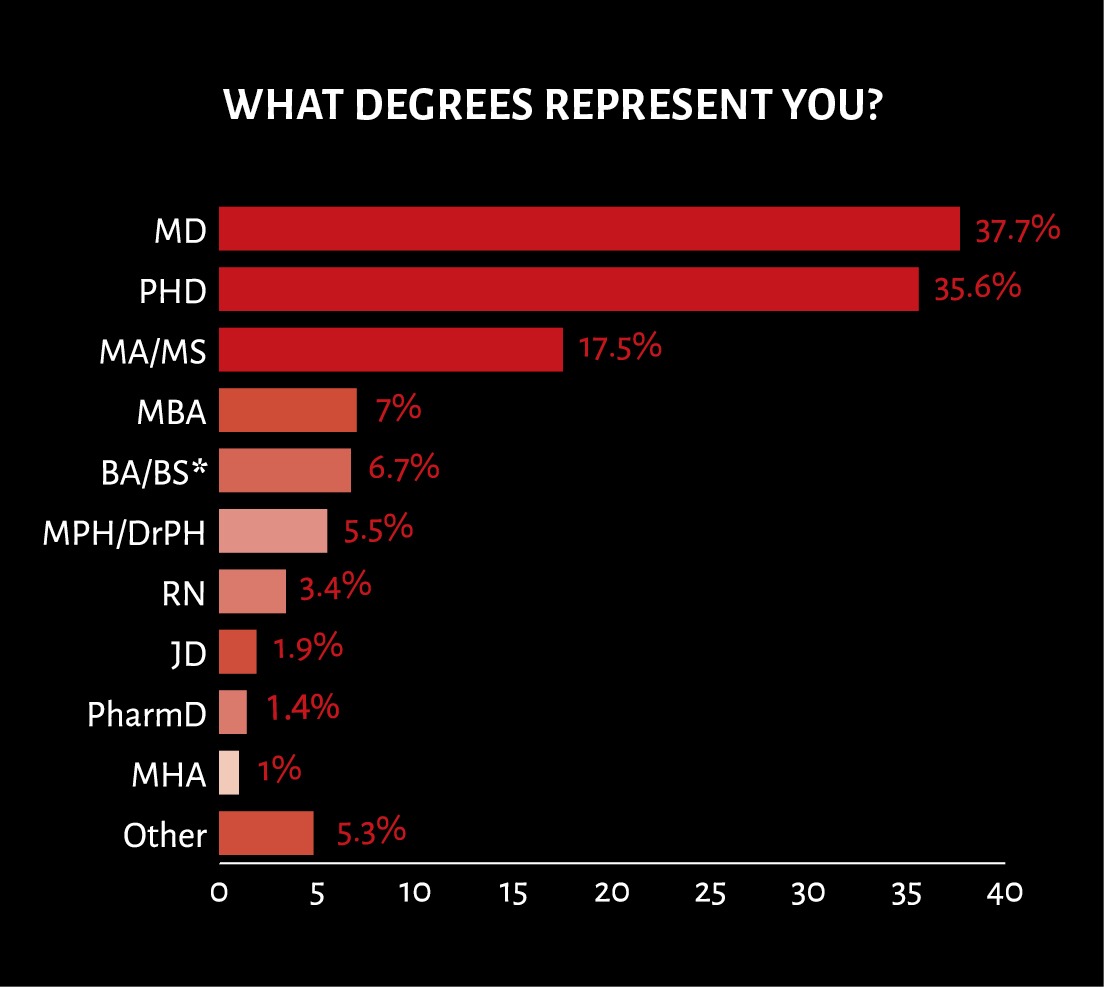
*terminal degree
You identified yourselves primarily as clinicians (33.7%), basic scientists (27.2%), and administrators (30.3%)—a surprisingly balanced spread.

While this survey didn’t include the thousands of readers at institutions that distribute the PDF internally, we were pleased to learn that you love reading our PDF edition as well as our online content. Redesigned in 2017, our PDF edition has won design awards, and is a primary way many of our readers access The Cancer Letter.
The Cancer Letter has over 200 institutional subscribers.
For login or subscription issues, inquiries about group rates, advertising, or any other administrative questions please contact katie@cancerletter.com.