For decades, cancer treatment has largely followed a familiar model: Identify the disease, determine its stage, and select the therapy most likely to benefit patients with similar characteristics. Even as targeted therapies and immunotherapies have transformed oncology, we have generally developed drugs for populations rather than individuals.
But what if we could reverse that paradigm? What if, instead of finding the best available drug for a patient’s cancer, we could manufacture a treatment specifically designed to recognize and attack that patient’s tumor?
This is the promise of personalized messenger RNA, or mRNA, cancer vaccines. Recent developments suggest that they may be approaching a pivotal moment in cancer treatment.
At Houston Methodist, my colleagues and I believe the technology has the potential to fundamentally change not only how cancer is treated, but how cancer therapies are developed, manufactured, and distributed. We have already demonstrated that an individualized cancer vaccine can be designed, manufactured, and administered within an academic hospital.
Now, our focus is on taking what we have learned from treating one patient and building a platform that could eventually benefit thousands.
A turning point for personalized cancer vaccines
The scientific rationale for personalized cancer vaccines is compelling. Cancer cells accumulate genetic mutations, some of which produce abnormal proteins known as neoantigens. These proteins can distinguish malignant cells from healthy tissue, creating potential targets for the immune system.
The challenge is teaching the immune system which targets to recognize.
Using tumor sequencing and computational analysis, researchers can identify mutations most likely to produce immunogenic neoantigens. We can then design an mRNA vaccine encoding selected targets, providing instructions that stimulate the patient’s immune system to recognize and potentially destroy cancer cells carrying those abnormalities.
Unlike conventional vaccines designed to protect large populations against a common infectious agent, each personalized cancer vaccine is tailored to the molecular characteristics of an individual tumor.
Until recently, the clinical evidence supporting this approach was promising but preliminary. That is beginning to change.
In the randomized phase IIb KEYNOTE-942 trial, an individualized mRNA cancer vaccine developed by Moderna and Merck, administered with pembrolizumab, demonstrated a 49% reduction in the risk of recurrence or death compared with pembrolizumab alone in patients with high-risk melanoma at five-year follow-up.
More recently, the phase III INTerpath-001 trial, involving more than 1,100 patients with resected melanoma, met its primary endpoint of recurrence-free survival, as well as the secondary endpoint of distant metastasis-free survival, according to results announced in August 2026.
Encouraging findings have also emerged from research by Memorial Sloan Kettering Cancer Center and BioNTech involving personalized mRNA vaccines for pancreatic cancer. Patients who developed vaccine-induced immune responses experienced substantially more favorable outcomes than those who did not, suggesting that these vaccines may help generate meaningful antitumor immunity even in a notoriously difficult-to-treat malignancy.
These findings do not mean personalized cancer vaccines are ready to become standard treatment across oncology. Questions remain about patient selection, durability of response, optimal combinations with other therapies, and which cancers are most likely to benefit.
But the accumulating evidence is increasingly difficult to ignore.
We are moving beyond the question of whether personalized cancer vaccines can stimulate the immune system. We are beginning to understand how to translate that immune response into meaningful clinical benefit.
From a single patient to a scalable platform
At Houston Methodist, we have already had an opportunity to explore what this future could look like.
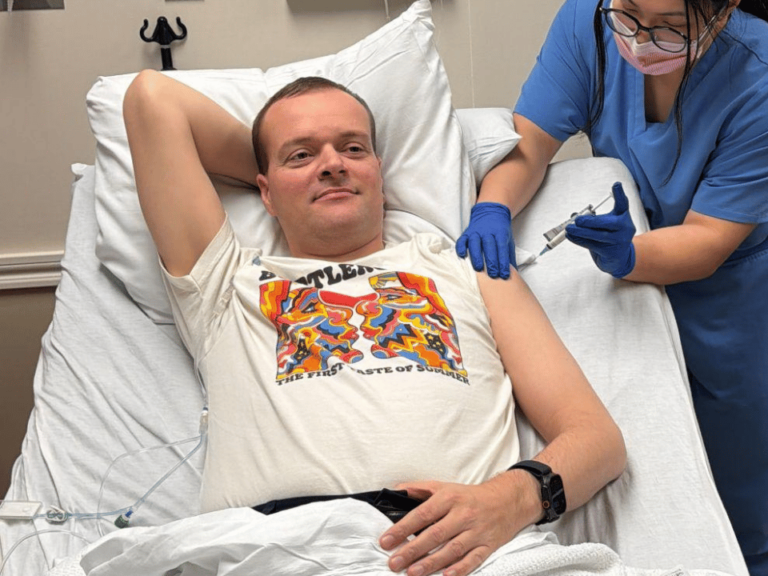
Our team developed and administered a personalized mRNA cancer vaccine for a patient with osteosarcoma of the spine who had exhausted conventional treatment options. The vaccine was designed around the unique molecular characteristics of his tumor, using sequencing data to identify potential neoantigens, and an individualized mRNA construct to stimulate an immune response.
The effort required extensive collaboration among scientists, physicians, bioinformaticians, and manufacturing specialists. It also required the ability to produce a clinical-grade therapeutic product under rigorous quality standards.
Importantly, it demonstrated that the essential steps in developing a personalized cancer vaccine—from tumor analysis and antigen selection to mRNA manufacturing and administration—can be accomplished within a hospital-based research environment.
One patient’s experience cannot establish efficacy, particularly when multiple therapies are involved. But it can demonstrate feasibility, and that is an important distinction.
We learned a tremendous amount from that experience, including how to improve the processes necessary to develop future vaccines more efficiently.
The next step is to move beyond individualized efforts and establish formal clinical trials that can systematically evaluate safety, immunogenicity, and efficacy while advancing a reproducible manufacturing platform through the appropriate regulatory pathways.
Our objective is not to create a separate drug development enterprise for every patient. It is to establish a validated platform capable of producing individualized therapies according to consistent manufacturing and quality standards.
Why the future of cancer vaccines should be local
One of the most exciting characteristics of mRNA technology is its relative simplicity and flexibility compared with many conventional biologic therapies.
Once an appropriate sequence has been identified, mRNA can be manufactured using processes that are adaptable to different therapeutic targets. The fundamental production platform can remain largely consistent even as the genetic instructions change from one patient to another.
This creates an opportunity to rethink the traditional pharmaceutical manufacturing model.
Rather than relying exclusively on centralized facilities to manufacture and distribute cancer therapies, we envision a future in which academic medical centers and regional hospitals can produce personalized vaccines much closer to the patients who need them.
One of the most exciting characteristics of mRNA technology is its relative simplicity and flexibility compared with many conventional biologic therapies.
At Houston Methodist, we are pursuing this vision through a proposed statewide initiative supported by the infrastructure and expertise we have developed in RNA therapeutics, including capabilities made possible through prior investments from the Cancer Prevention and Research Institute of Texas, also called CPRIT.
Our proposal would establish a core facility to support personalized mRNA cancer vaccine programs at institutions throughout Texas, beginning with collaborators in the Texas Medical Center and Houston Methodist’s community hospitals before expanding to additional regional partners.
The concept combines two essential components: hardware and software.
The hardware consists of deployable manufacturing systems capable of producing clinical-grade mRNA therapeutics. The software includes computational algorithms that identify promising neoantigens and optimize RNA sequences for stability and protein expression.
Together, these technologies could ultimately create a turnkey system through which hospitals develop personalized cancer vaccines without having to build an entirely new pharmaceutical manufacturing operation for every patient.
Imagine a future in which a patient undergoes cancer surgery at a regional hospital. Tumor tissue is sequenced, relevant neoantigens are identified, and an individualized vaccine is manufactured using a standardized platform. The vaccine is then administered as part of a coordinated treatment strategy intended to reduce the risk of recurrence.
That is the future we are working toward.
It will require continued advances in computational biology, manufacturing automation, regulatory science, and clinical validation. But the underlying technology is advancing rapidly, and we believe a distributed model could eventually make personalized cancer vaccines substantially more affordable and accessible.
Making personalized medicine truly personal
The broader significance of this work extends beyond a single vaccine or cancer diagnosis.
For years, precision oncology has meant using molecular information to select among existing treatments. Personalized mRNA therapeutics introduce a different possibility: using that information to create an entirely new treatment for an individual patient.
That is a profound change in how we think about drug development.
It also raises important questions about access. If individualized therapies remain available only through highly specialized research centers or extraordinary single-patient efforts, their impact will be limited.
Our responsibility as researchers and health care institutions is to ensure that advances in personalized medicine do not remain confined to a small number of patients with unusual resources or connections.
That means developing manufacturing systems that are efficient, scalable, and economically sustainable. It means building clinical trial networks that extend beyond major academic centers. And it means working with regulators to establish pathways that preserve the highest standards of safety and quality while accommodating therapies whose molecular composition changes from patient to patient.
Houston Methodist is uniquely positioned to help address these challenges because our work spans the entire translational continuum, from RNA engineering and computational design to clinical-grade manufacturing and patient care.
We have spent years developing this expertise, initially using RNA to reprogram cells and subsequently expanding into therapeutic applications. The emergence of mRNA vaccines during the COVID-19 pandemic demonstrated the extraordinary adaptability of the platform. Cancer immunotherapy now represents one of its most compelling next frontiers.
The next few years could change everything
I believe we are entering a period in which the pace of innovation in RNA therapeutics will accelerate dramatically.
Within the next several years, we may see personalized cancer vaccines become an increasingly important component of treatment for selected malignancies, particularly when combined with surgery, checkpoint inhibitors or other immunotherapies.
The technology may also open opportunities to address cancers that have historically been resistant to immune-based treatment.
There is still much to learn. We must determine which neoantigens produce the strongest responses, how best to overcome immunosuppressive tumor environments, and how to manufacture individualized treatments quickly enough to meet clinical needs.
But I am optimistic that these are solvable challenges. We are not simply waiting for personalized cancer vaccines to become widely available. We are working to build the scientific, manufacturing, and clinical infrastructure that could make their broader adoption possible.
The ultimate measure of success will not be whether we can manufacture an extraordinary vaccine for one extraordinary case. It will be whether we can make that same capability available routinely, affordably, and safely to patients across Texas and eventually beyond.
The next revolution in cancer care may not come from a single blockbuster drug.
It may come from giving hospitals the ability to manufacture a different drug for every patient who needs one.
And that future may be closer than we think.