Getting NCI clinical trials to the community has never been an easy task. Has it been getting simpler or more difficult in recent years?
How does research get done at the NCI Community Research Program sites?
To take the pulse of research in the community, The Directors podcast invited two NCORP principal investigators to ask the questions usually posed to directors of America’s cancer centers: What’s keeping you up at night?
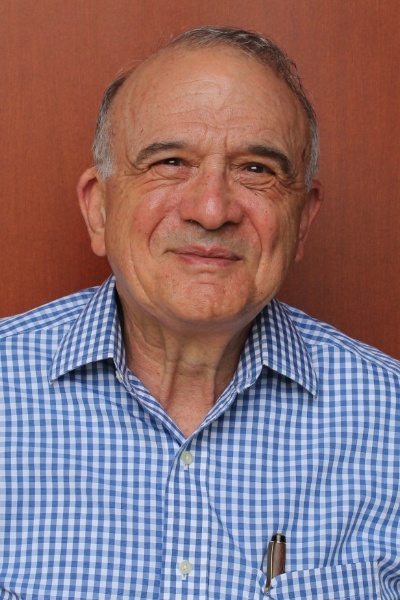
In the May episode of The Directors, we speak with Amarinthia Curtis, medical director of Gibbs Cancer Center and Research Institute and the Principal Investigator of Upstate Carolina NCORP, and Jeffrey Berenberg, a co-Principal Investigator of the Hawaiʻi Minority/Underserved NCORP and the Core Clinical Member for Translational and Clinical Research of the University of Hawaiʻi Cancer Center.
“I would love for the NCI to look closely at the recommendations put forth by the National Academies. I think it would do a lot to harmonize things between the DOD, HHS, CMS, FDA that all have their own conflict-of-interest regulations,” Curtis said. “There’s five different agencies that have policies about conflict of interest and how it needs to be reported, and how often, and what threshold is a conflict of interest.”
Compliance burdens are growing in the U.S. cancer enterprise, making it more of a challenge to run clinical research efficiently. Each agency has its own rules for what counts as a financial conflict of interest, how researchers must disclose it, how often disclosures must be updated, and what dollar amount triggers concern.
Berenberg said that even though the central Institutional Review Boards—the ethics committees that approve and monitor human subject research studies—solved some problems, clinical researchers now face even more layers of regulation outside the IRB process.
“I think things are getting worse rather than better,” Berenberg said. “The central IRB, the idea that was great, bypass your own IRB, because in the past it always used to be your IRB. They don’t really have any oncology expertise, they don’t really understand the study. Now, we don’t have that problem, but it seems like we have more regulation beyond the IRB.”
NCI Community Oncology Research Program is a national NCI-supported network that brings cancer clinical trials and cancer care delivery research studies to people in their communities. These institutions drive accrual and support dissemination, wrote Curtis in a guest editorial for The Cancer Letter last year.
“The NCORP is a key driver in our national research agenda. The 46 NCORP sites and ~4000 rostered community physicians place about a third of all participants onto NCTN trials. Community sites, where the majority of cancer patients are treated, are ideal for studying cancer care delivery. NCORP sites also promote generalizability and relevance to a wide population by accruing patients with different backgrounds” (The Cancer Letter, Oct. 3, 2025).
Recently, Curtis put together a catalogue of new regulations and the timeline of their implementation.
“I printed out a graph that showed that 60% of the regulations that we have were created in the past 10 years,” Curtis said on The Directors podcast.
“I wasn’t aware exactly of that, but my heart, my body can feel that,” Berenberg responded.
Curtis and Berenberg spoke with Paul Goldberg, editor and publisher of The Cancer Letter.
This episode is available exclusively on The Cancer Letter Podcast—on Spotify, Apple Podcasts, and YouTube.
Explore previous episodes of The Directors.
Some highlights:
On TMIST
Highlighting the role of NCORP in expanding access to cancer research, Berenberg recounted efforts to recruit members of Hawaiʻi’s Micronesian community into a major breast cancer screening trial, TMIST.
Said Berenberg:
I’m proudest of working really with the disparate communities in our catchment area in Hawaiʻi… We participated in the TMIST trial, which is a screening trial comparing tomosynthesis with classical more regular mammography.
And we accrued a very large number of patients, but the thing that really made me proud is that we reached out to the Micronesian community that are recent immigrants to Hawaiʻi, and only 20% of these people had ever had a mammogram and we worked with the outreach section of the cancer center and our CRA staff and we recruited significantly a high percentage of patients. It was very difficult.
It took a lot of time, but it was really a true expression of what the NCORP are meant to do is really to really broadly reach your community.
And it felt really special to me. It was a long project. We worked with the NCI initially to help get it started, but I felt this is really where we want to be. So, that’s what I’m most proud of.
Led by the ECOG-ACRIN Cancer Research Group, TMIST was the first randomized trial that sought to identify women for whom digital breast tomosynthesis, also called three-dimensional mammography, may outperform digital mammography in reducing advanced cancers—those more likely to kill women.
Although tomosynthesis is the newer technology, and is more sensitive, investigators want to confirm whether this sensitivity actually benefits women and improves their probability of living longer.
During the COVID-19 pandemic, enrollment dropped initially like all other cancer screening, and the trial was almost stopped by NCI.
NCI formed an ad hoc committee to consider whether the trial was still asking a relevant clinical question, whether it had been irrevocably harmed by the pandemic, and whether it would be possible to obtain an answer by means less expensive than randomized controlled trials (The Cancer Letter, March 19, 2021).
Ultimately, TMIST carried on, and enrollment rebounded to record levels and minority participation continued to grow (The Cancer Letter, March 25, 2022).
Curtis spoke more broadly about how NCORP serves as the “hands and feet” of cancer advancements.
Said Curtis:
What I’m most proud of is the bidirectional symbiotic relationship that on one hand the NCORP is really jet fuel for the national research agenda.
About a third of accruals on NCTN trials come from NCORP sites. So we’re really able to power trials to completion and collect data from a wide population.
But then, the other is the dissemination into the community that we’re able to be the hands and feet of cancer advances really in populations that are sometimes hard to reach.
And I think your example is a really good one, that there are patients that are never going to travel to an academic medical center. They really may not travel further than a couple dozen miles away from home, but the NCORP are there to provide cancer care and cancer research for those populations.
And I’m really, really proud of that. I think it’s a special niche in the cancer ecosystem.
The TMIST trial reached its accrual goal of 108,508 participants on Dec. 20, 2024.
“It closed last year, but many NCORPs really were able to accrue quite well,” Berenberg said. “But it really took a personal effort because of the belief system of many radiologists who just, whatever is the newest is the best, but maybe you’re overdiagnosing and maybe some cancers would never really develop. So, really, we felt strongly that this question had to be answered and we were able to get a radiologist in the community who was positive about it.”
Curtis served as the community co-chair for TMIST.
Said Curtis:
I think, again, having a community NCORP member have a seat at the table for a large national trial like this is so important.
And one of the unique things about our program, I’m very excited about TMIST, both for the primary outcomes, but also that we will have a large prospective data set now.
And in the future, I hope we will have more personalized screening recommendations. Right now, it’s very much one-size-fits-all, and you have to have data to build a personalized screening recommendation set. So, I’m excited about that and excited that they completed accrual, excited about some future studies that they’ll be able to do with that.
Like Jeff said, we learned a lot about TMIST and about our patient population.
We patted ourselves on the back, because we accrued a large number of African American women in our catchment area. We matched our catchment area in terms of demographics, but when we peeled a layer off the onion, the women with an African American background were half as likely to submit biospecimens as white women.
And so, we’ve done some focused education and outreach, but that’s something that we wouldn’t have known about our patient population if we weren’t so deeply involved in this study or really in any cancer research.
On the aging population
Both Curtis and Berenberg acknowledged that the aging population of cancer patients and survivors is a major stressor.
“The first thing that’s keeping me up at night is the workforce, this aging population, and longer survivors,” Cursti said. “I know there’s now a new word, metavivors, so people who are surviving with metastatic disease, but we need lots of doctors. And I know Jeff has had a lot of success with [Advanced Practice Providers] helping with research, and we’re starting to work that way also, in addition to needing more physicians to help us.
“I worry that if we don’t have enough physicians to staff clinics and prescribe chemotherapy and aromatase inhibitors, we also are not going to have enough physicians to put patients on clinical trials. So, what keeps me up at night is the physician workforce, particularly in medical oncology, less so for radiation oncology or surgical oncology, but medical oncology feels the most pressing right now.”
Berenberg said workforce shortages in Hawaiʻi have required innovative approaches to sustaining clinical trial participation, including expanding leadership roles for advanced practice providers, or APPs.
“So, number one, even on our island, Oahu, which is the most populated island, we have locums that are working and they’re really not able to participate and those physicians have really high workloads,” Berenberg said. “One of the things, one of our PIs with us is an APP. She’s a DNP. Her name is Christa Braun-Inglis, and she’s a phenomenal individual. I helped recruit her from Kaiser, where she was working. She doesn’t even have a PhD, and recruited her as an assistant professor. She’s been promoted to associate professor. We had a supplemental grant to our NCORP grant for a pilot study mentoring and teaching APPs on how to be involved in clinical trials.”
Braun-Inglis has helped expand the role of APPs in clinical research nationally, contributing to a model in which APPs now account for more than half of clinical trial accruals in Hawaiʻi, Berenberg said. Driven largely by physician shortages, APP involvement has been especially important for cancer control and [Cancer Care Delivery Research] studies, and APPs now play a major role in reviewing and supporting NCORP trials at the cancer center.
“So, it’s a phenomenal advance. But what’s keeping me up is basically we have a lot of staffing turnover because many people are going, [Clinical Research Associates] are going to medical school or nursing school or going into industry, and we have a financial problem because of changes here in Hawaiʻi,” Berenberg said.
The University of Hawaiʻi Cancer Center is historically based upon treatment, Berenberg said.
“And in the community, the major hospitals, Queen’s and HPH, we have to have a distributed model. It’s relatively inefficient because our staff are going out and working with personnel in the hospitals, and we’ve had a lot of turnover,” he said. “And because of changes in the legislature in support of our cancer center, we have financial shortages. So, I would say the financial shortage is the number one thing keeping me up now.”
On AI in cancer research
A big question on everyone’s minds is of course, will artificial intelligence hurt or help the future of cancer research.
Curtis said she is optimistic.
“Yes, you can put me down as an optimist on that. I use AI every day to format my notes and dictate my notes. I have an AI Scribe. That has saved hours a week for me. So, I think in an ethical framework, I would love to see AI help us,” she said.
Berenberg noted both advantages and limitations of AI in clinical research.
What I’m most proud of is the bidirectional symbiotic relationship that on one hand the NCORP is really jet fuel for the national research agenda. About a third of accruals on NCTN trials come from NCORP sites. So, we’re really able to power trials to completion and collect data from a wide population.
Amarinthia Curtis
An AI initiative was used to automate data extraction directly from clinical records, he said, which reduced the need for manual data entry by research staff.
“Also, there’s a radiologist who has used AI to be able to develop something called G, and the G basically is by looking at the CT scans that can calculate the tumor growth and can predict their survival really well. So, maybe patient therapies could be changed based upon this as well as things like biomarkers, which is a whole controversial area,” he said. “So, I think in certain things, but in terms of the regulatory burden and things like that, no. Maybe in terms of the conduct of the trials and the assessments, AI could be helpful, not in terms of the other stuff.”
Curtis said clinical notes are getting better because of AI.
“One of our CRAs has said that the biggest obstacle to doing her job is copy-and-paste,” Curtis said. “A lot of physicians copy and paste their notes and then it’s hard to get an assessment about was the patient having nausea or was it copied from the last visit?
“And I do think, again, having an AI Scribe, the patient’s symptoms are being reported in that conversation and entered into the note. So, that’s an actionable benefit of AI right now is that there are going to be some notes that have improved content because of AI and that will help us have better data and our data managers will not be pulling their hair out, because things that should be in the note aren’t…”
On deescalation and symptom management trials
There are some studies that have been struggling with recruitment. One is the OFSET trial, which came out of the TAILORx experience, Berenberg said.
“It’s looking at premenopausal women who are node-positive, but with a lower Oncotype to see whether they really…, because the data suggests that basically ovarian suppression probably can substitute for chemotherapy in that group, but it hasn’t really been proven based on epidemiology. So, it’s a rough randomization. It’s between hormone suppression and ovarian suppression and hormonal therapy plus or minus chemotherapy,” Berenberg said. “It’s a really important study, but it’s a very hard sell.”
On the other hand, there are studies looking at triple-negative breast cancer when omitting anthracycline.
“That study with all of the results of the KEYNOTE trial and bringing pembro in early on, that study is accruing okay. But these are studies I think Amy and I would both agree that are really unique that can be done in the NCORP with NCTN trials,” he said. “These studies are not studies that industry is going to be very excited about doing, maybe not using one of their drugs.”
Curtis said her NCORP’s patients seem enthusiastic about symptom managment studies.
Curtis said:
A lot of the treatment trials rely on medical oncologists, and we have a very engaged GU medical oncologist. So, we accrue very well to GU trials.
We have very engaged radiation oncologists. So, we accrue well to radiation trials, particularly prostate trials. And then cancer control, our portfolio for cancer control.
We have a robust relationship with Wake Forest and with URCC, those two research bases, and we love our colleagues there.
Our patients seem really receptive to those symptom management trials and they have for decades. So, we love the scientific deescalation or escalation or sequencing trials and those scratch our academic itch, but a lot of patients, when they’re done with their cancer treatment and they have symptoms, insomnia, stiffness, fatigue, cognitive impairment, they love that there’s research to help with their symptoms.
So, we’ve leaned into that because our patient population seems the most receptive to that.
Berenberg said the track record at his cancer center also reflects this interest in trials for cancer symptoms. He gave the example of a current Chemotherapy-Induced Peripheral Neuropathy, or CIPN, trial examining use of pressure and ice compression of extremities to relieve the sometimes debilitating symptoms of CIPN.
This trial has had no trouble accruing.
“Over the years after the very large breast cancer treatment and prevention treatment studies ended, the bulk of our accrual has been cancer control and also CCDR trials, even though we’re supposed to be 50/50. In the last 10 years for sure, we’ve never made the 50/50. It’s supposed to be 50. Our grant, our goal is 50% treatment and 50% non-treatment,” he said.
What’s keeping me up is basically we have a lot of staffing turnover because many people are going, [Clinical Research Associates] are going to medical school or nursing school or going into industry, and we have a financial problem because of changes here in Hawaiʻi.
Jeffrey Berenberg
Curtis said her community is seeing the same things.
“We have three affiliates and one of our affiliates, it’s the opposite, that they’re very successful with their treatment trials. For years, they had an adolescent and young adult oncologist who was quite a champion for Hodgkin’s disease trials, some of the COG trials,” Curtis said. “So, they were able to bump up our total NCORP accruals to treatment trials. But we just try and respond to our population and they’ve really clamored for the cancer control trials and symptom management.”
Literature shows that despite perceived barriers, most at-risk patients will still enroll in a trial if asked.
“I think the literature shows clearly, and this is such an important point, that for all the perceived barriers, there’s so many barriers, travel and extra cost concerns and fear and Tuskegee, whatever, all these things. Even in patients that are felt to be at-risk patients such as the African American community or the geriatric community, whatever, if they’re asked to participate in a trial, they’re going to say yes,” Berenberg said. “Now, they may have eligibility issues too, particularly the older adults, but the percentage is the same as it is in other populations.
“And that’s something that I think the physicians, and also other caregivers, probably APPs as well, they don’t really accept that. They think they know better, which is wrong.”
Listen to the full episode on Spotify, Apple Podcasts, and YouTube.
A transcript of the podcast is available below:
Paul Goldberg: Welcome to the May episode of The Directors.
With us today we have Dr. Amarinthia Curtis, the medical director of Gibbs Cancer Center and Research Institute and the PI of Upstate Carolina NCORP, and Dr. Jeffrey Berenberg, who is a co-PI of the Hawaii Minority and Underserved NCORP as well as the core clinical member for translational and clinical research of the University of Hawaii Cancer Center.
And it’s really wonderful to have you here because we’ve never really had NCORP chairs and PIs on The Directors and you do so much in this universe of cancer research. So, my first question is…
I usually ask is “What is it that’s keeping you up at nights?”
I think I’m going to ask it differently and that is: “What are you proudest of in May of 2026?”
Jeffrey Berenberg: I’ll just take one thing. I’m proudest of working really with the disparate communities in our catchment area in Hawaii.
And the thing specifically, I’ll answer it specifically and Amy probably will answer a little more generally, but we participated in the TMIST trial, which is a screening trial comparing tomosynthesis with classical more regular mammography.
And we accrued a very large number of patients, but the thing that really made me proud is that we reached out to the Micronesian community that are recent immigrants to Hawaii and only 20% of these people had ever had a mammogram and we worked with the outreach section of the cancer center and our CRA staff and we recruited significantly a high percentage of patients. It was very difficult.
It took a lot of time, but it was really a true expression of what the NCORP are meant to do is really to really broadly reach your community.
And it felt really special to me. It was a long project. We worked with the NCI initially to help get it started, but I felt this is really where we want to be.
So that’s what I’m most proud of. Sorry I interrupted Amy.
Amarinthia Curtis: I think that’s a wonderful example. I was going to answer more generally that I think the NCORP and what I’m most proud of is the bidirectional symbiotic relationship that on one hand the NCORP is really jet fuel for the national research agenda.
About a third of accruals on NCTN trials come from NCORP sites. So, we’re really able to power trials to completion and collect data from a wide population.
But then, the other is the dissemination into the community that we’re able to be the hands and feet of cancer advances really in populations that are sometimes hard to reach.
And I think your example is a really good one, that there are patients that are never going to travel to an academic medical center.
They really [might not] travel further than a couple dozen miles away from home, but the NCORP are there to provide cancer care and cancer research for those populations.
And I’m really, really proud of that. I think it’s a special niche in the cancer ecosystem.
And you mentioned the TMIST trial, which was almost stopped by NCI, and it’s now really doing incredibly well with their accrual. That wouldn’t have happened without NCORP.
JB: Right. It closed last year, but many NCORPs really were able to accrue quite well.
But it really took a personal effort, because of the belief system of many radiologists who just, whatever is the newest is the best, but maybe you’re overdiagnosing and maybe some cancers would never really develop.
So, really, we felt strongly that this question had to be answered, and we were able to get a radiologist in the community who was positive about it. Towards the end, there was a new radiologist who was questioning it, but, fortunately, he was willing to continue.
It was a rough beginning in part because of COVID.
JB: Correct.
Amy, do you want to add anything to that?
AC: I think we also had TMIST open, and I was given the opportunity to serve as the community co-chair for TMIST.
I think, again, having a community NCORP member have a seat at the table for a large national trial like this is so important.
And one of the unique things about our program, I’m very excited about TMIST, both for the primary outcomes, but also that we will have a large prospective data set now.
And in the future, I hope we will have more personalized screening recommendations. Right now, it’s very much one-size-fits-all, and you have to have data to build a personalized screening recommendation set. So, I’m excited about that and excited that they completed accrual, excited about some future studies that they’ll be able to do with that.
Like Jeff said, we learned a lot about TMIST and about our patient population.
We patted ourselves on the back, because we accrued a large number of African American women in our catchment area. We matched our catchment area in terms of demographics, but when we peeled off layer off the onion, the women with an African American background were half as likely to submit biospecimens as white women.
And so, we’ve done some focused education and outreach, but that’s something that we wouldn’t have known about our patient population if we weren’t so deeply involved in this study or really in any cancer research.
Well, maybe I should go back to my classic question, which is really the first question I always ask, and which is, what is keeping you up at nights in May 2026 as you run your institutions?
JB: You mean what isn’t?
I’ll let Amy take that first.
AC: Yes. The first thing that’s keeping me up at night is workforce, this aging population, and longer survivors.
I know there’s now a new word, metavivors, for people who are surviving with metastatic disease, but we need lots of doctors. And I know Jeff has had a lot of success with APPs helping with research, and we’re starting to work that way also, in addition to needing more physicians to help us.
I worry that if we don’t have enough physicians to staff clinics and prescribe chemotherapy and aromatase inhibitors, we also are not going to have enough physicians to put patients on clinical trials.
So, what keeps me up at night is the physician workforce, particularly in medical oncology, less so for radiation oncology or surgical oncology, but medical oncology feels the most pressing right now.
JB: Yeah, I would ditto that.
So, number one, even on our island, Oahu, which is the most populated island, we have locums that are working and they’re really not been able to participate and those physicians have really high workloads.
As Amy had said, one of the things, one of our PIs with us is an APP. She’s a DNP.
Her name is Christa Braun-Inglis, and she’s a phenomenal individual. I helped recruit her from Kaiser where she was working. She doesn’t even have a PhD, recruited her as an assistant professor.
She’s been promoted to associate professor. We had a supplemental grant to our NCORP grant that for a pilot study mentoring and teaching APPs on how to be involved in clinical trials.
She’s been involved nationally in changing the landscape for permission for APPs and the result is that more than 50%, maybe even higher, maybe even two-thirds.
And there’s an abstract in ASCO that is going to deal with this, of all of our accruals is coming from APPs in Hawaii, and that’s because of the physician shortages, and that’s led mostly to cancer control and CCDR, because they cannot be a local PI or they cannot enroll in treatment trials.
But there are even local PIs, and even at our cancer center, we have a disease site working group, which is predominantly APPs, but also there are some physicians who are screening all of these NCORP type of trials.
So, it’s a phenomenal advance.
But what’s keeping me up is basically we have a lot of staffing turnover, because many people are going, CRAs are going to medical school or nursing school or going into industry, and we have a financial problem because of changes here in Hawaii.
Our cancer center is historically based upon treatment.
And in the community, the major hospitals, Queen’s and HPH, we have to have a distributed model. It’s relatively inefficient, because our staff are going out and working with personnel in the hospitals and we’ve had a lot of turnover. And because of changes in the legislature in support of our cancer center, we have financial shortages.
So, I would say the financial shortage is the number one thing keeping me up now. Sorry for being so winded.
Is that happening in South Carolina and North Carolina?
AC: I’m fortunate that I’ve been somewhat insulated from some of the financial pressures. I know that there are conversations about 340B, about Medicaid, but those aren’t what keep me up at night.
I really trust the CFOs and accountants and all of the people in the administration of our institutions to keep those things and keep the lights on.
So, that doesn’t particularly keep me up at night. I think one thing though that does keep me up at night that’s directly affected by the finances is the customer service aspect for cancer care is that when they’re funding cuts or even when they’re not, you have to have people that answer the phones.
And if you’re going to put somebody on a clinical trial or even if you’re not, if you want them to trust you with the radiation or the chemotherapy, you have to do what you say you’re going to do.
If we say we’re going to order an MRI, then it’s really not too much to ask for the patient to get a call the next day with an appointment for an MRI in the next week or two.
But when there are staffing challenges for radiology technologists or even front desk staff, scheduling staff, prior authorization staff, some of those customer service things fall down and that directly impacts trust.
And there are a lot of trust problems in healthcare right now and we cannot let up on that customer service, that warmth, those good handoffs that need to happen.
What about data managers? They were really in high demand from the industry during COVID and after, and now the prices were being bid up by folks and is that still an issue in the community?
AC: Definitely.
And we were definitely caught off-guard by all of the remote work and COVID. I remember going to NCORP meetings and talking to our colleagues at Kaiser and how they would train somebody in San Francisco, and they would immediately get poached by industry—and that seemed like a California, a San Francisco problem.
And I was very much surprised that it became a Spartanburg problem with all of the remote work.
I think one of the things that, I guess another thing that keeps me up at night is how sometimes stifling all the regulatory and compliance burden can be.
And there are so many tools for data management that we can’t use. It still has to be a person that’s trained that’s on the delegation log that’s doing the data entry. It’s not as easy as you’ve got an eager pre-med student and they can come in and help.
Well, we’ve got to train them. There is a lot of work that goes into it. Some of it is quite valuable and important, but some of it, if you take a step back, maybe we’re doing it to check a box because there are so many boxes to be checked.
Jeff, what about you?
JB: Yes. In our system, we have different levels of CRAs.
The entry level really is data management, although they’re learning to be a CRA as well. We have the same problem in terms of our workforce, just the turnover right now I would say maybe 10, 15 years, 14, 15 years ago, we had a lot of career CRAs, very experienced and a few nurses and things have changed. We don’t have very many career CRAs.
We have mostly younger CRAs that are really preparing for medical school or nursing school. Right now, we have two CRAs who have been with us more than four years out of a pretty good size CRA pool, and that doesn’t include the manager, everyone else. And then many of them are two years. And then we’re lucky if we can keep them for two years.
And some of them, we have some of them are military spouses and so when their spouse goes off the island, we have a really, really good CRA who’s a pharmacy tech who worked at the military hospital and her spouse is leaving and she’s just about to be promoted to a CRA three and so her experience is going to be gone and so that is a real problem. It’s a major issue.
Is the industry hiring them away?
JB: We’re moving in new jobs, but we have had some really good CRAs gone to industry, not in the last couple of years, but earlier post-COVID we had several. Yes.
And then we had, in fact, our manager before, she wasn’t a CRA, but she was a manager, and really excellent. She was a lawyer, but she learned CCDR at one of the hospitals, and she became our manager, and she was excellent.
And now she got a call, “Would you like to manage one trial at one-third more of your salary? And you can live on the big island,” where her mother was living, the island of Hawaii, “And you can leave Oahu.”
And like, “Yeah, it sounds great.”
So, we lost a really good manager to industry.
Is that happening with you Amy?
AC: It slowed down. I definitely have still some scars from post-COVID and vividly remember one of our CRAs getting hired away by industry, and that company turned around and in the next week asked to meet with us because our accruals had slowed down.
We politely declined that meeting, pushed it out a little while.
But I think on one hand it’s fantastic that there is such a vibrant research ecosystem for all of these talented people. I love that there are opportunities for people’s careers to grow and I would much rather have somebody who is good and putting their heart into it for a short time than to not have them at all, but there is nothing like years of experience.
There’s no training that can replicate that, but we have to adjust, that’s the new reality. And so, we’ve beefed up our training, we have more mentorship, both formal and informal.
We’re building that into our staffing models is that we’re going to have more turnover, and so, we have to have managers. We’re going to have to devote more of their time to training, which means we need more managers.
So, that’s how we’re adapting to that challenge.
We’ve sped past Medicaid, and maybe we should circle back for a moment to Medicaid and see how the cutbacks have begun. Are they occurring to you out there in the world?
JB: I haven’t really noticed anything so far. Hawaii is fairly robust in terms of insurance coverage. There’s very few people.
And one of the things that one of the former CTO directors, the clinical trial office directors is she negotiated with Medicaid and Medicare locally, to make sure the clinical trials were being covered. So, that was something that the cancer center did for the community.
What about the physician workforce?
JB: For us, I already mentioned earlier, one of the larger organizations, even on Oahu, at their hospitals has a number of locums physicians and patients…
It’s really hard with the turnover of the physicians, the patients don’t have the relationship and the confidence that Amy was talking about.
They can’t really accrue to clinical trials, or if they can, there has to be another physician who’s willing to follow their patients. We do have one physician now who’s very experienced.
I mean, previous to coming here, and she wanted to participate in the NCORP trials, because she felt particularly the breast cancer studies and some of the deescalation trials that they’re doing, maybe we can talk about later on, that she wanted to accrue to these studies, but we had to get one of the permanent physicians who’s also a faculty member at the cancer center to express the willingness to follow their patients if she goes out of town.
So, that’s the exception to the rule.
We’re really having a problem. But I think in most institutions, it’s a few physicians that really believe. And we have one young radiation oncologist who—he just is going to NRG meeting—he’s sending us emails all the time, “What about this? What about that? I really want to do it.”
We need to mine for more of those people.
Maybe he’ll become like Amy in the future.
We’re hoping in the future, he’ll be maybe one of our PIs several years down the line. There’s some hope, but there are a lot of problems.
AC: I think relying on a broader physician workforce, again, radiation oncology may not have the same challenges as medical oncology workforce, but we have, I guess, the peanut butter problem, people get spread too thin, and all of us oncologists are being asked to think about more things.
So, when a patient comes into a room, we really need to think about trials, but we also need to think about cardio-oncology and oncofertility, and behavioral oncology.
All of those referrals or connections, they best happen if the physician recommends it.
So, we can have our navigators and we can have our nurses, and we can have automatic preset orders to refer people out to do rehab or to see a therapist, but the patient is more likely to go if the physician says, “I think this would be a good idea for you.”
But when you have wait times to get in to see a physician or a very busy clinic, you have to prioritize.
And so, sometimes those things are deprioritized, and also sometimes clinical trials are.
So, finding enough physicians to meet the needs in the clinic and to meet all of those other needs I think is what’s going to have to happen.
Are you actively looking to find the physicians or are you wishing for more physicians?
AC: Yeah. Yeah. We are recruiting. We’ve had ads in The Cancer Letter, we have gone to ASCO, we’ve interviewed.
And it’s tough to recruit to a non-metropolitan area. ASCO has actually put out a study and an infographic saying that’s a challenge for cancer care across the United States is that new grads are less likely to work in high need areas.
Jeffrey, you have anything to add?
JB: I was going to say just that so our cancer center is really unique because it’s an NCORP, but it’s also an NCI designated cancer center, but historically all the care has been in the community, 100% of the care.
Although there is a phase I unit that’s being developed.
But right now, one of the things that Dr. Ueno, whom I think you interviewed him in the past, he’s working with some of the large hospitals to co-recruit people and to get them to commit to some protected time where these people who are interested in clinical trials can come, they can maybe serve as a lung cancer expert.
We recently recruited a physician from, or co-recruited a physician from Tufts, who is an expert in lung cancer and melanoma, and she’s going to be working on clinical trials while practicing in the community.
So, that’s a model that is more specific for us because we’re this hybrid disseminated NCORP cancer center, which is really, we’re really unique in that regard. So we have our own problems.
You mentioned deescalation studies, maybe we should talk about that. Are there any studies that are particularly difficult right now?
JB: Yeah. I think the one that’s most difficult to recruit to, it’s interesting, there’s two studies that I could mention. One is the OFSET trial, which is I think that’s energy, right, Amy? Is that right?
Anyway, the OFSET trial came out of a lot of the TAILORx experience and it’s looking at premenopausal women who are node-positive, but with a lower Oncotype, because the data suggests that basically ovarian suppression probably can substitute for chemotherapy in that group, but it hasn’t really been proven based on epidemiology.
So, it’s a rough randomization. It’s between hormone suppression and ovarian suppression and hormonal therapy plus or minus chemotherapy. It’s a really important study, but it’s a very hard sell, very hard sell.
On the other hand, there are studies looking at triple-negative breast cancer when omitting anthracycline. That study with all of the results of the KEYNOTE trial and bringing pembro in early on, that study is accruing okay. But these are studies I think Amy and I would both agree that are really unique that can be done in the NCORP with NCTN trials.
These studies are not studies that industry is going to be very excited about doing, maybe not using one of their drugs. So these studies are super important and there’s other examples of those type of studies.
Well, and TMIST is also an example of that.
JB: TMIST is an example too. Yeah.
Because here’s… Yeah.
JB: Well, hopefully, but TMIST might end up being an escalation study. We’ll see, but yeah.
That’s fascinating. Amy, what are the trials you can’t do or having a hard time doing?
AC: We have a harder time in general with treatment trials, compared to cancer control trials.
And again, a lot of the treatment trials rely on medical oncologists and we have a very engaged GU medical oncologist. So we accrue very well to GU trials.
We have very engaged radiation oncologists. So, we accrue well to radiation trials, particularly prostate trials. And then cancer control, our portfolio for cancer control.
We have a robust relationship with Wake Forest and with URCC, those two research cases and we love our colleagues there.
Our patients seem really receptive to those symptom management trials and they have for decades. So, we love the scientific deescalation or escalation or sequencing trials and those scratch our academic itch, but a lot of patients when they’re done with their cancer treatment and they have symptoms, insomnia, stiffness, fatigue, cognitive impairment, they love that there’s research to help with their symptoms.
So, we’ve leaned into that because our patient population seems the most receptive to that.
JB: I really agree with what Amy said. And then the current CIPN trial using pressure or ice compression of extremities, it’s amazing how many patients, even though Hawaii doesn’t have that many patients that have been accrued and patients are just really, really desperate.
Not desperate but really happy to go on these kinds of trials. I completely agree with Amy. We’ve had the same track record. Over the years after the very large breast cancer treatment and prevention treatment studies ended, the bulk of our accrual has been cancer control and also CCDR trials, even though we’re supposed to be 50/50.
In the last 10 years for sure, we’ve never made the 50/50. It’s supposed to be 50. Our grant, our goal is 50% treatment and 50% non-treatment.
AC: We’re the same.
And we have three affiliates, and one of our affiliates, it’s the opposite, that they’re very successful with their treatment trials. For years, they had an adolescent and young adult oncologist who was quite a champion for Hodgkin’s disease trial, some of the COG trials.
So, they were able to bump up our total NCORP accruals to treatment trials. But we just try and respond to our population and they’ve really clamored for the cancer control trials and symptom management.
The number of people who go on clinical trials is remarkably small. It’s like 2 to 3%.
JB: I think it’s increased.
It’s increased? What is it now?
JB: If you include biobanking trials, I think the percent… It’s hard to know if the numbers have really increased or people using biobanking studies to increase that. It might be, I don’t know, more.
I think Joe Unger in the most recent papers, it could be higher. I think it’s increased a little bit, but it’s still inadequate, right?
Which I guess means that patients are not being offered that option.
JB: No, and I think the literature shows clearly, and this is such an important point, that for all the perceived barriers and there’s so many barriers, travel and extra cost concern and fear and Tuskegee, whatever, all these things.
Even in patients that are felt to be at-risk patients such as the African American community or the geriatric community, whatever, if they’re asked to participate in a trial, they’re going to say yes.
Now, they may have eligibility issues too, particularly the older adults, but the percentage is the same as it is in other populations.
And that’s something that I think the physicians and also other caregivers, probably APPs as well, they don’t really accept that. They think they know better, which is wrong.
Which they don’t. What about the paperwork? Is that a big barrier you think in your experience?
JB: I think there’s a certain barrier to getting the study open, for sure.
At our cancer center right now, the IRB has to cede to serve, otherwise you’re not able to do it.
And they have ceded, but we have to have a logistic review by our partners, hospitals, and they also go over the studies.
They go beyond the Medicare coverage analysis. They do their own Medicare coverage analysis. They take a look at the trial. There’s a university, even if a trial is a CCDR trial, we have to send it over to a biosafety office who then says, “Oh, we can’t review it.”
But they still want to see the application. And then we have to send it to another regulatory office outside of our own. And then it goes through a two-step scientific review because we’re a cancer center. And I’m talking about… from that point of view.
And then there’s obviously the paperwork for patients. But for us, a lot of the problems is getting the trial, actually getting the trial open, going through all of that, even for these trials.
AC: And I would echo that going back to sometimes we’re doing things to check a box and we also have many layers of compliance and regulatory IT security committee.
It seems like every time there’s a concern, there’s either a new meeting and committee that’s formed or a new formed that’s created that has to be filled out.
I love that the National Academies convened a meeting last year and they put out a report saying that 40% of effort is spent on the administrative regulatory compliance burden rather than doing science.
And that was their estimate for academic researchers. But I think that’s true for community researchers also because we have to navigate multiple hospital systems.
If there are overlapping or conflicting regulations, we have to navigate that to make sure every i is dotted and every t is crossed.
We’re audited by all of our research bases and some of our hospitals audit us too. We have internal office of Research Compliance and that all takes time and effort.
And again, if there’s any discrepancy, any form that’s signed late, then there’s another round of emails and meetings and notes to files that all takes time away from being with patients and promoting research.
JB: Yeah. Not to mention DTLs. If the DTL wasn’t signed by that one investigator and then you find out, well, you can’t put the patient on study because they didn’t do it because they don’t look at their email, right?
AC: Right, right.
Can AI help, or, actually, can NCI help? Who can help?
AC: I would love for the NCI to look closely at the recommendations put forth by the National Academies.
I think it would do a lot to harmonize things between the DOD, HHS, CMS, FDA that all have their own conflict of interest regulations. So, there’s five different agencies that have policies about conflict of interest and how it needs to be reported and how often and what threshold is a conflict of interest. And it really takes a lot of effort to…
And I’m glad it’s not me. I’m glad that we have people in our hospital that are lawyers and know these regulations, but they’re really-
JB: I think things are getting worse rather than better. I don’t think they’re getting better.
The central IRB, the idea that was great, bypass your own IRB, because in the past it always used to be your IRB, they don’t really have any oncology expertise.
They don’t really understand the study. Now we don’t have that problem, but it seems like we have more regulation beyond the IRB.
Would you agree, Amy?
AC: Yeah. I printed out a graph that showed that 60% of the regulations that we have were created in the past 10 years.
JB: Right. I wasn’t aware exactly of that, but my heart, my body can feel that.
I’m going to do something I don’t usually do. Would the two of you be willing to write a guest editorial for the cancer letter on this?
AC: Oh, yeah. I have a good one. I have a good story and I will save it. This will be a teaser. I will save it for my guest editorial, because I have a little anecdote that encapsulate just some of the, I won’t say insanity, but just conflict inherent with trying to make a robust and ethical research framework, but also one that can get things done.
Well, looking at what Tony Letai is trying to do with the cancer centers, which is streamline the paperwork required for designation, or in this case redesignation, actually. And why, I would think it’s something that NCI should look at, but who am I? I’m just a journalist.
JB: Oh, I agree with you.
So maybe that’s something NCI should take a look at, you would think?
AC: And I think that they are. I heard an interview with Ned Sharpless, and he tried to tackle the ballooning of regulatory compliance and other mandates for researchers.
And he said he was able to extend the grant period from five years to six years or for six years to seven years. He wasn’t able to actually shave anything off of the requirements, but he was able to extend the grant, which I mean, that’s a win for sure.
But the fact that he was at the highest level and he knew it was a problem and wasn’t able to put those regulations on a diet, I think that’s a little warning that it’s going to be a big task.
It might have been in The Cancer Letter.
AC: Yeah, maybe so. I was like, “I may have read it somewhere.” Maybe Paul, you brought it to me.
JB: Cool.
Let’s go back to AI. Can that be helpful?
Because there’s this movement to streamline clinical trials and move them to the community with the help of AI, but either for clinical trials, publicly funded ones or pharma.
AC: Yes, you can put me down as an optimist on that. I use AI every day to format my notes and dictate my notes. I have an AI Scribe. That has saved hours a week for me. So, I think in an ethical framework, I would love to see AI help us.
JB: Monica Bertagnolli, when she was in the Alliance, she really initiated an AI collaboration, basically so that eventually the aim was you could just take a look at your clinical record and you wouldn’t need to have the data managers put things in that.
You could just get all of the data from the record. I think that’s okay for laboratory. I think you still need to have the caregiver physician attributions and things like that.
If you don’t document it in your note, the best AI is not going to be able to… I don’t know, maybe I’m wrong.
Maybe AI would be able to tell from patient’s symptoms or whatever. If you had PROs and you had accurate symptoms and things like that, and then you had the labs, maybe you wouldn’t really need to worry so much about the physician input, but you could gather a lot of data that way and they’re still working on that.
And also in the Alliance there’s a radiologist who has used AI to be able to develop something called G, and the G basically is by looking at the CT scans can calculate the tumor growth and can predict their survival really well. So, maybe patients therapies could be changed based upon this as well as things like biomarkers, which is a whole controversial area.
I heard your other podcast recently about the ESR1 at the FDA.
So, I think in certain things, but in terms of the regulatory burden and things like that, no. Maybe in terms of the conduct of the trials and the assessments, AI could be helpful, not in terms of the other stuff.
AC: I would say one of our CRAs has said that the biggest obstacle to doing her job is copy-and-paste.
A lot of physicians copy and paste their notes and then it’s hard to get an assessment about was the patient having nausea or was it copied from the last visit?
And I do think, again, having an AI Scribe, the patient’s symptoms are being reported in that conversation and entered into the note. So that’s an actionable benefit of AI right now is that there are going to be some notes that have improved content because of AI and that will help us have better data and our data managers will not be pulling their hair out, because things that should be in the note aren’t…
JB: That’s a really good point.
Is NCI money coming through? Are you waiting, or has it been changing hands?
JB: We just applied. Of course, that only pays for a certain proportion of this clinical trial costs.
And Hawaii is particularly a problem because what happened was historically, because no patients are being treated at the cancer center, so there’s no revenue or anything and all that’s in the hospitals. So the hospitals were paying some money to support clinical trials, but then we’re also giving them some money back on subcontracts.
So, the cancer center and the state was paying the additional costs, but as that’s developed and there’s been some financial issues, we’re particularly at-risk maybe even more so than other sites. I think it’s a particular problem for us.
But you’re current as far as NCI payments?
JB: Oh yeah, we’re current ,and I mean, I think we have a good relationship. I think we’ve done a good job serving our community. We really like our new leader. I mean, we love Worta. But Brandy is phenomenal. You should interview her sometimes. She is a real powerhouse, and she’s really taken Worta’s vision, and she’s really works with the community.
And the biggest thing that she does is that she wants to be sure that the studies can be really done in the community setting, that they’re not only can be done in the university setting.
Because the whole thing about NCORP trials and the things, the purpose of them is to increase accrual, but it’s to make sure that our advances can be implemented and can be done in the community setting.
There are still a lot of problems, because—I can give you my whole philosophy about that—which is basically that a lot of studies are done with research support.
And ultimately, we have to go to implementation studies with clinical support to really show that the advances can really be translated, things like geriatric assessment, things like that, which is a new trial looking to see how that can really be done.
Anyway, I’m going around like a ping pong ball, but we really like Brandy and we love Worta, but we really like Brandy and we hope that she’ll stay on as our director and work with us.
That’s good to hear.
AC: Yeah. I want to echo that phrase and it’s Dr. Brandy Heckman-Stoddard for listeners who may not be steeped in NCORP.
But she is very good at getting to the heart of things and supporting our sites. And I really appreciate that she’s come in to fill some very big shoes and fill them and make them her own in a really difficult federal environment.
As far as funding, they say that they will release a NOFO, a Notice of Funding Opportunity, in late spring. I think Memorial Day, which is this weekend, the official start of summer.
And I don’t think we’re going to get that NOFO in the next few days. So it looks like it’ll be pushed back again. They say that we’ll have at least 30 days to write a grant.
JB: I think it’ll be 60 days. I think she said 60. At the Alliance meeting, she used her body language to make it seem like she, which is a little different than before.
You didn’t see her dancing around there, but maybe your staff did and she was like moving in a way to say, yeah, it’s really going to be the new… But were you talking about the new grant or are you talking about our funding levels?
I’m talking about the money that NCI should be transferring to you by now.
JB: Oh, that’s come. The money we’re not worried about, but the new grant, it’s been delayed for what, more than a year; right?
The new opportunity to go beyond. Yeah. So now we’re actually in our 12th… Well, we’re in what, seventh year? No, no, eighth year, into the eighth year, right?
AC: Right. On the six-year grant. So I think we were-
JB: Yeah, six-year grant.
AC: Year six extension—one. And now we’ve applied for bridge, I don’t know if bridge funding is the right word, but to be grant year six, extension two.
JB: Right. They’re going to call it year 12, but that’s just a semantic thing.
AC: The money still kept coming, I have talked to our administrators and let them know that air changes, but so far the checks have cleared.
And you’re paying salaries, you’re not laying people off? Well, it’s good to know even though the NOFO is late, whatever. It’s a big change. I think they’re also doing the same with the Cancer Center. Not the same.
JB: The research bases, research bases, yeah. For the NCORP grant, the NCTN grant, no, I don’t think they’ve even received the money for that. I’m not sure.
Last time I talked to any of the group chairs, they had just received the Notices of Award and by the time this runs, they hope they will receive the money.
JB: It was supposed to be March, I think. Yeah.
But the Notices of Award are flowing now, if not necessarily the money, but it’s good to know that you’re current on the NCI payments. That’s worrisome. Yeah. Well, is there anything I forgot to ask? Anything you’d like to add?
JB: I think that the thing that the NCORP has really done, summarizes that is that being able to show the studies in the community, the fact that even in the rural setting, the outcomes, the survival is equal if they’re on a clinical trial.
Minority recruitment has historically been way better than industry. That’s a major thing.
However, if you look at Joe Unger’s recent stuff, I’m a little bit concerned, because it seems to be dropping from history, I think because of personalized medicine. I think maybe certain minority populations aren’t assessing that.
But I don’t know if that’s my concern.
My main concern is making sure that the studies that the results, like I said earlier, will be able to be implemented with regular office staff in a time where there’s resources or less in practice that these, particularly in addition to treatment advances, other advances that Amy and I feel are really important, like geriatric assessment, things like that.
Amy, what did I forget to ask?
AC: I think you covered a lot about NCORP, and I would just say I think it’s a really special place in the cancer research ecosystem.
And the whole idea of cooperative groups and cooperation, that we can enroll the one patient with one mutation that’s in the upstate of South Carolina and the two or three that might be in Hawaii, and we put together enough of those patients around the country and you can make real advances.
I love the statistic that we’ve cut cancer death rates by so much over the past decades, and NCORP’s been a big part of that. So, I’m really proud of it. I think there are challenges and certainly there are times I lose sleep, but I sleep better knowing that there are a lot of people that care about the work that we do, both at the NCI and government, our patients care about the work that we do.
And I do think that together the future is bright as cliche as that might sound, I really do believe that.
Yep, let’s hope you’re right.
JB: Well, thank you for the opportunity.
Thank you so much for taking your time to talk with me.
AC: Thanks, Paul.