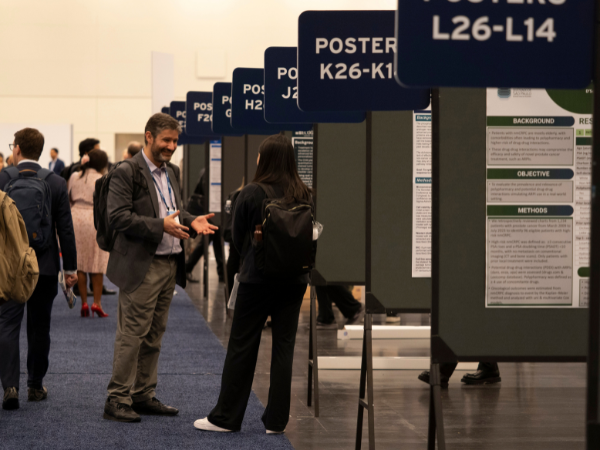
Patients with relapsed multiple myeloma treated with the immunotherapy teclistamab (TECVALI) lived significantly longer and remained in remission far longer than those receiving standard therapies, according to results from a major international phase III clinical trial published in The New England Journal of Medicine and presented at the 2026 American Society of Clinical Oncology annual meeting.
The study, led by senior author C. Ola Landgren, found nearly 70% of patients receiving teclistamab had no disease progression after 18 months—compared with about 27% of patients receiving standard treatments—while nearly two-thirds achieved complete remission, including many with no detectable cancer on highly sensitive testing.
Landgren is chief of the Sylvester Myeloma Institute at Sylvester Comprehensive Cancer Center, part of the University of Miami Miller School of Medicine
Teclistamab is sponsored by Johnson & Johnson.
“Now we have chemotherapy-free immunotherapy options for patients whose myeloma has relapsed for the first time,” Landgren said in a statement. “We are seeing very deep responses and long clinical benefit from these therapies. This is part of a much bigger transformation happening in myeloma care.”
When Landgren began his medical training more than 30 years ago, treatment for multiple myeloma relied almost entirely on chemotherapy. Today, the field has shifted toward immune-based therapies designed to help the body’s immune system identify and attack cancer cells more precisely and effectively.
Researchers are also moving these therapies earlier in the disease course instead of reserving them for later stages after multiple treatments have failed.
Teclistamab is part of a newer class of drugs known as bispecific antibodies. The therapy works by linking T cells, a type of immune cell, to BCMA, a protein found on myeloma cells, allowing the immune system to recognize and attack the cancer directly.
The phase III clinical trial, called MajesTEC-9, enrolled 593 patients across 24 countries. All participants had multiple myeloma that had returned after one to three prior treatments. About three-quarters had already taken and stopped responding to standard therapies, including immune-modulating drugs such as daratumumab and lenalidomide, leaving them with limited treatment options in routine practice.
Even among patients who had failed other therapies, teclistamab improved outcomes. Patients lived longer, stayed in remission longer and, in some cases, saw their cancer reduced to extremely low or undetectable levels known as minimal residual disease negativity.
Nearly 70% of patients treated with teclistamab had not experienced disease progression after 18 months, compared with about 27% of patients receiving standard therapies. Patients treated with teclistamab also reported longer symptom control and slower worsening over time.
For many patients, teclistamab did more than slow disease progression. Nearly two-thirds achieved complete remission, meaning physicians could no longer detect signs of myeloma using standard tests. In many cases, even highly sensitive minimal residual disease tests could not find remaining cancer cells.
“To see that this drug is so efficacious and so safe across patients from all these locations worldwide is a very strong signal,” Landgren said. “To see that in patients who have been exposed and refractory to commonly used myeloma treatments is very important.”
Teclistamab activates immune cells, which can also affect normal immune defenses. As a result, patients receiving the therapy face a higher risk of infection, particularly during the first six months of treatment. Physicians manage that risk through close monitoring and preventive care.
Patients receiving teclistamab often take antiviral and antibiotic medications to help prevent infections. Care teams regularly monitor antibody levels, and patients may receive immunoglobulin infusions if levels drop too low.
Researchers are now studying whether bispecific antibodies such as teclistamab could benefit patients even earlier in the disease course.
“For me, the goal is to develop curative strategies,” Landgren said. “We are working toward treatments that can either eliminate the disease entirely or control it for very long periods while minimizing the burden on patients and preserving quality of life.”