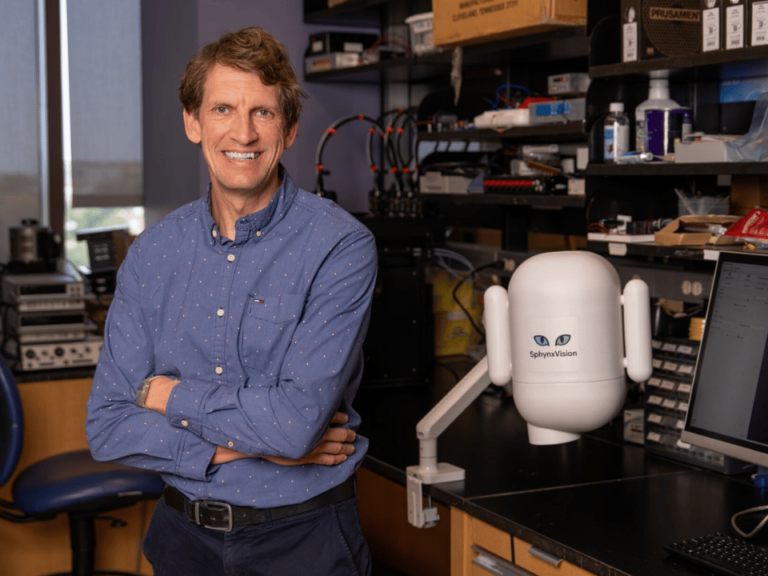
Steven Lemery named acting associate director of Tissue Agnostic Drug Development at FDA’s OCE

Share on facebook
Share on twitter
Share on linkedin
Share on email
Share on print

Steven Lemery was named acting associate director of Tissue Agnostic Drug Development within FDA’s Oncology Center of Excellence.

Lemery will continue as division director for the Division of Oncology 3.

Lemery joined FDA in 2006 as a clinical reviewer in the Division of Biological Oncology Products, which ultimately re-organized into the Division of Oncology Products 2. He served as team lead on the Gastrointestinal Malignancies team in the Division of Oncology Products 2 where he supervised the review of multiple original and supplemental applications.

Subsequently, he assumed the role of the supervisory associate division director in DOP2, primarily leading activities for the melanoma/sarcoma and pediatrics/rare malignancies teams.

More recently, he has assumed the role of acting director of DO3 and is a member of the Medical Policy and Program Review Council. In various roles, he has contributed to Office- and OCE-led regulatory or policy initiatives. These have included both biosimilar development and tissue agnostic development.

In his new role in the OCE, Lemery will focus on scientific and policy efforts related to tissue agnostic drug development and lead outreach and education in this topic.


Table of Contents

YOU MAY BE INTERESTED IN

Physician-scientists by day, a funk-loving musical troupe by night. You may have seen The CheckPoints—a 13 member cover band with a three-piece brass section and Jim Allison on harmonica—movin’, groovin’, and gettin’ down as a mainstay closing act at ASCO, AACR, or the Society for Immunotherapy of Cancer annual meetings. 
At the 2026 Annual Meeting of the American Society of Clinical Oncology in Chicago, results from the phase III HARMONi-6 trial were presented at the plenary session and published simultaneously in The Lancet. The HARMONi-6 trial tested a novel bispecific antibody that engages PD-1 and VEGF (ivonescimab), given with platinum-doublet chemotherapy to patients with previously untreated advanced squamous non-small cell lung cancer. 
In 2026, more than 900 million people are estimated to be regularly using generative artificial intelligence—computer systems capable of creating human-like text, images, audio, video, and other original content. AI is becoming integrated into nearly every aspect of daily life. Health care is no exception. 

Never miss an issue!

Get alerts for our award-winning coverage in your inbox.

Login