UCLA awarded $2.7 million to study AI role in improving cancer diagnosis

Share on facebook
Share on twitter
Share on linkedin
Share on email
Share on print

Researchers from the David Geffen School of Medicine at UCLA and UCLA Jonsson Comprehensive Cancer Center have received a $2.7 million grant from NCI to develop techniques to improve the quality of prostate magnetic resonance imaging and new artificial intelligence methods that use prostate MRI to assist cancer diagnosis.

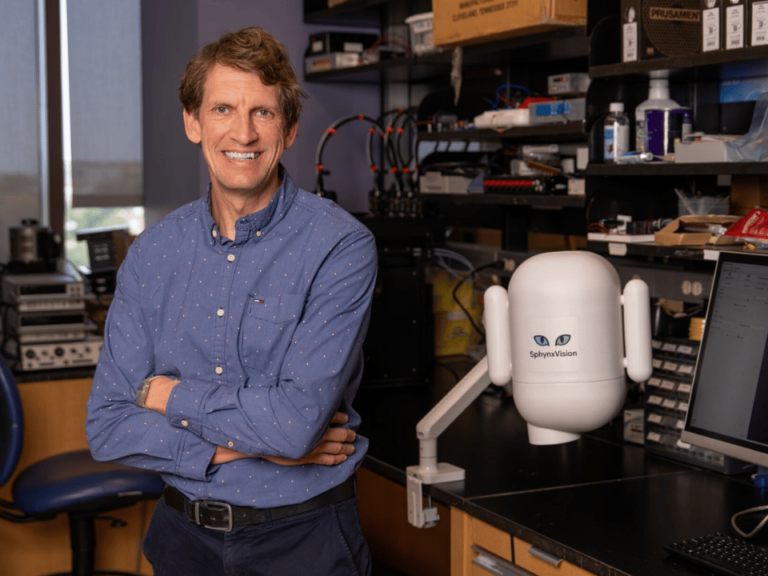
The five-year project, led by Kyung Sung, associate professor of radiology, and Holden Wu, associate professor of radiology, bioengineering and biomedical physics, will help radiologists improve their ability to diagnose prostate cancer and help identify and predict the aggressiveness of the disease.

The new techniques will be evaluated in men who undergo prostate MRI and proceed to biopsy or surgery.

Previous studies led by Sung have shown artificial intelligence can perform as well as experienced radiologists in detecting prostate cancer. Improvements to the current system could help not only save time but potentially provide diagnostic guidance to less-experienced radiologists. Sung and Wu have also developed advanced quantitative MRI techniques that will be combined with artificial intelligence to maximize the performance for prostate cancer diagnosis.

YOU MAY BE INTERESTED IN

Those of us who have devoted our careers to treating recalcitrant cancers know the heartbreak of walking alongside an individual facing an advanced diagnosis. We not only shoulder the clinical responsibility, but also the emotional weight that accompanies every step of that journey as each patient’s story becomes connected to our own.
If you believe in the miraculous healing power of ivermectin, hydroxychloroquine, and the harm from vaccination for HPV and COVID-19, you’ve got a powerful friend in Sen. Ron Johnson (R-WI), chair of the Permanent Subcommittee on Investigations of the Senate Committee on Homeland Security and Governmental Affairs.
In a poignant keynote punctuated with anecdotes about grief, American Society of Clinical Oncology’s immediate past president Eric Small emphasized that the annual conference is not just about scientific discovery, but about a responsibility to translate discoveries into better outcomes for cancer patients globally. 

Never miss an issue!

Get alerts for our award-winning coverage in your inbox.

Login