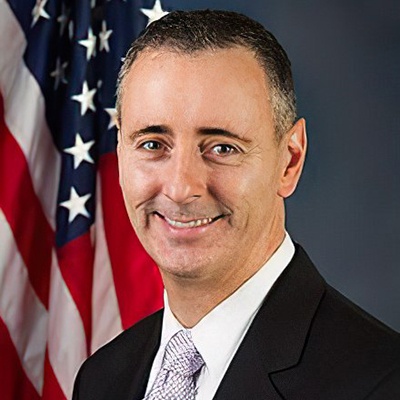
Higgins, King, Kilmer, Fitzpatrick to serve as co-chairs of House Cancer Caucus

Share on facebook
Share on twitter
Share on linkedin
Share on email
Share on print
Brian Higgins
Peter King
Peter King
Brian Fitzpatrick

Leading the House of Representatives Cancer Caucus are co-chairs House members Brian Higgins (D-NY), Peter King (R-NY), Derek Kilmer (D-WA), and Brian Fitzpatrick (R-PA).

Brian is a member of the House Budget Committee and the Committee on Ways & Means including its subcommittee on Health. His district includes Roswell Park Comprehensive Cancer Center.

Higgins is a founding member and co-chair of the NIH Caucus, a member of the Childhood Cancer Caucus, and an original sponsor of the Cancer Drug Parity Act.

“As a co-chair of the Cancer Caucus, I will continue to advocate for increased investment in cancer research,” King said in a statement. “It is essential we continue to fight hard and provide researchers with the necessary resources.”

“The Cancer Caucus is a leading voice on cancer research and funding in Congress,” Fitzpatrick said in a statement. “Cancer is indiscriminate, afflicting millions of Americans each year from all walks of life.”

YOU MAY BE INTERESTED IN

The tremendous promise—and potential peril—of the prostate-specific antigen (PSA) screening test have confounded guideline developers for decades. When introduced, PSA was one of the first and the only credible blood biomarkers for cancer screening. That a simple blood test should be used to screen for the most common cancer in men, one that was lethal for 3% of men and 5% of Black men, seemed like a slam dunk. 
With artificial intelligence becoming an increasingly ubiquitous part of the fabric of modern life, Cancer Grand Challenges has committed $10 million to a project aimed at developing AI “co-scientists”—AI agents that could help cancer researchers analyze data, generate hypotheses, and suggest new experiments.
For decades, cancer treatment has largely followed a familiar model: Identify the disease, determine its stage, and select the therapy most likely to benefit patients with similar characteristics. Even as targeted therapies and immunotherapies have transformed oncology, we have generally developed drugs for populations rather than individuals.

Never miss an issue!

Get alerts for our award-winning coverage in your inbox.

Login