A $100 million gift establishes a UChicago institute focused on microbiome and immunity

Share on facebook
Share on twitter
Share on linkedin
Share on email
Share on print
Members of the Duchossois Family Foundation, including (back row, from left) Craig Duchossois, Janet Duchossois, Ilaria Woodward, Jessica Swoyer Green, Dayle Duchossois Fortino, (seated, from left) Ashley Joyce, Richard Duchossois and Kimberly Duchossois. Photo by Richard Shay

The University of Chicago received a $100 million gift that will establish The Duchossois Family Institute: Harnessing the Microbiome and Immunity for Human Health.

The institute will bring together the university’s strengths in genetics, immunology, microbiome research, and computation to develop research and interventions focused on optimizing health.

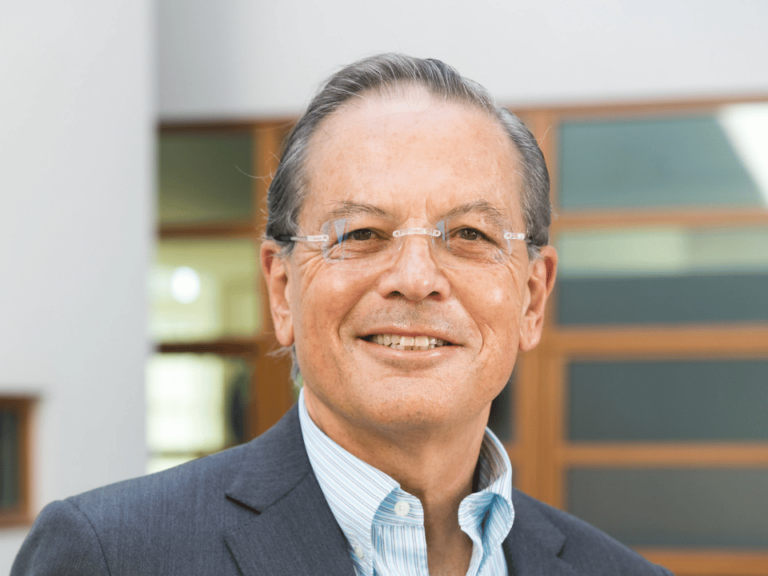
The gift was made by the Duchossois Group Inc. Chairman and CEO Craig Duchossois, his wife Janet Duchossois, and The Duchossois Family Foundation.

The Duchloss family first provided support to UChicago in 1980, when Richard Duchossois established the Beverly E. Duchossois Cancer Fund in memory of his wife. In the years since, the family has given $37 million to the medical center to drive innovation and transformative care, including a named professorship and several cancer research funds, as well as a $21 million gift in 1994 to establish the Duchossois Center for Advanced Medicine.

The Duchossois gift is the single largest in support of UChicago Medicine, and it is the fourth gift of $100 million or more to the University of Chicago.


YOU MAY BE INTERESTED IN

Physician-scientists by day, a funk-loving musical troupe by night. You may have seen The CheckPoints—a 13 member cover band with a three-piece brass section and Jim Allison on harmonica—movin’, groovin’, and gettin’ down as a mainstay closing act at ASCO, AACR, or the Society for Immunotherapy of Cancer annual meetings.
At the 2026 Annual Meeting of the American Society of Clinical Oncology in Chicago, results from the phase III HARMONi-6 trial were presented at the plenary session and published simultaneously in The Lancet. The HARMONi-6 trial tested a novel bispecific antibody that engages PD-1 and VEGF (ivonescimab), given with platinum-doublet chemotherapy to patients with previously untreated advanced squamous non-small cell lung cancer. 
In 2026, more than 900 million people are estimated to be regularly using generative artificial intelligence—computer systems capable of creating human-like text, images, audio, video, and other original content. AI is becoming integrated into nearly every aspect of daily life. Health care is no exception. 

Never miss an issue!

Get alerts for our award-winning coverage in your inbox.

Login