Rachel Humphrey named chief medical officer of CytomX

Share on facebook
Share on twitter
Share on linkedin
Share on email
Share on print

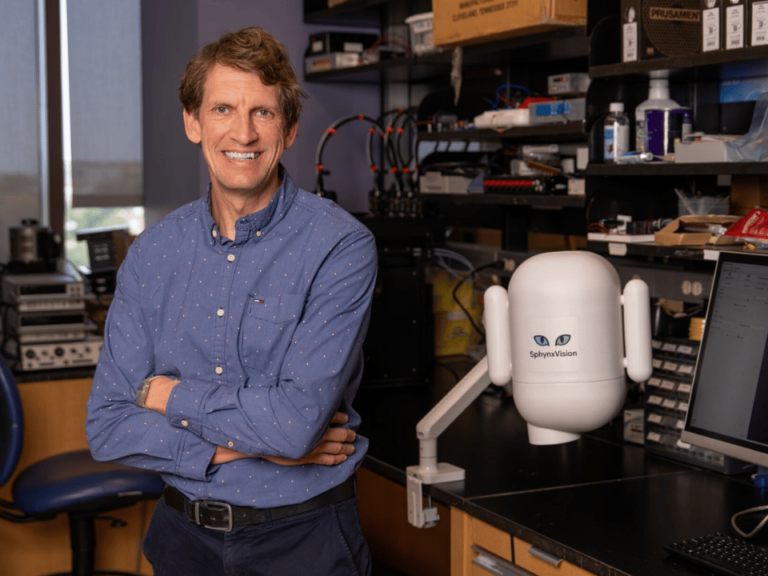
RACHEL HUMPHREY was named chief medical officer of CytomX. Humphrey previously served as a member of the company’s board of directors.

Humphrey formerly led immuno-oncology at Eli Lilly and AstraZeneca, and also oversaw clinical development of Yervoy (ipilmumab) at Bristol-Myers Squibb and the development of Nexavar (sorafenib) at Bayer.

Humphrey recently held positions as vice president and head of immuno-oncology at Eli Lilly and at AstraZeneca, where she was responsible for building the immuno-oncology departments and supervising the strategies and designs for all the immuno-oncology agents in development.

She previously served as vice president of product development at Bristol-Myers Squibb, where she led all aspects of the clinical development of Yervoy through the submission of global biologics license applications and global launch.

At Bayer, Humphrey supervised the early and late stage clinical development of Nexavar for treatment of renal cell carcinoma. She began her career as an oncology fellow and staff physician at the NCI.

In connection with her appointment as chief medical officer, Humphrey will resign from the board of directors of CytomX.


YOU MAY BE INTERESTED IN

When our hematological malignancy testing pilot project began in Eldoret, Kenya, there seemed to be a mismatch in relation to progress in healthcare. The region, like much of sub-Saharan Africa, had been focusing on combatting infectious diseases such as HIV and malaria—which was much-needed—yet cancer care was under-resourced. 
Artificial intelligence is rapidly transforming biomedical research and healthcare. Large language models, foundation models, and AI agents are increasingly being deployed to assist with data interpretation, literature review, clinical decision support, and translational research. 
In modern oncology, important insights from clinical trials often emerge years after initial publication. As new therapies extend survival and transition more patients into long-term remissions, clinicians and researchers are increasingly looking beyond initial response rates to understand durability, long-term safety, and even the possibility of a cure. 

Never miss an issue!

Get alerts for our award-winning coverage in your inbox.

Login