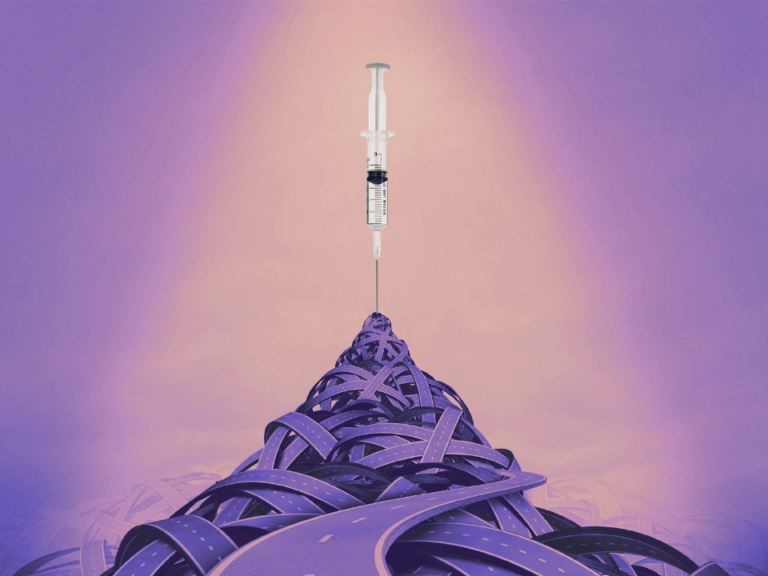
Grant-funded, investigator-initiated trials fail to bounce back from COVID as 50% of research staff left for higher-paying jobs

Share on facebook
Share on twitter
Share on linkedin
Share on email
Share on print

Academic cancer centers are facing severe staffing shortages after three years of personnel attrition during the COVID-19 pandemic—resulting in depressed levels of patient accrual to investigator-initiated and grant-funded clinical trials.

To access this subscriber-only content please log in or subscribe.

If your institution has a site license, log in with IP-login or register for a sponsored account.*
*Not all site licenses are enrolled in sponsored accounts.

Login Subscribe
Matthew Bin Han Ong
Matthew Bin Han Ong
Table of Contents

YOU MAY BE INTERESTED IN

Growing up in inner-city Detroit, Otis Brawley had a thriving community made up of his parents, Jesuit priests, friends, and neighbors encouraging him that he could do anything he put his mind to. 
NIH announced Jan. 29 that “Basic Experimental Studies Involving Humans,” also called BESH, will no longer be considered clinical trials and will therefore no longer be subject to the requirements under the NIH definition of a clinical trial, including registration and reporting requirements in ClinicalTrials.gov.
As NCI paylines drop to 4%, cancer centers are tapping into their institutional funds to provide “bridge funding,” typically in $50,000 to $100,000 increments, to enable investigators to keep their labs open until better times return—next year God willing.
Matthew Bin Han Ong
Matthew Bin Han Ong

Never miss an issue!

Get alerts for our award-winning coverage in your inbox.

Login