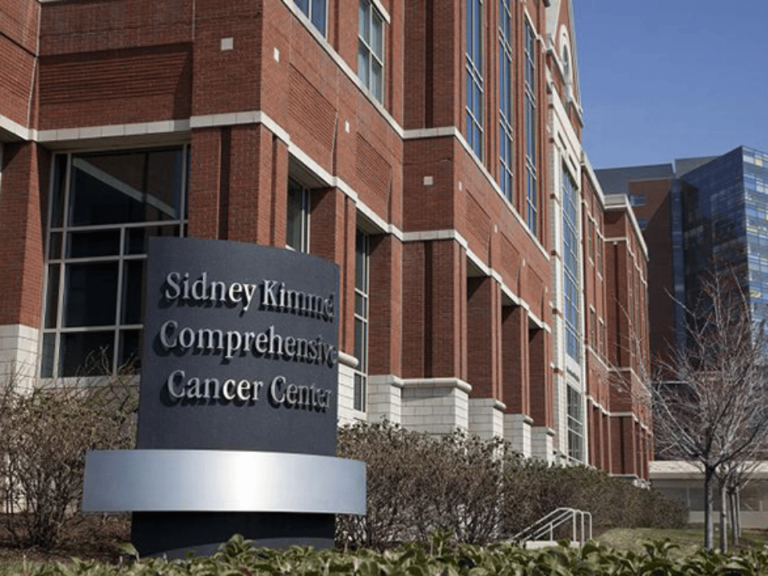
Siteman: Robotic technology allows for earlier, more accurate lung cancer diagnosis

Share on facebook
Share on twitter
Share on linkedin
Share on email
Share on print

Robotic technology available at Siteman Cancer Center at Barnes-Jewish Hospital and Washington University School of Medicine in St. Louis is enabling physicians to obtain tissue biopsies in previously hard-to-reach areas of the lung to test for cancer.

To access this subscriber-only content please log in or subscribe.

If your institution has a site license, log in with IP-login or register for a sponsored account.*
*Not all site licenses are enrolled in sponsored accounts.

Login Subscribe
Table of Contents

YOU MAY BE INTERESTED IN

In patients with extensive-stage small cell lung cancer, tarlatamab, a bispecific T-cell engager, plus durvalumab as first-line maintenance therapy extended median overall survival by more than eight months, more than tripled progression-free survival, and reduced the risk of death by 58% compared to durvalumab alone, according to the results of the phase III open-label, multicenter, randomized DeLLphi-305 study. 
Divarasib, a next-generation KRAS G12C inhibitor, lowered the risk of disease progression or death by 42% and the overall risk of death by 44% in people with previously treated KRAS G12C-mutated non-small cell lung cancer, according to the results from the phase III Krascendo 1 study. The therapy demonstrated the superior efficacy compared with current standard of care KRAS G12C inhibitors. 

Never miss an issue!

Get alerts for our award-winning coverage in your inbox.

Login