The United States has a translation problem. Scientific breakthroughs in oncology are accelerating, but clinical trial infrastructure hasn’t kept pace.
The solution: Speed up clinical trial enrollment by using AI to reduce costs and eliminate bureaucratic red tape. Tasks that ordinarily require hours of manual work for each patient in a single study can now be completed for 100,000 patients in a matter of minutes.
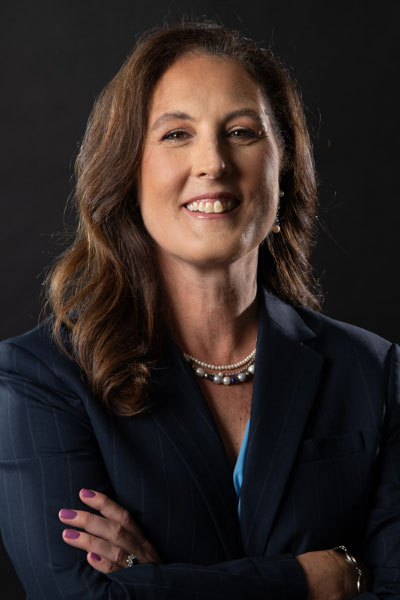
“If we really do have this problem of translating science to people because of the lack of resourcing and efficiency on the clinical trial side, then I don’t view innovation outside the U.S. as a bad thing. I actually think it’s a great thing, and it’s great for people who are getting access to these clinical trials,” Karen Knudsen, CEO of the Parker Institute for Cancer Immunotherapy, said on the July episode of The Directors.
“The fact that more people in China are getting access to advanced cancer care—good, and we’re going to learn from it. I feel the same about Germany. I feel the same about Australia. But we also want to make sure that people here in the United States have access, and don’t lose access to the most advanced form of care. That’s where we became really interested in working with Paradigm Health.”
For years, U.S.-based pharma and biotechnology companies have been offshoring clinical trials to manage labor costs, avoid regulatory burdens, and gain access to larger patient populations that can make recruitment easier.
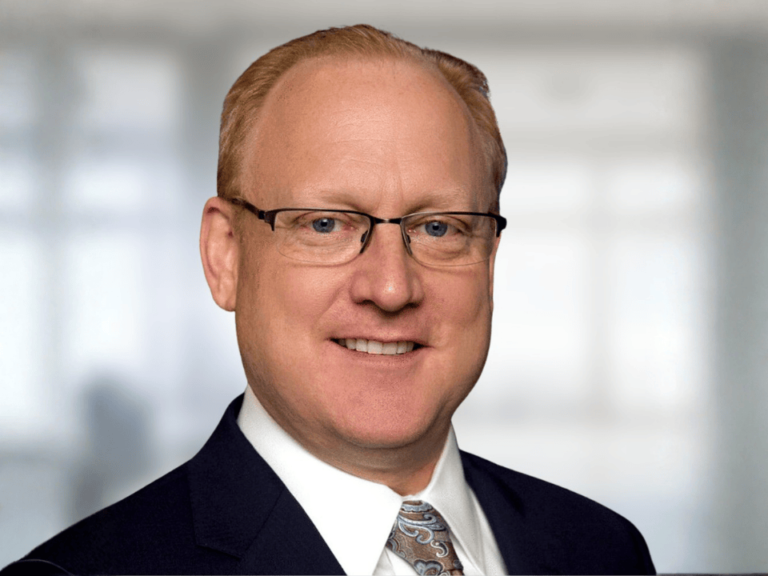
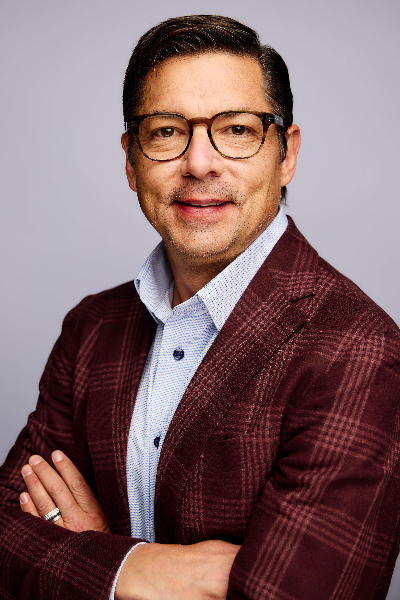
In this episode of The Directors, Knudsen and Kent Thoelke, CEO of Paradigm Health, a technology company focused on using AI to enhance clinical trials, discuss the factors that are bottlenecking translation in the U.S. and the promising role of AI in modernizing the U.S. clinical trial infrastructure.
Paradigm Health uses an AI-powered clinical trial technology platform that integrates clinical trial infrastructure directly into routine healthcare provider systems.
“If the administration and HHS and everybody truly wants to compete with geographies around the world and to drive early oncology development back to the U.S., this has to be a national priority,” Thoelke said. “Clinical trials cannot be an extra. Clinical trials cannot be a conversation that comes later in the game. I think that as a country we need to reposition the framework that clinical research, clinical trials should be a care option for all patients.”
Thoelke characterized the recently launched HHS Operation TrailBlazer as a tangible first step on that path (The Cancer Letter, June 26, 2026). Deployment of AI in the conduct of clinical trials also promises to make the U.S. clinical research infrastructure more competitive, Knudsen and Thoelke said.
Knudsen and Thoelke appeared together on The Directors, a monthly series which focuses on the problems that keep directors of cancer centers up at night. This episode breaks the format: Knudsen, a former cancer center director, knows what keeps other directors up at night, and, with Thoelke, may have an antidote.
This episode is available exclusively on The Cancer Letter Podcast—on Spotify, Apple Podcasts, and YouTube.
The American Society of Clinical Oncology sponsored this episode. ASCO plays no part in the editorial direction of this podcast.
“There’s so much room and opportunity for us to improve people’s access to the most advanced form of cancer care, which is the clinical trial,” said Knudsen, who serves on the board of directors of Paradigm Health and is a former CEO of the American Cancer Society. ACS was also one of early investors in Paradigm Health.
“Through my entire career, we have been bemoaning the fact that only single-digit populations of patients actually enroll on cancer clinical trials and [the rest] miss out on life-saving strategies for prevention, detection, and cure,” Knudsen said.
“I do feel like we’re entering a phase where technology is poised to help us do better, and the motivation is there. I said it when I was a cancer center director. I’ve said it now at the helm of two organizations, as CEO, trying to improve upon this.
If the administration and HHS and everybody truly wants to compete with geographies around the world and to drive early oncology development back to the U.S., this has to be a national priority. Clinical trials cannot be an extra. Clinical trials cannot be a conversation that comes later in the game.
Kent Thoelke
“Every cancer center director wakes up every day trying to understand how they can do better for the patients that are under their charge and to get that science to people,” Knudsen said.
The drive is present, but the bureaucratic logistics are hindering progress, Knudsen said.
“The motivation is there, but the hurdles and the bottlenecks are truly profound,” Knudsen said. “If you zoom out and you look at what’s happening in the U.S., I would say we actually don’t have a science problem. The pace of discovery and the impact of discovery is escalating in this log phase growth. But the hydraulics are bad, because the ability to translate that over into clinical trials is really a challenge—and it’s logistic, it’s resourcing.”
Some regulatory burdens are created by the government, others by the industry.
For the last 25 years, and some of this is regulatory and policy, but every time a pharma company has an audit of a site, every time a FDA Form 483 is issued, every time something happens, somebody somewhere in a pharma company creates a new SOP,” Thoelke said.
“Something happens” can anything from potential violations of FDA regulations or Good Clinical Practices of the International Council for Harmonisation.
“That SOP makes one more step in the process,” Thoelke said. “There are millions and millions of SOPs, if you asked how many of those SOPs actually impact the true quality and safety of a patient in the process, it is low. We do see pharma companies taking the step back and saying, this idea that we have to cover ourselves for every possible outcome is probably not accurate.”
These millions of SOPs, and the resulting repeated requests for identical documents, create delays.
Paradigm Health can help on every step of the conduct of clinical trials, Thoelke said.
“It’s not just about matching a patient. That scheduling data is critical, because we can put the right patient at the right time in front of the right caregiver to have that conversation about whether or not a particular trial is the best care option for that patient,” Thoelke said. “We have taken this massive manual engine, as Karen points out, with very poor hydraulics, and we have greased all the wheels, and we are making it super efficient and fast, so that no provider has to make that choice between ‘Do I screen all of my patients for participation in trial, or do I just do reimbursable care, because I can’t do both?’
“This allows us to create abundance from scarcity with technology.”
Efforts to address these problems are gaining political momentum, Knudsen and Thoelke said.
HHS initiatives, including Operation TrailBlazer, and bipartisan support for expanding access to clinical trials may help reduce the bureaucratic delays.
Knudsen’s and Thoelke’s suggestion to NCI:
Treat clinical research as a standard component of health care, not an add-on or last-ditch effort. Make them a national priority and a part of of the criteria for designation of cancer centers.
Historically, clinical trials have often been viewed as the final line of therapy.
“When I started my career, clinical trials were the last option. When patients got through third-line therapy and they were on their last leg and there were no other options, we’re like, ‘Well, you can go on a trial,’” Thoelke said. “Today, the reality is, a large proportion of the trials are first-line add-ons or adjuvant therapy add-ons, or neoadjuvant trials.”
The fact is, patients on trials have better outcomes due to more intensive monitoring. Every patient should automatically be evaluated for trial eligibility, Thoelke said.
Explore previous episodes of The Directors.
Some highlights
More on their message to NCI
Karen Knudsen: 1) Set a goal, 2) Embrace technology.
If you zoom out and you look at what’s happening in the U.S., I would say we actually don’t have a science problem. The pace of discovery and the impact of discovery is escalating in this log phase growth. But the hydraulics are bad, because the ability to translate that over into clinical trials is really a challenge—and it’s logistic, it’s resourcing.
Karen E. Knudsen
“Some of the challenges are policy-driven within academic centers that have NCI designation. Give them a goal of what activation times have to be and let each center work with their organization to make sure that they can meet that goal,” Knudsen said.
“Embrace technology and look for efficiencies that are going to reduce costs and enhance the number of patients who get onto clinical trials. I’m so thrilled that it’s been embraced as a priority with [NCI Director] Tony [Letai] and with the NIH. Because at the end of the day, how else is the National Institutes of Health going to improve health unless there’s access to clinical trials? The fact that it’s now getting quite some attention that reform is needed, I think, is a very welcomed first step.”
The more access to clinical trials, the better the outcomes, and subsequently, the lower the costs. Patients involved in the research have better outcomes overall.
Said Thoelke:
We have driven the care paradigm and the research trial paradigm way upfront.
To do that, to ensure that outcomes for patients, if you think about the proportion, the large proportion of patients in this country that get their cancer care in the rural and community setting, if they don’t get access to best possible care, it means their outcomes and their comorbidities are greater, and the cost to the country and the system and the patient are significant.
By driving research into the community and rural setting at a scale where the majority of patients now participate in research, it means those patients, they’d get access to better care. With clinical trials, potentially, the drug will work. That is always an opportunity.
But also, we know that patients that go on clinical trials have better outcomes simply because of the care they get.
The outcomes overall are better when patients participate in research. Then it drives the cost to the overall system down. When you think about 40% of our patients being on Medicare or Medicaid, that is a very expensive system, and so, poor outcomes cost the entire system.
From a national priority perspective, and this is why we were so excited to be part of the real-time clinical trials initiative that the FDA announced as part-and-parcel of the later discussion around Trailblazer, it is elevating that discussion, that there has got to be a better way to use technology to optimize clinical trials, to expand access into the community, and get all of those patients because everybody wins.
I think that for us, we launched the company that way. We’re at a scale now that allows us to be a part of that dialogue in a way that others can’t, and we actually focus on clinical trials. I think there’s a million tech companies out there. There’s lots of foundational models.
Everybody’s talking about, “Hey, we could help do this in health care or that in health care.”
We squarely sit in the world of clinical trials and clinical development in a way that I think adds value that’s hard for pure just tech players in the industry, and we sit in that workflow.
We understand the challenges and the pain of the providers that are doing this every day.
On the future of AI in oncology
As part of the FDA-led Real-Time Clinical Trials initiative, Paradigm Health is conducting pilot studies with AstraZeneca and Amgen to test a new way to run clinical trials.
Said Thoelke:
We made that announcement toward the end of April, that we were doing the two proof-of-concept studies with AstraZeneca and Amgen.
The AstraZeneca program was launched at MD Anderson and UPenn, two phenomenal academic medical centers. We’ve got great PIs there and research teams.
The AstraZeneca study already has, I think, 20 patients in the U.S. that are part of that program. We have already sent several hundred signals to the FDA as part of that proof-of-concept.
For people that don’t really understand, unlike traditional models, where we would be sending data to the FDA and the FDA reviewers, in the Real-Time Clinical Trials initiative, it really is more about continuous evidence generation. We configured the AstraZeneca trial into the EHR.
We spent months with the agency and AstraZeneca, predefining what an adverse event signal looked like, what a progression or an efficacy endpoint looked like, and where that data lived in the EHR.
Our platform, as patients come in, as that data’s generated, if a patient meets an endpoint we simply send a signal to the agency and to the sponsor to say, “This adverse event happened to this patient at this time.” Without sending over all of the data.
It is a completely novel mechanism, novel model.
I think it is really, really forward-thinking. I think the proof-of-concept studies, and this is where the collaboration with the agency has been so valuable and with AstraZeneca and Amgen—it’s completely new.
We are trying to understand what does a world look like and a model look like where we’re not shipping tens of millions of PDF documents from a clinical site to the FDA.
Is there a model where AI can help us say these endpoints were met?
If we need that additional data, models like Paradigm, because we sit in the EHR, we have that record and the EHR data so people can see what happened to the patient if they need to, the reviewers, the sponsor company. But do we really need a model where we’re shipping all of this data, much of what is actually never reviewed? Not because it shouldn’t be but because it’s not salient to the questions that are being asked in the protocol.
And so, this model’s been really, really interesting.
I think there’s lots of transitions happening in the agency.
Our core team at the agency, which we’ve been working with, between OCE and the reviewers and the leadership, has been phenomenal. We meet with them on a weekly or biweekly basis, both with Amgen and with AstraZeneca.
I think the intention is to learn from these proof-of-concepts over the next six and 12 months, but in the early days, the next quarter or two to help inform with the RFI, the FDA put out around AI in trials, to create pilot programs that will launch sometime in the fall, late fall, with the agency to pick eight or 10 or 15 more trials that will be more robust based on the lessons learned from the proof-of-concept studies.
Oncology is an ideal place for AI, Knudsen said.
Technology isn’t replacing oncologists. Rather, it’s removing the administrative aspects of care that have slowed research and cancer care for decades, she said.
If you live in rural Iowa, rural South Dakota, North Dakota, Mississippi, whether or not you get access to a novel medication, a lifesaving medication should not depend purely on geography. We needed to be able to focus on where the need was the greatest.
Kent Thoelke
“I think cancer and clinical trials are uniquely poised to lead the way to have AI work for good, because it’s not taking anyone’s job.
“It’s actually solving for bottlenecks and challenges that we’ve been unable to overcome for so long in the cancer space. I actually am very optimistic that we’re at an inflection point that will allow science to do better for people,” Knudsen said.
Thoelke offered a practical example of how this might work to provide a real-time view of where every patient is in their treatment process.
“For somebody running a cancer center, it is almost physically impossible for them to know all of the lung cancer patients they currently have on first-line therapy, and who’s on immunotherapy, and where they sit in that journey, and when they’re going to come in for a scan, and when they’re likely to progress,” said Thoelke.
“What our tool allows them to do is to see a picture of all those patients in real time.”
On democratization of treatment access
Geography shouldn’t determine who gets access to cutting-edge therapies, Knudsen and Thoelke said.
“Community health care, rural health care, has been left behind. While the research engine in the U.S. was really built around academic medical centers over the last couple of decades, for most patients, if you have a complex tumor or a cancer case, your best option always was, especially for later lines of therapy, to go to an academic medical center for care,” Thoelke said. “There is a fundamental unfairness with that model, which is dependent on zip code, dependent on geography.
“If you live in rural Iowa, rural South Dakota, North Dakota, Mississippi, whether or not you get access to a novel medication, a lifesaving medication should not depend purely on geography. We needed to be able to focus on where the need was the greatest.”
Paradigm Health’s platform was focused on community and rural healthcare settings from the get-go, Thoelke said.
Said Thoelke:
We deployed our system very early on, in a couple of dozen community and rural settings. We grew the company on that model as well.
Today, arguably, we have the largest oncology network in the U.S.
About 70% or 80% of our network is community or rural-based oncology.
It is everything from phenomenal research community programs like Sanford Health, which covers eight or nine states in the Midwest to ensure that rural Wyoming patients have the same access as downtown Sioux Falls, as North Dakota, to smaller systems that help with rural care in eastern Oregon, to bigger tertiary centers like Ochsner and Henry Ford. Florida Cancer Specialists arguably provides the majority of the care in Florida for community patients today for oncology.
Building a clinical trials program from scratch at a community hospital is prohibitively difficult and expensive, Knudsen said.
But AI-enabled platforms can dramatically lower those barriers, making it possible for more hospitals, and therefore more patients, to participate in clinical research.
“The vast majority of cancer centers have catchment areas that include rural or distant areas where they would very much like to serve those patients,” Knudsen said. “It’s just a matter of feasibility and resources. The way I see it, this is an opportunity to make that happen.”
Listen to the full episode on on Spotify, Apple Podcasts, and YouTube.
A transcript of the podcast is available below:
Paul Goldberg: Welcome to the July episode of The Directors, which I think might actually want to be called The CEOs, because with us today we have Karen Knudsen, CEO of Parker Institute for Cancer Immunotherapy, and Kent Thoelke, CEO of Paradigm Health.
While this should be called The CEOs, the subject matter is of great interest to the directors.
Here we go, bending rules, for why is there a need for rules unless you can bend them?
I should start with the first question, which is how efficient is the enterprise of cancer research or cancer clinical trials specifically? I heard Kent talk about it, and it really seemed like standup comedy the way you described it, Kent.
Kent Thoelke: Well, Karen and I are probably a good mix, and she actually ran a cancer center. I just sit in between, I will say.
I spent the majority of my career on the contract research organization side of the world, which, quite honestly, benefits from the inefficiency that has been created in the industry.
To be fair, when we launched clinical trials back in the mid ’80s, early ’90s, it was built off of paper and pen and capturing data from paper charts.
That efficiency was really modeled around how we treated cancer patients in the beginning, and health care, and healthcare delivery, and cancer center delivery.
Even though we have EHRs now, and some modernization, much of the processes for clinical trials has really stayed the same.
Even though we have all this modern technology, there are thousands of research directors around this country, cancer centers that I am sure today are tracking patients on spreadsheets, or on paper on their desk, or on a pad somewhere, and doctors that keep all of the trials in their head, who know when patients come in.
I would say from the efficiency perspective, it’s not very efficient for the trial side.
And Karen can talk about how we care for patients and if that efficiency transfers, but it is very low-hanging fruit to optimize efficiency, which just makes everything better for patients as well.
Karen Knudsen: Yes. I agree with everything that you said, Kent.
There’s so much room and opportunity for us to improve people’s access to the most advanced form of cancer care, which is the clinical trial. Through my entire career, we have been bemoaning the fact that only single-digit populations of patients actually enroll on cancer clinical trials and [the rest] miss out on life-saving strategies for prevention, detection, and cure.
I do feel like we’re entering a phase where technology is poised to help us do better, and the motivation is there. I said it when I was a cancer center director. I’ve said it now at the helm of two organizations as CEO, trying to improve upon this.
Every cancer center director wakes up every day trying to understand how they can do better for the patients that are under their charge and to get that science to people.
The motivation is there for the cancer center director, for the patients who want access to the most advanced form of care, for everyone who works at an academic medical center or a community center that wants to run clinical trials.
The motivation is there, but the hurdles and the bottlenecks are truly profound.
If you zoom out and you look at what’s happening in the U.S., I would say we actually don’t have a science problem. The pace of discovery and the impact of discovery is escalating in this log phase growth.
But the hydraulics are bad, because the ability to translate that over into clinical trials is really a challenge—and it’s logistic, it’s resourcing.
I think you’re in a room, in a virtual room here, Paul, with two people who are trying to change that.
It’s really interesting, clinical trials are moving offshore—or just starting offshore.
China is a hot topic. We should probably veer into that somewhat.
But I was just told by a friend of mine that Germany makes it easier to start a clinical trial than the United States. We’re in trouble when the Germans are less bureaucratic than Americans.
Karen Knudsen: Well, and throw Australia in there too; right?
Australia made it a national priority to make it easier to start up a trial. Maybe this is contrarian, but if we really do have this problem of translating science to people because of the lack of resourcing and efficiency on the clinical trial side, then I don’t view innovation outside the U.S. as a bad thing.
I actually think it’s a great thing, and it’s great for people who are getting access to these clinical trials.
The fact that more people in China are getting access to advanced cancer care—good, and we’re going to learn from it. I feel the same about Germany. I feel the same about Australia.
But we also want to make sure that people here in the United States have access, and don’t lose access to the most advanced form of care. That’s where we became really interested in working with Paradigm Health.
Kent?
Kent Thoelke: Yes. I do think, Paul, this is not new. When I was running with the executive team over at PRA Health Sciences on the CRO side, we shipped trials offshore for two reasons.
One, major public hospitals in places like China, Brazil, India—they see 10X, 20X, the volume of patients in a cancer center than a major center in the U.S. sees.
By sheer volume, they could put more patients on trial.
From a margin perspective, the labor that they could put on those trials, study coordinators, data managers, even oncologists, the cost for that labor is far lower.
The return on the extra expense to send those trials and all of the infrastructure that’s required to run those trials offshore was more [and] is more, but it was a labor issue.
Today, with AI, it’s a completely different issue.
When you look at countries like China, like Australia, where there have been national priorities, where they, too, have all the same tools we’re talking about that we have in the U.S. around AI, except their system modernized later than ours.
While we were spending the last 20-plus years developing EHRs, and trying to do that, they have really only started doing that in the last decade.
Their system at the baseline started a little bit better, and now they’re getting even more efficiency from the AI tools.
To Karen’s point, I agree, from a scientific perspective, more trials is better for everybody.
More learnings from new trials and new mechanisms and new drugs is super important. But also, I think that what it is driving in the U.S. right now that we’re seeing from the administration, from Health and Human Services, from FDA, is this conversation that we have got to fix the bureaucratic side.
We have got to fix the infrastructure to be able to scale and compete, so that major pharma companies have a need or a desire to bring those trials back to the U.S. at a cost and a scale and a speed that makes it impactful.
As opposed to spending the extra money to go to Australia, New Zealand, China, or wherever.
Karen Knudsen: Where most patients can’t afford to go.
Just to anchor it back also on the patient, people want access to clinical trials and they ask… but it’s been very difficult for them to understand what they may be eligible for, and how they may get there, and how to even make contact with someone who may be running a clinical trial.
There’s efficiency to be had on the academic health system side, or the community health system side, but also on the patient side, so that everyone can benefit.
It’s interesting because on The Directors, on this podcast, I’ve had guests who run NCORPs, and also cancer centers, but NCORPs especially are saying that the bureaucratic burden continues to grow.
Even as everybody is saying, “Oh, the bureaucratic burden is continuing to grow,” well, it grows, grows, grows even as the problem is acknowledged.
So what do you do?
Karen Knudsen: I’ll just start with a small thing at the beginning that I think it’s policy-related, that it’s not technology related.
One of the things that was challenging that I saw as a cancer center director, but also as president of AACI, was this trend towards sequencing of the IRB and the contracting.
Many universities are putting this in a requirement to be in a sequence instead of a parallel process. And that creates a significant delay and inefficiency that leads to these long times to activation.
Also, sometimes it’s centralization of the contracting that can significantly delay the time of activation of a trial.
There are some things I think we can do in the U.S. side on a policy perspective, especially at the NCI-designated Cancer Centers.
To make that a contingency, for example, of keeping your designation, is ensuring that you hit a specific time to activation from the time the trial is considered.
Every institution will have a different remedy for that, maybe because they want to end this sequence and make it parallel, or because they will be willing to make some adjustments in their own contracting processes.
I’m in favor of each center being able to figure that out on their own, but empowering those centers by putting an expectation. If we want there to be a change, then what does success look like?
Make that a condition of being an NCI-designated Cancer Center, or similar.
Kent Thoelke: I think the balance, Karen, and now that you’re on the PICI side and certainly have these experiences, is we do have the policy piece, which I think that we can supercharge things.
It should not take nine or 12 months for an academic medical center to get a study started. It’s a non-starter. I think there are AMCs that have done phenomenal work at getting that down to three months, four months.
But pharma, Paul, I think you heard me talk about this on the comedy of errors. For the last 25 years, and some of this is regulatory and policy, but every time a pharma company has an audit of a site, every time a 483 is issued, every time something happens, somebody somewhere in a pharma company creates a new SOP.
And that SOP makes one more step in the process.
I don’t know what AI could do, but I’m sure that if you put it into an engine somewhere, there are millions and millions of SOPs, if you asked how many of those SOPs actually impact true quality and safety of a patient in the process, it is low.
We do see pharma companies taking the step back and saying, this idea that we have to cover ourselves for every possible outcome is probably not accurate.
To Karen’s point, the centers, they go insane.
They’re getting asked for the same documents by 10 different teams at a single pharma company where somebody in the center says, “I think we gave that to you for the last 12 trials. Do we have to do it again?”
And they’re, like, “Well, yeah, it’s in our SOP.”
I think if everybody stepped back, and I think this is a personal thing, when my dad had glioblastoma, there was nothing that I thought about SOPs or processes that was going to slow access to getting him the best possible care.
If you ask most people, is it worth your mother, sister, brother, whoever, delaying their care or access to a trial by 12 weeks, 16 weeks, 18 weeks, because the [FDA form] 1572 needed to be done in a certain way, and redone 14 times, and reviewed by your quality teams and your clinical…
No!
With agentic workflows, I think that will go away.
What we are seeing with agentic workflows today, we have seen companies that can compress those processes by four weeks, 10 weeks. It is amazing how quickly agentic workflows can do what used to take us months and months to do.
This is the perfect time to ask the next question about Paradigm Health. What does Paradigm Health do? But also, Karen, you are on the board. You are also the CEO of PICI. In your previous gig, at ACS, ACS was an investor.
Can we talk about what Paradigm Health can bring to the table and what is the relationship between your various entities here?
Karen Knudsen: Sure. Do you want to start with what Paradigm does, Kent?
Kent Thoelke: I’ll start with what we do. You can start with the why.
I have been in clinical research for 30 years, and the needle has not moved. The processes have been the same the last couple of decades. That’s processes at a fundamental level for a cancer center, community center, rural center, it doesn’t really matter.
For a study coordinator, a physician, a research director to find a patient for a clinical trial today is still largely a manual process.
A pharma company starts a study at a particular site.
The inclusion/exclusion criteria have gotten more and more complex over the last two decades, to the point now where you’re talking about dozens of inclusion and exclusion criteria.
A nurse, a study coordinator, needs to sit down with their PDF version of their protocol, flow through all those pages, and then look physically at the EHR to find if there are patients that match the complex criteria.
It’s a massively manual process. It can take hours per patient per study.
The trade-off is, for most of these sites, they don’t have research revenue units, so they’re having to make the trade-off between an activity that may or may not be covered or paid for by the pharma company if the patient doesn’t go on a study, versus seeing a patient and providing care for patients under standard-of-care and reimbursed care, and things like that.
That process is slow, and it means that recruitment is very, very low for most centers. For most cancer studies today, recruitment is under 0.2, 0.3 patients per site per month, which means a big center is putting on two or three patients on a particular study per year.
Quite honestly, they’re not screening all of their patients. They’re screening patients that are in front of them that happen to be coming in the clinic that day, so it is a matter of chance more than process.
The reality is, that happens quite well at academic medical centers and very rarely, if at all, at community and rural centers, even with large research programs.
What we built at Paradigm Health was this concept that we could use technology, we could use AI, we could use large language models, we could use algorithms within the EHR to systematically use machine learning and tools like that to screen all of the patients in a healthcare system against all of the digital criteria for protocols that are active at that institution.
What was a manual process and could take a couple of hours or more per patient per study, we can now do 100,000 patients in minutes. There is no comparator for a healthcare system. If anything, the challenge for us today, as we deploy, is how do we take that massive volume in the background and make it approachable for these cancer center directors and research teams?
Because we can’t just give them 20,000 patients to look at.
The process also allows us, through our EHR integrations and our access to the patient data, we also have scheduling data.
It’s not just about matching a patient. That scheduling data is critical, because we can put the right patient at the right time in front of the right caregiver to have that conversation about whether or not a particular trial is the best care option for that patient.
We have taken this massive manual engine, as Karen points out, with very poor hydraulics, and we have greased all the wheels, and we are making it super efficient and fast, so that no provider has to make that choice between, do I screen all of my patients for participation in a trial, or do I just do reimbursable care, because I can’t do both?
This allows to create abundance from scarcity with technology.
On the other side of the cart, because we have access to all the EHR data, and I should be clear, the way we engage with healthcare centers, we are an extension of those healthcare centers and their research programs. We have data pipes that are built into the EHR directly. We operate under business associate agreements.
We operate under HIPAA the same way that those providers operate under HIPAA. Patient privacy is paramount, but we have an extra insight into those patients in the same way that a caregiver does. When we match patients, it is very specific and sensitive to make sure it’s the right patient.
On the back end, since we have all that data, for a clinical trial today, when a patient is being seen, somebody has to manually sit in front of that EHR and re-transcribe that patient data from the EHR into another electronic data capture system. Today, those are standard systems that are out there, so that the pharma company can look at that data and determine if the drug is working or not, and if it’s safe or not.
That process can take a dozen hours per week for a study coordinator, to have to enter all of those data points into the electronic data capture system.
Because we sit live in the EHR, because we configure our trials into the EHR, so everything that happens to that patient during a protocol, we’ve already configured into the EHR.
As a patient has events that are part of a trial or a protocol, we can take that data and push it directly into the electronic data capture system, bypassing the need for manual data entry.
On both sides of the system here, we have created this massive labor arbitrage, so that research departments, whether it’s at an academic medical center or a community or rural center, now have the ability to scale without having to add headcount.
Quite honestly, in the AI-for-good story, we can use AI so that they can hire headcount to take care of patients instead of hiring headcount to do bureaucratic or number-crunching or data transfer.
That is what we do. Then Karen can tell you why she thought it was a good idea at ACS and at PICI to invest and why she’s on the board.
Karen Knudsen: I love this model, obviously, but if you think about what Kent just said, it solves for the bottlenecks that every cancer center director faced, and that I faced in our 17-hospital system and our four advanced care hubs, where we delivered clinical trials across two states, at Jefferson and the Sidney Kimmel Cancer Center.
It’s having the FTEs, the people with the right skill sets to screen patients for clinical trial, to look at inclusion/exclusion criteria, to alert the care team that someone may have matched to study, and to help with the data draw and data pull down.
Every single one of those is a resource bottleneck from a finance [perspective], but also finding those individuals.
Keeping your research coordinators is a big challenge in academic medical centers.
When I met Kent and we started having this conversation, I thought this is actually what I would’ve loved to have had if I was still sitting in my seat [as center director].
But the other thing you didn’t talk about, Kent, is the cost to the cancer center is zero.
The cost of deploying this at the cancer center is really just the cost of making sure that it actually happens, but you have a customer success person on that end.
I became aware of this at ACS through our impact investment arm, BrightEdge.
Just to refresh, when I was given the charge of taking this fantastic, venerable organization that had fallen on hard times and transforming it back to health, and modernizing it, and making it fit for purpose of what cancer patients need in the modern era, remember, one of the things that happened in my time there was myself and the executive team implementing a new mission and vision for the organization.
The mission was to improve the lives of cancer patients and their families. How do you improve lives unless you enhance access to clinical trials?
This was one of our major strategies on the policy side through ACS CAN, but also through our impact investment arm, BrightEdge. We became aware of Paradigm, and we became one of the early investors in Paradigm, because it aligned to our thesis, that this was going to help improve lives.
It was AI-for-good, as Kent talked about.
But if it was successful, it could achieve something that we’d not achieved in my whole lifetime—improving access to clinical trials and the number of cancer patients who were even considered for a clinical trial.
So, we got involved.
I got a chance to, as an investor, I got a chance to know Kent and his team. They actually were called something different, they weren’t called Paradigm Health then, and really started working with them.
Then, when I was recruited to the Parker Institute—which is essentially BrightEdge on steroids; right?—it’s taking our strategy for our 14 Parker sites across the country and moving that science forward by acting both as a backer of game-changing research, but also embedding in the tech transfer office and then patenting and licensing out discoveries or starting early-stage companies in order to escalate the time by which we can get science to people—then continuing to work with Paradigm made a lot of sense.
I joined the board, so I get a chance to help work with Kent and his team and hopefully impart wisdom of what it’s like to run clinical trials in the community and in an academic center.
I get a chance to work with him from that perspective. But also, to watch with great joy Kent and Paradigm work with some of our portfolio companies that are in the phase of clinical testing.
As I said, we’ve got a translation problem. Translation problems are not going to be solved by one entity alone. I think we’re doing a great job of it at the Parker Institute. But in order to ensure that our portfolio company or investigator’s trials have every chance to get to the phase of clinical testing and then find and enroll the right patients who can benefit, then using technology is something we feel very strongly about.
To be clear, we’re not an investor in Paradigm Health. We haven’t needed to be. Paradigm has done a great job post-the-ACS-investment of meeting their goals, and then in developing an appropriate business strategy.
But we do work together from the perspective of our joint mission, which is to get science to people through clinical trials.
Kent Thoelke: I will say, we did start, Paul, and it was very mission-focused, so community health care, rural health care has been left behind.
While the research engine in the U.S. was really built around academic medical centers over the last couple of decades, for most patients, if you have a complex tumor or a cancer case, your best option always was, especially for later lines of therapy, to go to an academic medical center for care.
There is a fundamental unfairness with that model, which is dependent on zip code, dependent on geography. If you live in rural Iowa, rural South Dakota, North Dakota, Mississippi, whether or not you get access to a novel medication, a lifesaving medication should not depend purely on geography.
We needed to be able to focus on where the need was the greatest.
When we launched the company, we focused on community and rural healthcare settings. We deployed our system very early on, in a couple of dozen community and rural settings.
We grew the company on that model as well.
Today, arguably, we have the largest oncology network in the U.S.
About 70% or 80% of our network is community or rural-based oncology. It is everything from phenomenal research community programs like Sanford Health, which covers eight or nine states in the Midwest to ensure that rural Wyoming patients have the same access as downtown Sioux Falls, as North Dakota, to smaller systems that help with rural care in eastern Oregon, to bigger tertiary centers like Ochsner and Henry Ford.
Florida Cancer Specialists arguably provides the majority of the care in Florida for community patients today for oncology.
I think they used our platform to screen over 20,000 patients last year. They’re on track to double that this year. That is an example of where a partnership came together and said, how do we ensure that we use all of the levers we have and the technology Paradigm has to maximize our research program?
Now, to be fair, that is value for the patients they serve, because they want to make sure that they can provide every option to patients. Also, for a patient that’s near an FCS center that doesn’t want to travel to Miami, or to Moffitt, or one of these big academic medical centers, they want to make sure-
Karen Knudsen: Or can’t; right? Because that’s a lot of patients.
Kent Thoelke: Or can’t… We provide that option and it has been part of our ethos since the beginning, and I’m very, very proud of that.
Today, we have grown to also support academic medical centers, because, interestingly, and I’m sure Karen can comment on this, almost all the academic medical centers are also now reaching out into the community to say, can we also spread research programs out into the communities that we serve, so that people don’t have to come to the main campus?
We are serving all of that today.
From a network perspective, I think, we’re covering 46 states now.
It is a broad program, and I think it meets the national imperative we’re talking about, which is clinical research should be a care option regardless of geography or where patients get their care.
Karen Knudsen: I think that the cost of putting together the infrastructure, but also the personnel to lift up a clinical trials operation de novo in a community hospital, that barrier is high—having done it.
It’s just difficult.
But the way I see Paradigm has the ability to reduce that barrier to entry, I think it’s bearing out in real time that that’s what’s happening.
I totally agree with you, Kent.
The vast majority of cancer centers have catchment areas that include rural or distant areas where they would very much like to serve those patients. It’s just a matter of feasibility and resource. The way I see it, this is an opportunity to make that happen.
It’s interesting, because you can look at the internal politics, the political structures within the cancer centers.
With some of them, you hear people say, “Well, we’ve got too many trials, because it’s money, or because there’s curiosity there.” But more than they can handle through their standard systems.
Then, there are problems with interoperability of the health records.
Then, there’s also the internal competition for resources within the cancer centers.
How do you come into that? How do you deal with those issues?
Karen Knudsen: Well, maybe there are too many trials. I’m not really sure that is true.
I think there are a lot of trials that only accrue one or two patients, but part of that is because you’re constantly starved for resources for being able to screen patients.
I could be wrong, Paul, but I’m willing to bet a nickel or more that if there was an opportunity to screen every patient who came through the door, those numbers would go way up.
Because it really is a bottleneck for you as a cancer center director. But it’s also a bottleneck, because you can’t open a trial, because you don’t have the research coordinators downstream, even if it’s a really important trial for individuals who live in your catchment area.
I do think that this solves for quite a lot of that, but I don’t know, Kent, what do you think?
Kent Thoelke: I do think that the complexity of all that is true. There’s lots of functions there.
I do think that the bottleneck is significant for pharma today. If you think about the pipeline of drugs, and this is true for PICI as well, there is this massive pipeline for drugs.
We also now have AI on top of drug discovery that is creating new targets, and new druggable targets, and new drugs at a scale that is unprecedented.
We simply don’t have the ecosystem to run all of the trials to get those drugs to market. At least not in the U.S., where, the way the model works today, 5% to 7% of oncology patients participate in trials, and the majority of those are at academic and tertiary centers, not in the community.
We have got to solve for that, because I don’t know how else you get all of those trials done. We probably need more trials, not less.
I do think, Paul, to your point, one of the things that we provide—and our models are different—we have some models that are completely covered and some models that the healthcare centers pay us for.
But one of the things that we do do is when we layer our AI on top of all of the information we get from that healthcare center or those systems, we can look at their entire trial portfolio, and then gauge it against the patients they actually serve and help them choose which trials are most appropriate and can enroll patients.
Because oftentimes physicians, principal investigators, will take studies on an institution on anecdotal information, which is, “Yeah, that trial sounds interesting. We have a few of those patients. We should totally do it.”
We take that to a purely analytical function, which is, how many of those patients have you seen in the last 12 months? How many of those patients do you currently have under care and how many of them match the trials in your portfolio?
Then, we help those research directors basically make their trial portfolios more efficient. They close some studies, they open new studies. We help them understand if they have patients, but no studies for them, can we then coordinate and collaborate with our pharma partners to say, “Hey, Pfizer, AstraZeneca, BMS, you have this phenomenal program in metastatic breast cancer. We have 20 of these sites with a thousand patients that have no current breast cancer studies open.”
I think that goes to the article that you published at ACS, Karen, which was the clinical trial deserts, where the majority of non-metropolitan areas have no trials available today.
We’re that connector to help the healthcare system understand the patients they serve and what trials they need based on that data, then going to pharma to saying, “Here’s the trials you have. Now, let’s connect the two so that we can get more patients in trials.”
Really, before Paradigm was part of this process, that was pen-and-paper. Somebody had to look at their census, somebody had to call the pharma company.
That is all automated in our system today.
Karen Knudsen: Yes. In the model that you just talked about, just because I think everybody who’s hearing this is going to want to think about, what is the business plan behind it?
Correct me if I’m wrong, Kent, but the current strategy is that if someone really wanted to engage with Paradigm Health services, they could bring you on in a business arrangement. But if you’re already working with pharma for that trial, then the fees are waived; right?
Kent Thoelke: Yes. In our business model, the majority of the business is covered by pharma.
There is value for pharma in understanding where the patients are that match for their trials and getting those patients recruited for the trials, and so this cost burden shifts to pharma.
I think what’s interesting also, and I know, Paul, we had talked about this previously, 40-plus%of our patients across the rural and community healthcare systems are probably getting most of their coverage from CMS, Medicare, and Medicaid.
Those patients, that cost for their care can be shifted to participation in clinical trials as well. There are lots of value drivers here across the ecosystem where pharma is covering a lot of these costs.
But to be fair, if we can accelerate the number of patients that go into their studies, accelerate the timelines for them, get their data sooner to make decisions around getting to market faster, there’s also tremendous value for pharma.
While there are shifts of costs, and we cover some of our costs for our systems through those fees we charge to pharma, I think everybody is getting benefit out of this system.
Also, many of our healthcare systems, as we create more and more products for them, and Karen can comment on this, for the research directors that are tasked with everyday getting up and trying to make their system more efficient and get more patients, we are building products for them that they are purchasing from us, as well in addition to our clinical trial model. We just have a unique perspective into their workflow that a lot of people don’t have. We’re collaborating with them on that as well.
Since we’re talking about the politics, the political structures of clinical trials, should the community business go toward cancer centers, or should the cancer centers be buying the community practices, or spreading out to community?
Who should go where?
Or, maybe people can stay where they are and find some way of interacting that doesn’t include taking things over, and buying things.
Kent Thoelke: Go ahead. You go ahead, Karen. This is your world. You go.
Karen Knudsen: I don’t know that there’s a one-size-fits-all on that.
I think it’s what are the two entities trying to achieve and what’s a unique way to get there?
Obviously, when I was at Jefferson, we did a lot of M&A and that included in the cancer space, with practices, as well as hospital systems. In those situations, sometimes, it was really that the community wanted to come in, because we had some things that for cancer care were going to be hard for them to put together. Things like genetics, things like, obviously, specialists in the cancer care, that goes without saying, but other things that people don’t always think about. Things like cardio-oncology specialists, because of ancillary effects or an endocrinology unit that was used to seeing patients who developed metabolic disorder downstream of a cancer intervention.
In that scenario, it made a lot of sense to develop some partnership or come together as one entity.
In my experience at Jefferson, sometimes that happened in sequence. There were affiliates that we had who ultimately then decided to come in to Jefferson full stop.
But then there were some that didn’t.
In the clinical trial space, we were able to find really great ways to work together. I’ll give you the parable of Main Line Health. Main Line Health serves the suburban area of Philadelphia.
They’re a large health system.
When I was at Jefferson, they wanted to think through how it is that they improved quality for their cancer care program. They were an affiliate, and we gave them guidance on some things that they might want to consider delivering.
We opened up our clinical trial portfolio to them, like full visibility, so they could see what we had.
We agreed that we would flow patients back and forth.
And in order to have trust make this work, we actually hired a liaison, someone that was jointly employed by the Sidney Kimmel Cancer Center and by Main Line Health, and they were the single book of truth.
This person would actually track patients that they would ask us about, or refer over to us. Maybe they needed a trial, maybe they need a bone marrow transplant, and they could track where this patient would go, and make sure that the diagnosing physician, still at Main Line Health, is kept in the loop.
They would also track, which I think was beginning as surprise to Main Line, the fact that we would sometimes see patients who lived in the Main Line of Philadelphia who had relatively straightforward care that there were great opportunities to have that patient get treated closer to home.
And our commitment toward doing the right thing for patients was to send that patient over to the community.
So, I think that there are a lot of ways to get this done, as long as two entities are very clear from the outset about what they want to achieve for patients. When it comes to clinical trials, I think that’s especially true.
I think trust occurs when community hospitals are opening up trials appropriate for their catchment area.
If they don’t have something for their particular patient, what’s the next best option? How do we make sure that everyone stays in a communication loop?
That used to be a very manual process. Tools and technology are allowing that to be a much more straightforward process, especially with interoperability hopefully on the increase.
Kent Thoelke: I think we come along for the ride.
We have very large healthcare systems that continue to buy smaller community healthcare systems. You have a really large community healthcare system like a Sanford that’s buying and merging with smaller healthcare systems to expand their reach across community rural area.
We become a value-add for them, which is we have this amazing research program. We’re powered by Paradigm as a tool. As you come on board, if they have the same EHR, different EHR, we can help those teams understand how do we help them expand the efficiency of their research programs into these new acquisitions.
We just become part of that process where they include us, and we create more opportunities for the acquiring hospital, and for the hospital being acquired.
Karen Knudsen: As long as they are for patients, right?
Kent Thoelke: As long as patients get more access. You had said something earlier, Paul, that caught my ear, which is interoperability and the EHR tools.
We are completely EHR-agnostic.
It doesn’t really matter what EHR system you’re using. As healthcare systems buy or acquire or merge, if we’re already in there, and working with their IT programs, and their health programs, and their R&D programs, that’s a conversation we have with them.
If they’re looking at somebody new, do they have a different EHR? How can we help them? That interoperability is important, but our agnostic position for EHR is critical part of that as well.
Karen Knudsen: Can I just layer onto that for a second, Paul, and say something that might not be necessarily so obvious from the outside?
But one of the challenges that we had at Jefferson was really looking at, because we had multiple EHRs from some of the acquisitions, out in the community really determining where were there opportunities for us to ensure that someone gets evaluated for trial?
It was very difficult, for example, to ask relatively simple questions, like how many men did we see with prostate cancer who had a BRCA2 mutation in the last month?
And were they considered at the time for a clinical trial with a PARP inhibitor?
That was a real question.
It was very hard for me or for my team at the cancer center to actually get that aggregate data.
It was a very manual process to curate it, versus if you’re able to be agnostic about the EHR and you can get data about your own organization, it allows you to identify where there are some efficiencies. So that if we had identified that there were a large number of patients who were missed for being evaluated for what could be a game-changing trial, then to be able to just raise that awareness.
Correct me if I’m wrong, Kent, but I think that is a potential capability that comes downstream of the data that you’re tracking, is to give information back to the care team leadership about opportunities.
Kent Thoelke: Yes. And I think this is all timing.
Companies that started before us lived in the NLP world, and we lived in an NLP world before, before LLMs, before AI really came into its own, that was still a challenging process.
That query that Karen just mentioned—super complex because it requires lots of unstructured data. Even to get to that, somebody’s doing a lot of manual work, because the NLP was pretty good, but it wasn’t great.
The specificity and sensitivity wasn’t really great in those early days, but large language models—the ability to read unstructured data. When Karen asks those questions, whether it is a NGS report, a pathology report, an imaging report, physician notes, all of those things are unstructured where that data can sit. That isn’t say a lab value or a vital sign.
You need technology like ours, the ability of the LLM to read all of that unstructured data to be able to feed that information back to Karen, but simultaneously, to our teams, because we’re asking the same questions when we get a new study from pharma, where do these patients sit? How many of them currently are under care that meet that criteria?
They’re very complex, and so, that ability is unique and valuable to us and the care teams. And so, I think that from a point in time where we really matured as a company in the last two or three years, it has been around, the adoption and use of LLMs at scale.
This may be a non-sequitur, but are fax machines still used?
Kent Thoelke: The only place they are still used is in hospital systems.
Well, there you go. They are still used in clinical trials.
Karen Knudsen: They are.
Kent Thoelke: We don’t use them in trials, but…
Well, I know you don’t, but does anybody?
Karen Knudsen: They are still used in health care.
Kent Thoelke: They’re still used in health care.
Wonderful. Carrier pigeons, do they have them or is that moving towards or… ?
Karen Knudsen: Thankfully, I think we’ve moved beyond that, one hopes.
But yeah, no.
There are so many things that can be reformed in health care, I fully believe, with technology and lots of really great investors.
Like General Catalyst, one of their whole thesis areas is to use technology to help improve lives. In fact, they’re one of the fellow investors in Paradigm Health as well.
But I think cancer and clinical trials are uniquely poised to lead the way to have AI work for good, because it’s not taking anyone’s job. It’s actually solving for bottlenecks and challenges that we’ve been unable to overcome for so long in the cancer space.
I actually am very optimistic that we’re in an inflection point that will allow science to do better for people.
Kent Thoelke: I think, fundamentally, people that are in cancer care—oncologists, nurses, everybody wants to make sure that the patient in front of them is getting the best possible care at that point in time.
It is not for a lack of will or a lack of desire, but technology allows them now to do it at scale.
If you think about our model, if you’re at Florida Cancer [Specialists] or New York [Cancer an Blood Specialists], one of these systems using our tools, we can see every patient in real time and where they sit in their care journey.
Why that’s important and unique, Paul, is that for somebody running a cancer center, it is almost physically impossible for them to know all of the lung cancer patients they currently have on first-line therapy, and who’s on immunotherapy, and where they sit in that journey, and when they’re going to come in for a scan, and when they’re likely to progress.
What our tool allows them to do is to see a picture of all those patients in real time. We can follow all of those patients in their journey. We can put flags in the system to say, if Karen’s coming in, and she’s had lung cancer for eight or nine months, and she’s been on a doublet therapy, and she’s on an immunotherapy agent, but we see in the schedule she’s coming in in four weeks for a CT scan, we can start that conversation four weeks ahead of time to say, “Hey, when Karen comes in, she has met all the criteria for this second-line study. If that scan comes back with progression, this is the conversation in the trials that are available for her.”
Because the way it works today is Karen shows up, she has her scan, somebody in radiology says, “Hey, Karen progressed,” to the oncologist.
All of a sudden there’s a fire drill to say, “Oh my gosh, what is our plan for Karen? She’s going to come in next week and do we have care for her?”
The trial piece gets put to the back a little bit, because the initial question is, “How do we care for Karen for second line therapy?”
We just make sure that we don’t miss any of those patients or any of those options in a way that you would have to have dozens, hundreds of people scanning all of those charts for all those patients in real time.
AI does this in a way that allows these caregivers, oncologists, nurses to make sure that they’re not missing those patients and it’s not a fire drill.
It’s just a point in time, to Karen’s point, this inflection where technology like Paradigm’s deployed at scale just changes the whole game for everybody in how we care for patients and give them the best opportunity to beat their disease, lengthen their life, better quality of life.
It’s interesting because there was this scourge upon cancer centers after COVID when pharma companies hired all of the data managers.
Karen Knudsen: Well, you know what?
That started before COVID.
I remember sometimes talking about the fact that I felt like we were the farm team, because our data managers would get hired, they’d get up and running, it’d be fantastic, and then off they went.
You couldn’t blame them, because academic medicine, the margins make it so very hard to pay a competitive wage in that space.
That actually is one of the major bottlenecks I was talking about, of getting the right trials, the number of trials and right-sizing your research unit for the patients that you’re serving.
That was a major barrier.
Kent Thoelke: I do think the pressures on academic medical centers and centers in general that were getting federal funding and the conversations around overhead and things like that, you need to have tools like what we provide, because without that labor arbitrage, to Karen’s point, you just don’t have the budget anymore to keep your research program at the same scale it was.
But, one, you want to be able to provide that to your patients.
Two, these research programs provide a significant revenue stream for a lot of these institutions.
The question is, how do you use technology as a labor arbitrage to make sure you can keep your program at the same scale or grow without continuing to increase costs that are no longer covered by NIH grants and things like that?
We talk a lot about patients in pharma, but we also were solving a significant challenge for a lot of these centers that had relied upon some of that funding that no longer have access to it and how do they do what they did before with less people?
What’s your advice to Tony Letai and what would be your request from Tony Letai right now? I’m asking you to do it publicly, because I’m sure you’ve sent him emails.
Karen Knudsen: Yes. Actually, Tony and I had a long time to talk about this at ASCO.
Some of the things I’ve said here are some of the things I suggested to Tony. Set a goal. Some of the challenges are policy-driven within academic centers that have NCI designation.
Give them a goal of what activation times have to be and let each center work with their organization to make sure that they can meet that goal.
The other is, embrace technology.
Embrace technology and look for efficiencies that are going to reduce costs and enhance the number of patients who get onto clinical trial. I’m so thrilled that it’s been embraced as a priority with Tony and with the NIH.
Because at the end of the day, how else is the National Institutes of Health going to improve health unless there’s access to clinical trials?
The fact that it’s now getting quite some attention that reform is needed, I think, is a very welcomed first step.
Kent Thoelke: I think also Operation Trailblazer was a very good first step from HHS.
I think, to Karen’s earlier point, if the administration and HHS and everybody truly wants to compete with geographies around the world and to drive early oncology development back to the U.S., this has to be a national priority.
Clinical trials cannot be an extra. Clinical trials cannot be a conversation that comes later in the game. I think that as a country, we need to reposition the framework that clinical research, clinical trials should be a care option for all patients.
When I started my career, clinical trials were the last option.
When patients got through third-line therapy and they were on their last leg and there were no other options, we’re like, “Well, you can go on a trial.”
Today, the reality is, a large proportion of the trials are first-line add-ons, or adjuvant therapy add-ons, or neoadjuvant trials. We have driven the care paradigm and the research trial paradigm way upfront.
To do that, to ensure that outcomes for patients, if you think about the proportion, the large proportion of patients in this country that get their cancer care in the rural and community setting, if they don’t get access to best possible care, it means their outcomes and their comorbidities are greater, and the cost to the country and the system and the patient are significant.
By driving research into the community and rural setting at a scale where the majority of patients now participate in research, it means those patients, they’d get access to better care.
With clinical trials, potentially, the drug will work. That is always an opportunity.
But also, we know that patients that go on clinical trials have better outcomes simply because of the care they get. The outcomes overall are better when patients participate in research. Then it drives the cost to the overall system down. When you think about 40% of our patients being on Medicare or Medicaid, that is a very expensive system, and so, poor outcomes cost the entire system.
From a national priority perspective, and this is why we were so excited to be part of the real-time clinical trials initiative that the FDA announced as part-and-parcel of the later discussion around Trailblazer, it is elevating that discussion, that there has got to be a better way to use technology to optimize clinical trials, to expand access into the community, and get all of those patients because everybody wins.
I think that for us, we launched the company that way. We’re at a scale now that allows us to be a part of that dialogue in a way that others can’t, and we actually focus on clinical trials. I think there’s a million tech companies out there. There’s lots of foundational models.
Everybody’s talking about, “Hey, we could help do this in health care or that in health care.”
We squarely sit in the world of clinical trials and clinical development in a way that I think adds value that’s hard for pure just tech players in the industry, and we sit in that workflow. We understand the challenges and the pain of the providers that are doing this every day.
Well, Kent, you mentioned the FDA Real-Time Clinical Trials initiative. Of course, Paradigm Health’s own Jonathan Hirsch has been a part of that. What’s the status of it?
Kent Thoelke: We made that announcement toward the end of April, that we were doing the two proof-of-concept studies with AstraZeneca and Amgen.
The AstraZeneca program was launched at MD Anderson and UPenn, two phenomenal academic medical centers.
We’ve got great PIs there and research teams.
The AstraZeneca study already has, I think, 20 patients in the U.S. that are part of that program.
We have already sent several hundred signals to the FDA as part of that proof-of-concept.
For people that don’t really understand, unlike traditional models, where we would be sending data to the FDA and the FDA reviewers, in the Real-Time Clinical Trials initiative, it really is more about continuous evidence generation.
We configured the AstraZeneca trial into the EHR.
We spent months with the agency and AstraZeneca, predefining what an adverse event signal looked like, what a progression or an efficacy endpoint looked like, and where that data lived in the EHR.
Our platform, as patients come in, as that data’s generated, if a patient meets an endpoint we simply send a signal to the agency and to the sponsor to say, “This adverse event happened to this patient at this time.” Without sending over all of the data.
It is a completely novel mechanism, novel model.
I think it is really, really forward-thinking. I think the proof-of-concept studies, and this is where the collaboration with the agency has been so valuable and with AstraZeneca and Amgen—it’s completely new.
We are trying to understand what does a world look like and a model look like where we’re not shipping tens of millions of PDF documents from a clinical site to the FDA.
Is there a model where AI can help us say these endpoints were met?
If we need that additional data, models like Paradigm, because we sit in the EHR, we have that record and the EHR data so people can see what happened to the patient if they need to, the reviewers, the sponsor company. But do we really need a model where we’re shipping all of this data, much of what is actually never reviewed? Not because it shouldn’t be but because it’s not salient to the questions that are being asked in the protocol.
And so, this model’s been really, really interesting.
I think there’s lots of transitions happening in the agency.
Our core team at the agency, which we’ve been working with, between OCE and the reviewers and the leadership, has been phenomenal. We meet with them on a weekly or biweekly basis, both with Amgen and with AstraZeneca.
I think the intention is to learn from these proof-of-concepts over the next six and 12 months, but in the early days, the next quarter or two to help inform with the RFI, the FDA put out around AI in trials, to create pilot programs that will launch sometime in the fall, late fall, with the agency to pick eight or 10 or 15 more trials that will be more robust based on the lessons learned from the proof-of-concept studies.
The Amgen study is a little bit different than AstraZeneca in that it will be run at community healthcare systems.
We wanted to be able to look at both, how does an academic medical center workflow work in this, and how do community centers work in this, and how do we optimize for that program moving forward?
We’re thrilled. I think that we have talked to all of the top-20 pharma about this platform.
There’s lots of education going on, because it’s new, and because we’re the only technology company in there. We’re doing a lot of educating of the clinical teams, the data management teams to understand what does this really look like and what does real time mean for the agency?
I think continuous evidence generation in real time is a better descriptor so that the reviewers can see the data as it happens over the life of the study. By the end they will have seen everything and then we aggregate the data and then we help them make decisions in the end.
Karen Knudsen: Can I ask a cancer center director type question?
Please do.
Karen Knudsen: Because I think some of my peers looking at this or hearing you talk will wonder, “Well, what about a not pharma trial? What happens if someone wants to leverage the platform for an IIT [investigator-initiated trials] or some of the things that happen in academic centers?”
Kent Thoelke: You mean in the real-time model, the signal model?
Karen Knudsen: No, I mean just overall.
Kent Thoelke: Just in general?
Karen Knudsen: Yeah.
Kent Thoelke: We work with cancer center directors. The IIT piece is really interesting. A lot of our centers run a phenomenal amount of IITs.
Most of the IITs by the very nature of them are not reimbursed by pharma. We work with the cancer centers in those models to understand what their needs are.
The LLM side of our business, the AI side of our business, is not inexpensive. We work with the cancer centers to create a budget on what it would look like and what the cost would be for the centers to deploy our platform across all their IITs and really to make them more efficient.
Because the goal for IITs is to make them as low-cost as possible while still generating the data they need.
We’re working with our healthcare systems to understand what do those budgets look like, and what are the value drivers, and how do we do that? The reality is, on the LLM side, not every trial needs deep LLM, and the tokens associated with it to understand what’s happening or how to find those patients.
We’re working with the cancer center directors to understand what level of support do they need and how can our platform support that and what does that budget look like.
To what extent does reimbursement figure into all of the things that we were talking about? Because we had this Big Beautiful Bill that will bigly and beautifully cut Medicare and Medicaid.
Kent Thoelke: I think that there’s two pieces there.
I think that the Rural Health Transformation fund dollars that are being sent to all of the states, states are using that differently.
We have the pleasure of working with some of our healthcare systems in how they think about deploying those dollars. The way that works, those dollars wouldn’t come directly to us, as an example, but it would help grow their research programs and how they think about using tools like ours to make their research program more efficient so they can deploy dollars other ways.
The complexity there is that every state is doing it differently and the healthcare systems are not always involved, so where they are, I think there’s value.
I think on the CMS side, and there’s lots of policy around this, and there’s congressional discussions around this, we always want to make sure that CMS reimbursement and the guidelines around CMS reimbursement do not create a barrier for a participant in the trial.
We want to make sure that if a patient is going to participate in a clinical trial, the value or benefit they get from that does not reduce their access to CMS benefits.
There is lots of work being done there to make sure that doesn’t happen. It is a really, really important question to understand, because you don’t want to create a system that, as a byproduct, removes patients on Medicare and Medicare from participating in research.
That is what we want to make sure doesn’t happen.
Karen, where are you on this?
Karen Knudsen: I agree with everything that Kent said.
I think it’s up to us to make sure that we are educating elected officials on some of the potentially unintended consequences, because I don’t think that there is one member of Congress who wants their constituencies to not have access to life-saving cancer care because of some of the changes that are made.
I’m not always certain that that connection is made.
I think it’s an opportunity for us as a field to make it quite clear what the implications will be for people with cancer in the U.S.
Kent Thoelke: I think if ever there was a better opportunity for bipartisan legislation, it is around this issue, which is making sure that patients in rural and community areas across the country have the same access to those best possible care options.
To Karen’s point, it’s very hard to argue against patients with cancer should get better options for care.
Yeah. Congress has been actually quite wonderful in the past year and a half or so.
Karen Knudsen: It’s true, but I think it takes consistency as these changes that the regulatory or reimbursement side happen of making sure that we’re consistently educating about the implications.
I think ASCO does a really great job of that. ACS CAN does a very good job as well under the brilliancy of Lisa Lacasse. I’d like to hope that all of those efforts continue and intensify.
When I said the Congress is quite wonderful about these issues, I meant NCI issues.
Karen Knudsen: Yes.
But yeah, is there anything I forgot to ask? Anything we didn’t cover?
Kent Thoelke: I think we covered most of it. I do think education is key. I was in the CRO industry for a very long time. I helped build a lot of the industry that required manual data entry and physical monitoring of data, and change management is very hard.
We have created a pharma biotech model that has really grown up and matured in that anecdotal, labor-driven, manual model.
All of the architecture within those organizations today is built around that legacy model.
When we come into the game and we say, “Look, we can screen and find patients at scale that has never been seen before. We can see all of the EHR records. We can automate the entry of data so nobody has to manually enter data. When you start doing things like that, you obviate the need for a lot of the manual labor that we’ve built up in our models.”
And the CRO industry and the industry to monitor all of these trials, you’re talking about an industry that is $60, $70 billion.
Much of the budget for pharma and biotech goes to that infrastructure. But technology allows us to obviate the need for a lot of that. So, the budgets can be smaller for these trials, but changing minds, hearts and minds within the biopharma industry that this new model is regulatory-compliant, that it ensures patient safety, all of those things are built into what we provide.
From a regulatory perspective, we are 21 [CFR] Part 11-compliant, just like everything you would need to be.
But I do think change-managing and getting adoption from pharma to say there’s a better model, a faster model, a more efficient model, where more patients get access, and that pharma and biotech companies should put their trials into the community and rural setting at scale is something we all have to focus on—that education is key for us.
Karen Knudsen: For me, having watched this from initially learning about it at ACS and then investing, and then now sitting on the board, just to see the impact on patients of systems who never enrolled a patient on clinical trial ever, now all of a sudden become really efficient in not just evaluating their patients for study, but opening the right studies and enrolling those patients.
Actually, seeing the success of it makes me feel really good. Kent, you are improving lives, and I feel great about that.
Kent Thoelke: Well, I don’t do it by myself. I’m super proud. We have an amazing team at Paradigm.
We’ve got 150 employees now. This is all they do every day when they come to work. They think about the mission side of what we do. They’re all brilliant technicians and technologists and AI engineers, but I think they could work anywhere.
But I think most of our employees, they have been touched by cancer some way somehow.
This is deeply personal for them when they come to work. I’m really, really proud of what they have built the last four years.
Well, thank you. Thank you, Kent. Thank you, Karen. Thank you to ASCO, which is the sponsor of The Directors.
Karen Knudsen: Okay. I had forgotten about that. Well, well done, ASCO. Good job.
Kent Thoelke: Thank you, ASCO. Thank you, Paul. This has been fantastic.