In modern oncology, important insights from clinical trials often emerge years after initial publication. As new therapies extend survival and transition more patients into long-term remissions, clinicians and researchers are increasingly looking beyond initial response rates to understand durability, long-term safety, and even the possibility of a cure.
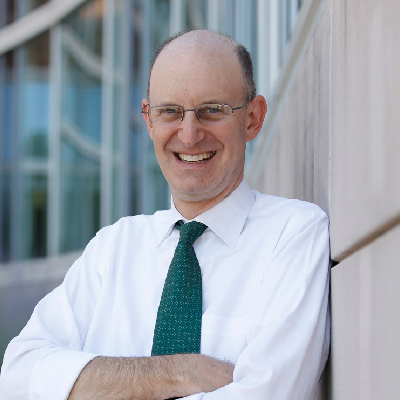
Editor-in-chief, JCO
This shift, highlighted through the CARTITUDE-1 trial, is transforming how cancer research is conducted, as well as how it must be published.
“Initial response rates are important, but durability is what ultimately changes practice,” says Jonathan W. Friedberg, MD, MMSc, editor-in-chief of Journal of Clinical Oncology (JCO). “Some of the most practice-changing insights emerge years after a trial is first reported.”
To support that evolving need, JCO has introduced a novel article type designed to extend the life and relevance of clinical research: the Clinical Trial Update.
Rather than treating publication as the end of a study, this approach provides a structured way for researchers and clinicians to document and revisit important datasets and share important data that may not have been available when the primary endpoint of the trial was published. Reputable journals are critical to continuing scientific conversation as therapies mature, outcomes evolve, and long-term evidence reshapes cancer care.
When long-term data changes the conversation
Few recent studies illustrate this better than CARTITUDE-1, a clinical trial evaluating ciltacabtagene autoleucel (cilta-cel) in patients with heavily pretreated, relapsed, or refractory multiple myeloma.
At the time of enrollment, these patients had exhausted standard options, following exposure to at least four lines of therapy. Historically, median survival for this population was approximately 1 year. Though the initial results were promising, it was the 5-year follow-up that redefined expectations1.
Among the 97 patients treated:
- One-third (32 patients) remained alive and progression-free at ≥5 years after a single infusion
- Median overall survival reached 60.7 months
- In a subgroup with deep follow-up, 100% showed no detectable cancer on advanced testing
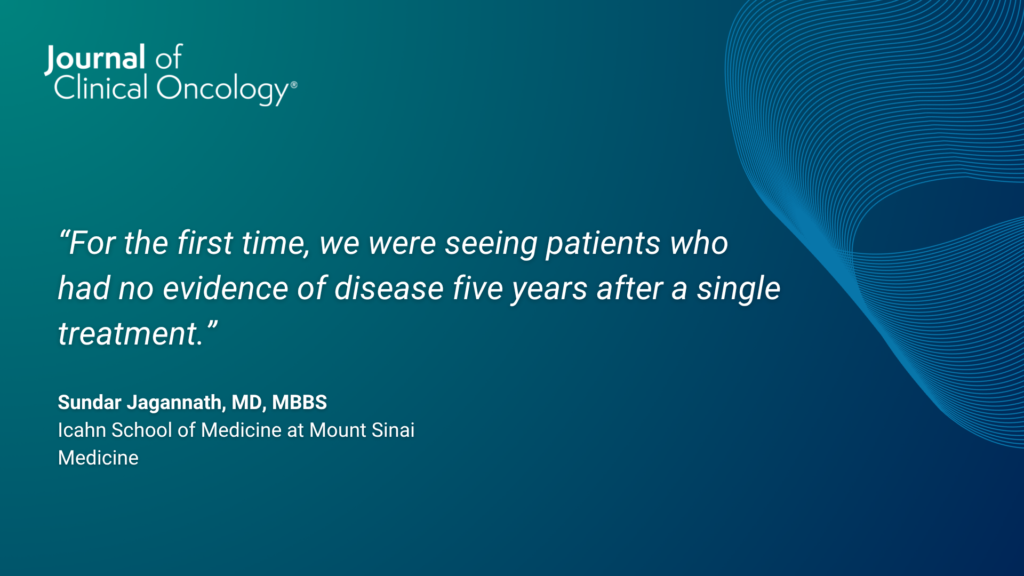
“For the first time, we were seeing patients who had no evidence of disease five years after a single treatment,” says Sundar Jagannath, MD, of the Icahn School of Medicine at Mount Sinai and lead author of the study. “Patients with no remaining options were in sustained remission.”
A commonly accepted benchmark in oncology holds that patients in sustained complete remission for 5 years or more without ongoing treatment may be considered effectively cancer-free. Jagannath went on, “Had we potentially found a way to move from hospice to cure?”
Importantly, these insights were not visible in the initial publication alone. They required years of follow-up and a platform to share those findings in a clinically meaningful way.
Building a credible, authoritative home for the full trial lifecycle
Historically, follow-up analyses like the ones from CARTITUDE-1 have been difficult to publish in high-impact journals. Original Reports took priority, while reports of long-term follow up often competed for space or were relegated to less visible formats.
JCO’s Clinical Trial Updates was designed to change that.
This article type provides a forum for reporting meaningful long-term outcomes. It enables authors to summarize initial findings while presenting updated survival data, safety observations, and subgroup analyses that inform clinical practice.
The result is a model that reflects how oncology research progresses, with clinical trials unfolding on a continuum:
- Early-stage concepts and protocol visibility
- Primary endpoint publications
- Long-term follow-up examining durability, toxicity, and survivorship
Clinical Trial Updates formalize the final and often most clinically meaningful stage of that lifecycle.
“For clinicians, these updates are critical,” Jagannath said. “Patients want to know if the therapy works, yes, but how long will it last? Will they need ongoing treatment? Can they live normal lives again?”
JCO’s role, he adds, “is to ensure that those answers reach the oncology community with the same rigor and visibility as initial results.” As a flagship publication of ASCO and one of the most widely read journals in oncology, JCO provides the credibility to amplify these findings.
“It’s a highly respected journal,” Jagannath said. “When you have a seminal paper, you want it in a place where clinicians will see it, trust it, and use it.”
Sustaining scientific conversation
The significance of Clinical Trial Updates extends beyond any single study or collection of research. As therapies become more targeted and effective, the need for accessible longitudinal evidence will continue to grow.
Immunotherapies, CAR-T treatments, and precision medicine approaches are reshaping cancer into a disease that, in some cases, can be managed chronically or even cured.
“We all recognize the importance of recording and reporting data,” Friedberg said. “Clinical Trial Updates does that while continuing the scientific dialogue.”
Patients, too, are part of that conversation.
“When patients see that someone like them has been in remission for 5 years without ongoing therapy, it changes their expectations,” Jagannath said. “It gives them confidence, and perhaps most importantly, hope.”
The future of oncology depends on long-term evidence
As cancer care evolves, the traditional model of a single, definitive publication is becoming less relevant. Instead, clinical research is emerging as a dynamic, iterative process that reflects the complexity of both disease biology and therapeutic innovation. It is the beginning of an ongoing clinical conversation that unfolds over years as therapies mature and outcomes evolve.
In this environment, journals play a critical role not only as gatekeepers of quality, but as infrastructure for scientific continuity.
Clinical Trial Updates represent one approach to meeting that need through a formal pathway for evidence to mature, and for important studies to continue informing care years after their initial impact.
Finally, publishing long-term follow-up findings can create additional waves of interest and significantly extend the visibility and influence of a study.
For example, the CARTITUDE-1 Clinical Trial Update has generated more than 54,747 downloads, 75 citations, and an Altmetric score of 438. The engagement is evident, and highlights how data can continue to attract readership, scholarly attention, and discussion across the oncology community even years after publication. In many ways, such sustained engagement reflects the evolving nature of cancer research itself—where new insights continue to emerge long after the initial results are reported.
“In oncology, the publication of a trial is not the end of the story,” Friedberg said. “It’s the beginning.” And with JCO’s Clinical Trial Updates, it continues.
Important studies continue to generate insights long after their initial publication
With JCO’s Clinical Trial Updates, authors can share long-term outcomes, sustain the visibility of their research, and contribute critical evidence that informs patient care.
Clinical Trial Updates should focus most on new or updated findings and their clinical implications. Submissions need not repeat what was previously reported but should include a brief description of the trial and a short summary of previous findings to provide context. Priority is given to planned secondary or subset analyses, but unplanned analyses that are particularly impactful may also be considered.
Learn more about the article type and submit today.
References
- J Clin Oncol 43, 2766-2771(2025); https://ascopubs.org/doi/10.1200/JCO-25-00760