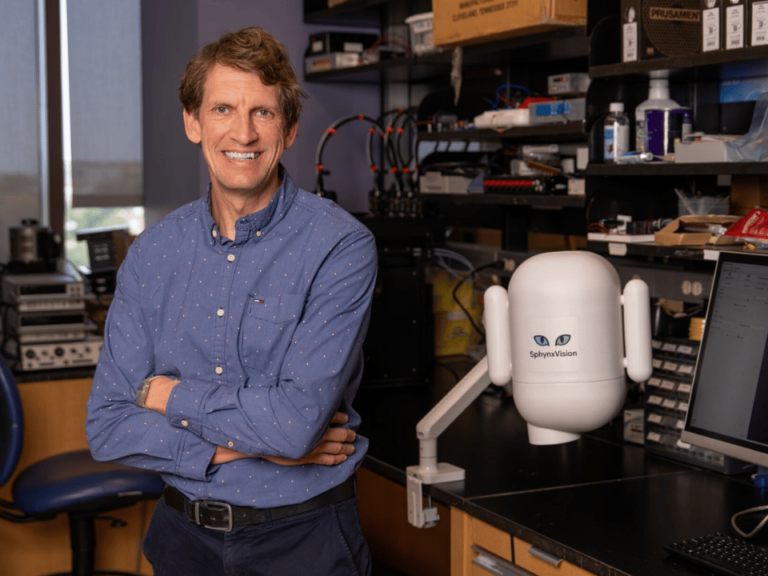
Feng Yue was appointed director of the Center for Cancer Genomics of the Robert H. Lurie Comprehensive Cancer Center of Northwestern University.
Yue joins Northwestern from the Penn State College of Medicine, where he was director of bioinformatics in the Penn State Institute for Personalized Medicine. His research focuses on how genetic variants contribute to gene regulation and three-dimensional organization of DNA molecules that influence human diseases.
He was recruited in a joint effort with the department of biochemistry and molecular genetics, the Simpson Querrey Center for Epigenetics, and the Center for Genetic Medicine, and will join Northwestern this summer. His hiring will advance basic, translational and clinical research in cancer genomics, and promote data sharing across disciplines.
“The recruitment of Feng Yue will dramatically impact our research efforts,” Leonidas Platanias, director of the Lurie Cancer Center and the Jesse, Sara, Andrew, Abigail, Benjamin and Elizabeth Lurie Professor of Oncology, said in a statement. “We are poised to maximize the potential of cancer genomics and accelerate its translation to precision oncology and individually tailored therapies.”
Yue received his postdoctoral training at the Ludwig Institute for Cancer Research, UCSD School of Medicine.