

Camille Ragin was named associate director of diversity, equity, and inclusion at Fox Chase Cancer Center.
Researchers at The Ohio State University Comprehensive Cancer Center – Arthur G. James Cancer Hospital and Richard J. Solove Research Institute (OSUCCC – James) conducted an extensive review of both peer-reviewed research studies and governmental public health data, looking at the so-called “intersectionality” of factors influencing health disparities to determine that sexual and racial minority status influences cancer screening behaviors and cancer risk.
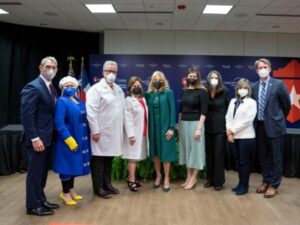
On Feb. 23, two exciting cancer initiatives converged in San Antonio, Texas: the Biden Administration’s Cancer Moonshot, and the third Advancing the Science of Cancer in Latinos biennial conference.
The American Cancer Society awarded the University of Illinois Cancer Center a $4.08 million, four-year grant to establish the Illinois Cancer Health Equity Research Center (I-CHER C), a consortium of health care researchers and clinicians charged with improving outcomes in communities disproportionately affected by cancer.

A panel convened by the Cancer History Project for Black History Month started with a discussion of mentorship, and concluded with a big underlying concept—justice.

President Joe Biden’s new national goal for the reignited Cancer Moonshot—to cut today’s age-adjusted cancer mortality rates by at least 50% before 2050—is bold, but achievable, said NCI Director Ned Sharpless.
Candice Lucas was named the first chief community impact officer of the Wilmot Cancer Institute Community Outreach & Engagement, part of the University of Rochester.
U.S. Sens. Ben Cardin (D-MD) and Lisa Murkowski (R-AK) introduced the Reducing Hereditary Cancer Act, bipartisan legislation to expand access to medically-appropriate genetic testing to determine an individual’s risk of developing hereditary cancer—and access to evidence-based medical care to reduce risk for those who have a predisposing genetic mutation.
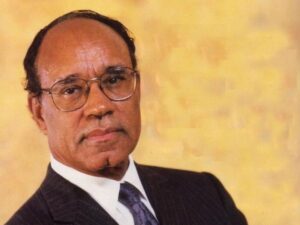
Harold Freeman had big plans after he finished his residency at Memorial Sloan Kettering Cancer Center in 1968. He planned to cut cancer out of Harlem.
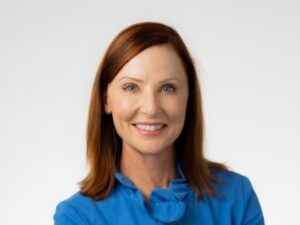
Since COVID-19 made its way to the United States, we have seen a stream of worrying news of the pandemic’s impact on cancer care in the U.S., including 9.4 million missed screenings for just about all forms of cancer. While screening rates rebounded in the fall of 2020, there’s a growing concern from oncologists that screenings haven’t returned to pre-pandemic levels for everyone.


