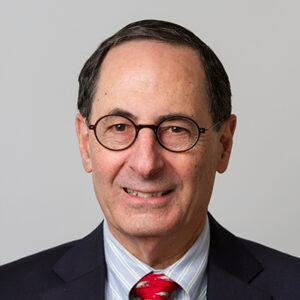
Arnold Daniel “Arnie” Kaluzny, PhD, longtime adviser to NCI and an early pioneer and contributor to what is now known as health services research, died Oct. 29 at the age of 87.

Dr. Kaluzny was professor emeritus of health policy and management in the University of North Carolina Gillings School of Global Public Health, a senior research fellow at UNC’s Cecil G. Sheps Center for Health Services Research, and an investigator at the UNC Lineberger Comprehensive Cancer Center. He was especially interested in the organizational factors affecting program implementation and change in a variety of healthcare organizations.
Much of his research focused on cancer treatment, prevention, and control, and the role of continuous quality improvement initiatives in healthcare organizations. In all these endeavors, he worked to strengthen the science base of healthcare policy and management practice.
As a researcher and mentor, he taught his colleagues that conducting randomized trials in a controlled clinical setting is only the first step in advancing the health of the public, and he recognized that equal rigor is necessary to establish benefits in “real world” practice and policy.
Having joined the faculty of the UNC School of Public Health in 1967, Dr. Kaluzny served as chair of the Department of Health Policy and Management, and he launched and was founding director of the doctoral program in health policy and management. Over the years, graduates of the program have assumed major academic and research positions both in the private and public sectors. Today, the UNC program is one of the premier health services research training programs in the country.
Janet Porter, PhD, former chief operating officer of the Dana-Farber Cancer Institute, worked closely with Kaluzny when she served as an associate dean at the UNC School of Public Health.
“We have lost a giant,” Porter reflected. “Arnie has left an enduring legacy. He modeled mentorship in his investment in hundreds of students who are now healthcare leaders, and his body of research has shaped our understanding of healthcare management.”
Stephen Shortell, PhD, MPH, MBA, dean emeritus of University of California at Berkeley’s School of Public Health, called Kaluzny a dear friend and colleague to “me and many of us working to improve healthcare delivery through our research and teaching.”
“Our co-edited text, Organization Theory and Design in Health Care, now in its 7th edition, continues to influence future leaders,” Shortell said. “[Arnie’s] work on organizational innovation and change in cancer care has helped to bridge the gap between new discoveries and their implementation in everyday clinical practice. His work has been a key contributor to the ongoing success of the Community Oncology Centers Program.”
Kaluzny served as consultant to private research and health service organizations and various international, federal, and state agencies, including Project HOPE, the World Health Organization, USAID, and various programs and institutes within the National Institutes of Health, the Joint Commission on the Accreditation of Healthcare Organizations, the Department of Veterans Affairs, the Agency for Health Care Policy and Research, and the National Academy of Sciences’ Institute of Medicine.
From 1991 through 1995, he was a member of the Board of Scientific Counselors for NCI’s Division of Cancer Prevention and Control and served as the division’s chair from 1993 to 1995.
Kaluzny famously shared his extensive network with many, whether from his doctoral program at Michigan, his colleagues, and former students from UNC, his vast network of healthcare management and health services research colleagues, his global network, his NCI colleagues, or those he met in his travels. He was known for staying in touch and maintaining these relationships over decades, always with keen interest in what one was doing and an offer to help in whatever way he could.
Brian Springer, MHA, vice president of research administration and associate center director of administration at Moffitt Cancer Center in Tampa, FL, and a graduate of the UNC Health Policy and Management program, describes Kaluzny as one of his most influential mentors.
“I first met Arnie when I was selling coffee at a gourmet store in Chapel Hill and preparing to go to graduate school,” Springer said. “We would talk about quality control and business models before I had any idea who or what a giant he was. He quietly, and unbeknownst to me, wrote a recommendation letter for me at UNC. He helped connect me to mentors at NCI and the State of North Carolina who led me into cancer research and, frankly, into my entire career through four Cancer Centers in multiple leadership roles. We would touch base from time to time, and he was always so engaged, so enthusiastic, thinking about the next important thing he would do. He was a constant presence throughout my career, and he was excited when we would cross paths professionally or catch up personally. In my view, he set the bar for passion, mentorship, and humility.”
Kaluzny co-authored or edited 10 books and more than 200 papers published in scholarly journals or as invited chapters in the area of health management quality, improvement, and research, dealing with the structure and operations of healthcare organizations. Many were on the topic of cancer programs.
One of us, Donna M. O’Brien, MHA, was Kaluzny’s longtime colleague and collaborator.
Said O’Brien:
I met Arnie early in my career, when he was a Commissioner on the Accrediting Commission on Education for Health Services Administration, and I was a Fellow and working as an executive at MD Anderson Cancer Center. At that time, he was becoming involved with an evaluation of the NCI Community Clinical Oncology Program, which was bringing clinical trials to cancer patients in the community, and we had an immediate connection. That involvement in cancer programs became a constant for him.
We reconnected years later, working together as advisers to the Office of the Director for the NCI Community Cancer Centers Program, where we studied the organizational factors that enabled or impeded performance on quality, access, and research—and uniquely for the NCI, thanks to Arnie—the business case for investment.
This became an almost 20-year collaboration and a cherished friendship. I had the great privilege of being a co-author with him on a book and several articles, and it was fitting that our last article, ‘How Vision and Leadership Shaped the U.S. National Cancer Institute’s 50-year Journey to Advance the Evidence Base of Cancer Control and Cancer Care Delivery Research,’ was published in 2020 in conjunction with the 50th anniversary of the 1971 National Cancer Act.
One of us, Barnett Kramer, MD, MPH, trained as a clinical trialist and was former director of the NCI Division of Cancer Prevention.
Said Kramer:
I learned an important lesson from Kaluzny. Namely, that the gap between the results of clinical trials in cancer treatment, screening, and prevention, and translation into benefit can be huge—a gap only bridged with meticulous attention and research on organizational structure and context. I am deeply grateful to Arnie for his insights and contributions to the NCI.
Throughout his career, Kaluzny’s research, publications, and teachings were recognized by various institutes and centers within the NIH and particularly by the NCI. He had served as adviser to various NCI research initiatives, study sections, and advisory committees, and contributed to the NCI research program.
We have lost a giant. Arnie has left an enduring legacy. He modeled mentorship in his investment in hundreds of students who are now healthcare leaders, and his body of research has shaped our understanding of healthcare management.
Janet Porter
Upon retirement from UNC in 1998, Kaluzny was appointed as an adviser to the NCI Division of Cancer Prevention and the Division of Cancer Control and Population Sciences, collaborating with NCI colleagues on new research initiatives, assessing the role of organizational and environmental factors affecting the quality, cost, and outcome of cancer care.
From 2009 through 2014, he served as adviser to the NCI Community Cancer Centers Program, located in the Office of the NCI Director. In each of these capacities, Kaluzny was a strong advocate for recognizing the role of organizational structure and management processes to assure the effective translation of the evolving science to improve cancer care within a community setting.
These efforts also were recognized by the NIH and NCI. In 2009, he was awarded the NIH Director’s Award for his contributions to the development and implementation of the NCI Community Cancer Centers Program. In 2013, he received the NIH Award of Merit for his leadership and vision in the field of multilevel intervention research and cancer care.
Kaluzny‘s research and teaching produced many invitations from international colleagues, resulting in lectures and assignments around the world, including in various countries in Europe, Asia, Africa, South America, as well as in Australia, New Zealand, and China. In 2005, he received a Senior Fulbright Specialist Award to the Oswaldo Cruz Foundation/Sergio Arouca National School of Public Health in Rio de Janeiro, Brazil.

Photo credit: UNC Gillings School of Global Public Health
From 1990 to 2000, he worked with Project HOPE and collaborated with Bill Pierskalla from the University of Pennsylvania’s Wharton School of Business, to design and implement the healthcare management training program in central Europe for hospitals, managers, and physicians. The program was one of the pioneer executive training programs to meet the management needs of Poland, Hungary, and the former Czechoslovakia as those countries achieved independence from the Soviet Union. A similar training program was implemented in China in 2002-2003. Both served as models for future management training programs for healthcare executives within the international community.
Kaluzny’s professional touchstone was a philosophy he attributed to Dr. Avedis Donabedien, his professor at the University of Michigan and longtime mentor.
Health care, at its core, Donabedien believed, is a scientific and moral enterprise, not a commercial one.
Arnie Kaluzny’s fierce advocacy for those in need, his self-effacing efforts to get goals accomplished and people collaborating, and his lifelong engagement with the public health issues that continue to challenge us may serve as our own touchstones in these troubled times. His many contributions to healthcare delivery, research, and education embodied the idea that science and morality are at the heart of good work in public health.
In the years following the death of his beloved wife Barbara in 2016, Kaluzny became more introspective than he often had allowed himself to be. In a memoir titled “A Life Well-Lived,” he wrote:
Mine is a story about hopes, dreams, plans and painstaking decisions, disappointments, and failures. Perhaps most significantly, the story is about people—family, teachers, mentors, friends, and colleagues, who provided guidance and counsel and served as role models along the way. It’s a rich, full life, one that, in retrospect and judged by any reasonable criteria, exceeded my expectations.
Arnie truly leaves us with a lasting legacy.
Donna M. O’Brien, MHA, is president of Strategic Visions in Healthcare and a Member of board of directors at International Cancer Expert Corps.
Barnett Kramer, MD, MPH, is a member of Lisa Schwartz Foundation for Truth in Medicine and former director of the Division of Cancer Prevention at National Cancer Institute.