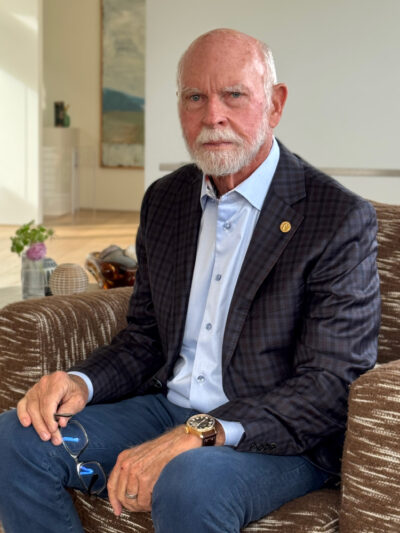
J. Craig Venter, a scientist and entrepreneur who raced against the Human Genome Project to decode the human genome, died on April 29, 2026. He was 79.
There’s no doubt that he accelerated the work that was foundational to almost every cancer advancement that has come along in the last 25 years. He was doing things bigger and faster, and it pushed the whole effort to sequence and understand the human genome in a way that would have taken much longer if Craig Venter had not jumped in.
Sequencing the human genome was accomplished more quickly and probably more completely because of his efforts—and that work changed everything about what we do today. All of the targeted therapies that we have today based on genetic mutations were enabled by us having an accurate human genome. CAR T therapy, the ability to target these tumor antigens—this is all enabled by us having the ability to have accurate sequences of human genes in a normal state. And because of that, we can then identify what goes wrong in an abnormal cancer state, and we can identify mutations.
When I think about the handful of scientific advances that have kind of been super-accelerators over the last 100 years, this is one of them. Would it have gotten done eventually? Sure. But Dr. Venter definitely made this go faster.
It’s so important to remind ourselves of how those teams around Dr. Venter and the Human Genome Project were working together. Roswell Park and Buffalo are part of that history, but science is a national and global effort.
This was foundational and took years, but the way science works, now we can sequence a genome in a day, as opposed to years. Every targeted therapy that we give a patient that’s based on mutational status today is dependent on this discovery.
In my own work, my team is doing a lot with pediatric and young adult sarcomas that are driven by these gene rearrangements and translocations that involve multiple genes rearranging. And the reason we can identify and study these differences is because we understand the normal sequence of the human genome that underlies them.
An obituary can be found on the J. Craig Venter Insitutite’s website.
The author is:
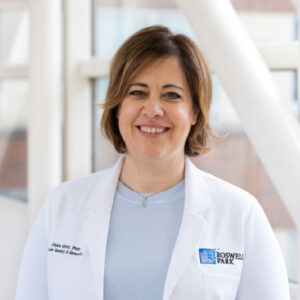
Joyce Ohm, PhD
Chair, Department of Cancer Genetics and Genomics,
John & Santa Palisano Endowed Chair of Cancer Genetics,
Roswell Park Comprehensive Cancer Center