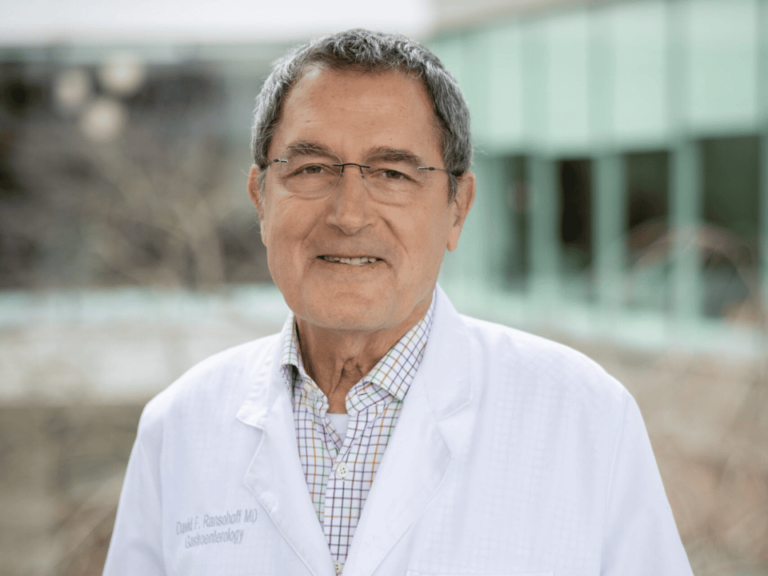
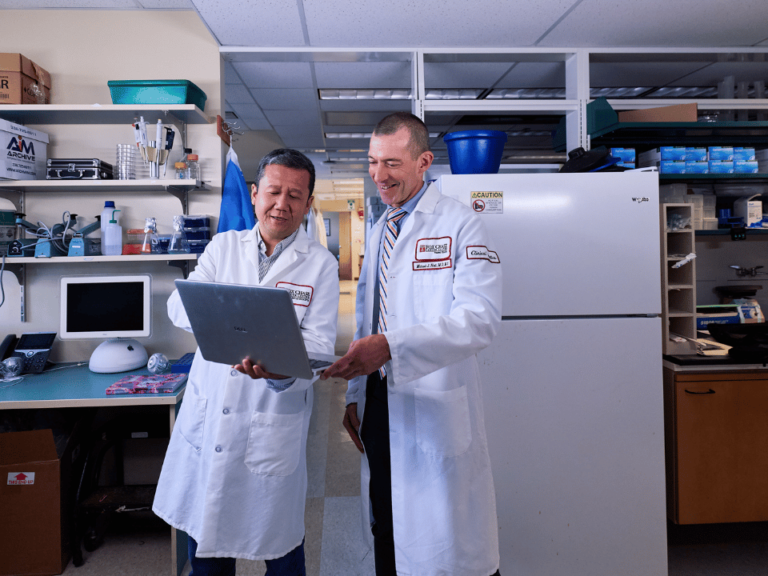
The American Association for Cancer Research named Raymond DuBois and Michael Pollak as editors-in-chief of Cancer Prevention Research.
Cancer Prevention Research publishes original preclinical, clinical, and translational research on the biology of premalignancy, risk factors and risk assessment, early detection research, and chemopreventive interventions, including the basic science behind these areas. The journal was launched in 2008 with Scott Lippman as the founding editor-in-chief.
DuBois is an expert in the molecular and genetic basis of colorectal cancer. His work in this area has led to a better understanding of the role of anti-inflammatory agents such as aspirin in the tumor microenvironment, and has subsequently resulted in various clinical trials, including treating precancerous polyps with celecoxib (Celebrex), an arthritis drug that selectively inhibits COX-2, an enzyme that facilitates inflammation.
DuBois is past president of the AACR, chairman and president of the AACR Foundation, a fellow of the AACR Academy, and has served as a member of the AACR Board of Directors. In addition, he has served as an editorial board member of Clinical Cancer Research and as an associate editor of Cancer Research. He is also a recipient of the Dorothy P. Landon-AACR Cancer Research Prize and the AACR-Richard and Hinda Rosenthal Foundation Cancer Research Award.
Pollak has served on the editorial board of Cancer Prevention Research since its inception. He holds the Alexander Goldfarb research chair in cancer research at McGill University in Montreal and directs the Division of Cancer Prevention of the Department of Oncology. Pollak is a medical oncologist at the Jewish General Hospital in Montreal and is involved in clinical trials of novel agents related to growth factor targets.
He directs a multi-disciplinary research program at the Lady Davis Research Institute, which investigates insulin and insulin growth factor physiology in relation to cancer, and provides specialized ELISA assays for epidemiologic and pharmaceutical collaborators. He has received a number of prestigious honors and awards.