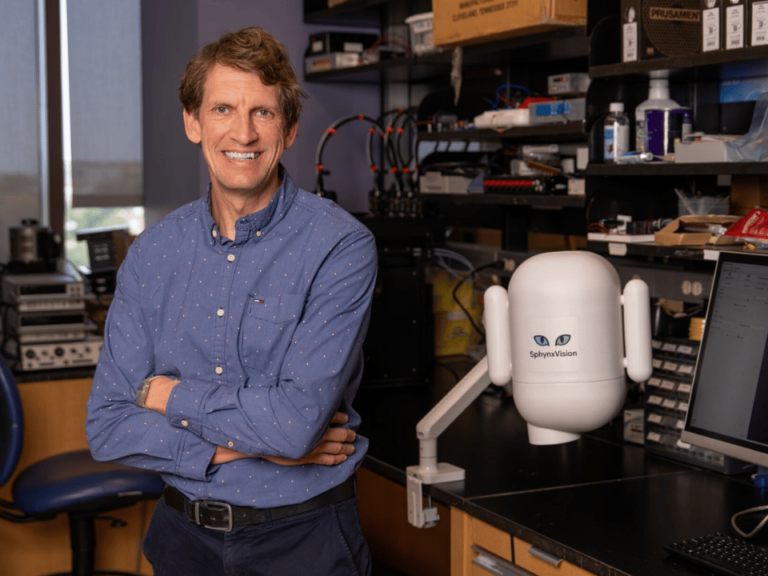
Rick Kittles joined City of Hope as professor and founding director of the Division of Health Equities within the Department of Population Sciences. Kittles’ research focuses on understanding the complex issues surrounding race, genetic ancestry and disease, particularly health disparities among different ethnicities.His work focuses on research into prostate cancer and health disparities among African-Americans, a field of study motivated by his grandfather’s late-stage prostate cancer diagnosis and subsequent death while Kittles was in graduate school.“It was just so shocking and quick how it happened,” he recalled. “I had no idea it was such a big issue in the black community.”
To access this subscriber-only content please log in or subscribe.
If your institution has a site license, log in with IP-login or register for a sponsored account.*
*Not all site licenses are enrolled in sponsored accounts.
Login Subscribe
If your institution has a site license, log in with IP-login or register for a sponsored account.*
*Not all site licenses are enrolled in sponsored accounts.
Login Subscribe