Jennifer Pietenpol named chief scientific advisor for Susan G. Komen

Share on facebook
Share on twitter
Share on linkedin
Share on email
Share on print

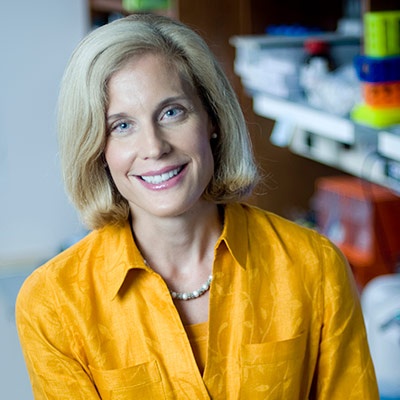
Jennifer Pietenpol, executive vice president for research at Vanderbilt University Medical Center and director of Vanderbilt-Ingram Cancer Center, was named a chief scientific advisor for the nonprofit breast cancer organization Susan G. Komen.

She joins George Sledge Jr., professor of Medicine at Stanford University Medical Center, in the CSA role, which includes responsibility for guiding the Komen Scientific Advisory Board.

The scientific advisory board helps guide Komen’s research programs and priorities. Since 2010, Pietenpol has served as a Komen Scholar, an advisory group of distinguished leaders in breast cancer research and advocacy who are chosen for their knowledge and leadership within the scientific, research and advocacy communities, and for their own contributions to breast cancer research.

Pietenpol, the Benjamin F. Byrd Jr. Professor of Oncology at Vanderbilt, is an expert in molecular genetics and triple negative breast cancer. She and her colleagues were the first to identify subtypes of TNBC and are spearheading clinical research trials to determine the best potential therapies for each subtype.


YOU MAY BE INTERESTED IN

When our hematological malignancy testing pilot project began in Eldoret, Kenya, there seemed to be a mismatch in relation to progress in healthcare. The region, like much of sub-Saharan Africa, had been focusing on combatting infectious diseases such as HIV and malaria—which was much-needed—yet cancer care was under-resourced. 
Artificial intelligence is rapidly transforming biomedical research and healthcare. Large language models, foundation models, and AI agents are increasingly being deployed to assist with data interpretation, literature review, clinical decision support, and translational research. 
In modern oncology, important insights from clinical trials often emerge years after initial publication. As new therapies extend survival and transition more patients into long-term remissions, clinicians and researchers are increasingly looking beyond initial response rates to understand durability, long-term safety, and even the possibility of a cure. 

Never miss an issue!

Get alerts for our award-winning coverage in your inbox.

Login