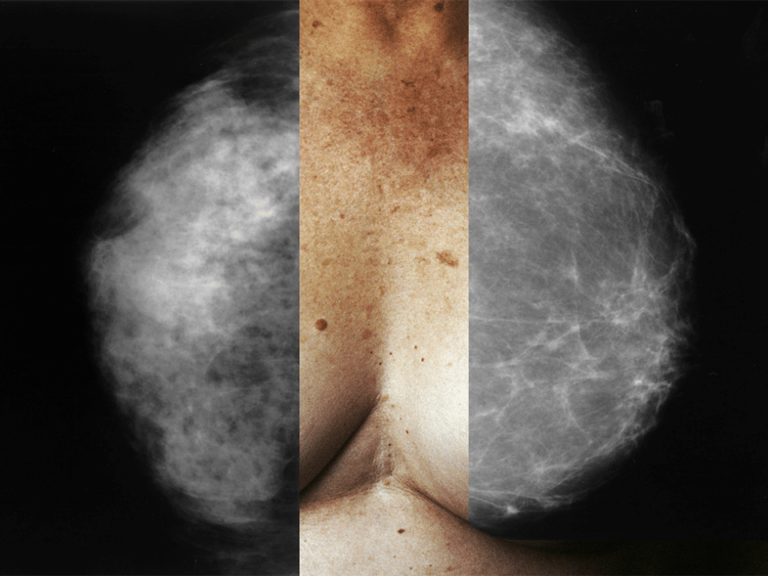
How First Lady Betty Ford and surgeon Bernie Fisher revolutionized America’s attitude toward breast cancer

Share on facebook
Share on twitter
Share on linkedin
Share on email
Share on print

It is rare that an ABC Movie of the Week endures. Buzz Kulik’s 1971 “Brian’s Song” is a notable exception. 

To access this subscriber-only content please log in or subscribe.

If your institution has a site license, log in with IP-login or register for a sponsored account.*
*Not all site licenses are enrolled in sponsored accounts.

Login Subscribe
Stacy Wentworth, MD
Clinical associate, Department of Radiation Oncology, Duke University School of Medicine; Host and producer, Less Radical podcast, which covers the story of Bernie Fisher and the NSABP
Table of Contents

YOU MAY BE INTERESTED IN

For people at high risk of developing breast cancer, yearly mammograms may not be enough to detect tumors early. To make earlier diagnosis easier, a Massachusetts Institute of Technology team has developed portable detectors based on ultrasound, which could be used much more frequently. The team reports that they have improved the resolution of the images produced by their system, making it easier to spot potential tumors, as well as cysts and microcalcifications. 
For decades, we have faced a central challenge in colorectal cancer screening. One in three eligible Americans—over 50 million people—remain unscreened despite established methods like colonoscopy or stool-based tests existing for decades. This gap persists even though early detection saves lives, and even as colorectal cancer is now the number one cancer killer for Americans under 50.
Stacy Wentworth, MD
Clinical associate, Department of Radiation Oncology, Duke University School of Medicine; Host and producer, Less Radical podcast, which covers the story of Bernie Fisher and the NSABP

Never miss an issue!

Get alerts for our award-winning coverage in your inbox.

Login