A “new normal” for NCI-sponsored clinical trials is long overdue

Share on facebook
Share on twitter
Share on linkedin
Share on email
Share on print

I read with interest the recently published story on the recommendations to streamline data collection in certain NCI trials presented at the Nov. 9, 2022, meeting of the Clinical and Translational Research Committee (The Cancer Letter, Nov. 11, 2022).

To access this subscriber-only content please log in or subscribe.

If your institution has a site license, log in with IP-login or register for a sponsored account.*
*Not all site licenses are enrolled in sponsored accounts.

Login Subscribe
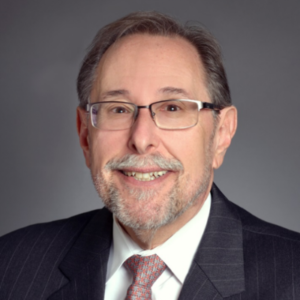
Richard L. Schilsky, MD, FACP, FSCT, FASCO
Professor emeritus, University of Chicago; Former chief medical officer and executive vice president, American Society of Clinical Oncology; Former chair, Cancer and Leukemia Group B
Table of Contents

YOU MAY BE INTERESTED IN

Growing up in inner-city Detroit, Otis Brawley had a thriving community made up of his parents, Jesuit priests, friends, and neighbors encouraging him that he could do anything he put his mind to. 
NIH announced Jan. 29 that “Basic Experimental Studies Involving Humans,” also called BESH, will no longer be considered clinical trials and will therefore no longer be subject to the requirements under the NIH definition of a clinical trial, including registration and reporting requirements in ClinicalTrials.gov.
As NCI paylines drop to 4%, cancer centers are tapping into their institutional funds to provide “bridge funding,” typically in $50,000 to $100,000 increments, to enable investigators to keep their labs open until better times return—next year God willing.
Moderna and Merck announced median five-year follow-up data from the phase IIb KEYNOTE-942/mRNA-4157-P201 study, evaluating intismeran autogene (mRNA-4157 or V940), an investigational mRNA-based individualized neoantigen therapy, in combination with Keytruda (pembrolizumab), Merck’s anti-PD-1 therapy, in patients with high-risk melanoma (stage 3/4) following complete resection. 
Richard L. Schilsky, MD, FACP, FSCT, FASCO
Professor emeritus, University of Chicago; Former chief medical officer and executive vice president, American Society of Clinical Oncology; Former chair, Cancer and Leukemia Group B

Never miss an issue!

Get alerts for our award-winning coverage in your inbox.

Login