It’s time to rethink peer review policies—and consider an “Earth Shot Program”

Share on facebook
Share on twitter
Share on linkedin
Share on email
Share on print

At a recent NIH study section that I chaired, we had many applications that we reviewed as a group before the meeting. At the meeting, we were required to discuss over 50% of the grants.

To access this subscriber-only content please log in or subscribe.

If your institution has a site license, log in with IP-login or register for a sponsored account.*
*Not all site licenses are enrolled in sponsored accounts.

Login Subscribe
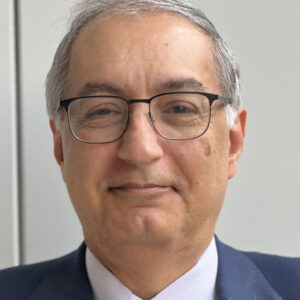
Wafik S. El-Deiry, MD, PhD, FACP
Director, Joint Program in Cancer Biology, Brown University and Lifespan Cancer Institute
Associate Dean, Oncologic Sciences, Warren Alpert Medical School, Brown University
American Cancer Society Research Professor

YOU MAY BE INTERESTED IN

Physician-scientists by day, a funk-loving musical troupe by night. You may have seen The CheckPoints—a 13 member cover band with a three-piece brass section and Jim Allison on harmonica—movin’, groovin’, and gettin’ down as a mainstay closing act at ASCO, AACR, or the Society for Immunotherapy of Cancer annual meetings.
At the 2026 Annual Meeting of the American Society of Clinical Oncology in Chicago, results from the phase III HARMONi-6 trial were presented at the plenary session and published simultaneously in The Lancet. The HARMONi-6 trial tested a novel bispecific antibody that engages PD-1 and VEGF (ivonescimab), given with platinum-doublet chemotherapy to patients with previously untreated advanced squamous non-small cell lung cancer. 
Wafik S. El-Deiry, MD, PhD, FACP
Director, Joint Program in Cancer Biology, Brown University and Lifespan Cancer Institute
Associate Dean, Oncologic Sciences, Warren Alpert Medical School, Brown University
American Cancer Society Research Professor

Never miss an issue!

Get alerts for our award-winning coverage in your inbox.

Login