Preclinical study reveals how HPV reprograms immune cells to help cancer grow

Share on facebook
Share on twitter
Share on linkedin
Share on email
Share on print

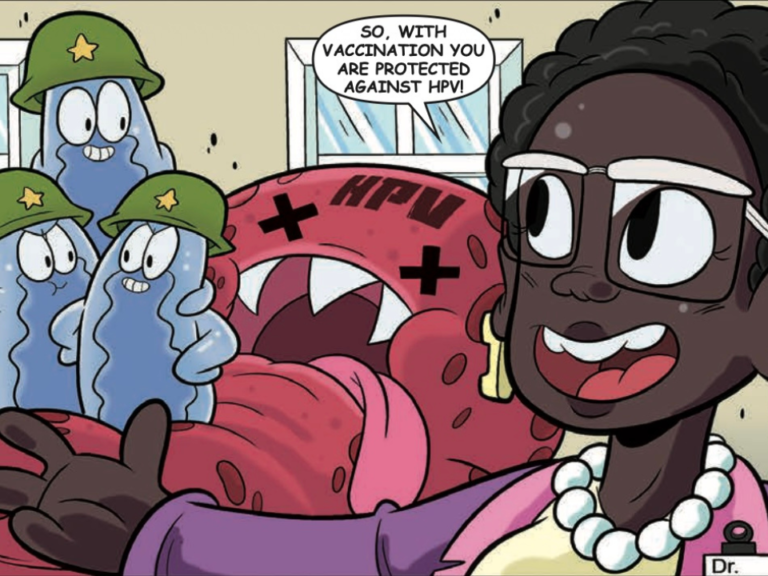
The most common cancer-causing strain of human papillomavirus, HPV16, undermines the body’s defenses by reprogramming immune cells surrounding the tumor, according to a preclinical study from researchers at the Keck School of Medicine of USC. In mice, blocking this process boosted the ability of experimental treatments for HPV to eliminate cancer cells. 

To access this subscriber-only content please log in or subscribe.

If your institution has a site license, log in with IP-login or register for a sponsored account.*
*Not all site licenses are enrolled in sponsored accounts.

Login Subscribe

Table of Contents

YOU MAY BE INTERESTED IN

In this week's episode of The Cancer Letter Podcast, editor and publisher Paul Goldberg, and associate editor Jacquelyn Cobb revisit two of last week’s most-read stories: the growing recognition that early-onset colorectal cancer requires a new diagnostic mindset, and the life and legacy of Maura Gillison, the scientist whose discovery that most head and neck cancers are driven by HPV transformed the field. 
Clinical, real-world data reaffirming the long-term effectiveness of Gardasil 9 (Human Papillomavirus 9-valent Vaccine, Recombinant) and Gardasil (Human Papillomavirus 4-valent Vaccine, Recombinant) against certain HPV-related cancers and diseases will be presented at the EUROGIN International Multidisciplinary HPV Congress 2026 in Vienna, Austria, March 18-21.

Never miss an issue!

Get alerts for our award-winning coverage in your inbox.

Login