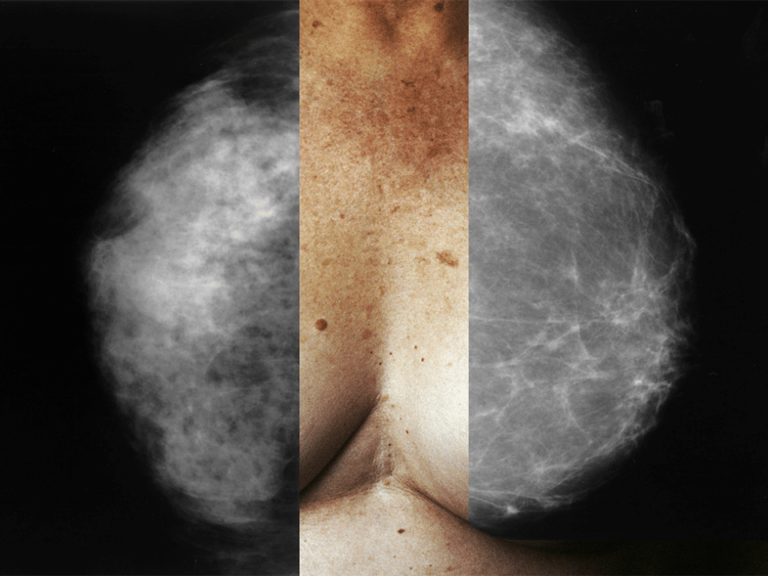
Rural hospital system demonstrates clinical benefits of universal hereditary cancer testing in breast cancer

Share on facebook
Share on twitter
Share on linkedin
Share on email
Share on print

Results from a collaborative study on universal hereditary cancer genetic testing in all patients with breast cancer in a rural population in the Annals of Surgical Oncology. Conducted by Invitae in collaboration with The Outer Banks Hospital in North Carolina from 2019 to 2022, the study analyzed the implementation of universal hereditary cancer genetic testing in all patients with breast cancer, as recommended by the American Society of Breast Surgeons guidelines in 2019. 

To access this subscriber-only content please log in or subscribe.

If your institution has a site license, log in with IP-login or register for a sponsored account.*
*Not all site licenses are enrolled in sponsored accounts.

Login Subscribe

Table of Contents

YOU MAY BE INTERESTED IN

In a poignant keynote punctuated with anecdotes about grief, American Society of Clinical Oncology’s immediate past president Eric Small emphasized that the annual conference is not just about scientific discovery, but about a responsibility to translate discoveries into better outcomes for cancer patients globally. 
Further positive results from the phase III SERENA-6 trial showed camizestrant plus a cyclin-dependent kinase 4/6 inhibitor—palbociclib, ribociclib or abemaciclib—maintained its progression-free survival benefit with longer follow-up and delivered a statistically significant and clinically meaningful improvement in second progression-free survival, demonstrating sustained benefit beyond initial treatment. 
“Backwater to Blockbuster,” the first de novo book published by the Cancer History Project, traces the evolution of St. Jude Children’s Research Hospital to its current status of a powerhouse of research in pediatric cancer.

Never miss an issue!

Get alerts for our award-winning coverage in your inbox.

Login