

Norman Coleman, associate director of NCI's Radiation Research Program and Gay Crawford, founding director of Cancer CAREpoint, were named recipients of the National Coalition for Cancer Survivorship's Ellen L. Stovall Award for Innovation in Patient-Centered Cancer Care.
Marc Lippman, a former director of Georgetown Lombardi Comprehensive Cancer Center, is returning as a professor in the departments of oncology and medicine at Georgetown University Medical Center, beginning July 15.
Laura Hutchins, a hematologist-oncologist at the University of Arkansas for Medical Sciences who specializes in breast cancer, melanoma and brain cancer, has been appointed interim director for the UAMS Winthrop P. Rockefeller Cancer Institute, effective immediately.
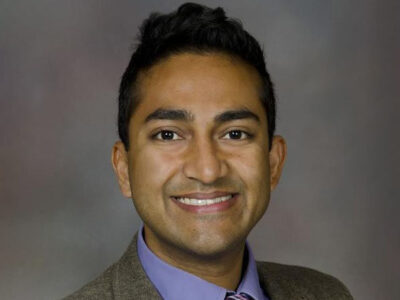
I have been following Vinay Prasad's work for several years, agreeing with some of what he said, but never quite finding time to look carefully at his argumentation.

In recent years, Vinay Prasad, a young hematologist–oncologist at Oregon Health and Science University, has emerged as a premier critic of new directions in cancer medicine.

The Cancer Letter won four 2018 Dateline Awards from the Washington, D.C. Chapter of the Society of Professional Journalists:
Research from Roswell Park Comprehensive Cancer Center suggests a new treatment combination can extend survival for many patients with advanced colorectal cancer.
Exact Sciences, Mayo Clinic identify blood-based DNA biomarkers to diagnose hepatocellular carcinoma
Researchers at Exact Sciences Corp. and Mayo Clinic announced progress toward developing a panel of novel, blood-based, DNA biomarkers that could accurately detect hepatocellular carcinoma, the most common cancer that originates in the liver.
Bristol-Myers Squibb Co. announced updated results from the phase III CheckMate -238 trial evaluating Opdivo (nivolumab) versus Yervoy (ipilimumab) in patients with stage IIIB/C or stage IV melanoma who are at high risk of recurrence following complete surgical resection.
Bristol-Myers Squibb Co. announced patient-reported outcomes data from the phase III CheckMate -214 trial in intermediate- and poor-risk patients with advanced renal cell carcinoma treated with the immuno-oncology combination Opdivo (nivolumab) plus low-dose (1mg/kg) Yervoy (ipilimumab) vs. sunitinib over a two-year follow-up period.


