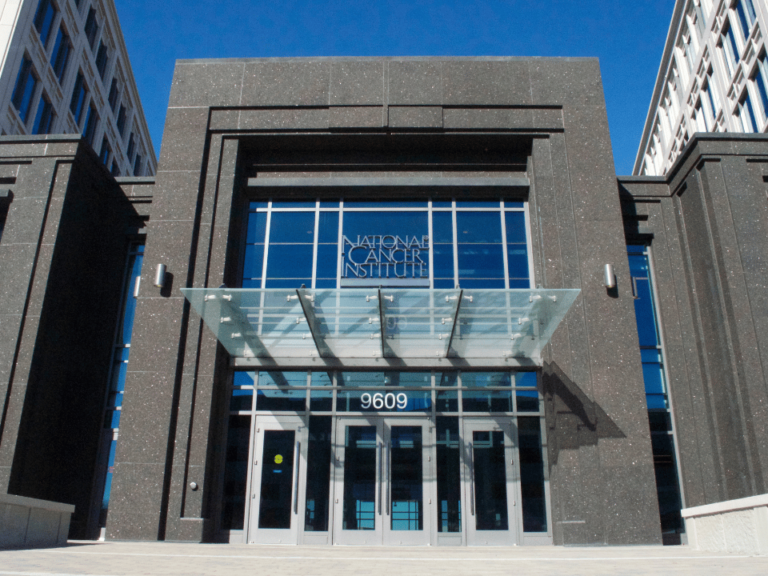
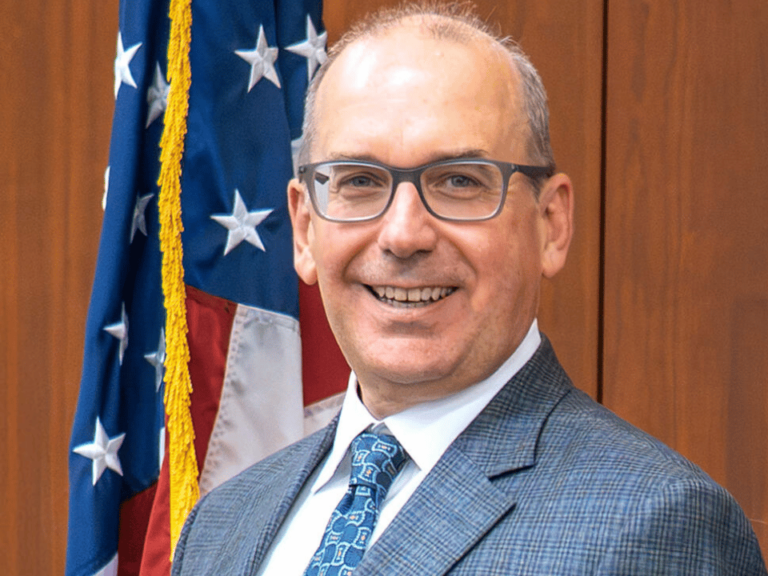
The faces of RIF: Staff members of NCI’s dissolved communications team gather for a farewell group photo

Share on facebook
Share on twitter
Share on linkedin
Share on email
Share on print

On May 21, staff members of NCI’s dissolved Office of Communications and Public Liaison and friends gathered at the house of Peter Garrett and Ken Crerar. 

Peter Garrett gives a toast.
NCI staff and friends pose at the home of Peter Garrett and Ken Crerar.
Staff members of NCI’s dissolved Office of Communications and Public Liaison and friends gather to say goodbye
Photo source: Peter Garrett

Garrett, who as the director for External Affairs oversaw the institute’s communications, legislative affairs, and advocacy relations, retired on May 9.

In the first week of May, NCI was left incommunicado as NIH eliminated the communications branch (The Cancer Letter, May 9, 2025).

The RIFs were a part of the Trump Administration’s Department of Government Efficiency efforts to consolidate and shrink the Department of Health and Human Services. 

This RIF means that there is no one left to run the cancer.gov website, the Physician Data Query database, the NCI social media channels, and the patient hotline. Also, no one is left to write and post drug information summaries, patient information notices and the Cancer Currents blog. The media relations function is gone, too. It’s been transferred to NIH. “Public liaison,” the function that engages cancer research stakeholders, advocates, and the general public, has been eliminated.

Table of Contents

YOU MAY BE INTERESTED IN

Cristina Puig-Saus, an associate professor of microbiology, immunology and molecular genetics and surgical oncology at the David Geffen School of Medicine at UCLA and an investigator at the UCLA Health Jonsson Comprehensive Cancer Center, and her research team have received a five-year, $3.9 million grant from NCI to develop drug-based strategies that could enhance cancer immunotherapy for patients with melanoma and potentially other types of cancer. 
How’s this for a paradox: The better cancer centers become at keeping patients alive, the more expensive cancer care becomes. This brutal tradeoff hits harder in rural areas, where the cancer burden is higher and the investigator and clinical trial representation is lower.

Never miss an issue!

Get alerts for our award-winning coverage in your inbox.

Login