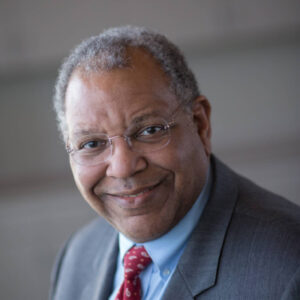
Paul Godley died after a brief illness on March 31. He was the Rush S. Dickson Distinguished Professor of Hematology and Oncology in the School of Medicine, a professor of epidemiology at the Gillings School of Global Public Health, and senior fellow at the Sheps Center for Health Services Research at the University of North Carolina, Chapel Hill.
He was a beloved and respected colleague in the oncology community, having made significant contributions as a clinician, researcher, mentor, and administrator.
Paul Alphonso Godley was born on April 20, 1957, in Detroit. His father was a physician and his mother was a nurse. He attended and graduated from the Friends School in Detroit, college at Yale, and medical school at Harvard.
Later he would obtain a master’s degree from the Harvard Kennedy School of Government and a Ph.D. in epidemiology from the Gillings School of Global Public Health at the UNC Chapel Hill. Paul trained in Internal Medicine at Case Western Reserve University and Medical Oncology at UNC Chapel Hill.
He joined the faculty in the Department of Medicine at UNC and became a member of the UNC Lineberger Cancer Center. His research in prostate cancer would include leadership roles in several large NCI studies of prostate cancer screening and prevention.
His work would lead to a better understanding of the complexities of prostate cancer screening. Throughout his career, Paul also studied and worked to eliminate racial disparities in health. He was director of the Program on Ethnicity, Culture, and Health Outcomes, a UNC-wide initiative of multidisciplinary research, education, training, and community partnerships to advance the study of the reasons for and solutions to racial disparities.
Paul believed in service to the academic community. He became executive associate dean for faculty affairs in the UNC School of Medicine in 2011. In 2012, he was one of the founders of The Academic Career Leadership Academy in Medicine, a UNC program that provided leadership development opportunities to junior faculty members.
More than 100 faculty members have completed the program. At the time of his death, Paul was the vice dean for diversity and inclusion at UNC School of Medicine.
I first met Paul when we were both in high school in Detroit, and we later became friends while medical residents in Cleveland.
Paul was an example of all that is the best in a physician.
Shelley Earp
We would collaborate on various projects for the next thirty years. While fun-loving, he was always a force that was steady, dependable, and with common sense. Shelley Earp, MD, is the UNC Lineberger Comprehensive Cancer Center Director and someone Paul considered a friend and mentor. While noting our loss, he said, “Paul was an example of all that is the best in a physician.”
Paul’s wife, Adaora Adimora, MD, MPH, is an expert in infectious disease. She is the Sarah Graham Kenan Distinguished Professor in the Department of Medicine and a professor in the Gillings School of Global Public Health at UNCI. Their daughter Bria Adimora Godley is a student in the UNC School of Medicine and their son Alegro Adimora works in the UNC administration. He is also survived by his father Alegro J. Godley, MD, of Sun City West, AZ; his brother, Bernard Godley, MD, Ph.D., and his wife, Fara Behnia, MD, of Galveston, TX; his sisters, Joanne Godley, MD, of Bangor, ME; and Beth Godley of Brooklyn, NY. His mother Juanita Fitzpatrick Godley, died when Paul was in medical school.
The author is the Bloomberg Distinguished Professor of Oncology and Epidemiology at Johns Hopkins University