In this episode of The Cancer Letter Podcast, Paul Goldberg, editor and publisher of The Cancer Letter, Jacquelyn Cobb, managing editor, discuss the Sept. 23 meeting of the FDA Molecular and Clinical Genetics Panel of the Medical Devices Advisory Committee, during which the panel voted in favor of Galleri, the multi-cancer detection test from GRAIL Inc., to become the first multi-cancer detection test to receive regulatory approval.
This episode is available on Spotify, Apple Podcasts, and Youtube.
At the advisory committee meeting, FDA put to rest the question of how it will assess multi-cancer screening tests. Reduction in mortality as shown through a randomized controlled trial, the standard measure of clinical benefit for a screening test will not be considered for approval of Galleri, FDA said. Surrogate metrics for clinical benefit, such as stage shift, would not be considered as part of the PMA, either, the agency said.
“The problem with this thing is how many science writers actually understand the subtle concepts we’re kicking around here right now? The answer is not many. How many doctors understand it? The answer is not many. What will happen to patients? And that’s where I kind of lose sleep. So, people get that test because they’re nervous, because they’re cancer-phobic, which is a reasonable thing. I have it. Cancer-phobia, I have a bad case.”
The agency repeatedly told the panel members to limit the scope of discussion to the ability of Galleri to detect cancers in asymptomatic individuals. The advisors were instructed not to get stumped on questions of whether the test can provide any clinical benefit, such as a decrease in mortality.
In this episode of The Cancer Letter Podcast, you can hear this exchange first-hand.
This episode is sponsored by Fox Chase Cancer Center. Learn more at https://www.foxchase.org/discovery.
Stories mentioned in this podcast include:
- The Directors: Two Gulf Coast cancer center directors on why NCI designation matters—and why they want it Lucio Miele and Raghu Kalluri
- FDA advisory committee votes in favor of Galleri approval, but calls for removal of “early” detection claims
- Trump weighs—and abandons—an executive order that would give OMB veto power over NIH grants
- When did stage 3B lung cancer become “early stage”?
- How biology is reshaping breast cancer care
- At confirmation hearing, Heidi Overton sidesteps questions about FDA regulation of fruit-flavored vapes
This episode was transcribed using transcription services. It has been reviewed by our editorial staff, but the transcript may be imperfect.
The following is a transcript of this week’s In the Headlines, a weekly series on The Cancer Letter Podcast:
Jacquelyn Cobb: This week on the Cancer Letter Podcast…
So, the final thing, the most important thing from this meeting is, and it’s honestly the piece that gives me a little bit of hope, is that at the risk of generalizing a little bit too far, the committee seemed to be in pretty much agreement, at least toward the end of the discussion, that early was really not appropriate as part of the nomenclature for this test. And it was actually really, really interesting. We can listen to it directly from them actually, but how deeply embedded this terminology of multi-cancer early detection test is. Somebody literally brought up like, “Well, we can’t get rid of that. It’s already out there.” And somebody else was like, “No, we actually definitely can. That is what this is.”
Paul Goldberg: NCI uses the term after much consideration, has been using the term MCD, which is multi-cancer detection test. And Grail has been using MCED early detection t÷est when it’s a misnomer. I mean, is it really early detection? I mean a lot of the cancers are not early cancers also that they’re detecting.
You’re listening to the Cancer Letter Podcast. The Cancer Letter is a weekly independent magazine covering oncology since 1973. I’m your host, Paul Goldberg, editor and publisher of the Cancer Letter.
Jacquelyn Cobb: And I’m your host, Jacquelyn Cobb, managing editor of The Cancer Letter. We’ll be bringing you the latest stories, groundbreaking research, and critical conversations shaping oncology.
Paul Goldberg: So, let’s get going.
Jacquelyn Cobb: Hello, Paul. How’s it going?
Paul Goldberg: Hi, Jacquelyn. How are you? Where are you, by the way? I see a different background.
Jacquelyn Cobb: Yes, yes. I am in the beautiful land of Canada. I think I’m in New Brunswick. This was a very last minute trip. So we’re at the Bay of Fundy National Park. So I’m pretty sure that’s in New Brunswick. Yeah. It’s really cool. We went on a hike this morning and we saw some of the caves. And I don’t know if you know this, Paul, and I’m probably going to butcher the specifics. Again, this is a last minute trip, but the Bay of Fundy has some of the largest tidal changes. So the tides go all the way up and then they’re 40 feet down or 20 feet down and they carve out the rocks and there’s some really, really cool just geological nature-y things. So I’m having a good time here.
And unlike on the West Coast of the United States, we’re very remote. We’re in the middle of nowhere. I’m in a national park and yet the pavilion is beautiful. It has, what’s it called? Outlets and it has star-like internet. So I’m in heaven right now.
Paul Goldberg: Canada is a good place. Don’t believe anything they tell you otherwise.
Jacquelyn Cobb: Who is telling me? Should I open that can of worms?
Paul Goldberg: No, let’s keep that can of worms.
Jacquelyn Cobb: Well, we’re going to get into that can of worms later, I think. But I will take us through last week’s headlines just briefly because honestly, last week I was very much locked in on my story. So I don’t actually, I’m not as familiar with all the stories from last week. So I might lean on you a little bit, Paul. But our cover story last week was an episode of The Directors. And as always, when I sort of go over that, I’m not going to get into too much detail because you can go and listen to it directly on the Cancer Letter podcast and listen to the whole thing. But Paul, do you want to just kind of give a plug about why people should go listen to that, what the essence of the story was? Not to put you on the spot.
Paul Goldberg: Yeah. No, this was really a lot of fun actually, because I called two directors. I invited two directors from Emerging Cancer Center, meaning that they’re just putting together their grants, their grant applications. One is going in fairly soon and that’s Louisiana and the other is Galveston and –
Jacquelyn Cobb: It’s University of Texas Medical Branch Cancer Center?
Paul Goldberg: Yeah, yeah, yeah. What I did was I contacted, I brought together two directors of cancer centers that are seeking NCI designation just to see what was the reason why do it. And it was really a blast because, well, one of them was Lucho Milier from Louisiana who is pretty deep into the process of seeking NCI designation. And the other was Ragu Kaluri, formerly of MD Anderson, who is from UT Medical Branch in Galveston. So it was really a fun conversation really that centered around the Gulf Coast
Because they’re kind of contiguous populations and very interesting populations that they serve with pretty big problems. So that made it even more interesting. So they didn’t know each other until they met on the directors. So I feel like a yenta because I brought them together and they probably should be on each other’s EAB. And I think they will be. So it was really fun. It was just a fun conversation about why there’s something magical about the NCI designation. Magical is the wrong word, but I’m using it, so stop me. Sue me. It’s not the word to use in science, but there’s something really alluring about it. And is that okay?
Jacquelyn Cobb: I accept. I accept. I think that’s a lot.
Paul Goldberg: So we kind of went deep into the conversation. It was really a blast. You should listen to it.
Jacquelyn Cobb: Yes. Definitely. I haven’t had a chance to listen to it yet, but I was watching as Claire and Katie were sort of discussing the art and the cover art and how we were going to visually represent this story and just the themes that were thrown out were all so interesting out of context. So definitely it seems like there’s a lot of really fun, enjoyable things to listen to in that conversation.
Paul Goldberg: Yeah,
Jacquelyn Cobb: It’s
Paul Goldberg: An interesting country we live in.
Jacquelyn Cobb: I don’t even know what the implication is because I haven’t read the story, but I hope it’s all good. We
Paul Goldberg: Love Canada. We love United
Jacquelyn Cobb: States. We love Canada. We love, yep.
Paul Goldberg: Yeah.
Jacquelyn Cobb: So our story too was about Grail. So I’m going to pause because I think that that’s probably what we’re going to be kind of diving into in a little bit more detail. So I’m just going to give us a little bit of a… We’re not going to get to that quite yet. But the third story was your story, Paul, about Trump weighing and then abandoning an executive order that would give OMB veto power over NIH grants. And so I just wanted to give you, and again, we’re going to definitely dive into more of the Grail Gallery stuff in the meat of this episode, but I just wanted to give you a chance to plug that story as well.
Paul Goldberg: Yeah, I think we should not… All right. Let’s just dispense with it and then go straight to Gallery after that. Agreed. OMB tried to institute a rule that would allow it to review grants for their consistency with the administration’s priorities. That was stopped by Congress at least temporarily. So under the continuing resolution, can’t do it. So OMB is full of very crafty and resourceful people who decided to do this through the executive order. And so they invited Jay Batacharia to the White House and there was what is described in various times and places as a confrontation, but whatever it is, it wasn’t nice. But the outcome, interestingly… Oh, Congress got into the act and what was fun is that cancer groups were horrified,
But silent because there was nothing to react to. It wasn’t right for contesting. But it was going to be kind of the review panel that would consist of a bunch of people, including the NIH director and the OMB director. So if the OMB director… And you had to have unanimous concurrence. And that just basically meant that OMB was going to be able to veto anything at all and everything. So there was a huge explosion of protest all over town, which is great, including Susan Collins of the great state of Maine, which is near where you are and where you live. Your senator.
Jacquelyn Cobb: My senator.
Paul Goldberg: Yes. Who wrote a letter to the White House saying, “Are you out of your minds?” And interestingly, this thing has been either delayed or killed. Why have science if you’re going to have a political review of grants? Why waste money on science? So anyway, I don’t know if it’s gone.
Jacquelyn Cobb: Yeah. Well, I think you made a good point in your story, Paul, that the president was a little busy this week with international issues. So while it has been paused and there is a lot of pushback, it is still sort of up in the air is what’s going to happen. But for now it does seem that it is quiet on that end.
Paul Goldberg: I’m not making any predictions myself about where it’s going, but it is kind of a bad thing to have the NIH director and the OMB director clashing at the Oval Office and the specter of an executive order is never a good thing like that. Kind of like undo everything, forget science. So it’s not a good thing. It may be a dead thing
Jacquelyn Cobb: And I
Paul Goldberg: Don’t know a thing.
Jacquelyn Cobb: We will continue to watch it, but it was a very interesting story. I feel like just news analysis wise, it was cool to see how a lot of things outside of oncology and even science in general do sort of get their fingers into these types of things. It’s all well connected. Cancer care moves forward when scientific discovery and clinical excellence come together. As one of the nation’s first NCI designated comprehensive cancer centers, Fox Chase Cancer Center has a longstanding legacy of advancing the understanding and treatment of cancer. Across basic translational and clinical research, their scientists and clinicians work together to look at cancer from every angle, turning discovery into new approaches, expanding treatment options, and shaping the future of cancer care. Learn more at foxchase.org/discovery.
So our third story was another… It was sort of a follow-up perspective piece by Dr. Flores about sort of this nomenclature of early stage in lung cancer. That was a really, really cool story, really interesting. He really goes through and really does an audit of exactly when and how early stage has been used. I just wanted to really quickly grab one piece from it that was striking to me. He mentioned that in the New England Journal of Medicine in 2023, there was a study published called Perioperative Pembrolizumab for early stage non-small cell lung cancer. So the highest of high and reputable sources, et cetera, et cetera. But he found that there’s no ambiguity. It says early stage in the title, but there were no stage one patients in that trial. I mean, go read the story. I feel like that’ll maybe hit harder if you actually read the full story, but that was, I think, pretty interesting and kind of surprising as I was reading it, even having read Dr.
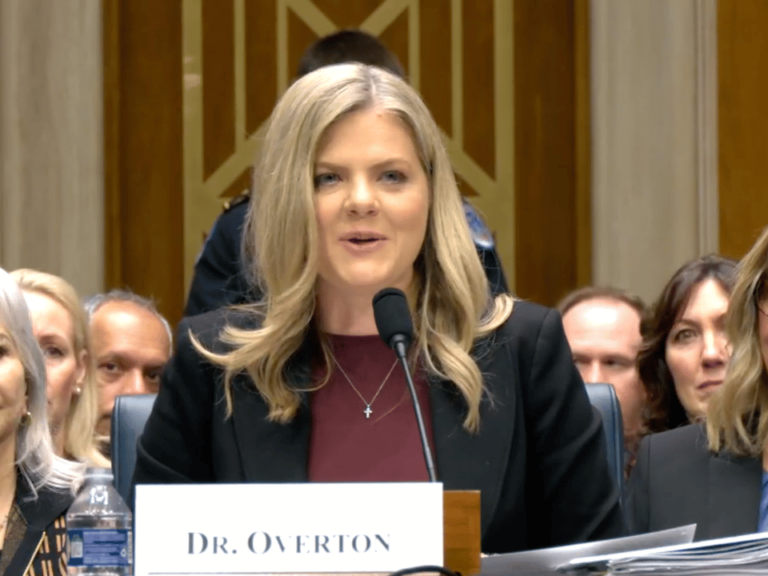
Flores’s initial piece documenting the fact that this terminology is weird. Finally, the last things I’ll mention is we had a sponsored article that was really excellent about how biology is reshaping breast cancer care. So that’s a really dense article that I would definitely recommend reading if that’s something that you’re interested in. And then finally, I want to mention just one cancer policy where Dr. Heidi Overton had her confirmation hearing in front of the Senate Health Committee, I believe, and some questions came up about vaping and some cancer related things, but it’s also just interesting in terms of leadership at the agency.
Paul Goldberg: Yeah. Yes. I don’t know what to
Jacquelyn Cobb: Make of that story. I’m honestly just putting off starting Grail because it’s so big and scary.
Paul Goldberg: All right. So
Jacquelyn Cobb: Grail. So I’ll start, but I just want to preface this by saying that I am still deep in this world, definitely still reporting, going to be more follow-up stories. So my brain is a little oversaturated with Grail information, so I may be a bit rambly as always, but extra right now. But basically – I like that
Paul Goldberg: About you.
Jacquelyn Cobb: Well, works out well for all of us. But basically last week on Wednesday was something I’ve been describing as sort of the season finale of the saga, just to explain to people who are maybe not as interested in trade oncology’s news that this is a really big deal and really almost like high drama, really interesting. So FDA held an advisory committee meeting. It was the Molecular and Clinical Genetics Panel of the Medical Devices Advisory Committee, and they were voting on Grail’s multi-cancer detection test gallery. So this was really interesting because it was the first time that a multi-cancer detection test has been submitted to FDA for pre-market approval. And so basically it’s the first time that FDA is evaluating data for a multi-cancer detection test. So very exciting.
I was thinking about how I was going to talk about this before the podcast, and I think what I have to say is that perhaps I was a little bit naive. I covered an issues meeting, basically it was a type of advisory committee meeting in 2024 that FDA held about how they were going to, in the future, evaluate these devices. And that was a very exciting sort of hot button topic. There was a lot of debate about whether FDA, specifically the in vitro diagnostics and the medical device side of FDA has the purview to actually consider clinical benefit and clinical outcomes in the… And this is where, again, honestly, going back to Dr. Flores, semantics is kind of tricky here. So I’m going to be careful with my wording, but basically things like actually improving, extending someone’s life from cancer, these clinical outcomes were not something that the FDA, and again, specifically the device side of FDA had the right the congressional purview, the direction from Congress to evaluate.
And they made that really clear in the meeting in 2024. And this is where I think I have to admit that I was a little bit naive. I really thought there’s no way. I really, really though, because there was so much debate and there was so much conversation and there was just… Maybe I’m just talking too much to the epidemiologists who feel really strongly about this, but basically what happened on Wednesday was that FDA, and again, we don’t know whether they’re going to approve it or not, that has not
Paul Goldberg: Happened. Oh, they’re going to
Jacquelyn Cobb: Approve it. We got to be careful.
Paul Goldberg: I’ll take that mystery out right there.
Jacquelyn Cobb: They
Paul Goldberg: Are going to approve it.
Jacquelyn Cobb: But they said very, very clearly, unambiguously that they were asking the committee not to discuss any claims not made by Grail in their pre-market approval application. And that’s important because there were no clinical outcome claims included in that application. The only claims that Grail was making was basically clinical validity data. And again, the semantics is a little bit weird, but it’s basically how it works as a… And they use this term, I struggle and get nervous to say this, but they use this term, FDA did. They evaluated it as a diagnostic test, things like specificity, sensitivity, positive predictive value. If you get a cancer signal detected, do you have cancer? Does it effectively catch cancers in asymptomatic people? All of these things from a device perspective make a lot of sense, but basically FDA was like, “That is all we can consider. That is the only thing that they’re applying for.” And anytime that the committee ventured off into these questions of clinical benefit, FDA was there pretty much to put them right back on track and say, “That’s not what we’re talking about.”
Paul Goldberg: Basically, patient benefit is not a part of this, which actually leads us to another set of questions, one of which is there is this law on the books that basically requires that the government pay for all drugs, excuse me, all MCDs or all modalities that are MCD-like grouped together regardless. So basically US Preventive Services Task Force is taken out of the equation, which is really fascinating. And plus, of course, Preventive Services Task Force, we don’t know how effective it’s going to be or what it’s going to be in the current iteration, which is a complete revamp. So who is left to ask, “Is anybody benefiting from this or is anybody harmed by it?” Which is actually worse.
Jacquelyn Cobb: Well, I just want to kind of give some clarifications and maybe some hedging a little bit because that is something I still want to report out and I feel like I haven’t seen anybody be super, super clear. This is the most administrative bureaucratic thing to cover, and my understanding of this law is still in progress. So I think that there’s more to it than that. I can
Paul Goldberg: Simplify it. They have to pay it, but you
Jacquelyn Cobb: Should do a
Paul Goldberg: Definite deep dive into the law.
Jacquelyn Cobb: Yeah. But I think that there is a little bit of nuance that I just want to vocalize that I don’t believe that it’s just immediate automatic CMS coverage with FDA approval. I think it is just a lot, a lot easier. And I believe, again, have to really make sure, but that USPSTF has been removed as a necessary component of CMS. Oh yeah. That’s definitely… Yeah. And that’s what’s really freaky is because, and just for listeners, and I think we’ve sort of given this context in previous podcasts about this, but just as a refresher, typically or before this, with most modern cancer screening tools, USPSTF is the regulatory body or the evaluating body.
Paul Goldberg: It wasn’t intended that way, but it became that.
Jacquelyn Cobb: Yeah, sure. Thank you. You probably have a lot more context, and that’s why I think I said modern, because I’m like, “This is just from what I know.” But it is typically, or it functionally has been acting as the thing that stands between or that decides whether
Paul Goldberg: A
Jacquelyn Cobb: Screening test is meets these clinical outcomes. They’re the ones that evaluate this. And honestly, I don’t know if maybe I might be overreaching, but I have a cynical faith in them because I think that they are considering CMS and insurance more broadly, and they have to be thinking about how do they use this pot of money that they have. And my cynical side is once money gets involved, if there’s limited money, hopefully they will use it well. It’s not just out
Paul Goldberg: Of. I don’t think any of that is happening, and plus I don’t believe you’re a cynic anyway, you’re a skeptic. What we have right now is a situation where nobody’s looking out to determine the question of whether anybody benefits from this, except, except NCI. And what was really interesting is that Phil Castle, Division of Cancer Prevention, was at that meeting and that he was at what’s called the open public hearing, reading his testimony, which was essentially the testimony of a skeptic. And there’s someone who is funding or trying to figure out whether it is possible to conduct a clinical trial that would answer this, and Galleri is not a part of that trial. So now question is who is looking out for the public interest, the interest of people who may or may not have cancer? And the answer is at the moment it’s NCI.
That’s what’s left. Now, is that a good thing for NCI to be a skeptic in this situation? I hope so.
Jacquelyn Cobb: I hope so too. Yeah. I mean, it definitely seems like from what I’m hearing is that it feels a lot of epidemiologists and people who understand the nuances of cancer screening are really just kind of sad about what’s happening. It just feels very… Yeah, like the American public is just in sort of this vulnerable position of not being, I don’t know, not being protected. Is that too strong of a terminology, Paul? The intuitions of the American public are not being honored, I guess. They think – Well,
Paul Goldberg: No, the benefit, because think of what the label might read. The label might read in conjunction with other tests. Is that how it’s going to be used? The answer is quite simply highly unlikely that it’s going to be used in accordance with the label because people are going to say, “Oh, well, you’ve got a few. You’re really worried about your grandmother who died of ovarian cancer. Why don’t we just give you a gallery? It’s just no big deal. Pay for it.” So I mean, it will be paid for actually, or may or may not be. And some insurance companies are actually, in New England, there’s an insurance company that’s actually asking people to offering it.
Jacquelyn Cobb: Yeah,
Paul Goldberg: Supporting it, encouraging people.
Jacquelyn Cobb: Yeah. Yeah. And then we’re still in a place where some primary care physicians refuse to accept them as information. We’re in such a weird time. But I think that what I was saying is more just that I’m generalizing here, but the American public sees FDA approval as a seal of, yes, this will work. As approval. Yes, exactly. And I think that’s all I was just getting at is that it’s sad. You know what I mean? These are really, really complicated. Oh, and I do want to say there’s two important things I want to say. I’m actually going to write one down because I’m going to forget. But the thing I wanted to say is that it was really fascinating to see this panel because they all, or most of them, had very different specialties. So there was a geneticist, there was a biostatistician, there was several clinicians, there was someone from the VA.
They had all of these sort of different perspectives that they were coming at it with. And it was fascinating to hear, generalizing, but the clinician saying something along the lines of, “What’s the problem if we say it’s early cancer detection when early is a little bit of a misnomer? It’s a questionable misnomer unless you mean that early only means before symptoms arise.” But then we have the biostatistician saying super, not aggressively, not in a negative way, but super strongly that accurate labeling philosophically from FDA is essential. So it’s like you have all of these, and then you have a geneticist saying that the general public’s numeracy, which I hadn’t heard that word before, that was an awesome word, is really poor, which is obviously true. And then of course you have a patient advocate who’s saying, “Well, no, education is important despite how hard it is.” It was just such an interesting sort of swirl of specialties interacting with each other.
And I do anticipate that at least, or I hope at least that this meeting really gets the ball rolling on these discussions. That’s I think the most that I can hope. But the other thing I wanted to touch on, lots to say about GRAIL, oh my gosh, but is this early idea, and I think that that’s really essential in this podcast. Yes.
Paul Goldberg: Oh, this is amazing because we got to the main point at the end. Classic. Yeah, there’s a term for this in psychiatry, the doorknob remark. There’s something
Jacquelyn Cobb: You say as your
Paul Goldberg: Hand is on the doorknob. And then there’s this thing about my mother. That’s good. That
Jacquelyn Cobb: Is very accurate. Go, go.
Paul Goldberg: The floor is yours.
Jacquelyn Cobb: So the final thing, the most important thing from this meeting is, and it’s honestly the piece that gives me a little bit of hope, is that at the risk of generalizing a little bit too far, the committee seemed to be in pretty much agreement, at least toward the end of the discussion, that early was really not appropriate as part of the nomenclature for this test. And it was actually really, really interesting. We can listen to it directly from them actually, but how deeply embedded this terminology of multi-cancer early detection test is. Somebody literally brought up like, “Well, we can’t get rid of that. It’s already out there.” And somebody else was like, “No, we actually definitely can. That is what this is.”
Paul Goldberg: And should.
Jacquelyn Cobb: And should.
Harpal Kumar : Data that we’ve presented today, which shows that 82% of the cancers that were detected at stages one through three were able to be treated with curative intent, and that is an important part of what we consider to be important. I mean,
Jason A. Dominitz: You’re carefully choosing your language, of course, it’s curative intent, but we don’t have any outcome data.
Harpal Kumar : We do not yet, but I’ll ask Dr. Fung to comment on this.
Courtney Lias: Before we do that, I do want to make a clarification. This is Courtney Lias, Food and Drug Administration. I just want to make clear for the panel that the intended use of the test doesn’t relate to those outcomes, that the intended use of the test really relates to that diagnostic performance. So while they may answer this question, just want to keep in mind that the follow on clinical support and the outcome measures like mortality are not part of the claim that the company is making.
Paul Goldberg: NCI uses the term after much consideration, has been using the term MCD, which is multi-cancer detection test. And Grail has been using MCED, early detection test, when it’s a misnomer. I mean, is it really early detection? I mean, a lot of the cancers are not early cancers also that they’re detecting. So one
Jacquelyn Cobb: Could – Yeah, the earliness of it is a real… There’s a lot that we could get into about… Grail will say that, or has said that it is an early detection test, even if we were able to prove that it somehow does lead to intrastage shifts. So just earlier stage four, catching stage four earlier than you would if you waited till symptomatic. And I see the logic there. It is technically early. The only thing that you can really Is what I’ve said before is that it’s presymptomatic, but obviously of course that’s not necessarily what people really think. And that’s honestly to Dr. Flores’s point with his guest editorial protective piece. It’s this idea of early and nomenclature and what the public expects versus what clinicians expect versus what epidemiologists say and mean and what they expect and regulators expect. It feels very much, and this was a subhead, it’s a matter of semantics, but in this case it feels like the committee and even FDA to a certain degree, they brought up a whole question just asking if early was appropriate, the word early was appropriate in this case.
And it seems like, and again, I’ve been proven wrong and been disappointed many times with this story, but that the committee at least did kind of agree on this point that early is not appropriate here and hopefully FDA heard them.
Paul Goldberg: Well, but FDA was asked point blank, do you have a definition of early? And the FDA said, officials at least said point blank that no, we do not have a definition of early.
Jacquelyn Cobb: We don’t have a regulatory definition, which is so funny because it’s throughout the whole…
Paul Goldberg: Well, so the next question is going to be, will they or will they not have a label that will say early?
Jacquelyn Cobb: Yeah. Are they the ones that would enforce whether let’s say this is now getting very, what’s the word? Oh, it’s
Paul Goldberg: Huge.
Jacquelyn Cobb: I’m thinking ahead, but let’s say GRAIL gets this approval, but FDA says on the label you have to say that it’s not early or you have to put some qualifications. What if GRAIL keeps calling it MSAID? Do they have regulatory authority to stop them? For sure. Yeah. Okay, well that’s good. That makes me feel something. Sure. Well that’s something.
Paul Goldberg: Yeah.
Jacquelyn Cobb: Well good.
Paul Goldberg: Well, I mean devices also are pretty weird things in terms
Jacquelyn Cobb: Of – They’re weird. It’s new for me.
Paul Goldberg: Approvals and you can get into all manner of stuff with that. But there’s a whole bunch of other questions you can be asking. For example, how many of these modalities are out there? And the answer is around 30. Not all of them are approved and probably a bunch of them will be. And then if you’re asking patient benefit question, with which modality, at which point do you ask that question? Because these things are being re-engineered all the time. So let’s say you run a 20 years clinical trial of all of this stuff and it changes about, oh, I don’t know, 20 times in that time. So what are you doing? So really it’s an unanswerable question to some extent, but does it mean – Unfortunately now that the flood gates are open. You know what I think we should do? We should invite Phil Castle back.
Jacquelyn Cobb: Well, what I was actually thinking, Paul, and I agree with you, but for this podcast, I think that it would be really helpful to just let listeners hear his open public hearing speech. It’s three minutes and we have it. So what do you think about that, Paul?
Paul Goldberg: Done. Hey, I vote with both hands.
Philip E. Castle: For multi-cancer detection tests remain promising but preliminary. Large scale trials demonstrate reasonable sensitivity for some late stage cancers, yet the sensitivity for early stage cancer detection or intervention matters the most remains poor. Concerns persist around false positive rates, harms, insufficient mortality reduction data or any proven benefits and a lack of completed randomized controlled trials in the US healthcare context and reality. Routine clinical adoption is therefore premature. Extrapolations of reductions in incidence stage four cancer to mortality reductions using registry data are scientifically invalid. These cancers are diagnosed at an early stage could be less or more lethal, or they could be bad actors that are destined to be lethal no matter when they’re detected. And a comparison to early stage cancers diagnosed in the absence of a screening test, which are incidental omas, are likely to be less lethal than all cancers at that stage, most of which are currently not observable.
Notably, lung cancer screening in the UK where the trial occurred is just being introduced there and therefore the trial likely benefited from the lack of prior lung cancer screening in the trial participants. I urge the FDA to consider the evidence carefully and maintain the standard for approval based on proven clinical benefit, not detection claims alone. The latter will open the floodgates for other MCDs with even less data. Until there’s rigorous evidence showing a favorable benefits to harms ratio, routine approval and broad population rollout would risk harms and waste resources. As a USG employee, I have no vested or conflicted interest in MCD tests. Indeed, in my role at the NCI, I support the development of these tests and wait anxiously for the availability of a validated test with proven benefits and excellent benefit to harms ratio. Nobody wants an MCD test on the market more than me, except perhaps those that stand to gain a profit.
Jacquelyn Cobb: But yes, Paul, I do think that we should get Castle back on and talking about it. But yeah, personally, my next move is I would really, I feel that a deep research project is on my horizon. I want to understand the entire history of FDA approval and CMS coverage of cancer screenings. But I need to know it. It’s like this hunger. Oh, you do? Yeah.
Paul Goldberg: Yeah.
Jacquelyn Cobb: How does this happen?
Paul Goldberg: It’s simpler than you currently think because basically what it means is that CMS will cover it.
Jacquelyn Cobb: Period.
Paul Goldberg: Done.
Jacquelyn Cobb: There we go. Heard of your first folks. Will it be
Paul Goldberg: Early? Will the word early be in it? I have no idea, but I can’t wait to find out.
Jacquelyn Cobb: I know, I know, I know. I’m like, when can we expect it? It’s being a journalist. Oh wow. It’s a great time to be a journalist, Paul.
Paul Goldberg: Well, of course. But the problem with this thing is how many science writers actually understand the subtle concepts we’re kicking around here right now? The answer is not many. How many doctors understand it? The answer is not many. What will happen to patients? And that’s where I kind of lose sleep. So people get that test because they’re nervous, because they’re cancerophobic, which is a reasonable thing. I have it. Cancer-phobia, I have a bad case. So my cancer-phobia is getting better though.
Jacquelyn Cobb: I don’t know how to… Good?
Paul Goldberg: I don’t either. But that’s where we are.
Jacquelyn Cobb: Well, I think something that, because I was with my parents in Vermont when I was covering this story and I was talking to them about it. I was feeling really jazzed and stuff. And I think the thing that helps people understand the sort of stakes here the most, at least in my experience, is comparing what’s happening now with this test to a drug. You would never introduce a drug. You would never give FDA approval to a drug if we didn’t know if it helped or hurted. Hurt people.
Paul Goldberg: In my country, we say hurted.
Jacquelyn Cobb: Thank you, Paul. But yeah, it’s just like there’s this sort of, I think because it is just a blood test or it seems like just a blood test or technically the device is just a blood test, it’s easy to get lost in the Grail thinking and the Grail argument, which is that there aren’t screening tests for all of these different cancers and we do catch cancers too late and there are people… And all of these things are true. If we had an effective multi-cancer detection test that did save lives, who wouldn’t want that? Of course we all want that, but we don’t know that
Paul Goldberg: We have that. Yeah, but I mean there’s another approved test that’s paid for and it’s not approved for multi-cancer, it’s approved for colon cancer, which is great. So then there is… Grail could have been developed for pancreatic cancer potentially. They could have done that. They could have stuck that on the label. That would be pretty great if they would.
Jacquelyn Cobb: Yeah. It’s tricky because I mean, I think the colon cancer one is a little… Because we have colonoscopy which has been demonstrated to… So it’s like pancreatic I think is… And all of these cancers that we don’t have a screening test for, my understanding, and again, very complicated, but my understanding is that those are the ones that it is a little bit harder to show clinical benefit because you have to do a mortality endpoint trial to really prove it or to show it. It’s
Paul Goldberg: Quick with, unfortunately.
Jacquelyn Cobb: Well, yeah. I mean, that’s true. Yeah. Yeah.
Paul Goldberg: So with pancreatic, you could have done it.
Jacquelyn Cobb: Yes. Yes. And I think people probably are. I would not be surprised if there are people working on liquid biopsy screening. I’m actually nearly positive that is in the… But Grail can’t do that. That was actually a whole sort of part of the discussion, honestly. And just now it’s using my memory, so I want to fact check all of this. But was FDA wanted to know, can we just say that for certain cancers it’s better than others and break it up and give people this information. But the test itself isn’t cancer specific. You do get a cancer signal of origin, but you get a cancer signal or not first. So it’s like you can’t just get the pancreatic cancer patients. It will capture all of the 50 types that it tests for, and that will include potentially some pancreatic cancer, some breasts, some lungs, some blah, blah, all of them.
And what one of the members said, and I forget
Exactly who it was right now, but basically the discussion was if this test is done and a cancer signal of origin is detected, or sorry, a cancer signal is detected, even what’s the realistic thing here? We’re going to tell a patient, “You have a cancer signal, but it’s not one of the ones that we test for, so just forget about it.” Someone, I think it was maybe the person from the VA, but basically they were like a doctor, a clinician who gets a cancer signal result will try their best to find that cancer. Right now, that’s the state of things and maybe there’s – Try
Paul Goldberg: Your best. That means a whole lot of workup.
Jacquelyn Cobb: Yep.
Paul Goldberg: Yep. Here’s what you really need. I think what I would do if I were seeing patients, which would be a felony in my case, but if I were not afraid… No, if I actually were qualified to see patients, I would take a number two pencil, sharpen the heck out of it, take your story, which shows the ODAC, the advisory committee discussion of this thing and go through it very carefully and then use that as a baseline to figuring out what the heck happens next. And you really can’t just be limited to Galleri. Now, the other thing with Galleri that’s easy to forget, the NHS trial was negative. Okay. Does that make sense?
Jacquelyn Cobb: Yes.
Paul Goldberg: It was a three-year trial.
Jacquelyn Cobb: Well, yes. I think it’s ongoing. They
Paul Goldberg: Needed to run five years, but they did not have it run five years.
Jacquelyn Cobb: But that’s what I’m saying, Paul. I think they are having it run five years. It’s just not done yet. Well, they’re continuing
Paul Goldberg: To follow up,
Jacquelyn Cobb: But
Paul Goldberg: They reported it out after three years.
Jacquelyn Cobb: Yes. I really don’t want to say that they’re not doing it. I think that’s a landmine. I think we need – It would have
Paul Goldberg: Been very nice to run it longer.
Jacquelyn Cobb: But they are. It would have been nice for Grail to wait until they had mortality data in order to – Thank you for translating into English. In order to apply to FDA. What I meant to say. Yes.
Paul Goldberg: You reached deep into my brain and pulled out a complete thought. Congratulations.
Jacquelyn Cobb: I did it. I did it. I’m the Paul whisperer. Yes.
But yes, no, I agree. I think, again, one of the committee members said that. It’s like we can’t really run away from the fact that the only… And I think something I always want to say, it was a monumental effort and it was good. It’s great that they tried to get a randomized control trial despite all of the sort of criticisms that are put upon it, but it failed. It already was sort of a lower bar in terms of stage shift versus mortality, which you can go read about in our stories, and it failed to meet the endpoint. I though that that was going to be part of the discussion at ODAC, or not ODAC, I did the same thing that you did at this advisory committee meeting last week. And that’s what I was so surprised about is I thought this was going to be a debate about how do you prove a mortality benefit in the face of great need and long trials and blah, blah, blah.
All of the typical debate around how do you evaluate MCED, but that literally…
Paul Goldberg: MCD.
Jacquelyn Cobb: Okay. In my brain, when I say MCEDs, it is MCDs, but I will be careful. I’ll just say MC.
Paul Goldberg: From now on, spell it.
Jacquelyn Cobb: Spell it out. No E, no E.
Paul Goldberg: No. No E.
Jacquelyn Cobb: Yes. Yes. M-C-D. M-C-D, yes. No
Paul Goldberg: E.
Jacquelyn Cobb: Yes. But yeah, it was not… I mean, they had plenty to talk about. There’s a lot of important things in this discussion, but clinical benefit was not one of them this time. Yes. A part of the
Paul Goldberg: Discussion. This is a story we, as the listeners might guess, there’s more to come.
Jacquelyn Cobb: Lots. Lots, lots, lots.
Paul Goldberg: It’s going to be very interesting. And when you think about it, how much trouble did we get ourselves into with a bunch of sort of very simple tests that –
Jacquelyn Cobb: PSA, are you thinking of? Ovarian. Yeah.
Paul Goldberg: Ovarian. Yeah. A bunch of them. And how little understanding there is generally of so much of that field. And look at the mess we’re going to be able to get ourselves into with these 30 or so constantly changing modalities which can be used off-label for sure. And there’s no crime in using things off label and with no one to discipline you. And I shudders your thinking the thought that the only place that can provide information on this that I would trust is NCI. And will NCI be able to do it? Who knows? Will NCI be defunded for trying? Who knows?
Jacquelyn Cobb: Okay. Well, I think that we have talked everybody’s ear off about this for now. Like we said, more to come. Is there anything else you want to talk about today, Paul, before we sign off?
Paul Goldberg: Not a thing.
Jacquelyn Cobb: Not a thing. All right. Well, listeners, you will hear us next week. Bye-bye.
Paul Goldberg: Thank you for listening.
Jacquelyn Cobb: Thank you for joining us on the Cancer Letter Podcast, where we explore the stories shaping the future of oncology. For more in-depth reporting and analysis, visit us at cancerletter.com. With over 200 site license subscriptions, you may already have access through your workplace. If you found this episode valuable, don’t forget to subscribe, rate, and share. Together, we’ll keep the conversation going.
Paul Goldberg: Until next time, stay informed, stay engaged, and thank you for listening.