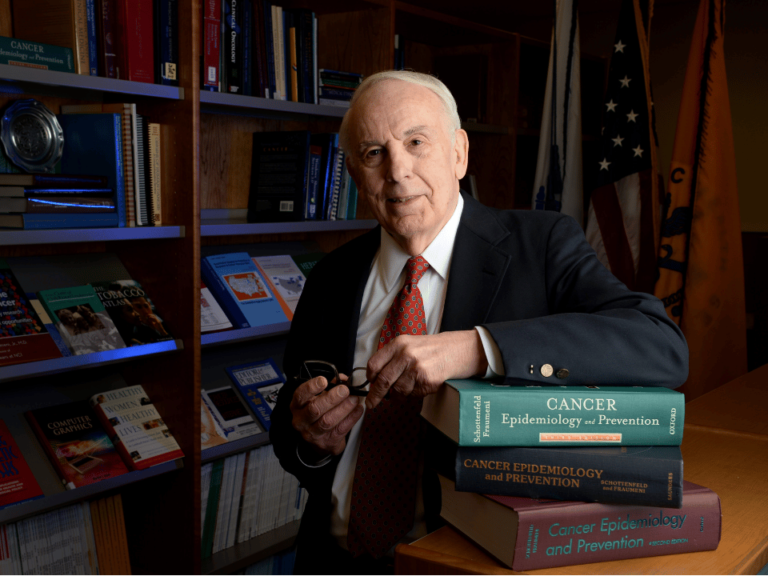
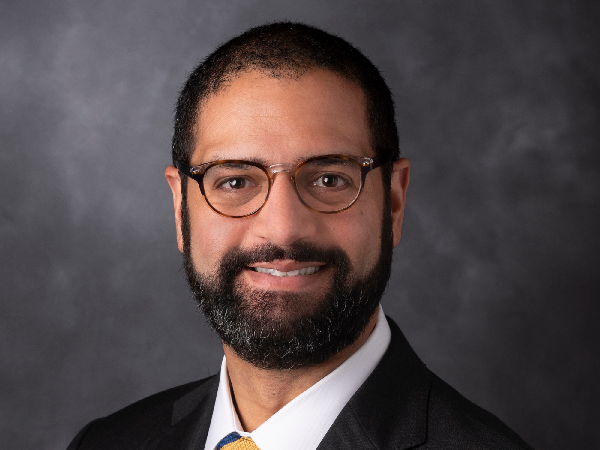
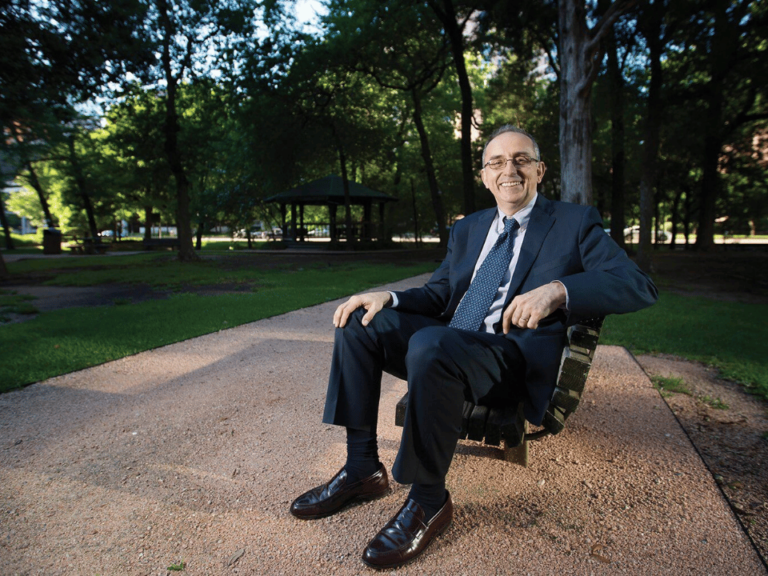
Maura L. Gillison, MD, PhD, a medical oncologist and molecular epidemiologist whose work changed the standard of care for head and neck cancer by distinguishing human papillomavirus-positive from HPV-negative disease and thereby guiding diagnosis, treatment and prevention, died on June 21.
Gillison, a professor of medicine, thoracic head and neck medical oncology at the University of Texas MD Anderson Cancer Center, was 61.
Gillison, who had been diagnosed with small bowel cancer, died at her childhood home in Willoughby, OH, with her family at her side, her husband, David E. Symer, said.
“Maura was fearless, brilliant, and exceedingly compassionate, all in one package,” Sue Yom, NRG Oncology Head & Neck Cancer Committee chair and RTOG Foundation Head & Neck Cancer Committee chair, said in an announcement of Gillison’s death to that group’s members. “She was a genius who decided to spend her career dedicated to improving the lives of people with head and neck cancer. For that, and for her tender, entertaining, and inspiring friendship, I and countless others are profoundly grateful.”
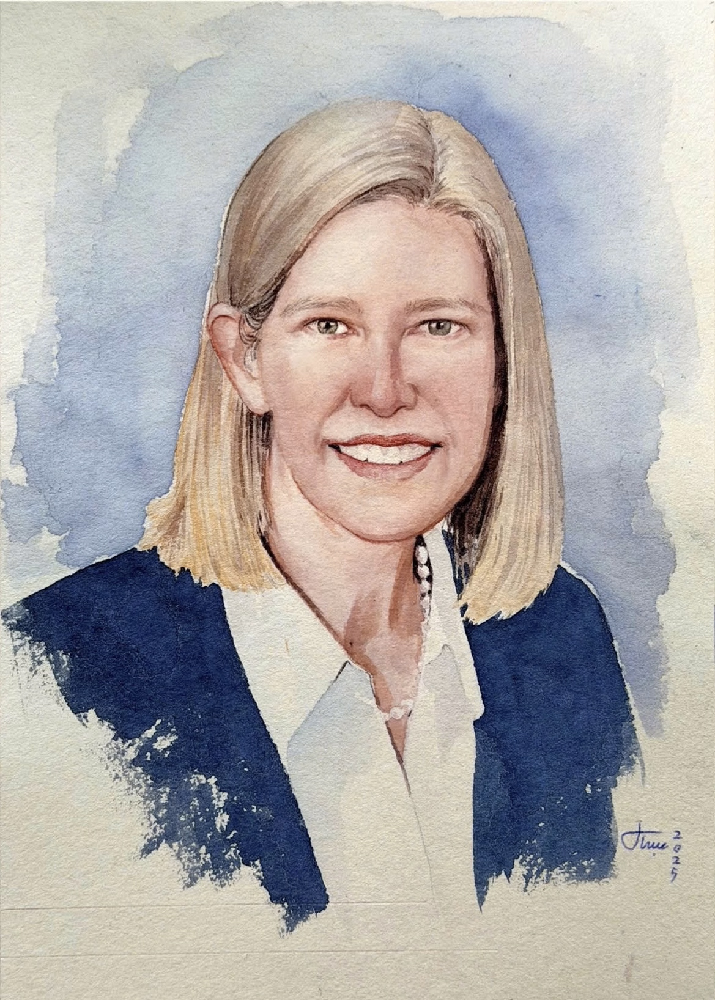
Art credit: VinFuture Foundation.
In 2021, Gillison received the David A. Karnofsky Memorial Award, the highest honor of the American Society of Clinical Oncology. She is also a recipient of the prestigious VinFuture Grand Prize, which she shared in December 2025 with NCI’s Douglas R. Lowy, John T. Schiller, and Aimée R. Kreimer.
“Maura Gillison’s untimely passing at 61 is a blow to the cancer research community, including me,” Lowy, NCI principal deputy director, said to The Cancer Letter. “She was a visionary leader whose research focused on HPV-positive oropharynx cancer and her many patients. Dr. Gillison’s 2000 paper on this entity was immediately accepted as seminal because she found HPV in metastases in addition to the primary tumors. She then became a major contributor to what has been learned in the past 25 years about this condition.”
“Maura began making major impactful contributions while still in training. She totally changed our understanding of the etiology of head and neck cancer and demonstrated that one person can make a difference,” Otis W. Brawley, Bloomberg Distinguished Professor of Oncology and Epidemiology at the Johns Hopkins University Sidney Kimmel Comprehensive Cancer Center, said to The Cancer Letter.
Gillison was an elected member of the National Academy of Medicine, the American Society of Clinical Investigation, and the Association of American Physicians.
“She was a true genius and perhaps the most impactful head and neck medical oncologist in history,” said John Heymach, Thoracic/Head and Neck Medical Oncology chair at MD Anderson. “She was also an amazing physician, mother, and colleague who cared deeply and worked tirelessly toward making breakthroughs that helped patients.”
MD Anderson President Peter WT Pisters described Gillison as a “visionary scientist and compassionate physician who, through her landmark discoveries around HPV, reshaped the course of head and neck cancer research and care.

“We mourn the loss of an extraordinary colleague and leader, while celebrating a legacy that will continue to inspire discovery, advance patient care and improve lives for generations to come,” Pisters said to The Cancer Letter.
Gillison was born in Canada, one of four children of Robert and Marvis Gillison. Her family lived in multiple locations throughout the U.S. and Mexico during her childhood. The family settled in Ohio in 1974, where she attended Hathaway Brown School, graduating in 1983.
She graduated from Duke University in 1987, summa cum laude, after spending a life-transforming year studying at Oxford University. She received her MD degree from Johns Hopkins University School of Medicine in 1991.
There she met David, in the combined MD/PhD program at Hopkins. They married in 1992 in Baltimore.
Gillison performed postdoctoral research work in the laboratory of Chi Van Dang, then completed medical internship at Johns Hopkins Hospital. After completing medical residency at Massachusetts General Hospital in Boston, she helped open a medical practice in Malden, MA, for indigent patients.
Gillison and husband Symer moved back to Baltimore in 1996 as clinical and research fellows at the Johns Hopkins Oncology Center. Gillison then enrolled in the new Graduate Training Program in Clinical Investigation at the Johns Hopkins Bloomberg School of Public Health, where she received her PhD in 2001.
As a post-doctoral fellow at the Kimmel Cancer Center and Bloomberg School of Public Health at Hopkins, Gillison demonstrated that a subset of head and neck cancers of the pharynx, tonsils, and base of tongue was driven by HPV.
“Until her discovery, it was understood that head and neck cancer was caused by tobacco and alcohol and case reports of the presence of HPV in some tumors was attributed to laboratory contamination,” William G. Nelson, the Marion I. Knott Professor and Director of Sidney Kimmel Comprehensive Cancer Center, said in an announcement of Gillion’s death to the faculty. “She subsequently led a prospective case control study, at the SKCCC, which definitively demonstrated the causal role of HPV in oropharynx cancer published in 2007 in The New England Journal of Medicine.
“Today, distinguishing head and neck cancers between HPV-positive and negative to guide treatment is standard of care,” Nelson said. “The body of her lifework was pivotal to adding head and neck cancer prevention as an indication to the HPV vaccine.”
Quynh Thu-Le, NRG Oncology Group chair, RTOG Foundation Group chair, said Gillison’s work fundamentally shaped the treatment of HPV-positive HNC.
“Her [collaborative work] in the seminal RTOG 0129 trial identified the patient population eligible for treatment de-escalation,” Thu-Le said in a letter to the group. “Subsequently, her leadership on the RTOG 1016 trial was critical in demonstrating that Cetuximab is inferior to cisplatin, preventing a widespread shift to a less effective therapy. Her influence also extended to cancer prevention, where she did foundational epidemiological work to support HPV vaccine for both boys and girls with the NCI.”
Announcing Gillison’s Karnofsky Award in 2021, ASCO said that Gillison’s work had brought about a “paradigm shift in determining the risk, diagnosis and treatment of head and neck cancer.”
The ASCO announcement of the Karnofsky Award reads:
Gillison found that HPV causes about 70% of oropharyngeal cancers in the U.S., where rates have risen dramatically in male adults in recent decades. After proving the link between HPV and oropharyngeal cancer, Gillison found that HPV status is the greatest determinant of prognosis, with better outcomes for HPV-associated oropharyngeal cancer.
Her practice-changing findings contributed to new diagnostic tests, staging criteria, and treatment guidelines for this cancer, as well as clinical trials of less-intensive therapy for HPV-associated oropharyngeal cancer. She also was senior investigator on clinical trials that led to the approval of checkpoint inhibitors for head and neck cancer.
Gillison has produced population-level evidence to demonstrate the effectiveness of the HPV vaccine in reducing oral HPV rates among men in the U.S., supporting the 2020 approval of HPV vaccines for this indication and underscoring the importance of continued efforts to increase HPV vaccination rates among young adults.
While at Ohio State University Comprehensive Cancer Center, Gillison led the first-ever study exploring the possible impact of HPV vaccination on oral HPV infections.
The study’s findings suggested that the HPV vaccine may reduce the rate of oral HPV infections in young adults by as much as 88%. However, given the vaccine’s low rate of uptake in the U.S. at that time—especially in males—the impact of the vaccine on oral HPV infections was low.
She was a true genius and perhaps the most impactful head and neck medical oncologist in history.
John Heymach
Using data from the National Health and Nutrition Examination Survey, a study conducted by the National Center for Health Statistics, Gillison’s team analyzed responses from 2,627 young adults ages 18-33, and compared the prevalence of an oral HPV infection in those who received one more doses of the vaccine to those who did not.
At that time, about 18.3% of young adults in the U.S. reported receiving one or more vaccine dose by age 26, with vaccination more common in women than men, 29.2% versus 6.9%, respectively. In the cohort, the researchers evaluated the prevalence of HPV type 16, 8, 6 and 11— the four types included in HPV vaccines prior to 2016.
The team observed that the prevalence of vaccine-type HPV infections was far less common in individuals who had been vaccinated versus not vaccinated. Virus infection rates in the vaccinated group were about 88% lower than in those individuals who had not been vaccinated.

In light of previous research, which showed that this epidemic of HPV-positive head and neck cancers was disproportionately affecting men, compared to women, Gillison and her colleagues were particularly interested in looking at whether the vaccine appeared to be associated with a reduced prevalence of infection in men.
“When we compared the prevalence in vaccinated men to non-vaccinated men, we didn’t detect any infections in vaccinated men. The data suggests that the vaccine may be reducing the prevalence of those infections by as high as 100%,” Gillison said at the time (The Cancer Letter, May 31, 2017).
At the time, the HPV vaccine was not approved for the prevention for head and neck cancers, but was already approved for the prevention of cervical, vulvar, vaginal, and anal cancers in women, and anal cancers in men. The vaccine was approved for prevention of head and neck cancers in 2020.
In 2017, Gillison joined MD Anderson as a Cancer Prevention & Research Institute of Texas scholar. At MD Anderson, she was a co-leader of MD Anderson’s HPV-Related Cancers Moon Shot.
While maintaining her overall focus on HPV-caused cancers throughout her career, Gillison intentionally pivoted several times to advance her research questions and approaches.
With each pivot, she rapidly mastered the existing knowledge in specific research fields, and then generated new data and methods that have moved the field forward in new ways.
Gillison started with molecular epidemiology studies, and then investigated the virus’ clinical, prognostic, and therapeutic impacts. Her ongoing studies of genetic and genomic variation in HPV-positive vs. HPV-negative oropharyngeal cancers led to identification of secondary molecular variants that define these cancer types.
Her team also discovered a new form of genomic instability in HPV-associated cancers that involves extrachromosomal, circular DNA, termed heterocateny, and can lead to formation and expression of fusion genes.
More recently, Gillison investigated immune genotypes and phenotypes in HPV-positive head and neck cancer patients who either responded or did not respond to immune checkpoint inhibitors, resulting in discovery of new therapeutic approaches that may benefit future patients directly. Much of this work currently is unpublished.
“My lab worked closely with Maura in the past four years, meeting her every week in Zoom meetings until three weeks ago,” Ken Chen, a genomics expert at MD Anderson, wrote on a LinkedIn remembrance page. “She has been one of my beacons in my journey in cancer research, defining how greatly a physician scientist could achieve in a lifetime.
Maura began making major impactful contributions while still in training. She totally changed our understanding of the etiology of head and neck cancer and demonstrated that one person can make a difference.
Otis Brawley
“As a data scientist, I often feel a bit disconnected from the mainstream cancer research. That is not the case when working with Maura. Her brilliance and breadth makes me feel my strength is greatly utilized and valued. A great deal of knowledge, experience and science were shared, facilitating the collective growth of the whole community.
“What a loss to our community and to my lab. But we will carry the torch to continue the important work,” Chen wrote.
In analyzing data, Gillison spent countless hours “letting the data speak to her” to find the simplest explanation and to describe and report the results directly.
“She continued to lead her weekly lab meetings up to the week prior to her death. She said that she did this in the end to distract herself and escape the inevitability of her own cancer, even while continuing to help other patients with cancer,” Carole Fakhry, professor of Otolaryngology-Head and Neck Surgery at Hopkins, and a mentee of Gillison’s, wrote.
“Far beyond everything else, Dr. Gillison cherished time with her family, voraciously reading books, drinking tea, listening to music, and snuggling with her beloved dogs, Charlie and Harry,” Fakhry wrote.
Gillison is survived by husband Symer, daughters, Sanna and Lia, her parents, siblings, and extended family.
A memorial and celebration of her life are being planned for late summer or early fall. A fund to facilitate completion and publication of the ongoing research projects in her laboratory is being established at MD Anderson.
Carole Fakhry, MD, PhD, professor of Otolaryngology-Head and Neck Surgery at Johns Hopkins, contributed to this story.