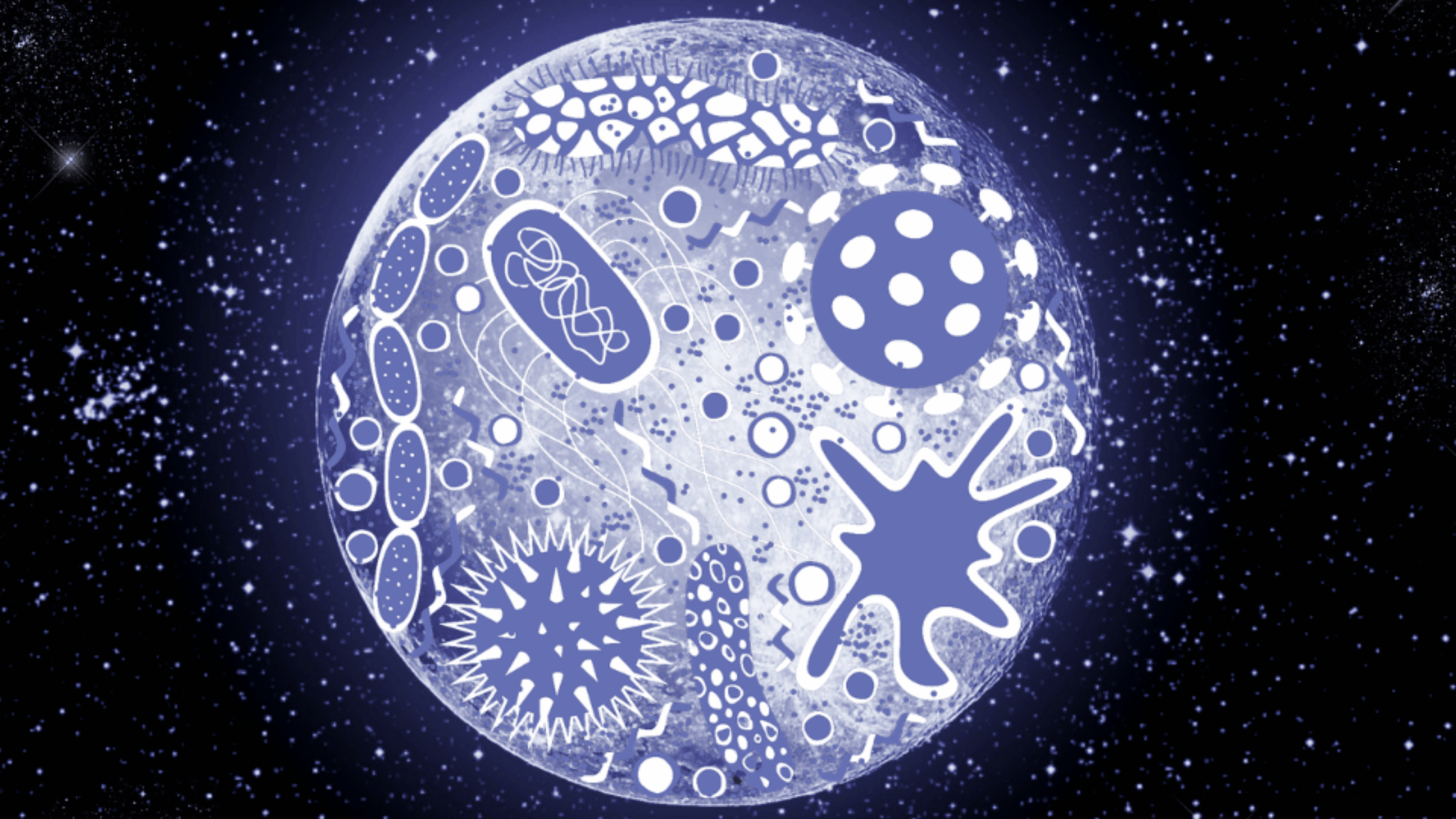
Top HHS officials last week called for a “moonshot” focused on the role of the microbiome in cancer.
The call for launching the program came from Secretary Robert F. Kennedy Jr. and was echoed by NIH Director Jay Bhattacharya, NCI Chief Science Advisor George Sigounas, and Head of the NCI Cancer Immunology Section Giorgio Trinchieri.
The symposium, which took place on the City of Hope campus in Duarte, CA, May 13, was co-sponsored by NIH.
The new effort would in part build on the results of a two-phase Human Microbiome Program that ran between 2007 and 2016 and received $170 million from the NIH Common Fund.
The HMP wasn’t focused on cancer. Phase One of the HMP focused on the development of DNA sequence datasets and computational tools for characterizing the microbiome in healthy adults and in people with specific microbiome-associated diseases.
Phase Two focused on creating integrated datasets of multiple biological properties from both the microbiome and the host over time in people with specific microbiome-associated diseases.
I’m looking for those opportunities to change the trajectory and to recalibrate what we do at NIH to make it narrowly focused on the etiology because of the impacts of exposures like microplastics, like pesticides, like ultra-processed foods to study the contribution of obesity, of metabolic health, of endocrine disruptors to the decline in health that we’re experiencing now.
Robert F. Kennedy
NCI and other NIH institutes also have been funding research in the microbiome as part of their research portfolios.
Now, if the presentations at the City of Hope symposium are an indication, the objective of the next phase of research would include a focus on cancer, potentially leading to funding increases for basic research and clinical trials. Unlike the two completed phases of the HMP, the planned new phase of the program will likely be focused at least initially on NCI, sources said.
“The goal of the day was to convene national scientific leaders together around the opportunity for a Human Microbiome Program Three. What became clear very quickly is that the interest, energy, and alignment are already here. So, the question now is: how do we move from discussion to action, and when can we begin?” Marcel van den Brink, president of City of Hope Los Angeles and City of Hope National Medical Center, chief physician executive, and holder of the Deana and Steve Campbell Chief Physician Executive Distinguished Chair in Honor of Alexandra Levine, MD, said to The Cancer Letter.
The conversations van den Brink is referring to will start next fall, when NCI convenes a workshop of microbiome experts and starts to hammer out the program for what might be called HMP III.
A conversation with van den Brink appears in this issue.
“Advancing the field like the microbiome and translating its promise into real outcomes requires leadership that extends beyond the N-of-1,” Robert Stone, CEO and the Helen and Morgan Chu Chief Executive Officer Distinguished Chair at City of Hope, said at the symposium. “It requires partnership across government, academia, health providers, and industry. Federal research funding is the engine behind the discoveries that have helped reduce U.S. cancer mortality by roughly one-third since the 1990s. That partnership has never been more important than today.
“If we do this well, if we bring the same level of collaboration, focus, and urgency that has defined the greatest achievements in cancer, then the microbiome will represent the next chapter in how we attack cancer and, in turn, change the world for people,” Stone said.
If Kennedy’s remarks at the symposium are an indication, a program focused on the role of the microbiome in cancer—as well as on human health overall—is consistent with his ideas about human health.
Kennedy’s 30-minute remarks included anecdotes from his experiences as a patient, as an attorney suing chemical companies, and as a Trump administration official with power to reshape medical research to fit his often-idiosyncratic ideas about health, science, and health policy.
“As you know, the microbiome is now recognized as the biggest organ in the body. It affects the health of all of our other organs. It probably affects our mental health as well, and yet we know less of it than any other organ,” Kennedy said at the City of Hope symposium.
In Kennedy’s view, America’s fatalities during the COVID pandemic occurred largely because of underlying chronic diseases.
“And that’s why we need to look at our immune system first, and our microbiome first, and start finally dedicating the resources to make those studies that should have been done long ago,” Kennedy said. “You can still reverse the chronic disease epidemic. Doing so will take a combined national effort of researchers to work with us, help us unlock the sequence of the microbiome.”
Said Kennedy:
Let’s shape preventative medicine’s future. I invite all of you who have issues that you think that we should be studying to contact [COH CEO] Robert Stone. He has my contacts, and we will—I will—try to make those kind of studies happen.
I’m looking for those opportunities to change the trajectory and to recalibrate what we do at NIH to make it narrowly focused on the etiology, on the impacts of exposures like microplastics, like pesticides, like ultra-processed foods, to study the contribution of obesity, of metabolic health, of endocrine disruptors to the decline in health that we’re experiencing now.
We want ideas, we want proposals, and I want to get them funded.
The physicians use this knowledge we already have to integrate these insights into what your patient care about, and and tell your patients, “You are what you eat, so eat real food.”
Subsequently, HHS issued a press release in which Kennedy is quoted referring to research in the microbiome as a “national ‘moonshot’ priority.”
At the City of Hope symposium, NIH Director Bhattacharya, who appeared on video, said he envisions emphasizing clinical research in the role of the microbiome in cancer.
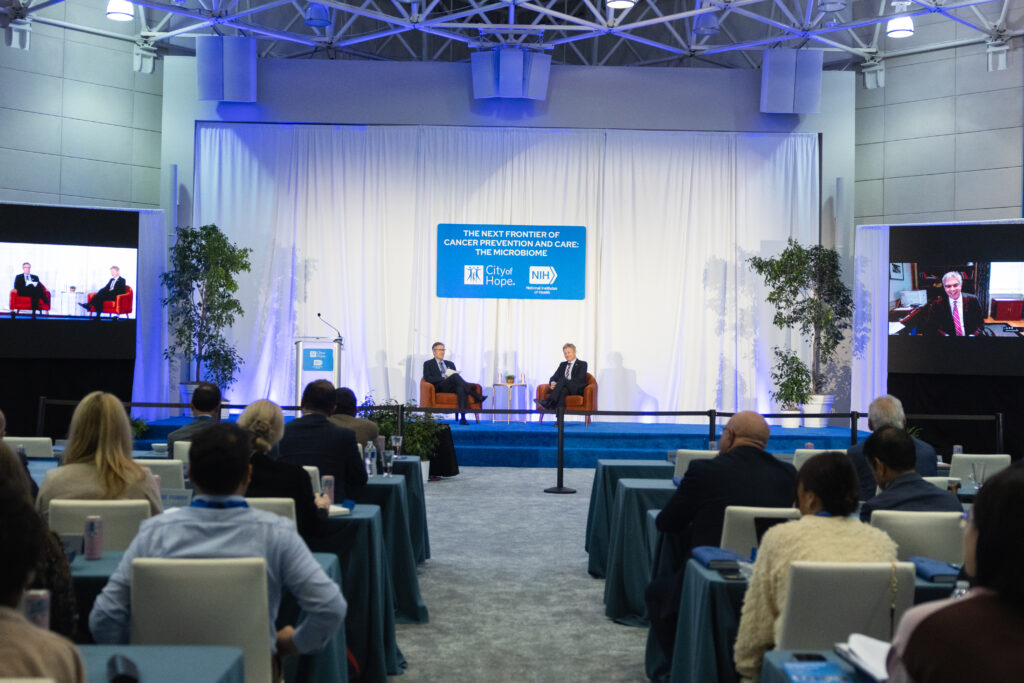
Photo credit: City of Hope
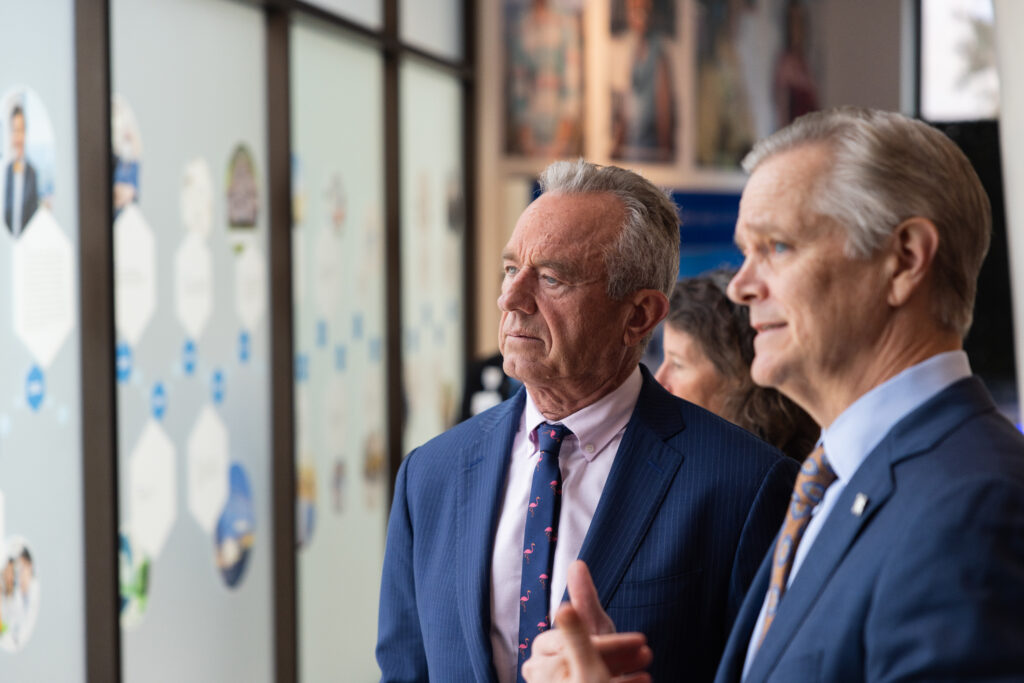
Photo credit: City of Hope
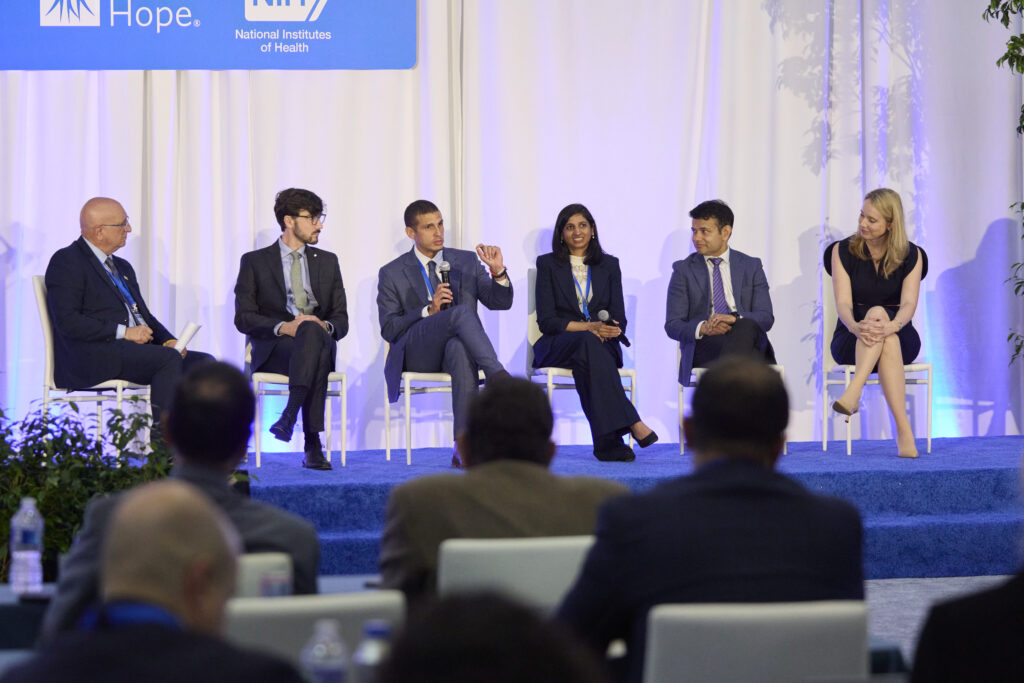
Photo credit: City of Hope
“In preparation for this conference, I’ve been reading some of the literature on the links between microbiome and cancer, for instance, on melanoma and checkpoint inhibitors, how potentially having interventions that improve the microbiome can actually improve cancer outcomes for patients from melanoma under treatment. Mind-blowing; right?” Bhattacharya said. “Really promising stuff, but they all need rigorous clinical evaluation, and that means randomized trials, and that means structuring and creating clinical trial networks that allow scientists to more easily get their ideas tested, and then also for patients to have access.
“The basic science we absolutely must continue to invest in, but the translation is to develop clinical trial networks that reach out to all parts of the United States, whether you live in a rural community or wherever you live [in an urban setting], you should have access to the kind of clinical trials that are promising, that can address the conditions that you have in ways that advance science and then generalize knowledge for the entire patient population,” Bhattacharya said.
NCI is initiating the process for designing the microbiome moonshot program, NCI’s Sigounas said.
“I know for sure, after I heard the [HHS] secretary, and also Dr. Bhattacharya—and the director of NCI, Dr. Letai, is also interested in that area,” Sigounas said. “Also, NCI is planning to have a workshop that Dr. Letai is going to co-chair, and we are targeting around the fall for that workshop, and hoping that we will bring all the experts in the field, coming together to brainstorm and try to see how we can move the field forward.
“NCI has a process which it has to follow.”
At the symposium City of Hope’s CEO Stone invited leaders from cancer research institutions, including the University of Texas MD Anderson Cancer Center, Dana-Farber Cancer Institute, Fred Hutch Cancer Center, Huntsman Cancer Institute at the University of Utah, The Ohio State University Comprehensive Cancer Center – Arthur G. James Cancer Hospital and Richard J. Solove Research Institute, and Children’s Hospital Los Angeles, to meet directly with Kennedy to discuss areas of collaboration between top academic centers and federal agencies.
“The microbiome represents one of the most consequential frontiers in medicine, with mounting evidence that the trillions of microorganisms residing in and on the human body play a critical role in immune function, metabolism, and disease including cancer initiation, progression, and treatment response,” Peter WT Pisters, president of MD Anderson, said to The Cancer Letter. “A systematic, national effort to understand and harness the microbiome could fundamentally transform how we prevent, diagnose, and treat a wide range of diseases.
“We had a very good meeting with Secretary Kennedy, and we are genuinely encouraged by the engagement and the direction of the conversation,” Pisters said.
Stone said he is looking forward to the next step in designing the microbiome project.
The microbiome represents one of the most consequential frontiers in medicine, with mounting evidence that the trillions of microorganisms residing in and on the human body play a critical role in immune function, metabolism, and disease including cancer initiation, progression, and treatment response. A systematic, national effort to understand and harness the microbiome could fundamentally transform how we prevent, diagnose, and treat a wide range of diseases.
Peter WT Pisters
“We are encouraged by the Secretary Kennedy’s commitment to advocacy and his interest in helping support and accelerate this work moving forward,” Stone said. “We would welcome the opportunity to continue the conversation, and to serve as a committed partner in advancing this platform for science, prevention, public health, and better outcomes for patients.”
In studies of the microbiome, there are no drugs that would ultimately hit the market and recoup private investment. This means that for such research to happen, the government has to play the leading role, especially in conducting clinical research.
The goal of the new project would be to bring the insight from the study of the microbiome into clinical care, van den Brink said, summarizing the day-long symposium.
“We need to think about the microbiome as an essential part of human biology—in many ways, like another organ,” van den Brink said. “If we want to deliver the best care for patients and design the most effective clinical trials, we need to understand the microbiome’s role and relevance. That is the starting point.
“Next is the opportunity to accelerate clinical trials,” van den Brink said. “As we heard from both the NIH director and the [HHS] secretary, there is strong interest in understanding how we can come together as a national consortium—potentially around a moonshot or Human Microbiome Project Three—and translate what we have learned about cancer, diet, and the microbiome into clinical trials.
“We have learned from many studies that the changes in the intestinal microbiome can have significant impact on the efficacy and toxicity of many cancer therapies, current and future ones. In the future we should incorporate analysis of the intestinal microbiome when we analyze the results of clinical trials similar to the routine assessments of other organs (such as heart, lung, kidneys, and more).
“Eventually, microbiome analysis will become part of the routine exam of every person.”